

You set your alarm for 4:50 AM with the absolute best intentions. When it actually goes off, you smash the snooze button, roll over, and wake up an hour later feeling rushed and defeated. As a night owl, trying to force a drastic shift in your sleep schedule usually ends in a caffeine-dependent, exhausting afternoon. The problem isn't that you lack willpower. The problem is that you lack a realistic system.

Waking up early without a concrete plan is just sleep deprivation. To make those early hours count, you need a precise blueprint.
The Core of the 5 AM Club Schedule: The 20/20/20 Formula
Pioneered by author Robin Sharma, the true power of waking up at dawn lies in the "Victory Hour" from 5:00 AM to 6:00 AM. You do not wake up at 5 AM just to scroll through social media or start answering emails. You wake up to prime your mind and body.

A successful 5 am club schedule is strictly divided into three 20-minute blocks.
5:00 AM - 5:20 AM: Move
The minute your feet hit the floor, you need to sweat. Do not think. Do not negotiate with yourself. Just put on your workout clothes and move.
- Why it works: Intense exercise lowers cortisol (the stress hormone) and releases BDNF (Brain-Derived Neurotrophic Factor), which repairs brain cells and accelerates learning.
- Actionable steps: Do jumping jacks, burpees, a quick run outside, or a high-intensity interval training (HIIT) video. You want your heart rate up and your body sweating.
5:20 AM - 5:40 AM: Reflect
Now that your brain chemistry is optimized, slow down. This block is for deep quiet and mental clarity.
- Why it works: Solitude before the sun comes up reduces anxiety and helps you organize your priorities for the day.
- Actionable steps: Meditate, pray, or write in a journal. Write down your biggest goals for the day or simply list three things you are grateful for. Avoid looking at your phone at all costs.
5:40 AM - 6:00 AM: Grow
Use the final 20 minutes to consume high-quality information.
- Why it works: You are feeding your brain when it is most alert and receptive.
- Actionable steps: Read a non-fiction book you picked up from Barnes & Noble, listen to an educational podcast, or put on an Audible audiobook about business, psychology, or personal development.
In the "Grow" block, you're encouraged to dive into a great non-fiction read. If you want to truly master this schedule, what better book to start with than the foundational text that pioneered this exact routine? Robin Sharma’s original blockbuster hit dives much deeper into the neuroscience and philosophy behind the 20/20/20 framework. It offers a powerful narrative that will motivate you to get out of bed and give you the ultimate blueprint for taking back your mornings.
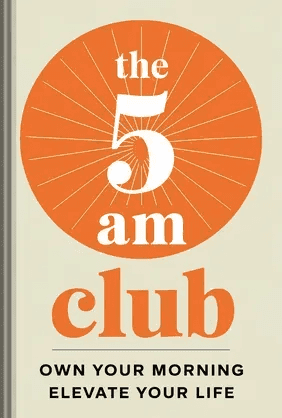
The 5 AM Club
Robin Sharma
 39 Duration
 10 Key Points
 4.6 Rate

Struggling to fit a whole book into 20 minutes? Get key insights from non-fiction bestsellers fast to nail your morning "Grow" block.
 LeapAhead
How to Wake Up at 5 AM Every Day (Without Crashing)
Knowing the routine is easy. Executing it is the hard part. If you want to know how to wake up at 5 am every day, you have to realize that a successful morning actually begins the night before. You cannot go to sleep at midnight and expect to thrive at 5 AM.
Here is the exact protocol to shift your sleep schedule.
1. The Gradual Shift Method
If you normally wake up at 7:30 AM, setting your alarm for 5:00 AM tomorrow is a setup for failure. Move your alarm back by 15 minutes every two days.
- Days 1-2: Wake up at 7:15 AM
- Days 3-4: Wake up at 7:00 AM
- Keep dialing it back until you hit 5:00 AM. Your circadian rhythm needs time to adjust.
2. Lock Down Your Evening Routine
To wake up at 5 AM, you need to be asleep by 9:30 PM to 10:00 PM. Treat your bedtime like a strict business meeting.
- Digital Sunset: Turn off all screens by 8:30 PM. The blue light from your devices blocks melatonin production.
- Optimize the Environment: Drop your bedroom temperature to around 65°F. A cooler room triggers your body that it is time to sleep.
3. Move the Alarm Clock
Stop sleeping with your phone right next to your pillow. Plug your phone or alarm clock in across the room. When it rings at 5 AM, you will be physically forced to get out of bed to turn it off. Once you are up, stay up.
If you're consistently struggling to shift your bedtime earlier, the issue might be a lack of understanding of how your body's sleep cycles actually function. Dropping the thermostat to 65 degrees and moving your phone across the room are great first steps, but mastering your evening routine is much easier when you understand the science of slumber. Learning exactly what happens to your brain when you cut corners on rest can be the ultimate wake-up call to prioritize your physical recovery.

Why We Sleep
Matthew Walker and Steve West
38 Duration8 Key Points4.6 RateSurviving the 66 Day Habit Installation Process
You will want to quit on day four. You will definitely want to quit on day twelve. This is completely normal.

Science shows that it takes more than the mythic 21 days to form a habit. To permanently wire the 5 am club morning routine into your brain, you must commit to the 66 day habit installation process. This process is divided into three distinct phases.
- Phase 1: Destruction (Days 1-22)
This phase is brutal. You are tearing down old neural pathways and fighting your old identity as a night owl. You will feel exhausted and cranky. Expect this resistance and push through it anyway. - Phase 2: Installation (Days 23-44)
This is the messy middle. The routine is no longer entirely foreign, but it still requires conscious effort. You might experience frustration or feel like your progress is plateauing. Stay consistent. - Phase 3: Integration (Days 45-66)
This is where the magic happens. Waking up at 5 AM stops being a chore and becomes an automatic response. By day 66, it will actually feel weird not to wake up at 5 AM.
For Efficient Learning: LeapAhead
While diving into a full book is a fantastic goal, the reality of a strict 20-minute window can be daunting. If you’re worried about losing momentum or want to clear that "reading debt" of books you’ve bought but never finished, a microlearning app can be a powerful tool. LeapAhead is designed specifically for this scenario, offering 15-minute summaries of over 30,000 bestselling non-fiction books in both audio and text formats. This allows you to absorb the core ideas of books like Atomic Habits or The 5 AM Club itself, making your "Grow" block incredibly efficient. The app's features, like personalized recommendations and daily learning goals, align perfectly with the structured discipline this morning routine requires.
However, it's a tool with trade-offs. If you’re a purist who wants the full nuance and narrative of a 300-page book, a summary won’t replace that deep dive. Additionally, its mobile-first design is ideal for learning on the go but may feel less comprehensive for those who prefer to study on a desktop. For the purpose of the 20/20/20 formula, though, it’s an excellent way to guarantee you consume a powerful new idea every single morning.
Pushing through the brutal "Destruction" phase and reaching full habit integration requires more than just sheer willpower; it demands a bulletproof behavioral system. If you want to make waking up at dawn as automatic as making your morning coffee, it helps to understand the underlying mechanics of habit formation. Building an environment optimized for success and learning how to seamlessly stack new routines will ensure you don't fall off the wagon when things get tough around day twelve.

Atomic Habits
James Clear
26 Duration8 Key Points4.7 RateUse a 5 AM Club Tracker for Accountability
You cannot manage what you do not measure. Visual progress triggers a dopamine response in your brain, pushing you to keep going.
Print out a simple calendar or buy a habit journal on Amazon to use as your dedicated 5 am club tracker. Keep it visible—tape it to your bathroom mirror or your refrigerator. Every time you successfully complete the 20/20/20 routine, mark a giant red "X" on that day.
Your only goal during the 66-day process is to not break the chain. If you have a bad night and miss a day, give yourself grace, but never miss two days in a row.
Get the core ideas of bestselling books in 15 minutes. LeapAhead is the perfect tool to supercharge your 20-minute 'Grow' block.
LeapAheadCommon Pitfalls That Will Derail You

- Checking your phone first thing: The moment you open your email or social media at 5:05 AM, you give up control of your morning. Your mind goes from proactive to reactive. Keep your phone on airplane mode until 6:00 AM.
- Sleeping in on weekends: You cannot wake up at 5 AM Monday through Friday and then sleep until 10 AM on Saturday. This creates "social jetlag" and resets your internal clock. During the first 66 days, you must wake up at 5 AM on weekends too.
- Doing fake work: The 20/20/20 hour is not for folding laundry, paying bills, or packing lunch. It is strictly for personal growth. Protect this hour fiercely.
Avoiding the trap of "social jetlag" and fake productivity is essential, but sometimes you just need an extra dose of inspiration to keep your early hours fresh and engaging. If you want to explore other life-changing morning frameworks to complement the 20/20/20 rule, there are incredible resources out there that focus entirely on early rising. Expanding your perspective on morning routines can help you customize your habits, ensuring you start every single day with maximum energy and unbreakable focus.

The Miracle Morning
Hal Elrod
41 Duration10 Key Points4.6 RateFAQ
Do I have to wake up exactly at 5 AM if I work late shifts?
No. The core philosophy is about taking the first hour of your day for yourself before the world demands your attention. If your schedule absolutely dictates that you sleep until 7 AM due to a late night shift, apply the 20/20/20 formula to the hour between 7 AM and 8 AM.
No. The core philosophy is about taking the first hour of your day for yourself before the world demands your attention. If your schedule absolutely dictates that you sleep until 7 AM due to a late night shift, apply the 20/20/20 formula to the hour between 7 AM and 8 AM.
What if I feel extremely tired in the middle of the afternoon?
Afternoon crashes are common during the first 22 days of the habit installation process. Take a 20-minute power nap (no longer, or you will enter deep sleep and wake up groggy) or go for a brisk walk outside. Drink plenty of water. Your body will adapt over time as you start going to bed earlier.
Afternoon crashes are common during the first 22 days of the habit installation process. Take a 20-minute power nap (no longer, or you will enter deep sleep and wake up groggy) or go for a brisk walk outside. Drink plenty of water. Your body will adapt over time as you start going to bed earlier.
How many hours of sleep do I need for this routine to work?
You should aim for 7 to 8 hours of sleep. The 5 AM club is about waking up earlier, not sleeping less. If you are getting up at 5 AM, your head needs to be on the pillow by 9:30 PM.
You should aim for 7 to 8 hours of sleep. The 5 AM club is about waking up earlier, not sleeping less. If you are getting up at 5 AM, your head needs to be on the pillow by 9:30 PM.
Can I change the order of the 20/20/20 formula?
While you can experiment later, stick to the prescribed Move-Reflect-Grow order in the beginning. Exercising first is crucial because it immediately clears sleep inertia and wakes up your brain, making the reflection and learning phases much more effective.
While you can experiment later, stick to the prescribed Move-Reflect-Grow order in the beginning. Exercising first is crucial because it immediately clears sleep inertia and wakes up your brain, making the reflection and learning phases much more effective.