


You finish reading Albert Camus’s The Stranger, put down Jean-Paul Sartre’s Nausea, and your brain immediately clumps them into the same bleak, depressing category. You are not alone. Decades of pop culture have mashed these complex frameworks together under the umbrella of brooding French men smoking cigarettes in Parisian cafés. But lumping them together destroys their unique power. These are fundamentally different mental models for surviving a chaotic, indifferent world.
To clear up the confusion, we need to strip away the academic jargon. We need to look at how these philosophies actually operate when you hit a wall in life and demand an answer from the universe.
The Shared Starting Point: The Silent Universe
Before looking at absurdism vs existentialism, you have to understand where they agree. Both philosophies start at the exact same terrifying premise: the universe does not care about you.
There is no divine plan, no cosmic justice, and no pre-packaged destiny waiting for you to uncover it. Both schools of thought emerged into the mainstream during and immediately after World War II. The horrors of the 20th century shattered the illusion of a rational, morally guided universe.
If you stare up at the night sky and ask, "Why am I here?" the universe responds with absolute, deafening silence.
The divergence between the two philosophies happens the moment you decide what to do about that silence.
The trauma of the 20th century profoundly shaped how we understand human resilience in the face of a seemingly indifferent universe. If you are fascinated by how individuals find purpose after enduring unimaginable suffering, examining firsthand accounts from this era is essential. Psychiatrist Viktor Frankl survived the Holocaust and developed his own existential framework, proving that while we cannot always choose our circumstances, we retain the radical freedom to choose our response. His seminal work is a must-read for anyone exploring the profound weight of human meaning.
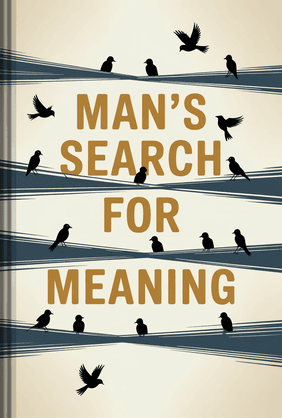
Man's Search for Meaning
Viktor E. Frankl
 44 Duration
 8 Key Points
 4.6 Rate
Existentialism: The Burden of Radical Freedom
Jean-Paul Sartre, the undisputed heavyweight champion of existentialism, coined the defining phrase of the movement: "Existence precedes essence."
If you buy a coffee maker on Amazon, its "essence" (to brew coffee) existed in the designer's mind long before the physical machine "existed" in your kitchen. Humans, Sartre argued, are the exact opposite. You exist first. You appear in the world blank, undefined, and without a predetermined purpose. Your "essence" is something you must create yourself through your choices and actions.
The Core Mechanics of Existentialism
- Radical Freedom: You are entirely free to choose who you are. No excuses. Biology, social class, and past trauma influence you, but they do not define your final choices.
- Anguish (Angst): This absolute freedom is terrifying. Realizing that you are the sole author of your life's meaning creates a profound psychological weight. Sartre called this being "condemned to be free."
- Bad Faith (Mauvaise Foi): When you lie to yourself and pretend you don't have a choice—blaming your boss, your spouse, or "society" for your misery—you are operating in bad faith. You are surrendering your humanity to act like an object that merely reacts to its environment.
For the existentialist, the lack of universal meaning is an invitation. The universe gives you a blank canvas. It is your absolute responsibility to pick up a brush and paint.
Diving into existentialism can feel overwhelming, especially when trying to decipher exactly how to apply this "radical freedom" to your own daily life. While Sartre provides the heavy theoretical groundwork, exploring other contemporary thinkers can help you better understand the nuances of crafting your own essence. If you want to dig deeper into the philosophical movements of the mid-20th century and see how different minds tackled the burden of existence, looking at the broader spectrum of existential thought will give you a richer, more actionable perspective.

The Philosophy of Existentialism
Gabriel Marcel
22 Duration8 Key Points5 Rate
Absurdism: The Defiant Rebel
Albert Camus looked at Sartre's blank canvas and laughed. For Camus, the existentialist attempt to create a permanent, satisfying meaning in an indifferent universe is just another comforting illusion.
Absurdism is born from a specific collision. On one side, you have the desperate human desire for order, meaning, and purpose. On the side, you have a cold, chaotic universe that offers absolutely none. The clash between these two forces is what Camus called "The Absurd."
When analyzing Camus philosophy compared to his peers, his most famous essay, The Myth of Sisyphus, serves as the ultimate anchor. Sisyphus is condemned by the gods to push a massive boulder up a mountain, only to watch it roll back down. He must do this for all eternity. It is the ultimate picture of a meaningless, repetitive existence.
How to Handle the Absurd
Camus argued humans generally try to escape the Absurd in three ways:
- Physical Suicide: Opting out of existence. Camus rejected this as cowardly. It doesn't solve the Absurd; it just eliminates one side of the collision.
- Philosophical Suicide: Leaping into blind faith. Whether it's traditional religion, a political utopia, or even Sartre's rigid existential meaning-making, Camus viewed any system that claims to "solve" the mystery of life as intellectual surrender.
- Acceptance and Rebellion: This is the absurdist path. You look the meaningless universe dead in the eye, acknowledge the boulder will roll back down the hill, and you push it up anyway with a smile on your face.
You don't need a grand purpose to enjoy a cup of coffee, watch a sunset, or love another person. The rebellion is in living passionately despite the lack of grand meaning. As Camus wrote, "One must imagine Sisyphus happy."

Is Camus an Existentialist?
Because his books are shelved next to Sartre's, people constantly ask: is Camus an existentialist?
The short answer is no. Camus vehemently rejected the label during his lifetime. While both men started with a meaningless universe, Camus felt that existentialists committed "philosophical suicide" by trying to artificially construct a meaning to replace God. Camus wanted people to live without any constructed meaning, thriving purely on the defiant energy of existing in the present moment.
You simply cannot grasp the full weight of Absurdism without going straight to the source material. While reading about Sisyphus provides a great high-level overview, experiencing Camus's original arguments will completely change how you view life's daily frustrations. His most famous essay is not just a philosophical milestone; it is a profound, beautifully written manifesto on why we must continue to live passionately despite the universe's ultimate silence. If you are ready to embrace the Absurd, this foundational text is the perfect place to start.
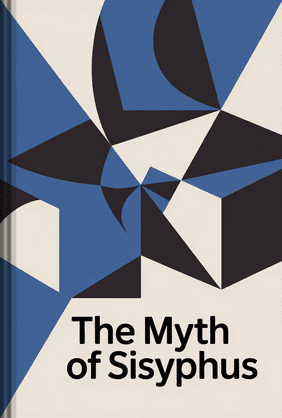
The Myth of Sisyphus
Albert Camus
49 Duration8 Key Points4.5 RateReading dense philosophical texts like Camus's can be a heavy lift, especially if you're short on time. If you want to grasp the core arguments of these thinkers before diving into the full books, an app can be a great starting point.


Grasp the core ideas of challenging philosophers like Camus and Sartre in 15-minute audio or text summaries, making their profound concepts accessible on a busy schedule.
 LeapAhead
Albert Camus vs Jean Paul Sartre: The Great Schism
The philosophical debate of Albert Camus vs Jean Paul Sartre eventually spilled out of the Parisian cafés and turned into one of the most famous intellectual feuds of the 20th century. Their falling out perfectly illustrates the practical differences between their worldviews.
Sartre, driven by his existential belief that humans must actively forge meaning and take responsibility for the world, became highly political. He aligned himself with Marxism and, for a time, defended the Soviet Union. Sartre believed that committing to a political cause—even a violent one—was necessary to forge a better future. For him, the ends often justified the means if they led to human liberation.
Camus, the absurdist, completely rejected this. Because the universe is inherently chaotic and the future is entirely unknowable, Camus believed it was absolute madness to sacrifice human lives in the present for a theoretical utopian future. He published The Rebel in 1951, where he condemned authoritarianism and the totalitarian violence of the Soviet regime.
Sartre took this as a personal attack. His magazine published a scathing review of Camus's book, effectively ending their friendship.
The takeaway for your mental model:
Sartre believed you must commit to a system of meaning and force it into the world. Camus believed human life in the present moment was the only tangible value, and any ideology that demands bloodshed for a "better tomorrow" is a dangerous lie.
Sartre believed you must commit to a system of meaning and force it into the world. Camus believed human life in the present moment was the only tangible value, and any ideology that demands bloodshed for a "better tomorrow" is a dangerous lie.
The Dark Cousin: Nihilism vs Absurdism
When you discuss meaninglessness, another heavy hitter inevitably enters the room: nihilism. Understanding nihilism vs absurdism is crucial, as they are frequently and incorrectly used as synonyms.
Nihilism, popularized by Friedrich Nietzsche's critiques of European culture, is the belief that all values are baseless and nothing can be known or communicated. In popular practice, it manifests as absolute pessimism.
If we place these three philosophies in a modern scenario—say, losing your entire life savings in a market crash—here is how the different mental models react:
- The Nihilist: "Money is a social construct. My life is ruined, the system is rigged, and nothing matters. I might as well lay in bed and wait to die." (Surrender)
- The Existentialist: "This is a devastating situation, but my value as a human is not tied to my bank account. I have the radical freedom to redefine my life right now. I will choose a new career path and build a new meaning." (Creation)
- The Absurdist: "Working for 30 years to lose it all in a day is profoundly absurd. The universe is a joke. But I refuse to let the joke break me. I'm going to pour myself a drink, laugh at the absurdity of the stock market, and go find a job tomorrow just to spite the universe." (Rebellion)
Nihilism looks at the void and gives up.
Existentialism looks at the void and builds a bridge over it.
Absurdism looks at the void, accepts that no bridge will hold, and decides to dance on the edge.
Existentialism looks at the void and builds a bridge over it.
Absurdism looks at the void, accepts that no bridge will hold, and decides to dance on the edge.
Since nihilism is so closely tied to Friedrich Nietzsche’s blistering critiques of traditional morality, understanding his actual philosophy is crucial for separating the edgy internet stereotypes from the profound historical context. Nietzsche didn’t just want to tear down values; he wanted to expose the foundations of Western thought to see what could withstand the wrecking ball. If you are intrigued by how the deconstruction of truth and morality paved the way for both nihilism and modern existentialism, diving into Nietzsche’s most provocative work will seriously challenge your mental models.
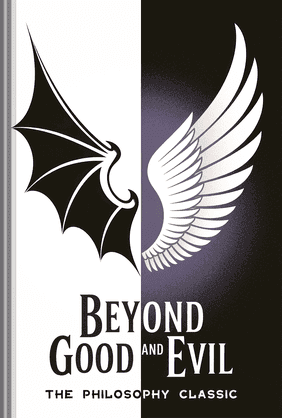
Beyond Good and Evil
Friedrich Nietzsche
32 Duration11 Key Points4.5 Rate
Which Framework Fits Your Mental Model?
Differentiating between absurdism vs existentialism isn't just an academic exercise. It is about selecting the right operational system for your brain when facing adversity.
Lean toward Existentialism if:
- You feel stifled by societal expectations, family pressures, or corporate ladders, and you need the intellectual permission to forge your own path.
- You thrive on taking extreme ownership of your actions.
- You find comfort in the idea that your daily habits, career choices, and relationships actively construct your "soul."
Lean toward Absurdism if:
- You suffer from anxiety caused by trying to find your "one true purpose" or "destiny."
- You want to appreciate the immediate, sensory experiences of life (a good meal, a walk in the woods) without needing them to connect to a grand, overarching narrative.
- You find empowerment in stubborn defiance when things go wrong.
Neither framework asks you to be happy all the time. Both demand courage. The real value of mastering these 20th-century philosophies is realizing that the lack of universal meaning is not a punishment. Whether you choose to be the architect of your own essence or the smiling rebel pushing the boulder, the power rests entirely in your hands.
Exploring these profound philosophies is a journey, not a destination. For those who want to dive deeper into the works of thinkers like Camus, Sartre, and Nietzsche but find their days packed, a microlearning approach can make it much more manageable.
Listen to the key insights from foundational philosophy books in just 15 minutes, helping you build your mental model without needing hours of dedicated reading time.
LeapAheadFAQ
Did Camus and Sartre ever reconcile?
No. After their public fallout in 1952 over Camus's publication of The Rebel, the two never repaired their friendship. When Camus died tragically in a car crash in 1960 at the age of 46, Sartre wrote a respectful and moving eulogy, acknowledging Camus's immense contribution to literature and human thought, but their personal relationship remained permanently severed.
Is it possible to be both an absurdist and an existentialist?
Practically speaking, you can borrow tools from both mental models depending on the situation. However, philosophically, they contradict each other at their core. Existentialism requires you to believe that the meaning you create is valid and necessary. Absurdism requires you to accept that any meaning you create is an illusion, and you must live without the comfort of that illusion. You cannot simultaneously believe your purpose is real and a complete illusion.
How does nihilism differ from depression?
Nihilism is a philosophical stance regarding the objective value of the universe; depression is a clinical mental health condition. While passive nihilism (the belief that nothing matters so effort is pointless) can look like or trigger depressive symptoms, they are not the same. Someone can be a cheerful nihilist—believing nothing matters and therefore choosing to simply enjoy the ride without stress.
Why is Sisyphus the ultimate hero of Absurdism?
Sisyphus is the absurd hero because he is entirely conscious of his tragic fate. His punishment relies on the hope that he might one day get the rock to the top. By abandoning hope, accepting his fate, and finding joy in the sheer physical effort of pushing the rock, he strips the gods of their power to torture him. His defiance is his victory.