


You are working 60-hour weeks, hitting all your metrics, and climbing the corporate ladder. Yet, true financial freedom and mental peace still feel lightyears away. The hard truth is that working harder will not make you rich. Direction matters entirely more than speed. If you are running in the wrong direction, it does not matter how fast you are moving.
Naval Ravikant, a highly successful angel investor in companies like Uber and Twitter, completely reframed how Silicon Valley looks at wealth creation and personal well-being. Eric Jorgenson compiled Naval's decades of wisdom into a single text, but if you lack the time to digest the full book, this Almanack of Naval Ravikant summary extracts the exact frameworks you need to restructure your career, investments, and daily life.
Here are the critical mindsets you must adopt to decouple your time from your income and reclaim your peace of mind.
And if your schedule is so packed that even reading one full book feels like a heavy lift, you're not alone. Many busy people find it helpful to start with the core concepts to decide which books are worth a deeper dive.


LeapAhead

Grasp the core ideas of bestsellers like The Almanack of Naval Ravikant in just 15-minute audio or text summaries, perfect for a busy schedule.
Almanack of Naval Ravikant Key Takeaways
Before breaking down the mechanics of Naval's philosophy, you must understand the foundational principles that drive his worldview. These are the Almanack of Naval Ravikant key takeaways that serve as the operating system for everything else:
- Wealth is not money. Wealth is having assets that earn while you sleep. Money is simply how we transfer wealth.
- Leverage is the great equalizer. You will never get rich renting out your time. You must own equity and utilize leverage (code, media, capital, or labor).
- Specific knowledge makes you irreplaceable. If society can train someone else to do your job, society can replace you. You must double down on your unique obsessions.
- Happiness is a choice and a skill. It is not a default state of euphoria, but a state of peace achieved by removing external desires.
- Compound interest dictates your life. All meaningful returns in wealth, relationships, and knowledge come from playing long-term games with long-term people.
These core principles are just the beginning. Naval's wisdom is often best absorbed through his direct, powerful statements that challenge conventional thinking.
If you are serious about decoupling your time from your income, reading a summary is just the first step. To fully absorb Naval's mental models, you need to dive into the source material. Eric Jorgenson did an incredible job compiling Naval's best insights from Twitter, podcasts, and essays into one definitive guide. Grabbing a copy of the actual book will allow you to highlight, revisit, and deeply internalize these wealth-building frameworks over time.
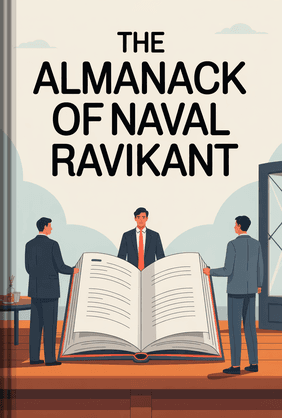
The Almanack of Naval Ravikant
Eric Jorgenson
 14 Duration
 7 Key Points
 4.7 Rate
Part 1: How to Get Rich Without Getting Lucky Summary
Naval famously broke the internet with a massive tweet thread detailing the exact formula for wealth generation. He argues that making money is not a function of luck; it is a deterministic outcome of applied skills. Here is the definitive how to get rich without getting lucky summary.
Seek Wealth, Not Status
Most people play the wrong game. They play the status game. Status is your ranking in the social hierarchy. It is a zero-sum game; for you to go up, someone else must go down. Politics, luxury cars, and corporate titles are status games.
Wealth is a positive-sum game. You building a successful software company does not stop someone else from building one. Stop optimizing for how you look to your peers. Optimize for acquiring assets—businesses, stocks, real estate, servers running your code—that generate cash flow independently of your physical labor.
Arm Yourself with Specific Knowledge
To get paid exceptionally well, you must provide society with something it wants but does not yet know how to get. This requires "specific knowledge."
Specific knowledge is not something you learn in a standard university curriculum. It is found on the bleeding edge of your genuine curiosity. It often looks like play to you, but looks like hard work to others. If you can be easily trained to do your job, a computer or a cheaper worker will eventually replace you.
Your specific knowledge is a unique combination of your traits. You might be a mediocre coder and a mediocre writer, but if you are the best at writing highly engaging technical documentation for complex APIs, you have carved out a highly lucrative niche. Follow your innate obsessions, not the current hot trend.
Mastering this concept is key to escaping the time-for-money trap. To truly build a moat around your career, you must understand how to develop your unique skills and combine them with the new forms of leverage.

Take Accountability Under Your Own Name
If you want massive upside, you must take massive accountability. You must be willing to put your name out there and take the risks.
Society rewards people with responsibility, equity, and leverage when they take accountability. When you operate under your own name, you absorb the downside if things fail, but you capture the massive upside when things succeed. Think of Elon Musk or Oprah Winfrey. Their personal brands are inextricably linked to their business outcomes. Stop hiding behind a corporate facade. Build your personal reputation.
Naval specifically points to Elon Musk as the ultimate example of taking extreme personal accountability. When you put your name and reputation on the line, society rewards you with leverage and outsized upside. If you want a masterclass in how embracing massive risks under your own brand can lead to industry-defining success, exploring the life of one of Silicon Valley's most recognizable figures is highly recommended. It is a fascinating look at what happens when relentless accountability meets bold execution.

Elon Musk
Ashlee Vance
19 Duration8 Key Points4.6 RateThe Three Forms of Leverage
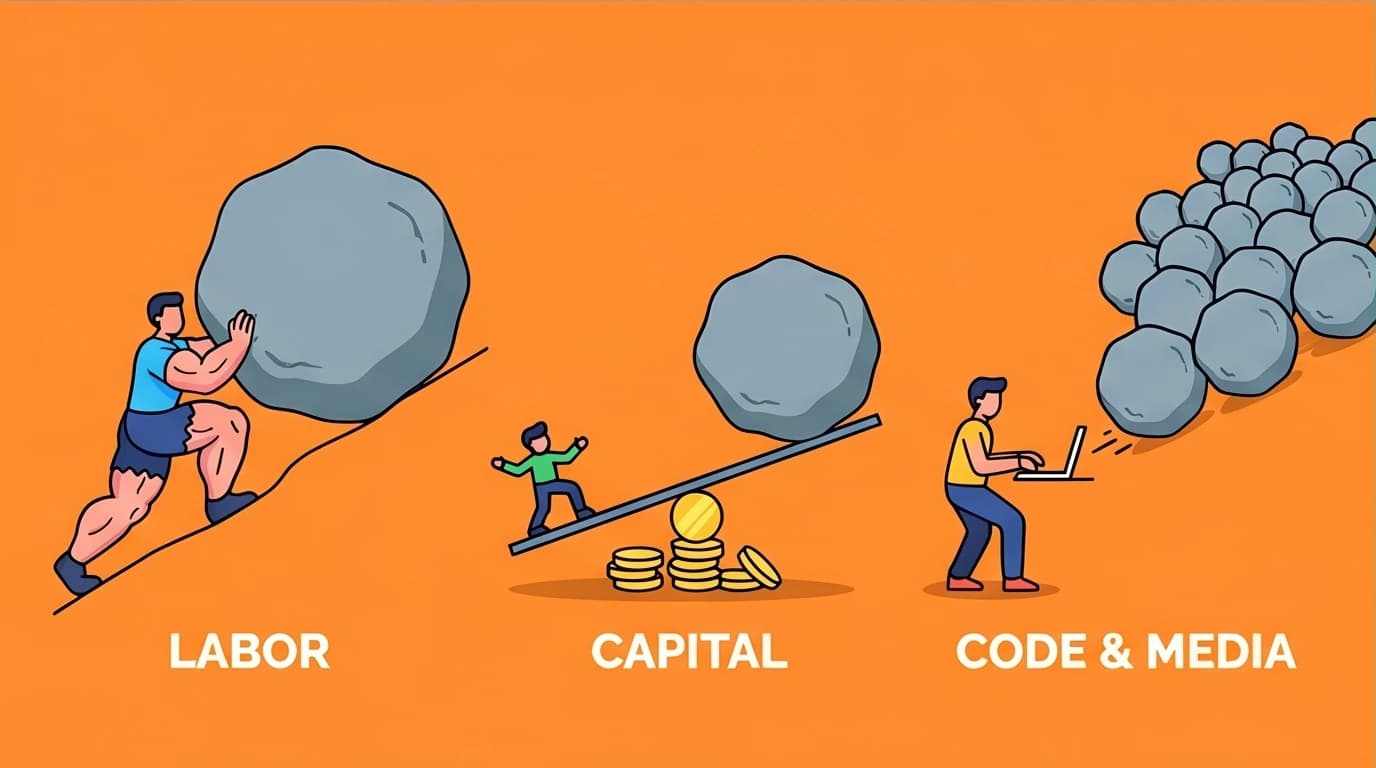
This is the most critical concept in modern wealth creation. Leverage acts as a multiplier for your effort. Naval outlines three distinct types of leverage:
- Labor (People working for you): This is the oldest and most contested form of leverage. Managing people is complex, messy, and requires immense leadership skills. Naval advises against chasing this as your primary leverage.
- Capital (Money working for you): This is the leverage used by Warren Buffett and Wall Street. It scales incredibly well, but it is "permissioned." You need someone to give you money to invest or you need to spend years saving it.
- Code and Media (Products with no marginal cost of replication): This is the new leverage. It is entirely permissionless. You do not need anyone's approval to write an app, record a podcast, or publish a book.
A software developer writes a piece of code once, and it runs on a million servers simultaneously. An author uploads a manuscript to Amazon or Apple Books once, and it generates royalties while they sleep. If you want to build wealth today, you must learn to code, or learn to communicate via media.
Play Long-Term Games with Long-Term People
Look at the tech industry or Wall Street. The most successful people have been working with the same tight-knit group of peers for decades. When you play long-term games, you build compounding trust.
When trust is established, business moves at lightning speed. You do not need massive legal contracts or endless due diligence. Pick an industry you want to be in for the next 20 years, find the smartest, most ethical people in that industry, and work with them repeatedly. Ignore the fast-buck opportunists.
Playing the long game requires a fundamental shift in how you view compounding, patience, and capital. Much like Naval’s advice on ignoring the noise of short-term status games, mastering your financial life is less about being a math genius and more about behavior and emotional control. If you want to dive deeper into why some people naturally accumulate wealth while others constantly sabotage their portfolios, this next read is a staple in the American investing community. It perfectly complements Naval's philosophy on building sustainable wealth over decades.

The Psychology of Money
Morgan Housel
48 Duration7 Key Points4.6 RatePart 2: Happiness is a Learned Skill
The second half of this Naval Ravikant book summary shifts from the external world of wealth to the internal world of the mind. Naval argues that getting rich will not make you happy. It will simply solve your money problems. Happiness requires entirely different mental models.
Happiness is Peace, Not Joy
Americans are conditioned to view happiness as a state of constant excitement or joy. Naval redefines happiness as a state of peace.
Happiness is what remains when you remove the feeling that something is missing in your life. It is the absence of desire. When you sit quietly and do not feel the urge to check your phone, buy a new gadget, or be somewhere else, you are experiencing true peace.
This shift from chasing fleeting joy to cultivating lasting peace is central to Naval's entire philosophy on life. It's a practice that requires unlearning societal conditioning and adopting new mental models for well-being.
Redefining happiness from a state of constant excitement to a baseline of peace is a challenging mental shift, especially in our hyper-connected, always-on culture. This concept of removing desire and finding tranquility is heavily rooted in Stoic philosophy and mindfulness. If you are looking for practical ways to quiet the noise, lower your anxiety, and find clarity amidst the chaos of modern life, Ryan Holiday provides phenomenal insights into mastering your internal environment.

Stillness Is the Key
Ryan Holiday
18 Duration8 Key Points4.7 RateDesire is a Contract for Unhappiness
Naval provides one of the most powerful definitions of desire: "Desire is a contract you make with yourself to be unhappy until you get what you want."
Every time you want a promotion, a better car, or a bigger house, you are actively choosing to be dissatisfied with your current reality. You cannot eliminate all desires—that is practically impossible—but you must be extremely ruthless about which desires you allow into your life.
Pick one overwhelming desire (like building a successful business). Acknowledge that you will suffer until you achieve it. Then, let go of all other trivial desires. Do not stress over having the perfect coffee, the newest iPhone, or the exact right temperature in your office. Lower your baseline for satisfaction.

Health Over Everything Else
Your health is the foundation of your existence. If your body fails, your wealth and your intellect mean nothing. Naval operates on a strict priority ladder:
- Physical Health
- Mental Health
- Spiritual Health
- Family
- Work
Notice that work is dead last. If you sacrifice your sleep to grind out extra hours, you are compromising the foundation to prop up the roof. Exercise daily. Lift heavy weights. Walk in nature. Eat whole foods. Protect your physical machine at all costs.
Naval Ravikant Concepts Explained: Key Mental Models
To fully implement this philosophy, we need to have specific Naval Ravikant concepts explained. Naval relies heavily on mental models—frameworks for making rapid, accurate decisions in a complex world.
Read What You Love Until You Love to Read
Most people treat reading like eating vegetables. They force themselves to read dense business books or classic literature because they think they "should." This kills the habit.
Naval's advice is simple: read garbage if you have to. Read science fiction, read fantasy, read comic books. Buy a stack of paperbacks from Barnes & Noble, download thrillers on your Kindle, or listen to fiction on Audible. The goal is to make reading a default addiction. Once the habit is built, your brain will naturally start craving denser, higher-quality information. You will naturally graduate to history, philosophy, and economics.
Another way to ease into a reading habit, especially after a long day when you're too tired for a full chapter, is to listen to the main takeaways of a book first.
LeapAhead
Build a consistent learning habit by absorbing key insights from influential books in short audio sessions during your commute, workout, or break.
If You Cannot Decide, The Answer is No
Modern professionals suffer from severe decision fatigue. Should you take this job? Should you invest in this startup? Should you marry this person?
Naval's rule is absolute: If you have a difficult time deciding between two choices, the answer is no. When you choose a path, you are making a massive long-term commitment. You are tying up your time and capital. If a choice is not a hell yes, it is a no. Save your resources for the obvious, undeniable opportunities.
Inversion and Rationality
When faced with a complex problem, do not try to find the perfect solution. Instead, figure out what guarantees failure, and simply avoid doing that.
If you want to be wealthy, figure out what makes people permanently broke (high credit card debt, substance abuse, playing status games) and avoid those actions. Avoiding stupidity is much easier than achieving brilliance.
Actionable Implementation: How to Execute
Reading about wealth and happiness is useless without execution. Here is exactly how to apply this summary to your life starting today:
- Audit Your Leverage: Look at your current job. Are your inputs entirely tied to your outputs? If you work 10 hours, do you only get paid for 10 hours? If so, you lack leverage. Start building a side project using code or media. Write a blog, start a YouTube channel, or learn Python. Build assets that work while you sleep.
- Identify Your Specific Knowledge: Write down the things you loved doing when you were 12 years old. What comes effortlessly to you but drains the people around you? That intersection is your specific knowledge.
- Ruthlessly Cut Desires: Make a list of everything you currently "want." A new car, a promotion, a bigger apartment. Pick the one that actually moves the needle on your long-term goals. Discard the rest. Accept your current car. Accept your current apartment. Reclaim your mental bandwidth.
- Prioritize the Long Game: Audit your network. Are you surrounding yourself with highly ethical people who think in decades? If your friend group is obsessed with get-rich-quick crypto schemes and weekend drama, you are playing a short-term game. Cut ties and find long-term players.
Building wealth and finding peace are not mysterious events bestowed upon lucky individuals. They are deliberate, structural choices. You must reject the societal default of trading time for money and chasing status. Apply these mental models, optimize for leverage, and let compound interest do the heavy lifting over the next decade.
FAQ
Is the Almanack of Naval Ravikant worth reading if I already listen to his podcasts?
Yes. While his podcasts are excellent, the book structures his scattered thoughts into a cohesive, organized system. It removes the conversational tangents and gives you a dense, highly distilled reference manual you can return to whenever you face major life or career decisions.
Yes. While his podcasts are excellent, the book structures his scattered thoughts into a cohesive, organized system. It removes the conversational tangents and gives you a dense, highly distilled reference manual you can return to whenever you face major life or career decisions.
What is a practical example of specific knowledge?
Specific knowledge is a unique stack of skills. For example, knowing how to code in JavaScript is not specific knowledge; anyone can learn it at a bootcamp. However, having a deep understanding of behavioral psychology, combined with high-level JavaScript skills, and a passion for fitness allows you to build the most engaging fitness app on the market. That unique intersection is your specific knowledge.
Specific knowledge is a unique stack of skills. For example, knowing how to code in JavaScript is not specific knowledge; anyone can learn it at a bootcamp. However, having a deep understanding of behavioral psychology, combined with high-level JavaScript skills, and a passion for fitness allows you to build the most engaging fitness app on the market. That unique intersection is your specific knowledge.
How can a regular W-2 employee gain leverage?
You do not have to quit your job to gain leverage. You can gain leverage internally by taking extreme accountability for a high-impact project. Alternatively, you can use your nights and weekends to build permissionless leverage. You can write industry analyses on LinkedIn, publish a newsletter, or build a micro-SaaS product. You transition by slowly building your own equity outside of your 9-to-5.
You do not have to quit your job to gain leverage. You can gain leverage internally by taking extreme accountability for a high-impact project. Alternatively, you can use your nights and weekends to build permissionless leverage. You can write industry analyses on LinkedIn, publish a newsletter, or build a micro-SaaS product. You transition by slowly building your own equity outside of your 9-to-5.
Did Naval Ravikant actually write this book?
No. The Almanack of Naval Ravikant was curated and written by Eric Jorgenson. Jorgenson spent months collecting Naval's tweets, podcast transcripts, and essays, organizing them into a logical flow. Naval authorized the book and wrote the foreword, but he did not sit down and write the manuscript himself.
No. The Almanack of Naval Ravikant was curated and written by Eric Jorgenson. Jorgenson spent months collecting Naval's tweets, podcast transcripts, and essays, organizing them into a logical flow. Naval authorized the book and wrote the foreword, but he did not sit down and write the manuscript himself.