


You see it on the front tables at Barnes & Noble. It dominates Amazon charts and Goodreads recommendation lists. Atomic Habits is inescapable. When a self-help book reaches this level of cultural saturation, skepticism is the natural and correct response. The genre is notorious for stretching a single blog post into a 300-page book. You do not want abstract motivation. You want to know if the underlying system actually works in the real world.
Here is an objective, analytical breakdown of what the book delivers, where it falls short, and whether it deserves a spot on your reading list.
The Core Premise: Systems Over Goals
The most valuable paradigm shift Atomic Habits offers is the aggressive pivot away from goal-setting. Society obsesses over goals: losing 20 pounds, running a marathon, or writing a book. Clear argues that winners and losers have the exact same goals. The differentiation lies in the system.
A goal is the desired outcome. A system is the collection of daily behaviors that get you there.
If your room is messy and you set a goal to clean it, you will have a clean room for one day. If you do not change the sloppy habits that led to the mess, the room will be chaotic again by the end of the week. Clear focuses entirely on fixing the inputs. If you fix the inputs, the outputs fix themselves.
He introduces the concept of getting 1% better every day. Through the power of compound interest, a 1% daily improvement results in being 37 times better by the end of the year. This mathematical approach removes the emotional burden of needing massive, overnight transformations.

The Four Laws of Behavior Change
Clear strips down the traditional psychological habit loop (Cue, Routine, Reward) into a highly practical, four-step operating manual. This is the mechanical core of the book.
1. Make It Obvious (Cue)
You cannot change a habit you are unaware of. Clear advocates for environment design over willpower. If you want to practice guitar, do not leave it in a case in the closet. Put it on a stand in the middle of your living room. If you want to drink more water, place a filled bottle on your desk before you start work. Willpower is a finite resource; visual cues are automatic.
2. Make It Attractive (Craving)
Dopamine drives behavior. Clear introduces "Temptation Bundling," which links an action you want to do with an action you need to do. For example, you only allow yourself to listen to your favorite true crime podcast on Audible while you are on the treadmill.
3. Make It Easy (Response)
Friction is the enemy of action. Humans naturally gravitate toward the path of least resistance. Clear’s "Two-Minute Rule" is a standout concept here. Scale down any new habit so it takes less than two minutes to do. "Read before bed each night" becomes "Read one page." "Do thirty minutes of yoga" becomes "Take out my yoga mat." You master the art of showing up before you worry about optimizing the performance.

4. Make It Satisfying (Reward)
What is rewarded is repeated. The modern world often separates effort from reward (you work today, but get a paycheck in two weeks). Clear suggests creating immediate artificial rewards for good habits. Habit trackers work perfectly for this. The simple act of crossing an "X" on a calendar provides immediate visual gratification that reinforces the behavior.
Is Atomic Habits Worth Reading?
If you struggle with procrastination, inconsistency, or breaking bad routines, is Atomic Habits worth reading? Absolutely.
The book is not selling a new secret to human psychology. It is selling architecture. Clear acts as a translator, taking decades of dense cognitive behavioral research and formatting it into a plug-and-play system. You do not need a psychology degree to apply the Two-Minute rule. You can read a chapter on a Tuesday morning and implement the strategy by Tuesday afternoon.
However, if you are looking for deep philosophical meaning, emotional healing, or a profound exploration of human trauma, this book will feel robotic. It treats human behavior like software code. For many, that objective detachment is exactly what is needed to finally get things done.

Inspired by Atomic Habits but don't have time for a full read? Get the core ideas in 15 minutes with LeapAhead and start building better habits today.

Download LeapAhead App now
If you are tired of relying on fleeting motivation and want a practical, everyday framework to overhaul your routines, picking up James Clear’s masterclass is the next logical step. Instead of abstract self-help fluff, this read provides the exact blueprints you need to design an environment primed for success. Whether you are aiming to hit the gym more consistently, organize your workspace, or simply break a stubborn bad habit, having the physical book on hand to reference its matrices and rules is incredibly helpful for long-term execution.

Atomic Habits
James Clear
 26 Duration
 8 Key Points
 4.7 Rate
Examining the Pushback: Atomic Habits Criticism
No book is flawless, and approaching this text with a critical eye reveals a few structural weaknesses.
The most common Atomic Habits criticism centers on originality. Academics and heavy readers of psychology often point out that James Clear did not invent the science of habit formation. He synthesized it. The foundation of his work relies heavily on B.J. Fogg’s behavioral models and Charles Duhigg’s research. Clear acknowledges this, but critics argue the book lacks ground-breaking primary research.
Furthermore, if you dive into any Atomic Habits reddit review thread on r/books or r/productivity, you will find a polarized debate regarding his anecdotes. Clear frequently uses high-performance sports teams or historic business figures to prove his points. The most famous example is his story of the British Cycling team, which supposedly went from mediocre to Olympic gold through "1% marginal gains" (like changing the massage gel or the pillows they slept on).
Many Redditors and sports analysts have pointed out the survivorship bias here. The British Cycling team also received a massive influx of state funding, bought better equipment, and hired elite coaches. Attributing their success purely to 1% habit tweaks oversimplifies a complex reality. This is a recurring issue in the book: complex systemic successes are occasionally reduced to fit the narrative of small habits.

Books Like Atomic Habits
If you want to explore the landscape of behavioral psychology further, or if you prefer a different angle on productivity, several books like Atomic Habits offer excellent alternatives.
The Power of Habit by Charles Duhigg
If Atomic Habits is the "how-to" manual, Duhigg’s book is the history and science textbook. It dives much deeper into the neurology of why habits form and explores macro-habits within giant corporations like Target and Alcoa. Read this if you want the journalism and science behind the scenes.
If Atomic Habits is the "how-to" manual, Duhigg’s book is the history and science textbook. It dives much deeper into the neurology of why habits form and explores macro-habits within giant corporations like Target and Alcoa. Read this if you want the journalism and science behind the scenes.
If you want to understand the deep-rooted neurology of why you reach for your phone the second you wake up or how major corporations design products to hook you, Charles Duhigg’s journalistic exploration is an absolute must-read. It is a fantastic companion piece that satisfies the intellectual curiosity Clear’s action-oriented manual might leave behind. You will walk away with a profound understanding of how habits shape not just our individual lives, but the entire American consumer landscape.
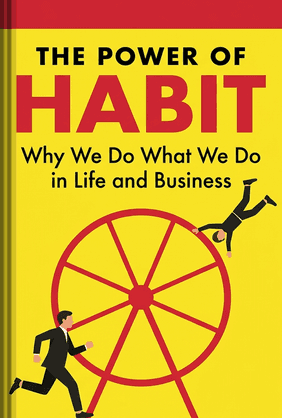
The Power of Habit
Charles Duhigg
31 Duration10 Key Points4.6 RateTiny Habits by B.J. Fogg
Fogg is the Stanford researcher whose actual academic work heavily influenced Clear. Tiny Habits shares a very similar DNA—focusing on starting incredibly small and using existing triggers. Fogg leans more heavily into the emotional aspect of habit formation, specifically how "feeling successful" drives change.
Fogg is the Stanford researcher whose actual academic work heavily influenced Clear. Tiny Habits shares a very similar DNA—focusing on starting incredibly small and using existing triggers. Fogg leans more heavily into the emotional aspect of habit formation, specifically how "feeling successful" drives change.
For readers who feel overwhelmed by the prospect of overhauling their entire lifestyle, B.J. Fogg offers an incredibly compassionate and scientifically backed alternative. His methodology proves that you do not need monumental willpower or a 10-mile run to build momentum; you just need to start ridiculously small. If you want to learn how celebrating minor victories can fundamentally rewire your brain for lasting success, this is the perfect guide to add to your nightstand.
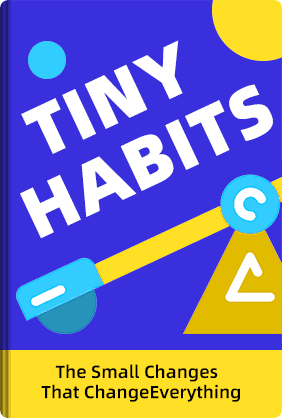
Tiny Habits
BJ Fogg, Ph.D.
40 Duration8 Key Points4.7 RateLeapAhead: A Microlearning App for Busy Readers
For those who love the principles of Atomic Habits but struggle with the "reading debt" of a growing book list, LeapAhead offers a modern solution. It's a microlearning app that distills the key ideas from over 30,000 bestselling non-fiction books (including this one) into 15-minute audio and text summaries. Instead of letting another great book collect dust, you can absorb its core framework during your commute, workout, or coffee break, directly applying the "Make It Easy" rule to the act of learning itself.
For those who love the principles of Atomic Habits but struggle with the "reading debt" of a growing book list, LeapAhead offers a modern solution. It's a microlearning app that distills the key ideas from over 30,000 bestselling non-fiction books (including this one) into 15-minute audio and text summaries. Instead of letting another great book collect dust, you can absorb its core framework during your commute, workout, or coffee break, directly applying the "Make It Easy" rule to the act of learning itself.
While a summary can't replace the depth of a full read, LeapAhead is invaluable for building the initial momentum. It helps you quickly grasp the actionable systems from authors like Clear, Duhigg, and Fogg, making you more likely to implement them. For learners who value consistency over intensity, the app’s daily goal-setting and personalized recommendations provide a system for continuous self-improvement, turning fragmented time into a powerful learning habit. Its mobile-first design makes it an ideal tool for on-the-go learning, though users who prefer long study sessions on a desktop might find the experience limiting.
Thinking, Fast and Slow by Daniel Kahneman
For the reader who finds self-help too superficial. Kahneman, a Nobel laureate, breaks down the two systems of the brain (instinctive vs. analytical). It is a dense, rigorous examination of human decision-making and cognitive bias. It explains why we make bad choices, though it offers less immediate, actionable advice than Clear’s book.
For the reader who finds self-help too superficial. Kahneman, a Nobel laureate, breaks down the two systems of the brain (instinctive vs. analytical). It is a dense, rigorous examination of human decision-making and cognitive bias. It explains why we make bad choices, though it offers less immediate, actionable advice than Clear’s book.
Ready to graduate from standard productivity advice and dive into the heavy-hitting behavioral economics that drive human error? Daniel Kahneman’s Nobel Prize-winning masterpiece will fundamentally change the way you view your own mind. It takes a demanding, rigorous look at the hidden biases and mental shortcuts that sabotage our best intentions. While it requires a bit more focus to get through, the payoff is a top-tier education in cognitive psychology that will sharpen your critical thinking skills for a lifetime.
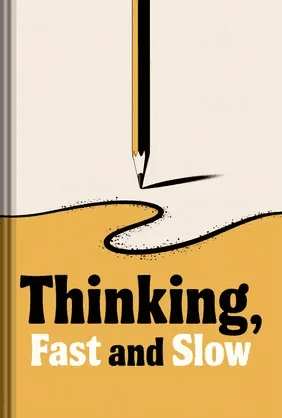
Thinking, Fast and Slow
Daniel Kahneman
53 Duration9 Key Points4.5 RateFinal Verdict
Atomic Habits is a highly effective operational manual for your daily life. It strips away the emotional baggage of failure and replaces it with cold, hard systems.
Read it if:
- You know what you need to do, but fail at consistently executing it.
- You appreciate highly structured, bullet-point style frameworks.
- You want immediate, actionable steps you can apply today.
Skip it if:
- You have already read extensive literature on habit formation (Tiny Habits, The Power of Habit)—you will find it redundant.
- Your primary roadblocks are deep psychological trauma or severe clinical burnout, which require professional therapy rather than a habit tracker.
- You hate anecdotal storytelling used to frame business/self-help concepts.
Explore the key insights from Atomic Habits, The Power of Habit, and thousands of other non-fiction books. LeapAhead makes consistent learning your easiest habit.
Download LeapAhead App now
FAQ
Does Atomic Habits help with breaking bad habits, or just building good ones?
Yes, it covers both. The book inverts the Four Laws for breaking bad habits: Make it invisible, make it unattractive, make it difficult, and make it unsatisfying. By adding friction to bad behaviors (like unplugging your TV after every use), you disrupt the automated loop.
Yes, it covers both. The book inverts the Four Laws for breaking bad habits: Make it invisible, make it unattractive, make it difficult, and make it unsatisfying. By adding friction to bad behaviors (like unplugging your TV after every use), you disrupt the automated loop.
Can I just listen to the audiobook instead of buying the physical copy?
Listening on Audible or Apple Books is a great way to consume the material. James Clear narrates the book himself and his delivery is engaging. However, the book contains several visual charts, matrices, and habit contracts. If you are a visual learner or want to easily reference the frameworks, the physical or Kindle version is superior.
Listening on Audible or Apple Books is a great way to consume the material. James Clear narrates the book himself and his delivery is engaging. However, the book contains several visual charts, matrices, and habit contracts. If you are a visual learner or want to easily reference the frameworks, the physical or Kindle version is superior.
How long does it actually take to build a habit using this system?
Clear debunks the popular myth that it takes exactly 21 days to form a habit. He emphasizes that habits are formed based on frequency, not time. Doing a small action 50 times in a week builds a stronger habit loop than doing it once a week for a month.
Clear debunks the popular myth that it takes exactly 21 days to form a habit. He emphasizes that habits are formed based on frequency, not time. Doing a small action 50 times in a week builds a stronger habit loop than doing it once a week for a month.
Are the concepts applicable to larger organizational teams, or just individuals?
While the language is primarily targeted at individual personal development, the underlying psychology scales. Managers frequently use the concepts of "reducing friction" and "environment design" to optimize workplace operations and improve team compliance with new protocols.
While the language is primarily targeted at individual personal development, the underlying psychology scales. Managers frequently use the concepts of "reducing friction" and "environment design" to optimize workplace operations and improve team compliance with new protocols.