


You are juggling endless emails, trying to hit the gym regularly, and hoping to read more books this year. Yet, your motivation always seems to vanish after a week. You hear people raving about James Clear’s bestselling book on podcasts and see it topping charts on Amazon and Goodreads. But you do not have the hours to sit down and read 300 pages. You need the exact rules, the actionable frameworks, and a fast way to apply them today.
If you're wondering whether the book lives up to the hype and is the right choice for you, it can be helpful to see a detailed analysis.
If the biggest barrier to your reading goal is time, using an app that distills bestselling books into key insights can be a great way to start.


LeapAhead

Absorb the core ideas from books like Atomic Habits in just 15-minute audio or text summaries, perfect for learning during a commute or workout.
Here is the straightforward breakdown of the frameworks that actually work.
The Core Philosophy: Forget Goals, Focus on Systems
Most people try to change their habits by focusing on what they want to achieve. This leads to goal-based habits. The alternative is building identity-based habits.
Goals are about the results you want to achieve. Systems are about the processes that lead to those results. If you are a student, your goal is to get straight As. Your system is your study schedule and note-taking method. If you are a sales manager, your goal is a million-dollar quarter. Your system is how you track leads and execute daily cold calls.

Clear argues that goals restrict your happiness. You tell yourself, "Once I reach my goal, then I will be happy." Systems allow you to fall in love with the process.
The Three Layers of Behavior Change
To build lasting habits, you must understand the three levels of change:
- Changing your outcomes: Losing weight, publishing a book, winning a championship.
- Changing your process: Implementing a new routine at the gym, organizing your desk for better workflow.
- Changing your identity: Changing your beliefs, your worldview, your self-image.
True behavior change is identity change. The goal is not to read a book; the goal is to become a reader. The goal is not to run a marathon; the goal is to become a runner. Every action you take is a vote for the type of person you wish to become.
You’re getting a fast-paced crash course here, but if this philosophy resonates with you, nothing beats reading the full text where these concepts originated. Diving into the complete, unabridged guide allows you to fully absorb the strategies behind identity-based behavior change. You will see exactly how elite athletes, successful CEOs, and everyday folks transformed their lives simply by shifting their focus from end-goals to daily systems.

Atomic Habits
James Clear
 26 Duration
 8 Key Points
 4.7 Rate
The Science of the James Clear Habit Loop
A habit is a behavior that has been repeated enough times to become automatic. The ultimate purpose of habits is to solve the problems of life with as little energy and effort as possible.
Any habit can be broken down into a feedback loop that involves four steps. Understanding the James Clear habit loop is mandatory before you attempt to change your daily routine.

- Cue: The trigger that initiates the behavior. It is a piece of information that predicts a reward. (e.g., Your phone buzzes with a text message).
- Craving: The motivational force behind every habit. You do not crave smoking a cigarette; you crave the feeling of relief it provides. (e.g., You want to know the contents of the text message).
- Response: The actual habit you perform, which can take the form of a thought or an action. (e.g., You grab your phone and read the text).
- Reward: The end goal of every habit. Rewards satisfy your craving and teach your brain which actions are worth remembering in the future. (e.g., You satisfy your curiosity. Grabbing your phone becomes associated with your phone buzzing).
If a behavior is insufficient in any of the four stages, it will not become a habit.
This loop provides the foundation for the book's core framework. To see how Clear translates this cycle into a practical guide for daily life, it's worth exploring his core rules in more detail.
Understanding the mechanics of the habit loop is an absolute game-changer. If you find the psychology behind cues and rewards fascinating, there is another foundational read you should add to your nightstand. Exploring the deeper neuroscience of why we do what we do in life and business will give you even more leverage to rewire your brain’s automatic responses for the better.
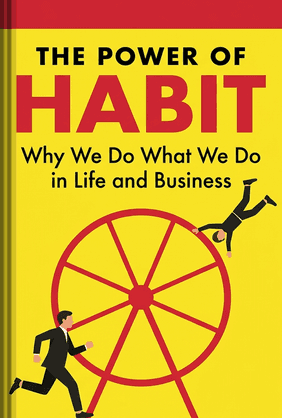
The Power of Habit
Charles Duhigg
31 Duration10 Key Points4.6 RateAtomic Habits Chapter Summary: The Four Laws of Behavior Change
To build good habits, Clear flips the habit loop into a practical framework called the Four Laws of Behavior Change. This Atomic Habits chapter summary extracts the exact rules you need to follow for each step of the loop.
Law 1: Make It Obvious (The Cue)
Your environment dictates your behavior far more than your motivation. If you want to play guitar more, do not keep it hidden in a closet. Put it on a stand right in the middle of your living room.
Tactic 1: The Habit Scorecard
Before you build new habits, you must recognize your current ones. Make a list of your daily habits. Mark the good ones with a "+", the bad ones with a "-", and the neutral ones with an "=". Awareness is the first step.
Before you build new habits, you must recognize your current ones. Make a list of your daily habits. Mark the good ones with a "+", the bad ones with a "-", and the neutral ones with an "=". Awareness is the first step.
Tactic 2: Implementation Intentions
Stop saying "I will work out more." Be specific. Use this formula:
I will [BEHAVIOR] at [TIME] in [LOCATION].
Example: I will exercise for 30 minutes at 6:00 AM at the local gym.
Stop saying "I will work out more." Be specific. Use this formula:
I will [BEHAVIOR] at [TIME] in [LOCATION].
Example: I will exercise for 30 minutes at 6:00 AM at the local gym.
Tactic 3: Habit Stacking
Tie a new habit to an existing habit.
After [CURRENT HABIT], I will [NEW HABIT].
Example: After I pour my morning cup of coffee, I will meditate for one minute.
Tie a new habit to an existing habit.
After [CURRENT HABIT], I will [NEW HABIT].
Example: After I pour my morning cup of coffee, I will meditate for one minute.
Law 2: Make It Attractive (The Craving)
The more attractive an opportunity is, the more likely it is to become habit-forming. Dopamine is released not only when you experience pleasure, but also when you anticipate it.
Tactic 1: Temptation Bundling
Link an action you want to do with an action you need to do.
Example: Only listen to your favorite Audible audiobook or true-crime podcast while you are on the treadmill.
Link an action you want to do with an action you need to do.
Example: Only listen to your favorite Audible audiobook or true-crime podcast while you are on the treadmill.
Tactic 2: Join the Right Culture
We imitate the habits of three groups: the close (family and friends), the many (the tribe), and the powerful (those with status). Join a culture where your desired behavior is the normal behavior. If you want to get into tech, surround yourself with developers. If you want to run, join a local running club.
We imitate the habits of three groups: the close (family and friends), the many (the tribe), and the powerful (those with status). Join a culture where your desired behavior is the normal behavior. If you want to get into tech, surround yourself with developers. If you want to run, join a local running club.
Law 3: Make It Easy (The Response)
Human behavior follows the Law of Least Effort. We naturally gravitate toward the option that requires the least amount of work. To build a habit, you must reduce the friction associated with it.
Tactic 1: Prime the Environment
Prepare your environment to make future actions easier. Want to eat a healthy breakfast? Chop the fruit and prep the pan the night before. Want to run in the morning? Lay out your workout clothes and shoes right next to your bed.
Prepare your environment to make future actions easier. Want to eat a healthy breakfast? Chop the fruit and prep the pan the night before. Want to run in the morning? Lay out your workout clothes and shoes right next to your bed.
Tactic 2: The Two-Minute Rule
When you start a new habit, it should take less than two minutes to do.
When you start a new habit, it should take less than two minutes to do.
- "Read before bed each night" becomes "Read one page."
- "Do thirty minutes of yoga" becomes "Take out my yoga mat."
- "Study for class" becomes "Open my notebook."
The goal is to master the habit of showing up. You have to standardize before you can optimize.
Scaling your new routines down to a two-minute version is the secret sauce to consistency. When you stop relying on massive bursts of willpower and instead design your environment to make good choices effortless, your success rate skyrockets. If you want a deeper dive into the science of starting ridiculously small to achieve massive long-term results, this next recommendation is a brilliant companion to the two-minute rule.
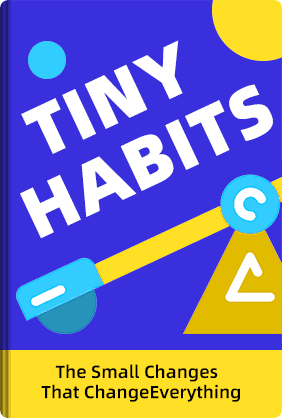
Tiny Habits
BJ Fogg, Ph.D.
40 Duration8 Key Points4.7 RateLaw 4: Make It Satisfying (The Reward)
We are more likely to repeat a behavior when the experience is satisfying. The human brain prioritizes immediate rewards over delayed rewards. You must attach an immediate sense of gratification to your new habits.
Tactic 1: Use a Habit Tracker
A habit tracker is a simple way to measure whether you did a habit (like crossing off a calendar day). It makes your progress visible and creates a streak. The core rule: Never miss twice. If you miss one day, try to get back on track as quickly as possible.
A habit tracker is a simple way to measure whether you did a habit (like crossing off a calendar day). It makes your progress visible and creates a streak. The core rule: Never miss twice. If you miss one day, try to get back on track as quickly as possible.
Tactic 2: Immediate Reinforcement
If you are trying to stop spending money on useless items, open a savings account labeled "Vacation Fund." Every time you skip buying a $5 coffee, transfer $5 into that account. You immediately see the number grow, making the act of not spending money satisfying.
If you are trying to stop spending money on useless items, open a savings account labeled "Vacation Fund." Every time you skip buying a $5 coffee, transfer $5 into that account. You immediately see the number grow, making the act of not spending money satisfying.
How to Break a Bad Habit: The Inversion
You can use the exact same framework to destroy bad habits. You just invert the Four Laws.
- Invert Law 1 (Make it Invisible): Reduce exposure to the cue. If you waste time on your phone, leave it in another room while working.
- Invert Law 2 (Make it Unattractive): Highlight the benefits of avoiding your bad habit. Reframe your mindset.
- Invert Law 3 (Make it Difficult): Increase friction. Unplug the TV after every use and take the batteries out of the remote.
- Invert Law 4 (Make it Unsatisfying): Get an accountability partner. Create a habit contract where you have to pay a friend $50 every time you skip a workout.
Reversing the four laws is an incredibly effective way to dismantle negative behaviors, especially when it comes to technology. Let's face it: our smartphones and social media apps are engineered by some of the smartest minds in Silicon Valley to keep us hooked. If your biggest bad habits revolve around screen time and endless scrolling, mastering the art of tuning out digital noise is the ultimate superpower.
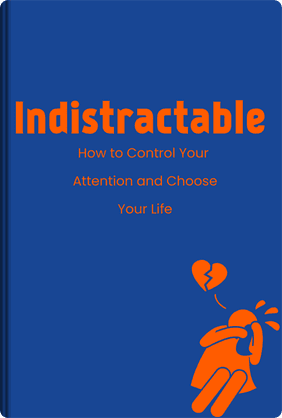
Indistractable
Nir Eyal
23 Duration10 Key Points4.5 RateYour Atomic Habits Cheat Sheet: Actionable Tactics
Print this Atomic Habits cheat sheet and keep it at your desk. When your systems fail, refer to these immediate fixes.
- To start a new habit: Use the Two-Minute Rule. Scale it down until it feels ridiculous not to do it.
- To remember a new habit: Use Habit Stacking. Attach it to something you already do every single day without fail (brushing teeth, making coffee).
- To stay consistent: Track it. Put a large wall calendar in your office and draw a red "X" over every day you complete the habit.
- To stop a bad habit: Add steps. Put your junk food on the highest shelf in the pantry. Delete social media apps from your phone so you have to log in via the web browser every time.
- To survive a bad day: Remember the "Never miss twice" rule. One mistake is a slip-up. Two mistakes in a row is the start of a new, bad habit.
Atomic Habits Key Takeaways for Long-Term Success
Beyond the immediate rules, here are the overarching Atomic Habits key takeaways that determine whether you succeed over the span of years, not just weeks.
1. The Plateau of Latent Potential
Habits often appear to make no difference until you cross a critical threshold. Clear uses the analogy of an ice cube sitting in a room at 25 degrees Fahrenheit. You heat the room to 26, 27, 28, 29, 30, 31 degrees. Nothing happens. Then, at 32 degrees, the ice melts. A one-degree shift did it. Your work was not wasted; it was just being stored. Stick with your systems through the "Valley of Disappointment."
Habits often appear to make no difference until you cross a critical threshold. Clear uses the analogy of an ice cube sitting in a room at 25 degrees Fahrenheit. You heat the room to 26, 27, 28, 29, 30, 31 degrees. Nothing happens. Then, at 32 degrees, the ice melts. A one-degree shift did it. Your work was not wasted; it was just being stored. Stick with your systems through the "Valley of Disappointment."

2. The Goldilocks Rule
Humans experience peak motivation when working on tasks that are right on the edge of their current abilities. Not too hard. Not too easy. Just right. As a habit becomes automatic, it becomes boring. Boredom is the greatest threat to success. You must constantly tweak your habits to keep them engaging.
Humans experience peak motivation when working on tasks that are right on the edge of their current abilities. Not too hard. Not too easy. Just right. As a habit becomes automatic, it becomes boring. Boredom is the greatest threat to success. You must constantly tweak your habits to keep them engaging.
3. Small Changes Compound
If you can get 1% better each day for one year, you will end up thirty-seven times better by the time you are done. Conversely, if you get 1% worse each day for one year, you will decline nearly down to zero. Success is the product of daily habits—not once-in-a-lifetime transformations.
If you can get 1% better each day for one year, you will end up thirty-seven times better by the time you are done. Conversely, if you get 1% worse each day for one year, you will decline nearly down to zero. Success is the product of daily habits—not once-in-a-lifetime transformations.
Sometimes, a powerful phrase is all you need to stay motivated. The ideas in this book have inspired many memorable lines that can serve as daily reminders of your goals.
This principle of small, compounding efforts is powerful. If you want to build a consistent learning system without the pressure of finishing long books, a daily summary can be your '1% better' action.
LeapAhead
Make learning a daily system by getting the key insights from a new book in 15 minutes, helping you build a powerful reading habit that sticks.
FAQ
Q: Does the two-minute rule actually work for massive goals like writing a book?
Yes. The two-minute rule works because it builds the identity of a writer. If you sit down and write for two minutes every day, you establish the routine of showing up. You defeat procrastination at the starting line. Once you are seated with the document open, momentum takes over and you naturally write for longer.
Yes. The two-minute rule works because it builds the identity of a writer. If you sit down and write for two minutes every day, you establish the routine of showing up. You defeat procrastination at the starting line. Once you are seated with the document open, momentum takes over and you naturally write for longer.
Q: How long does it really take to build a new habit?
Forget the myth of 21 days. The time it takes varies wildly depending on the complexity of the behavior and the person. Clear emphasizes that it is not about the amount of time that has passed, but the frequency of the habit. Repeating a habit 100 times in 100 days builds a stronger pathway than repeating it twice in 30 days.
Forget the myth of 21 days. The time it takes varies wildly depending on the complexity of the behavior and the person. Clear emphasizes that it is not about the amount of time that has passed, but the frequency of the habit. Repeating a habit 100 times in 100 days builds a stronger pathway than repeating it twice in 30 days.
Q: Should I focus on breaking bad habits or building good ones first?
Focus on building good ones using the path of least resistance. When you crowd your day with positive, frictionless systems (like reading a page a day or drinking water), you naturally have less time and energy for the bad habits. Use the Inversion of the Four Laws to slowly make your existing bad habits more difficult to access.
Focus on building good ones using the path of least resistance. When you crowd your day with positive, frictionless systems (like reading a page a day or drinking water), you naturally have less time and energy for the bad habits. Use the Inversion of the Four Laws to slowly make your existing bad habits more difficult to access.
Q: Is the full book worth reading if I already understand this summary?
Absolutely. While this summary gives you the exact actionable frameworks, the full book provides deeper psychological context, historical examples, and nuances that reinforce the mindset shift. If you lack time, grabbing the Audible version and listening at 1.5x speed during your commute is a highly efficient way to absorb the material.
Absolutely. While this summary gives you the exact actionable frameworks, the full book provides deeper psychological context, historical examples, and nuances that reinforce the mindset shift. If you lack time, grabbing the Audible version and listening at 1.5x speed during your commute is a highly efficient way to absorb the material.