

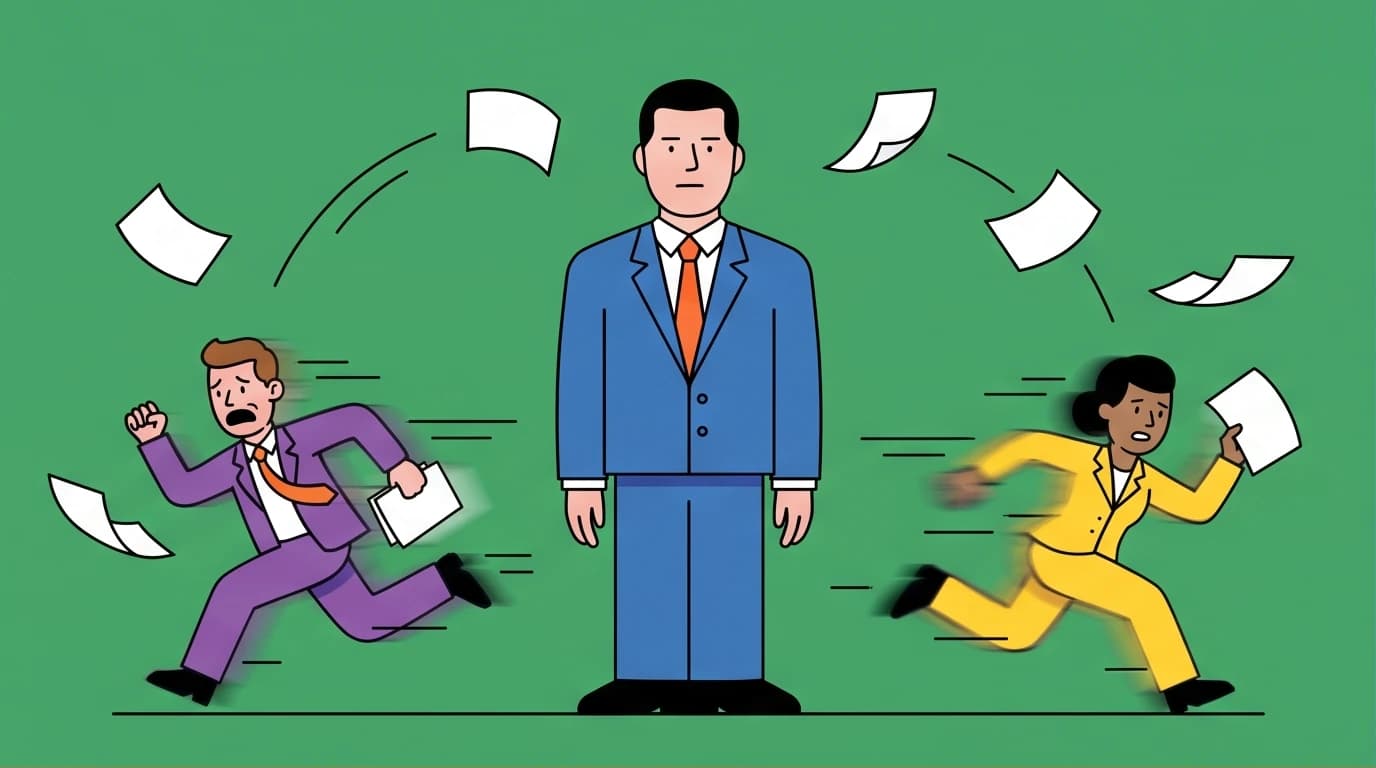
You have a literature seminar or a book club meeting in a few hours, and Herman Melville’s 1853 prose is dense. You do not have time to wade through lengthy 19th-century descriptions of New York real estate. You just need a clear, accurate breakdown of what actually happens in the story without missing the crucial details your professor or group leader expects you to know.
This guide strips away the fluff. We will walk through the exact sequence of events, decode the character dynamics, and give you everything you need to understand the narrative arc.
And if the challenge of tackling dense classics is a recurring theme for you, modern tools can help you grasp the core ideas without dedicating weeks to a single book.

LeapAhead breaks down the essential insights from challenging books in 15-minute audio or text summaries, perfect for when you're short on time.

Download LeapAhead App now
The Office Before Bartleby: Setting the Scene
To understand the bartleby the scrivener plot, you first need to understand the environment Bartleby disrupts.
The story is narrated by an unnamed, elderly lawyer who runs a comfortable, unexciting law practice on Wall Street. He actively avoids conflict and prides himself on taking the easy way out of any situation. Before Bartleby arrives, the lawyer employs three eccentric individuals. Understanding them is critical, as they contrast sharply with Bartleby's eventual behavior.
- Turkey: An older Englishman who is an excellent worker in the morning. However, after his lunch break (and presumably some alcohol), he becomes flushed, irritable, and prone to making mistakes in the afternoon.
- Nippers: A younger, ambitious man who is the exact opposite of Turkey. He suffers from morning indigestion, making him cranky and restless before noon. In the afternoon, he settles down and works efficiently.
- Ginger Nut: A twelve-year-old errand boy whose main job is buying ginger nut cakes for Turkey and Nippers.
Because Turkey and Nippers perfectly balance each other out—one works well in the morning, the other in the afternoon—the conflict-averse narrator accepts their quirks. However, his business expands. He needs another scrivener (a law copyist). He places an ad, and Bartleby walks through the door.
The Bartleby the Scrivener Plot: A Phase-by-Phase Breakdown
The story does not just jump straight into chaos. Bartleby’s rebellion is a slow, agonizing burn. The narrative is best understood by breaking it down into distinct stages of resistance.
Phase 1: The Honeymoon Period
When Bartleby first arrives, he is a pale, quiet, and incredibly focused worker. The lawyer places Bartleby's desk in his own office behind a folding screen. This isolates Bartleby but keeps him within earshot.
For the first few days, Bartleby works like a machine. He copies documents day and night by window light and candlelight. He doesn't pause, he doesn't speak, and he devours the work. The lawyer is thrilled to have finally found a reliable employee who doesn't have the mood swings of Turkey and Nippers.
Phase 2: The First Refusal
In a pre-typewriter world, lawyers had to proofread hand-copied documents by reading them aloud with their clerks to check for errors. The lawyer calls Bartleby out from behind his screen to help examine a short document.
Without moving, Bartleby delivers the line that defines the entire story: "I would prefer not to."
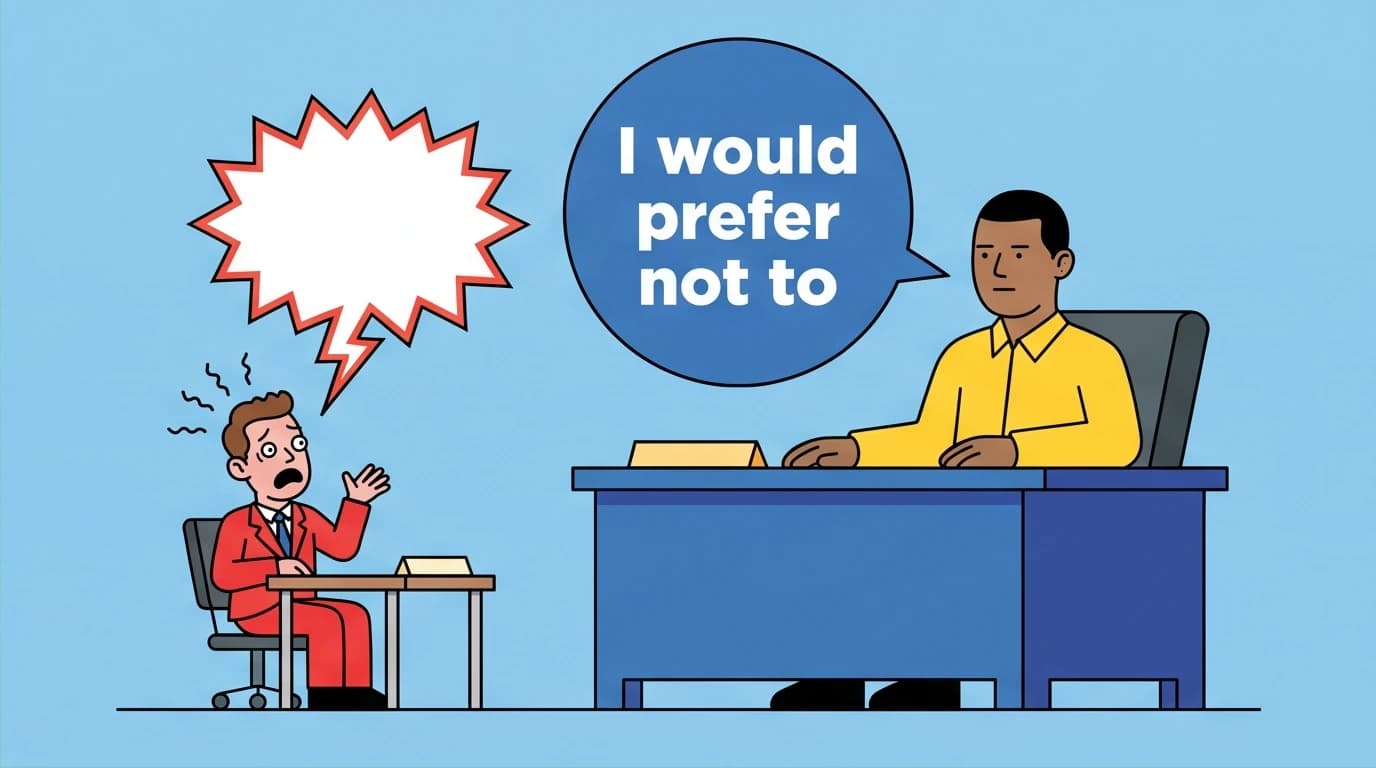
The lawyer is stunned. He is so shocked by this calm, emotionless refusal that he literally does not know how to react. Because he hates confrontation, and because Bartleby is otherwise copying documents flawlessly, the lawyer rationalizes the behavior and lets it slide. He asks Turkey and Nippers to help him instead.
Phase 3: The Escalation of Passive Resistance
A few days later, a larger document needs proofing. The lawyer calls all his employees together, including Bartleby. Once again, Bartleby states, "I would prefer not to."
This marks a turning point in any thorough bartleby the scrivener synopsis. Bartleby is no longer just avoiding minor tasks; he is actively refusing standard duties. Yet, the lawyer still cannot bring himself to fire the man. Bartleby’s utter lack of anger or defiance disarms the narrator. There is no insolence to punish, just an impenetrable wall of preference.
Soon, Bartleby’s refusals expand. He refuses to run errands. He refuses to tell the lawyer anything about his personal life. He just stays behind his screen.
Phase 4: The Discovery and Total Shutdown
One Sunday morning, the lawyer stops by Trinity Church and decides to pop into his Wall Street office. His key doesn't work. From the inside, Bartleby tells him to come back later.
The lawyer realizes something disturbing: Bartleby is living in the office. He sleeps there, washes there, and eats nothing but ginger nut cakes. The lawyer feels a profound wave of pity, realizing how crushing Bartleby's loneliness must be.
However, this pity soon turns to repulsion. The very next day, Bartleby announces that he is giving up copying entirely. He will do no more work. When the lawyer asks why, Bartleby simply says his eyes are bothering him, though he eventually admits he just doesn't want to work anymore.
Bartleby now functions as a ghost in the office. He stands all day staring out the window at a blank brick wall. He does no work, but he refuses to leave.
Bartleby's quiet refusal to participate in the grinding machinery of 19th-century capitalism might remind you of other famous literary figures who decided to simply step away from society. If you're fascinated by the transcendentalist movement of the 1850s and the radical idea of rejecting conventional work to find your own path, Henry David Thoreau's masterpiece is essential reading. Published just a year after Melville's story, it explores what happens when a person deliberately turns their back on the hustle and bustle to live intentionally.
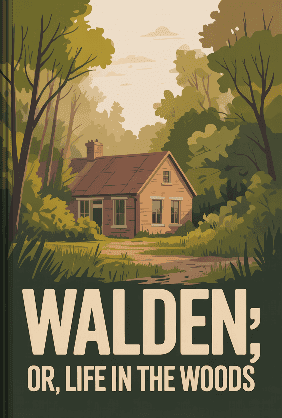
Walden; or, Life in the Woods
Henry David Thoreau
 36 Duration
 8 Key Points
 4.6 Rate
Phase 5: The Extreme Solution
The lawyer finally builds up the courage to fire Bartleby, offering him extra money and telling him he must vacate the premises in six days. The deadline passes. Bartleby is still there.
The lawyer's professional reputation is now taking a hit. Other attorneys visiting the office wonder who this strange, silent man is standing in the corner. Fearful of a scandal but entirely unable to physically throw Bartleby out, the lawyer takes a drastic, almost comical step: He moves his entire law practice to a different building.
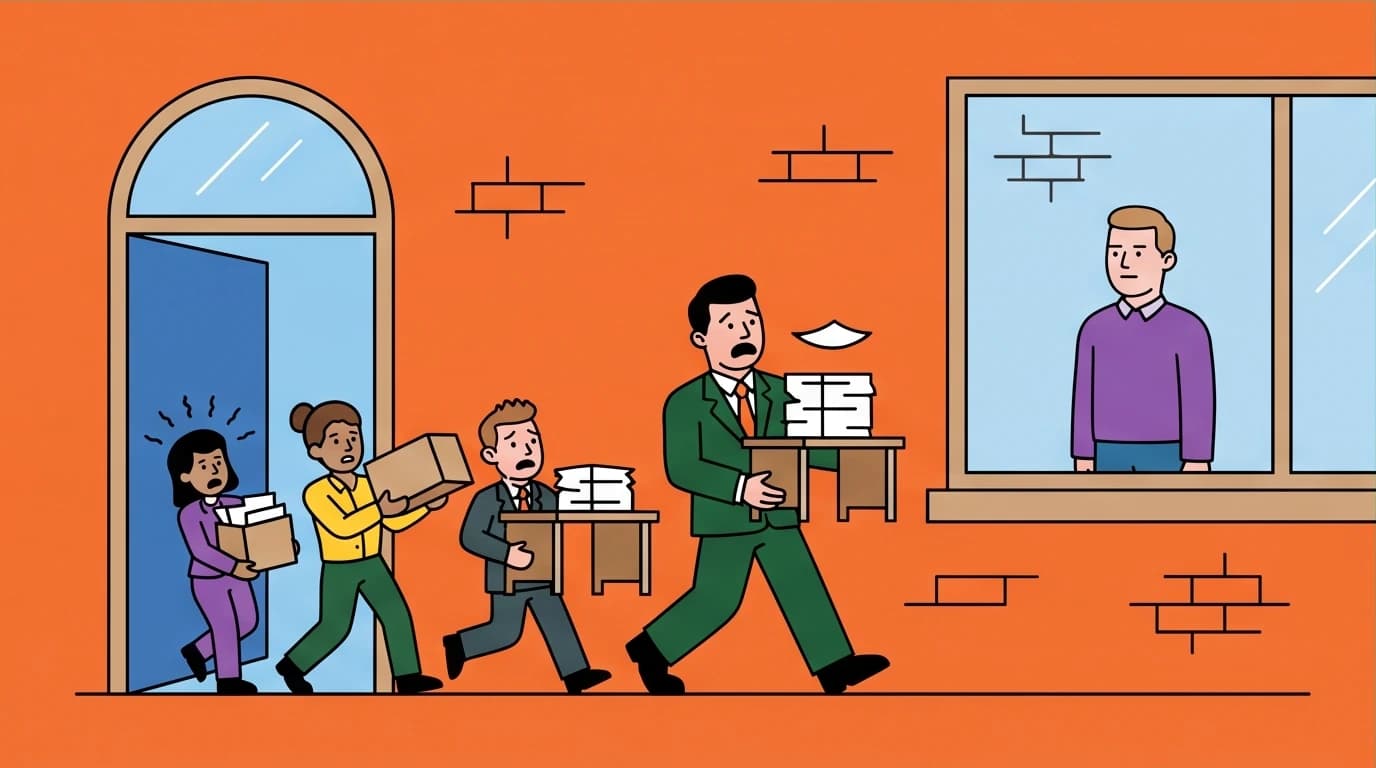
He leaves Bartleby behind in the empty office.
Phase 6: Arrest and The Tombs
A few days later, the new tenants of the old office track the lawyer down. They tell him Bartleby still refuses to leave. The new tenants have kicked him out of the suite, but Bartleby now sleeps on the stairs and haunts the building's banisters.
Feeling a shred of residual responsibility, the lawyer goes back and tries to reason with Bartleby. He even offers to take Bartleby into his own home. Bartleby politely declines every offer. "I would prefer not to make any change," he says.
The frustrated landlord calls the police. Bartleby is arrested as a vagrant and sent to the local prison, known as "The Tombs." Even during his arrest, he offers absolutely no physical resistance.
Phase 7: The Tragic End
The lawyer visits Bartleby in prison. The environment is grim, but Bartleby is allowed to wander the grassy courtyard. The lawyer bribes a prison grub-man (a cook) to make sure Bartleby gets good food.
When the grub-man approaches Bartleby with a meal, Bartleby refuses. "I prefer not to dine to-day," he says.
A few days later, the lawyer returns to The Tombs. He finds Bartleby lying curled up at the base of a thick prison wall. He touches the clerk and realizes he is dead. Bartleby has successfully starved himself to death.
The Epilogue: The Dead Letter Office
The story closes with a brief, haunting epilogue. The narrator reveals a rumor he heard after Bartleby's death. Before coming to Wall Street, Bartleby allegedly worked in Washington D.C. at the Dead Letter Office. His job was to sort through undelivered mail—letters intended for people who had moved, vanished, or died—and burn them.

The narrator believes that constantly handling these symbols of failed communication, hopelessness, and death destroyed Bartleby's spirit. The lawyer ends the narrative with a famous, despairing sigh: "Ah, Bartleby! Ah, humanity!"
Short Summary of Bartleby the Scrivener (Quick Recap)
If you need a rapid-fire short summary of bartleby the scrivener to review right before you walk into a room, memorize this timeline:
- A Wall Street lawyer hires a quiet copyist named Bartleby.
- Bartleby works incredibly hard at first.
- Eventually, Bartleby responds to a standard request with, "I would prefer not to."
- This phrase becomes his default answer to everything. He stops working completely and begins living in the law office.
- Unable to bring himself to forcefully evict the clerk, the lawyer moves his entire business to a new location to escape him.
- The new tenants have Bartleby arrested for vagrancy and sent to "The Tombs" (prison).
- Bartleby prefers not to eat and starves to death in prison.
- An epilogue reveals Bartleby previously worked at the Dead Letter Office, a soul-crushing job burning undelivered mail, which likely triggered his deep depression.
Why Read a Herman Melville Bartleby Summary? (Thematic Takeaways)
Understanding what happens is only half the battle. If you want to demonstrate a real grasp of the material, you need to know why the plot matters. When people search for a herman melville bartleby summary, they usually need to connect the events to major literary themes. Here is the framework you should use to analyze the text.
1. The Critique of Wall Street and Capitalism
Melville wrote this story as the American economy was rapidly industrializing. Wall Street represents an environment where human beings are reduced to mere tools for generating profit. Bartleby is treated as a machine—a human photocopier. When he stops producing value, society has no place for him. His death highlights the brutal efficiency of a system that discards people who cannot, or will not, participate in the grind of labor.
Melville wrote this story as the American economy was rapidly industrializing. Wall Street represents an environment where human beings are reduced to mere tools for generating profit. Bartleby is treated as a machine—a human photocopier. When he stops producing value, society has no place for him. His death highlights the brutal efficiency of a system that discards people who cannot, or will not, participate in the grind of labor.
Melville’s sharp critique of mindless administrative work in the 1850s feels incredibly prophetic today. If you're drawn to this theme and want to explore how modern society has created entirely new categories of meaningless labor, anthropologist David Graeber’s brilliant exploration of pointless employment is a must-read. It dives deep into the psychological toll of spending your days doing work that doesn't actually need to be done—a feeling Bartleby knew all too well during his time copying documents and burning dead letters.
Bullshit Jobs
David Graeber
16 Duration6 Key Points4 Rate2. Clinical Depression and Alienation
Modern readers often view Bartleby through a psychological lens. His lack of energy, his refusal to eat, his physical isolation behind a screen, and his prolonged staring at brick walls align closely with severe clinical depression. The phrase "I would prefer not to" is the ultimate expression of executive dysfunction and apathy.
Modern readers often view Bartleby through a psychological lens. His lack of energy, his refusal to eat, his physical isolation behind a screen, and his prolonged staring at brick walls align closely with severe clinical depression. The phrase "I would prefer not to" is the ultimate expression of executive dysfunction and apathy.
Modern readers clearly see the signs of severe depression in Bartleby's profound isolation and loss of willpower. If you want to better understand the root causes of this kind of psychological alienation, Johann Hari’s groundbreaking work offers incredible insights. He argues that much of our depression stems from a profound disconnection from meaningful work, human community, and hopeful futures—exactly the kind of crushing disconnection that ultimately broke Bartleby’s spirit in the heart of Wall Street.

Lost Connections
Johann Hari
53 Duration11 Key Points4.7 RateWith a growing list of must-read books, it's easy to feel like you'll never catch up. If you want to absorb the key takeaways from these and other bestsellers quickly, there's a more efficient way to learn.
LeapAhead helps you clear your 'reading debt' by summarizing nonfiction books, so you can learn their most valuable lessons in just 15 minutes a day.
Download LeapAhead App now
3. Passive Resistance
Bartleby exercises the only real power he has: the power of refusal. He doesn't shout, strike, or rebel violently. He simply opts out. This form of absolute passive resistance completely paralyzes the lawyer and the systems of authority around him. They know how to handle a violent criminal, but they have no framework for dealing with someone who simply "prefers not to."
Bartleby exercises the only real power he has: the power of refusal. He doesn't shout, strike, or rebel violently. He simply opts out. This form of absolute passive resistance completely paralyzes the lawyer and the systems of authority around him. They know how to handle a violent criminal, but they have no framework for dealing with someone who simply "prefers not to."
FAQ
What does "I would prefer not to" actually mean?
It is a polite but absolute assertion of negative will. Unlike saying "I will not," which is aggressive and invites an argument, "I would prefer not to" removes all room for debate. It forces the person making the request to confront the fact that they cannot force someone to care or to act against their own apathy.
It is a polite but absolute assertion of negative will. Unlike saying "I will not," which is aggressive and invites an argument, "I would prefer not to" removes all room for debate. It forces the person making the request to confront the fact that they cannot force someone to care or to act against their own apathy.
Why doesn't the narrator just fire Bartleby immediately?
The narrator is pathologically conflict-averse. He values a quiet, easy life above all else. Furthermore, Bartleby's calm demeanor disarms him. The lawyer feels a mixture of pity, confusion, and a twisted sense of Christian charity toward Bartleby, which prevents him from taking decisive, harsh action until his own business reputation is threatened.
The narrator is pathologically conflict-averse. He values a quiet, easy life above all else. Furthermore, Bartleby's calm demeanor disarms him. The lawyer feels a mixture of pity, confusion, and a twisted sense of Christian charity toward Bartleby, which prevents him from taking decisive, harsh action until his own business reputation is threatened.
What is the significance of the brick walls?
Throughout the story, Bartleby is constantly facing walls. His desk faces a window looking at a brick wall in the law office; he spends hours staring at a dead wall; and he ultimately dies curled up against the thick stone wall of a prison courtyard. The walls symbolize the dead ends of modern life, the lack of human connection, and the inescapable trap of industrial society.
Throughout the story, Bartleby is constantly facing walls. His desk faces a window looking at a brick wall in the law office; he spends hours staring at a dead wall; and he ultimately dies curled up against the thick stone wall of a prison courtyard. The walls symbolize the dead ends of modern life, the lack of human connection, and the inescapable trap of industrial society.
Why is the Dead Letter Office important?
The Dead Letter Office in the epilogue represents the ultimate failure of human connection. Letters are messages of hope, love, or business that never reach their destination. For a man like Bartleby to spend years reading and burning these failed connections is profoundly traumatizing. It explains his worldview: if all communication ultimately fails and ends in death (the fire), there is no point in trying to communicate or participate in life at all.
The Dead Letter Office in the epilogue represents the ultimate failure of human connection. Letters are messages of hope, love, or business that never reach their destination. For a man like Bartleby to spend years reading and burning these failed connections is profoundly traumatizing. It explains his worldview: if all communication ultimately fails and ends in death (the fire), there is no point in trying to communicate or participate in life at all.