

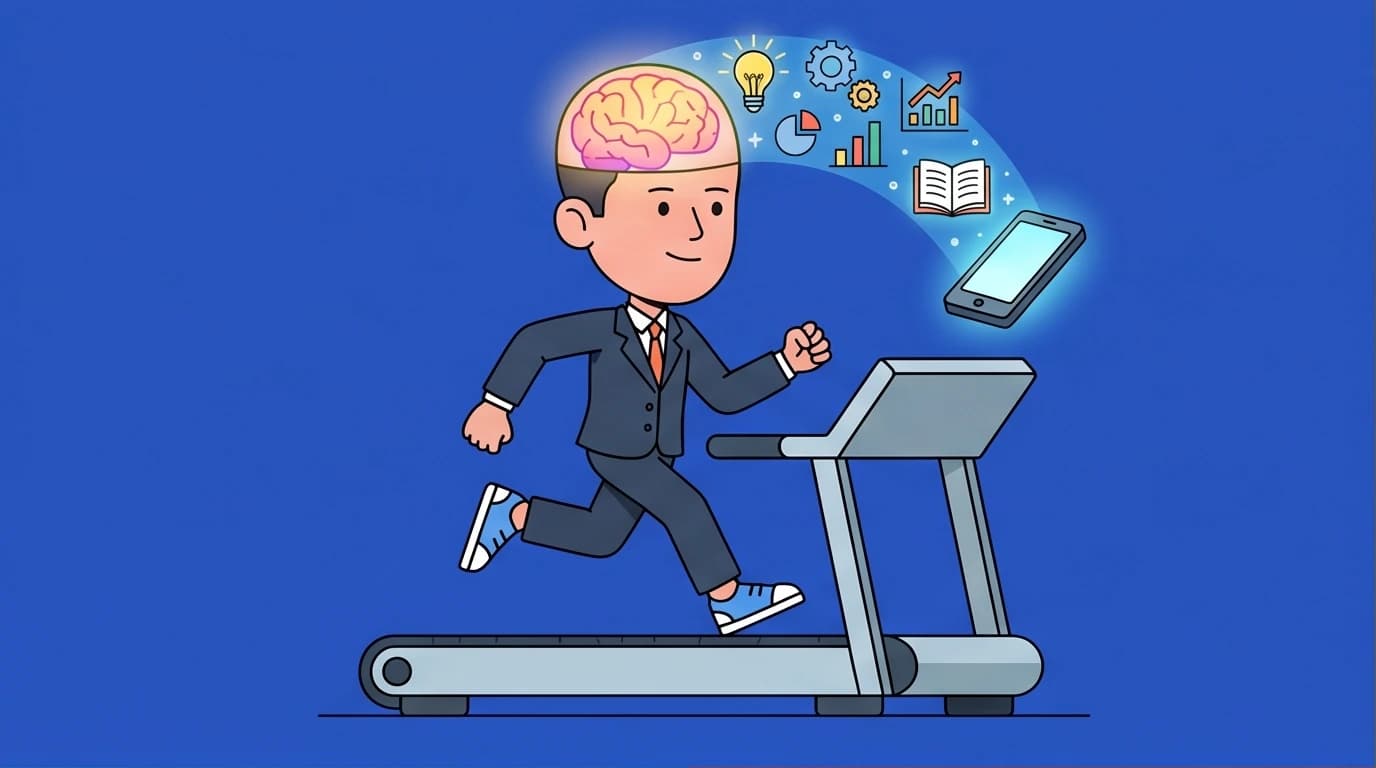
You have massive ambitions but zero time to force your way through a 300-page hardcover. You buy highly rated titles on Amazon, stack them on your nightstand, and watch them gather dust. You do not need more reading homework. You need the exact psychological frameworks to execute your vision right now.
Most business and self-help authors stretch a single brilliant concept into ten chapters of filler. As a high achiever, your fastest path to growth is extracting the core frameworks and getting straight to the execution.
Why You Should Rely on Summaries and Audio
Time is your ultimate bottleneck. If you want to understand the psychology of achievement, you do not need to read every page of the top productivity books. The 80/20 rule applies heavily to non-fiction.
By leveraging goal setting book summaries and audio apps, you can digest the core mechanics of a bestseller during a morning commute or a gym session. You extract the framework, plug it into your daily routine, and move on. This is how top performers consume information. They do not read for entertainment; they read for utility.


LeapAhead

Absorb the core ideas from bestselling books on goal setting and productivity in just 15 minutes a day with LeapAhead.
Here is the definitive breakdown of the best books about achieving goals, distilled into actionable frameworks you can use today.
The Elite List: Core Frameworks Extracted

1. Atomic Habits by James Clear
The Core Insight: Goals set your direction, but systems dictate your progress.
Clear argues that winners and losers often have the exact same goals. Every Olympian wants the gold medal. The goal itself does not differentiate them; the daily system does. If you completely ignored your goals and only focused on your system, you would still succeed.
The Actionable Framework:
- Habit Stacking: Tie a new tiny habit to an existing routine. "After I pour my morning coffee, I will write down my top priority for the day."
- Identity Shift: Stop focusing on what you want to achieve. Focus on who you want to become. Do not say, "I am trying to run a marathon." Say, "I am a runner."
If you are serious about rebuilding your daily routines from the ground up, diving deeper into this specific methodology is a game-changer. Clear’s approach strips away the motivational fluff and gives you the exact, tactical steps needed to rewire your behavior. Whether you are aiming to hit a new sales quota, run your first 5K, or simply organize your chaotic mornings, picking up this title will completely transform how you execute those tiny, compounding daily tasks.

Atomic Habits
James Clear
 26 Duration
 8 Key Points
 4.7 Rate
2. Your Best Year Ever by Michael Hyatt
The Core Insight: Traditional SMART goals are outdated. They often lead to safe, uninspiring targets. Hyatt evolved this concept, making his work one of the definitive books on smarter goals.
Hyatt introduces the SMARTER framework, injecting emotion and risk into the goal-setting process. A goal must stretch you outside your comfort zone to trigger sustained motivation.
The Actionable Framework (The SMARTER Criteria):
- Specific: Pinpoint exactly what you want.
- Measurable: Establish concrete metrics. You cannot improve what you cannot measure.
- Actionable: Start with a strong action verb (e.g., "Launch," "Eliminate," "Publish").
- Risky: This is the game-changer. If a goal does not scare you a little, it will not command your focus.
- Time-keyed: Set a tight deadline.
- Exciting: Your goal must inspire you. If you are bored by it, you will abandon it by February.
- Relevant: It must align with your current season of life and core values.
If you feel like you are constantly setting New Year’s resolutions that fizzle out by Valentine’s Day, it is time to upgrade your entire planning system. Hyatt’s insights will push you to stop playing it safe and start aiming for targets that actually demand your highest level of effort. For any busy professional looking to map out a truly transformative twelve months, exploring this complete framework will help you design ambitious milestones that are virtually fail-proof. To see how these principles translate into actionable targets, it's helpful to review concrete examples.

Your Best Year Ever
Michael Hyatt
49 Duration8 Key Points4.6 Rate
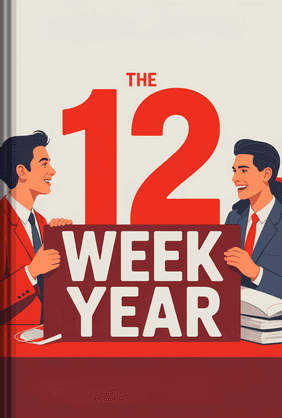
3. The 12 Week Year by Brian P. Moran and Michael Lennington
The Core Insight: Annual goals breed complacency.
When you set a goal for December, you naturally slack off in March because you feel like you have plenty of time. Moran destroys the 12-month cycle. You must treat a 12-week period as your entire year.
The Actionable Framework:
- Condense your timelines. Map out what you want to achieve in the next 12 weeks.
- Break that 12-week goal down into weekly execution plans.
- Score your execution. At the end of each week, measure your completion rate. If you hit 85% execution on your weekly tasks, you will hit your 12-week goal.
Procrastination thrives when deadlines are months away. If you need a forcing function to compress your timeline and create a sense of absolute urgency, this strategy will be your secret weapon. Reading or listening to the full breakdown of this concept will teach you how to ruthlessly prioritize your week, block out the noise, and accomplish more in a single quarter than most of your peers do in an entire calendar year.
The 12 Week Year
Brian P. Moran, Michael Lennington
39 Duration7 Key Points4.6 Rate4. The LeapAhead Microlearning System
The Core Insight: Consistent micro-doses of learning are more sustainable than occasional deep dives.
In a world of fragmented attention, the biggest barrier to achieving goals isn't a lack of information—it's a lack of consistent engagement. The LeapAhead system is built on the principle that absorbing the core ideas of a book in 15-minute sprints is more effective for busy professionals than trying to schedule multi-hour reading blocks that never materialize.
The Actionable Framework:
- Goal-Based Learning Albums: Instead of picking books at random, follow curated collections focused on specific outcomes like "Career Success Strategies" or "Breaking Phone Addiction" to ensure your learning is targeted.
- Daily Learning Goals: Use the app's check-ins and goal-tracking features to build a powerful learning habit that feels effortless, compounding knowledge over time.
- Multi-Format Consumption: Switch between audio and text summaries to fit learning into any part of your day—your commute, a workout, or a lunch break.
- Visual Reinforcement: Leverage infographics and knowledge mind maps to ensure the core frameworks from books actually stick, improving retention and real-world application.
While individual books provide deep frameworks, a platform like LeapAhead provides the delivery system. Its strength lies in its ability to help you consistently consume and retain key ideas from a massive library of over 30,000 titles. That said, users seeking deep academic analysis may find the summarized format too concise. It’s a mobile-first experience, which is perfect for on-the-go learning but may feel limiting for those who prefer long study sessions on a desktop.
5. Measure What Matters by John Doerr
The Core Insight: High-level ideas are worthless without execution and transparency.
Doerr brought the OKR (Objectives and Key Results) system to Google. This framework is heavily utilized by tech giants but scales perfectly down to individual personal development.
The Actionable Framework:
- Objective: What do I want to achieve? (The direction. Example: Become a recognized authority in my industry).
- Key Results: How will I know I am getting there? (The milestones. Example: Publish 3 high-impact articles per month, secure 2 podcast interviews by Q3, grow email list to 5,000 subscribers).
- Keep OKRs visible at all times and grade them relentlessly at the end of each cycle.
Transparency and metric tracking are the bedrock of high-level execution, especially if you are managing a remote team or scaling a startup. Doerr’s inside look at how Silicon Valley behemoths operate is nothing short of a masterclass in organizational alignment. If you want to learn exactly how to cascade ambitious objectives from the boardroom down to your own daily to-do list, this resource is universally recognized as the gold standard for driving real results.

Measure What Matters
John Doerr
47 Duration9 Key Points4.5 Rate
LeapAhead
Turn insights from top goal-setting books into action with LeapAhead's daily learning system and 15-minute summaries.
How to Turn Reading into Execution
Consuming knowledge feels productive, but it is entirely passive. If you just read summaries and change nothing about your routine, you are wasting your time.
Choose exactly one framework from the list above. Do not mix and match immediately. If you need a strict corporate structure, use OKRs. If you struggle with daily consistency, use Clear's Habit Stacking. If your goals feel flat and uninspiring, apply Hyatt's SMARTER criteria.
Map this framework into the tools you already use. Build a tracking board in your favorite project management app. Set calendar alerts. Treat your personal goals with the same operational ruthlessness you apply to your career.
Common Pitfalls to Avoid
The "Tool Hopping" Trap
Many high achievers spend weeks searching for the perfect goal-setting app or notebook. They think a better app will solve a discipline problem. It will not. Stick to a simple digital notepad or a basic spreadsheet until your execution habit is locked in.
Many high achievers spend weeks searching for the perfect goal-setting app or notebook. They think a better app will solve a discipline problem. It will not. Stick to a simple digital notepad or a basic spreadsheet until your execution habit is locked in.
Information Overload
Do not try to read five top productivity books back-to-back. The insights will blur together. Listen to one summary on Audible or a book summary app. Extract the specific mechanics. Execute on them for 30 days before consuming the next piece of content.
Do not try to read five top productivity books back-to-back. The insights will blur together. Listen to one summary on Audible or a book summary app. Extract the specific mechanics. Execute on them for 30 days before consuming the next piece of content.
Ignoring the "Why"
You can set a perfectly structured 12-week goal, but if the outcome does not actually matter to your long-term vision, you will quit when the work gets hard. Always run your targets through the "Exciting" and "Relevant" filters of the SMARTER framework. Properly applying these criteria is a skill in itself.
You can set a perfectly structured 12-week goal, but if the outcome does not actually matter to your long-term vision, you will quit when the work gets hard. Always run your targets through the "Exciting" and "Relevant" filters of the SMARTER framework. Properly applying these criteria is a skill in itself.
FAQ
What is the difference between SMART and SMARTER goals?
Traditional SMART goals (Specific, Measurable, Achievable, Realistic, Time-bound) prioritize safety. The SMARTER framework (Specific, Measurable, Actionable, Risky, Time-keyed, Exciting, Relevant) prioritizes growth. SMARTER replaces "Realistic" with "Risky" to force you out of your comfort zone, and adds "Exciting" to ensure emotional buy-in.
Traditional SMART goals (Specific, Measurable, Achievable, Realistic, Time-bound) prioritize safety. The SMARTER framework (Specific, Measurable, Actionable, Risky, Time-keyed, Exciting, Relevant) prioritizes growth. SMARTER replaces "Realistic" with "Risky" to force you out of your comfort zone, and adds "Exciting" to ensure emotional buy-in.
Are book summaries actually as good as reading the whole book?
For actionable execution, yes. Business and productivity books are often heavily padded with repetitive anecdotes to meet publishing requirements. Reading a high-quality summary gives you the core psychological frameworks and action steps in a fraction of the time, allowing you to focus on implementation rather than reading.
For actionable execution, yes. Business and productivity books are often heavily padded with repetitive anecdotes to meet publishing requirements. Reading a high-quality summary gives you the core psychological frameworks and action steps in a fraction of the time, allowing you to focus on implementation rather than reading.
What is the best way to consume these resources if I am always busy?
Audio is your best leverage. Platforms like Audible are great for full books, but summary-specific apps like Blinkist or Shortform are specifically designed for the busy professional. They distill hours of reading into 15-minute audio or text summaries, making it incredibly easy to consume during a drive or workout.
Audio is your best leverage. Platforms like Audible are great for full books, but summary-specific apps like Blinkist or Shortform are specifically designed for the busy professional. They distill hours of reading into 15-minute audio or text summaries, making it incredibly easy to consume during a drive or workout.
Which goal-setting framework is best for beginners?
Start with Atomic Habits. Before you try to map out massive quarterly objectives, you need the daily discipline to execute small tasks. Build the system first using habit stacking, then apply aggressive frameworks like The 12 Week Year once your foundational habits are solid.
Start with Atomic Habits. Before you try to map out massive quarterly objectives, you need the daily discipline to execute small tasks. Build the system first using habit stacking, then apply aggressive frameworks like The 12 Week Year once your foundational habits are solid.