


You wake up to the harsh sound of your alarm. You hit snooze. When you finally drag yourself out of bed, you immediately check your phone, instantly reacting to unread emails, news alerts, and endless notifications. Your day has barely started, yet you already feel behind.
You cannot control everything that happens in your day, but you can control how it begins. A structured morning routine is the ultimate defense against daily chaos. If you want to upgrade your mornings, you do not need to guess what works. Decades of research and practical application have already been documented by experts. To save you time, we extracted the most valuable insights from the best books on morning routines. Here is the blueprint to owning your morning.
The Core Library: Essential Books for Your Morning
If you check Goodreads or Amazon for the top productivity books, the same few titles dominate the charts. These books are not just about waking up early. They are about energy management, cognitive psychology, and intentional living.
1. The Miracle Morning by Hal Elrod
Hal Elrod’s approach is perfect for beginners who feel overwhelmed and do not know where to start. After a near-fatal car accident and a severe financial crisis, Elrod researched the habits of highly successful people and combined them into one streamlined morning practice.
A quick miracle morning summary revolves around the acronym S.A.V.E.R.S. Elrod argues that dedicating just a few minutes to each of these six practices will drastically shift your mental and physical state:
- Silence: Start with meditation, deep breathing, or prayer. Lower your cortisol levels immediately upon waking.
- Affirmations: Speak your goals out loud. Reprogram your subconscious mind to focus on success.
- Visualization: Mentally walk through your day going perfectly. Imagine executing your tasks with high focus.
- Exercise: Do some quick movement. Jumping jacks, yoga, or a brisk walk gets your blood flowing and releases endorphins.
- Reading: Read a few pages of a non-fiction book. Feed your brain with new ideas.
- Scribing: Keep a journal. Write down what you are grateful for or dump your anxious thoughts onto paper to clear your mind.

The Actionable Takeaway: You do not need two hours for this. Elrod designed a "6-Minute Miracle Morning" where you spend exactly one minute on each step. It is the ultimate low-friction way to build momentum.
If you are tired of waking up feeling rushed and reactive, reading the full text of The Miracle Morning is an absolute game-changer. Hal Elrod provides much more than just a quick summary in the book; he offers a step-by-step 30-day transformation challenge to make the S.A.V.E.R.S. method stick. Whether you are a busy executive or a stay-at-home parent, this read will teach you how to carve out dedicated time for yourself before the demands of the world take over.
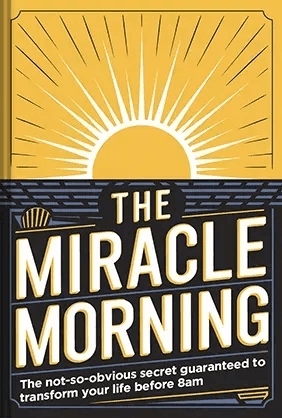
The Miracle Morning
Hal Elrod
 41 Duration
 10 Key Points
 4.6 Rate
2. The 5 AM Club by Robin Sharma
If The Miracle Morning provides the ingredients, The 5 AM Club provides the strict psychological framework. Robin Sharma wraps his philosophy in a fable about an entrepreneur, an artist, and an eccentric billionaire. The core premise is simple: own your morning, elevate your life.
The foundation of the 5 am club habits is the 20/20/20 formula. Sharma dictates that the first hour of your day (from 5:00 AM to 6:00 AM) must be divided into three 20-minute segments:
- Move (5:00 - 5:20): Intense physical exercise. Sweat clears cortisol (the stress hormone) and generates Brain-Derived Neurotrophic Factor (BDNF), which repairs brain cells and accelerates neural connections.
- Reflect (5:20 - 5:40): Meditation, journaling, or planning. This builds deep cognitive awareness and guards against digital distraction.
- Grow (5:40 - 6:00): Study. Read a book, listen to an educational podcast on Audible, or review your goals.

Sharma introduces the concept of "Transient Hypofrontality." At 5 AM, your brain's prefrontal cortex—the part that causes you to overthink and stress—temporarily shuts down. The isolation and silence of the early morning allow you to tap into a state of deep flow before the rest of the world wakes up.
The Actionable Takeaway: Block the first 60 minutes of your day exclusively for personal growth. Keep your phone in another room. The peace of 5 AM is your competitive advantage.
For those who want to dive deeper into the neuroscience of transient hypofrontality and elite performance, Robin Sharma’s masterpiece is a must-read. The 5 AM Club goes beyond just a wake-up time—it provides a tactical playbook for maximizing your focus, health, and productivity. The book uses a captivating storytelling format that makes digesting complex habit-building concepts incredibly easy. If you are ready to stop making excuses and start operating like a top-tier performer, you will want to add this to your shelf.
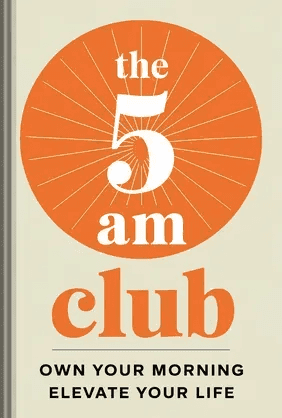
The 5 AM Club
Robin Sharma
39 Duration10 Key Points4.6 Rate3. Atomic Habits by James Clear
While not exclusively a book about waking up, Atomic Habits is mandatory reading for anyone trying to build a morning protocol. You can have the best routine on paper, but if you do not understand the mechanics of human behavior, you will quit by Wednesday.
Creating an atomic habits morning routine is about systemizing your behavior so that making the right choices becomes automatic. Clear emphasizes that you do not rise to the level of your goals; you fall to the level of your systems.
To fix your mornings using Clear's framework, apply these three rules:
- Habit Stacking: Tie a new morning habit to an existing one. "After I start the coffee maker, I will do 10 push-ups." "After I brush my teeth, I will write down one goal for the day."

- Environment Design: Willpower is a myth. Make good habits easy and bad habits impossible. If you want to run in the morning, place your running shoes next to your bed. If you want to stop scrolling in bed, buy an old-school alarm clock and leave your phone charging in the kitchen.
- The Two-Minute Rule: Downscale any new habit to take less than two minutes. Do not commit to reading a whole chapter. Commit to reading one page. Master the art of showing up first.
The Actionable Takeaway: Stop relying on morning motivation. Redesign your bedroom environment tonight so that executing your routine tomorrow requires zero mental effort.
Understanding the psychology behind habit formation is the secret weapon for long-term success. While making a few tweaks to your morning is great, James Clear’s Atomic Habits will give you the exact framework to ensure those tweaks become permanent lifestyle changes. This book breaks down the science of why we do what we do into simple, bite-sized strategies. If you want to finally stop falling off the wagon after a few days, Clear’s insights on environment design and habit stacking are indispensable.

Atomic Habits
James Clear
26 Duration8 Key Points4.7 Rate4. Daily Rituals: How Artists Work by Mason Currey
If you want historical proof that routines work, Currey’s book is a fascinating study. It analyzes the daily habits of 161 brilliant minds—from Benjamin Franklin to Maya Angelou.
While these figures had wildly different schedules, a massive percentage of them shared one trait: they protected their mornings fiercely. They did their most intense, cognitively demanding work right after waking up, long before they allowed outside demands to dictate their attention.
The Actionable Takeaway: Treat your morning hours as sacred. Protect your peak energy windows for your highest-leverage tasks, not for answering low-priority emails.
Learning from historical masters is invaluable, but you might be curious how these principles apply in the modern digital age. The core idea of protecting your morning remains the same, even if the tools have changed.
Feeling inspired by this list but overwhelmed by the thought of adding four more books to your reading pile? There's a way to absorb their core ideas without dedicating weeks to reading.


LeapAhead

LeapAhead summarizes bestselling books like these into 15-minute reads or listens, perfect for building a learning habit into a busy morning routine.
How to Build Your Routine: A Practical Framework
Reading the top productivity books is easy. Executing their advice is hard. People often fail because they try to adopt Hal Elrod’s S.A.V.E.R.S., Robin Sharma’s 5 AM wake-up time, and James Clear’s habit tracking all on the exact same day.
You need a customized approach. Here is how to build a lasting routine based on the literature.
1. Audit Your Current Reality
Before adding new habits, eliminate the bad ones. The most destructive morning habit is hitting the snooze button. When you hit snooze, you fragment your sleep cycle, initiating a new REM cycle that you will abruptly interrupt a few minutes later. This causes sleep inertia—that groggy, heavy feeling that can last for hours. Move your alarm across the room.
2. Define Your "Why"
Waking up early just for the sake of it is unsustainable. What is the payoff? Do you need quiet time to write a book? Do you want to exercise before your kids wake up? Anchor your routine to a highly desirable outcome.
3. Start Small (The 15-Minute Protocol)
If you currently wake up at 7:30 AM, do not set your alarm for 5:00 AM tomorrow. You will crash by noon. Wake up at 7:15 AM. Use those 15 minutes to drink a large glass of water, step outside to get sunlight in your eyes, and review your top priority for the day. Hold that schedule for a week before moving the clock back another 15 minutes.
The 15-minute protocol is a powerful starting point. For those with packed schedules, having a few ultra-efficient routines in your back pocket is a game-changer for consistency.
4. Protect Your Evenings
Every great morning routine starts the night before. You cannot sleep at midnight and expect to crush a 5 AM Club routine. Optimize your sleep hygiene. Drop the room temperature to around 65 degrees Fahrenheit. Cut off caffeine after 2 PM. Put away screens an hour before bed.
Pitfalls to Avoid (What the Books Don't Tell You)
While these authors offer phenomenal frameworks, readers often fall into a few predictable traps.
The Perfectionism Trap: You miss your 20-minute meditation because you overslept, so you decide the whole morning is ruined and spend the next hour scrolling social media. Rigidity is the enemy of consistency. If you only have five minutes, do a compressed version of your routine. Something is always better than nothing.
The Sleep Deprivation Trap: Waking up at 5 AM is productive. Waking up at 5 AM on four hours of sleep is destructive. Chronic sleep deprivation ruins your cognitive function, wrecks your metabolism, and elevates stress hormones. If you had a late night, prioritize adequate sleep over a rigid wake-up time.
You cannot expect to conquer your mornings if your nights are consistently chaotic. As you build your wake-up routine, understanding the sheer power of rest is critical. If you find yourself constantly battling fatigue or wondering why your brain feels foggy even after your morning coffee, digging into the science of slumber can completely shift your perspective. Matthew Walker's brilliant exploration of sleep science will teach you exactly how to optimize your resting hours, ensuring you wake up fully recharged and ready to tackle your ambitious goals.

Why We Sleep
Matthew Walker and Steve West
38 Duration8 Key Points4.6 RateThe "Productivity Theater" Trap: A morning routine is a tool to prepare you for the day. It is not the main event. Spending three hours meditating, journaling, and drinking green juice just to avoid doing actual hard work is procrastination disguised as productivity. Keep your routine efficient. Get in, prime your mind and body, and attack your real goals.
Ultimately, the goal is to build a routine that serves you without overwhelming you. If finding the time to read is your biggest hurdle, you can still get the powerful insights from these authors.
LeapAhead
Use LeapAhead to listen to the key ideas from books like The 5 AM Club during your commute, turning otherwise dead time into a chance for personal growth.
FAQ
What is the best time to wake up?
There is no universal best time. The best time to wake up is the time that gives you at least 30 to 60 minutes of uninterrupted focus before your daily obligations begin. For some, that is 5:00 AM. For a night shift worker, that might be 11:00 AM. Consistency matters more than the specific hour on the clock.
There is no universal best time. The best time to wake up is the time that gives you at least 30 to 60 minutes of uninterrupted focus before your daily obligations begin. For some, that is 5:00 AM. For a night shift worker, that might be 11:00 AM. Consistency matters more than the specific hour on the clock.
Do I really need to wake up at 5 AM to be successful?
No. Many successful CEOs and artists are night owls. The core lesson of the 5 AM Club is about claiming uninterrupted time and leveraging your brain's natural rhythms. If you naturally peak at night, you can apply similar isolation and focus techniques to your evenings.
No. Many successful CEOs and artists are night owls. The core lesson of the 5 AM Club is about claiming uninterrupted time and leveraging your brain's natural rhythms. If you naturally peak at night, you can apply similar isolation and focus techniques to your evenings.
How do I stick to a morning routine when I travel?
Simplify. When you are in a hotel or crossing time zones, drop the complex 60-minute routine. Resort to a "travel baseline." This might just be 10 push-ups, drinking a glass of water, and writing down one goal for the day. Maintain the habit of the routine, even if you reduce the scope.
Simplify. When you are in a hotel or crossing time zones, drop the complex 60-minute routine. Resort to a "travel baseline." This might just be 10 push-ups, drinking a glass of water, and writing down one goal for the day. Maintain the habit of the routine, even if you reduce the scope.
Which book should I read first?
If you want a highly structured, step-by-step daily plan, start with The Miracle Morning. If you struggle with consistency and keep abandoning your routines, read Atomic Habits first to fix your underlying behavioral systems. Add both to your Amazon cart or library queue, but implement the lessons from one before moving to the next.
If you want a highly structured, step-by-step daily plan, start with The Miracle Morning. If you struggle with consistency and keep abandoning your routines, read Atomic Habits first to fix your underlying behavioral systems. Add both to your Amazon cart or library queue, but implement the lessons from one before moving to the next.