

You are working 80-hour weeks, putting out daily fires, and acting as the primary bottleneck in your own company. You do not need another motivational speech; you need proven frameworks to reclaim your schedule and multiply your output. If you are trapped in the daily grind of your operations, your business cannot grow. The following books and tools provide the exact blueprints to transition from a burnt-out operator to an effective CEO.

Here is the definitive guide to reading material that actually moves the needle for your business, categorized by the specific operational bottlenecks they solve.
Time Management Books for Business Owners
When you are drowning in tasks, you need immediate triage. These books rewrite how you view your daily calendar, helping you separate tasks that drive revenue from tasks that drain your energy.
1. Buy Back Your Time by Dan Martell
The Core Concept: You should not hire to grow your business; you should hire to buy back your time.
Dan Martell addresses the exact dilemma every successful founder faces: hitting a growth ceiling because you literally run out of hours in the day. The premise is entirely financial. You audit your time, assign a dollar value to your tasks, and hire people to take over low-value work so you can focus on high-leverage activities.
Immediate Implementation:
Calculate your "Buyback Rate." Take your total annual income, divide it by 2,000 (standard working hours in a year), and divide that number by four. If a task costs less per hour than your Buyback Rate, you must delegate it immediately. Stop doing $15/hour admin work when you need to be doing $500/hour strategic planning.

Calculate your "Buyback Rate." Take your total annual income, divide it by 2,000 (standard working hours in a year), and divide that number by four. If a task costs less per hour than your Buyback Rate, you must delegate it immediately. Stop doing $15/hour admin work when you need to be doing $500/hour strategic planning.
2. The ONE Thing by Gary Keller and Jay Papasan
The Core Concept: Extreme, narrow focus yields extraordinary results.
Business owners constantly drown in endless to-do lists. This book forces you to ask a single filtering question: "What is the one thing I can do such that by doing it everything else will be easier or unnecessary?" Multitasking is a lie. Productivity requires identifying the single domino that knocks down all the others.
Immediate Implementation:
Block off four uninterrupted hours every morning for your ONE thing. Do not open your email, do not check Slack, and do not look at your phone. Treat this time block with the same respect you would give a meeting with your top investor.
Block off four uninterrupted hours every morning for your ONE thing. Do not open your email, do not check Slack, and do not look at your phone. Treat this time block with the same respect you would give a meeting with your top investor.
If you constantly find yourself pulled in a dozen different directions, reading the full text of The ONE Thing is an absolute game-changer. The authors dive deep into the psychology of goal-setting and provide practical worksheets to help you identify your highest-leverage tasks. Grab a copy to learn how successful entrepreneurs organize their entire year around a single, revenue-generating priority.

The ONE Thing
Gary Keller, Jay Papasan
 22 Duration
 10 Key Points
 4.5 Rate
Pressed for time? Get the key insights from top business books like these in just 15 minutes a day with the LeapAhead app. Perfect for busy entrepreneurs.
Download LeapAhead App now
Books on Scaling a Business and Building Systems
Once you manage your immediate schedule, the next step is systemizing the company. You cannot scale a business based on your sheer willpower and memory. You need rigid systems.
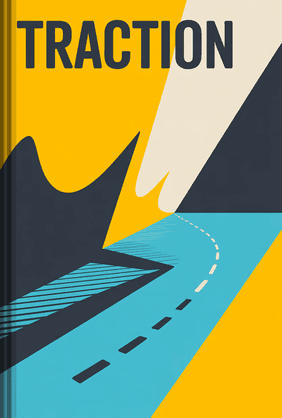
3. Traction: Get a Grip on Your Business by Gino Wickman
The Core Concept: The Entrepreneurial Operating System (EOS).
Traction is arguably the gold standard among business efficiency books. It provides a complete, holistic system to align your leadership team, track data, and solve issues. Without an operating system, every problem requires the founder's intervention. EOS gives your team the framework to run the company without you holding their hands.
Immediate Implementation:
Implement the "Level 10 Meeting" structure with your leadership team this week. Drop the unstructured, hour-long catch-ups. Use a strict 90-minute agenda where 60 minutes are dedicated entirely to identifying, discussing, and solving core issues (IDS).
Implement the "Level 10 Meeting" structure with your leadership team this week. Drop the unstructured, hour-long catch-ups. Use a strict 90-minute agenda where 60 minutes are dedicated entirely to identifying, discussing, and solving core issues (IDS).
To fully implement the Entrepreneurial Operating System (EOS) in your own company, you will want to keep a physical copy of Traction on your desk. Gino Wickman’s operational playbook goes far beyond just meetings—it covers everything from defining your core values to mapping out your ten-year target. It is highly recommended to have your entire leadership team read this together so everyone operates from the same strategic blueprint.
Traction
Gino Wickman
42 Duration8 Key Points4.6 Rate4. The E-Myth Revisited by Michael E. Gerber
The Core Concept: Working on your business, not in it.
Gerber explains exactly why most small businesses fail. The founder is usually a "technician" (a great coder, a great baker, a great marketer) who suffers an entrepreneurial seizure and starts a business. They end up owning a stressful job rather than a scalable company. To fix this, you must view your business as a franchise prototype, even if you never plan to franchise it.
Immediate Implementation:
Start documenting Standard Operating Procedures (SOPs). Open a Google Doc or use a tool like Loom to record your screen while you do a task. Build a manual for every role in your company, starting with the job you hate doing the most.

Start documenting Standard Operating Procedures (SOPs). Open a Google Doc or use a tool like Loom to record your screen while you do a task. Build a manual for every role in your company, starting with the job you hate doing the most.
Building Standard Operating Procedures can feel overwhelming, but The E-Myth Revisited makes the process incredibly approachable. Michael E. Gerber’s storytelling perfectly captures the frustration of being the 'technician' in your business and offers a step-by-step roadmap for stepping into a true CEO role. This classic read is an absolute must if you want to build a self-sustaining business model that thrives even when you take a much-needed vacation.

The E-Myth Revisited
Michael E. Gerber
39 Duration8 Key Points4.5 RateBuilding a business that can run without you isn't just about documenting procedures; it's also about empowering your team. As you step into a true CEO role, strengthening your leadership skills is the next critical step.
Habit Books for Entrepreneurs
Your business output is a lagging indicator of your personal habits. If your personal life is chaotic, your business operations will reflect that chaos.
5. LeapAhead App
The Core Concept: Absorb the core ideas of bestselling business books in 15 minutes a day.
For founders whose biggest hurdle isn't just what to read but when, a microlearning app like LeapAhead is a powerful tool for habit formation. It addresses the "reading debt" many entrepreneurs feel by condensing over 30,000 nonfiction books into 15-minute summaries available in both audio and text. This allows you to consume key takeaways from books on this very list while commuting, at the gym, or during a short break, turning dead time into learning time. While a summary can't replace the granular detail of a full implementation guide like Traction, it's an incredibly efficient way to discover new frameworks and reinforce core concepts.
Immediate Implementation:
Use the "Commute Test." For one week, replace your usual podcast or music during your commute with a 15-minute audio summary from LeapAhead. Pick a book you've been meaning to read. This small habit stack introduces a powerful learning routine into a pre-existing schedule without requiring you to "find" extra time. Note what you learn and if the format helps you stay consistent.
Use the "Commute Test." For one week, replace your usual podcast or music during your commute with a 15-minute audio summary from LeapAhead. Pick a book you've been meaning to read. This small habit stack introduces a powerful learning routine into a pre-existing schedule without requiring you to "find" extra time. Note what you learn and if the format helps you stay consistent.
Want to build a reading habit without the heavy time commitment? LeapAhead summarizes bestselling books to help you learn key business strategies on the go.
Download LeapAhead App now
6. Atomic Habits by James Clear
The Core Concept: Systems over goals.
Entrepreneurs love setting massive quarterly goals, but goals do not dictate success—systems do. Clear breaks down the psychology of how to make good habits inevitable and bad habits impossible. This is critical for founders who need to establish routines that protect their mental bandwidth.
Immediate Implementation:
Use "Habit Stacking." Tie a new, desired business habit to an existing daily routine. Example: "After I pour my morning coffee (current habit), I will write down my top three priorities for the day on a sticky note (new habit)."
Use "Habit Stacking." Tie a new, desired business habit to an existing daily routine. Example: "After I pour my morning coffee (current habit), I will write down my top three priorities for the day on a sticky note (new habit)."
While "Habit Stacking" is a phenomenal starting point, James Clear's Atomic Habits explores dozens of other scientifically backed methods to optimize your daily routine. By reading the complete guide, you will learn how to design your environment for success and make your most tedious business tasks feel effortless. It is the perfect read for any founder looking to align their personal lifestyle with their ambitious professional goals.

Atomic Habits
James Clear
26 Duration8 Key Points4.7 Rate7. Deep Work by Cal Newport
The Core Concept: Focus is the new IQ.
In a modern business environment dominated by instant messaging and notifications, the ability to focus without distraction is a rare and highly profitable skill. Newport argues that shallow work (emails, meetings, logistics) keeps you from getting fired, but deep work (strategy, product development, high-level sales) gets you promoted and scales companies.
Immediate Implementation:
Establish "Office Hours" for your team. Instead of letting employees interrupt you all day with "quick questions," tell them you are only available for rapid-fire troubleshooting between 3:00 PM and 4:00 PM. Keep your door closed (or your Slack status on "Do Not Disturb") the rest of the time.

Establish "Office Hours" for your team. Instead of letting employees interrupt you all day with "quick questions," tell them you are only available for rapid-fire troubleshooting between 3:00 PM and 4:00 PM. Keep your door closed (or your Slack status on "Do Not Disturb") the rest of the time.
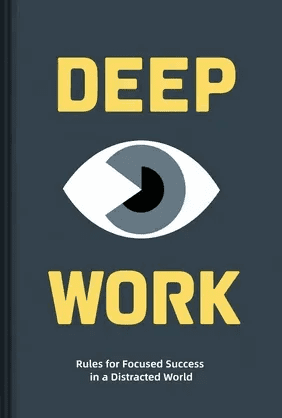
For those struggling to implement office hours or escape the endless cycle of inbox zero, diving into Cal Newport’s Deep Work will fundamentally shift your perspective. Newport provides compelling case studies and actionable routines to help you disconnect from digital noise and cultivate intense, profitable focus. Consider adding this to your reading list if you want to reclaim your cognitive bandwidth and finally finish those massive strategic projects.
Deep Work
Cal Newport
47 Duration8 Key Points4.6 RateHow to Consume These Books as a Busy Founder
Buying these books will not fix your business. Executing their concepts will. The biggest mistake founders make is treating non-fiction business books like entertainment rather than instruction manuals.
Here is how you extract maximum ROI from your reading time:
- Audit Your Constraints First: Do not read a book on sales if your current bottleneck is fulfillment. Pick the book that solves the exact problem costing you money right now.
- Leverage Audio: You likely drive, commute, or spend time at the gym. Get an Audible subscription. Listen to these books at 1.5x speed. When you hear a concept you need, use the voice notes app on your phone to dictate the idea so you can execute it later.
- Use the "One-Action Rule": Never start a new business book until you have fully implemented at least one strategy from the last book you read. If you read Traction but do not set up a single scorecard or meeting rhythm, you wasted your time.
- Read the Table of Contents: You do not get a medal for finishing a book cover-to-cover. If chapters 4, 5, and 6 contain the exact system you need to streamline your supply chain, skip straight to chapter 4. Take the framework, deploy it in your company, and put the book back on the shelf.
FAQ
I barely have time to sleep. How can I possibly find time to read?
Stop trying to find large blocks of time. Use audiobooks during dead time—driving, folding laundry, or working out. Alternatively, keep a Kindle on your nightstand and commit to reading just 10 pages before you fall asleep. At 10 pages a day, you will finish a 300-page book every month.
Stop trying to find large blocks of time. Use audiobooks during dead time—driving, folding laundry, or working out. Alternatively, keep a Kindle on your nightstand and commit to reading just 10 pages before you fall asleep. At 10 pages a day, you will finish a 300-page book every month.
If I only read one book from this list to start, which should it be?
Start with Buy Back Your Time by Dan Martell. It directly attacks the core problem every overwhelmed founder faces: time scarcity. It gives you a mathematical formula to figure out exactly what to delegate and who to hire first, providing immediate relief to your schedule.
Start with Buy Back Your Time by Dan Martell. It directly attacks the core problem every overwhelmed founder faces: time scarcity. It gives you a mathematical formula to figure out exactly what to delegate and who to hire first, providing immediate relief to your schedule.
Are these books suitable for solopreneurs or only for founders with large teams?
They are highly relevant for solopreneurs. Books like The E-Myth Revisited and Atomic Habits are best read before you hire your first employee. Building strong systems and SOPs when it is just you ensures that when you do bring on a team, you plug them into a smooth machine rather than a chaotic mess.
They are highly relevant for solopreneurs. Books like The E-Myth Revisited and Atomic Habits are best read before you hire your first employee. Building strong systems and SOPs when it is just you ensures that when you do bring on a team, you plug them into a smooth machine rather than a chaotic mess.
I read these books but struggle to implement the ideas. What should I do?
Stop reading and start building. Pick one framework—like the Level 10 Meeting from Traction or the Habit Stacking from Atomic Habits—and commit to doing it for 30 days. Treat the book as a reference manual, not a novel. Bring the book into your office, open it on your desk, and copy the exact templates provided.
Stop reading and start building. Pick one framework—like the Level 10 Meeting from Traction or the Habit Stacking from Atomic Habits—and commit to doing it for 30 days. Treat the book as a reference manual, not a novel. Bring the book into your office, open it on your desk, and copy the exact templates provided.