

You built a great product and found your market. Now you have to manage people. Suddenly, you spend less time executing the work you love and more time refereeing team disputes, fixing hiring mistakes, and trying to keep everyone aligned.

The skills that helped you launch your business will not help you scale it. This transition requires a completely new toolkit. You have to shift from a solo doer to a strategic leader who knows how to hire, delegate, and inspire.
To help you navigate this transition, here are the most effective books and tools broken down by the exact scaling challenges you face.
While the books on this list are tailored for the scaling phase, building a strong foundation from day one is just as critical.
For those just starting out, check out our guide to the must-read books for beginning entrepreneurs.
Management Books for Startup Founders Navigating Chaos
When you hire your first batch of employees, informal communication breaks down. You can no longer just yell across the room to get things done. You need reliable systems.
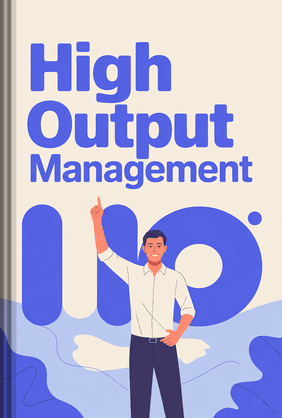
1. High Output Management by Andrew Grove
Former Intel CEO Andrew Grove wrote the definitive guide to measuring and managing human output. This is not a theoretical text. It is a highly practical manual on how to run a company.
The core lesson: Your output as a founder is the collective output of your team.

Grove explains how to structure your day, run effective 1-on-1s, and conduct performance reviews that actually matter. If you want to understand the raw mechanics of management, start here.
Grove explains how to structure your day, run effective 1-on-1s, and conduct performance reviews that actually matter. If you want to understand the raw mechanics of management, start here.
If you're tired of guessing how to manage your team and want a proven blueprint that Silicon Valley's most successful tech giants rely on, picking up Grove's masterpiece is a no-brainer. It is essentially an MBA in a single volume, packed with practical advice on optimizing your daily workflow and getting the most out of your direct reports. Grab a physical copy, keep it on your desk, and reference it whenever you feel your operational engine sputtering.
High Output Management
Andrew S. Grove
 30 Duration
 13 Key Points
 4.8 Rate
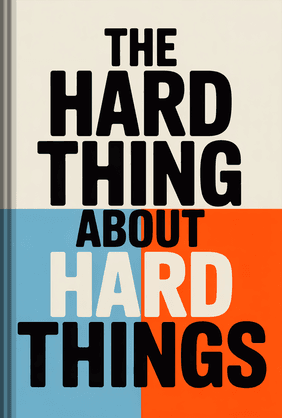
2. The Hard Thing About Hard Things by Ben Horowitz
Most business literature assumes a perfect world where every strategy works. Horowitz skips the happy scenarios and dives straight into the messy, terrifying reality of running a startup.
The core lesson: There is no formula for dealing with constant crises. Horowitz covers the decisions nobody wants to make—like firing your best friend, laying off a team, or keeping morale up when the company is bleeding cash. It consistently ranks among the absolute best books for CEOs who feel isolated during times of severe business stress.
Leading a growing startup isn't just about celebrating the big wins; it is about surviving the 3 AM cold sweats. Horowitz’s brutally honest stories will remind you that you aren't alone when everything feels like it is falling apart. This is a must-read for any founder in the United States—from Silicon Valley to Wall Street—who needs unfiltered, battle-tested advice on navigating the absolute darkest moments of company building.
The Hard Thing About Hard Things
Ben Horowitz
38 Duration8 Key Points4.6 RateHorowitz’s lessons underscore the intense psychological demands of entrepreneurship. Cultivating the right mental framework is non-negotiable for long-term success.


Too busy to read the classics? Get 15-minute audio summaries of top leadership books like High Output Management with LeapAhead.
 LeapAhead
Books on Leading a Team and Building Culture
A great product fails if the team building it is dysfunctional. As you grow, your primary job becomes managing human dynamics and setting the standard for company culture.
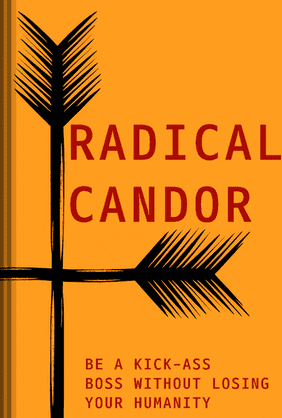
3. Radical Candor by Kim Scott
Founders often swing between two extremes: being too aggressive and alienating their team, or being too empathetic and letting poor performance slide. Kim Scott offers a framework to balance both.
The core lesson: You must care personally while challenging directly.

This framework eliminates toxic passive-aggressiveness in the workplace. It helps you deliver critical feedback that improves performance without destroying your team's confidence.
This framework eliminates toxic passive-aggressiveness in the workplace. It helps you deliver critical feedback that improves performance without destroying your team's confidence.
Mastering the art of feedback is arguably the most valuable skill you can develop as a boss. If you have ever held back from telling an employee they missed the mark because you didn't want to hurt their feelings, this is your solution. Scott's approach will completely transform how you communicate, helping you build a culture where honesty drives rapid growth and genuine respect.
Radical Candor
Kim Scott
19 Duration7 Key Points4.6 Rate4. LeapAhead: Microlearning for Time-Starved Founders
While not a single book, LeapAhead is a critical tool for entrepreneurs who know they should read the books on this list but can't find the time. It’s a microlearning app that distills bestselling nonfiction books into 15-minute summaries, available in both audio and text. For founders juggling product, sales, and team issues, this is a way to stay on top of essential leadership principles.
The core lesson: Consistent learning, even in small doses, is more effective than binge-reading you never find time for.
LeapAhead addresses the "reading debt" many entrepreneurs feel—that stack of unread books on the nightstand. With a library of over 30,000 titles, you can absorb the core frameworks of books like Traction or Radical Candor during a commute or workout. The app's features, like daily learning goals and personalized recommendations, help build a sustainable habit of continuous improvement without the pressure of finishing a 300-page book.
Of course, a 15-minute summary won't provide the same narrative depth as Horowitz's full account or the detailed case studies in Lencioni's fables. However, it's an incredibly efficient way to grasp the main ideas and decide which books deserve a deeper dive. Its mobile-first experience is perfect for learning on the go but might feel limiting for those who prefer dedicated study sessions on a desktop. For the founder whose biggest enemy is a packed calendar, LeapAhead offers a pragmatic solution to keep learning and scaling their leadership skills.
5. Who: The A Method for Hiring by Geoff Smart and Randy Street
Hiring the wrong person costs time, money, and team morale. Yet, most entrepreneurs rely on unstructured interviews and gut feelings to make hiring decisions.
The core lesson: You need a systematic approach to recruitment. This book provides a rigorous, scorecard-based method for sourcing and selecting top talent. It teaches you how to identify A-players and filter out candidates who talk a good game but cannot execute. Make this mandatory reading before you sign your next offer letter.
Organizational Leadership Books for Long-Term Scale
Once your team grows beyond 15 people, sheer willpower is no longer enough to drive the business forward. You need an organizational structure. Without it, you become the biggest bottleneck in your own company.
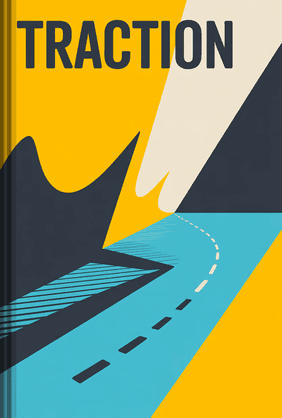
6. Traction: Get a Grip on Your Business by Gino Wickman
Many entrepreneurs hit a ceiling where growth stalls and everything feels out of control. Wickman introduces the Entrepreneurial Operating System (EOS), a practical method for aligning your entire company.
The core lesson: Vision without execution is hallucination.

You will learn how to define clear core values, establish a 10-year target, and run weekly Level 10 meetings that actually resolve issues instead of just talking about them.
You will learn how to define clear core values, establish a 10-year target, and run weekly Level 10 meetings that actually resolve issues instead of just talking about them.
When your startup hits that inevitable growth plateau, sheer hustle won't push you through it. You need a system that holds everyone accountable. Implementing the EOS framework outlined in this guide has helped countless American small businesses and mid-sized enterprises align their goals and regain momentum. It is an incredibly practical roadmap for turning your disorganized chaos into a well-oiled, self-sustaining machine.
Traction
Gino Wickman
42 Duration8 Key Points4.6 Rate7. The Five Dysfunctions of a Team by Patrick Lencioni
Written as a leadership fable, this book dissects exactly why teams fail to work together and what a founder must do to fix it.
The core lesson: Trust is the foundation of any functioning organization. Without vulnerability-based trust, your team will develop an artificial harmony. That fake harmony kills debate, ruins accountability, and destroys results. Lencioni provides a clear pyramid model to diagnose where your team is failing and how to rebuild the dynamic.
Building a scalable company requires unshakeable team cohesion. If you sense underlying tension, constant gossip, or a lack of commitment among your key players, you need to diagnose the root cause immediately. This engaging fable is a quick, entertaining read that packs a massive punch, giving you the tools to foster real trust and turn a group of talented individuals into an unstoppable, unified force.

The Five Dysfunctions of a Team
Patrick Lencioni
33 Duration8 Key Points4.5 RateHow to Consume These Books as a Busy Founder
Founders are notoriously strapped for time. You do not need to read every single page to extract massive value.
- Listen on the go: Grab the audio versions on Audible or Apple Books. Listen at 1.5x speed during your commute, your workout, or your morning run.
- Keep physical reference copies: Use Amazon or Barnes & Noble to buy physical copies for your office. Highlight the key frameworks.
- Check the summaries: Use platforms like Goodreads to review user-generated summaries of chapters you want to revisit quickly.
Turn your commute into a leadership MBA. Absorb key ideas from the best business books in just 15 minutes a day with the LeapAhead app.
LeapAheadListening on the go is a powerful hack for absorbing knowledge without sacrificing productivity. If audio is your preferred format, we have even more suggestions.
FAQ
I have zero free time. Which one book should I start with?
Start with High Output Management. It provides the most immediate, actionable return on your time regarding how to run meetings, manage subordinates, and understand your role as a manager.
Start with High Output Management. It provides the most immediate, actionable return on your time regarding how to run meetings, manage subordinates, and understand your role as a manager.
Are the lessons in these books applicable to a fully remote team?
Yes. Frameworks like Radical Candor and the hiring scorecards in Who are actually more critical in remote environments. When you lack physical office interactions, you must be far more intentional about your feedback loops and your hiring criteria.
Yes. Frameworks like Radical Candor and the hiring scorecards in Who are actually more critical in remote environments. When you lack physical office interactions, you must be far more intentional about your feedback loops and your hiring criteria.
Should I buy these books for my early employees?
Absolutely. Handing a copy of Traction or Radical Candor to your early management team ensures everyone is operating on the same wavelength. It creates a shared vocabulary for your company culture, making it much easier to scale your expectations as new hires join.
Absolutely. Handing a copy of Traction or Radical Candor to your early management team ensures everyone is operating on the same wavelength. It creates a shared vocabulary for your company culture, making it much easier to scale your expectations as new hires join.