


You are staring at the ceiling at 3 AM again. Your mind is racing through a loop of declining cash flow, unread emails, and the terrifying thought that you might not actually know what you are doing. Building a business is heavily romanticized, but the reality is a brutal psychological roller coaster.
You do not need another guide on marketing funnels or venture capital pitch decks right now. You need a mental anchor.
Success in business is rarely about having the perfect strategy. It usually comes down to who can handle the highest threshold of pain, uncertainty, and rejection without losing their mind. To help you survive the psychological warfare of building a company, here is a curated list of the best mindset books for entrepreneurs, broken down by the exact mental hurdles you are facing right now.
Rewiring Your Brain for Growth and Uncertainty
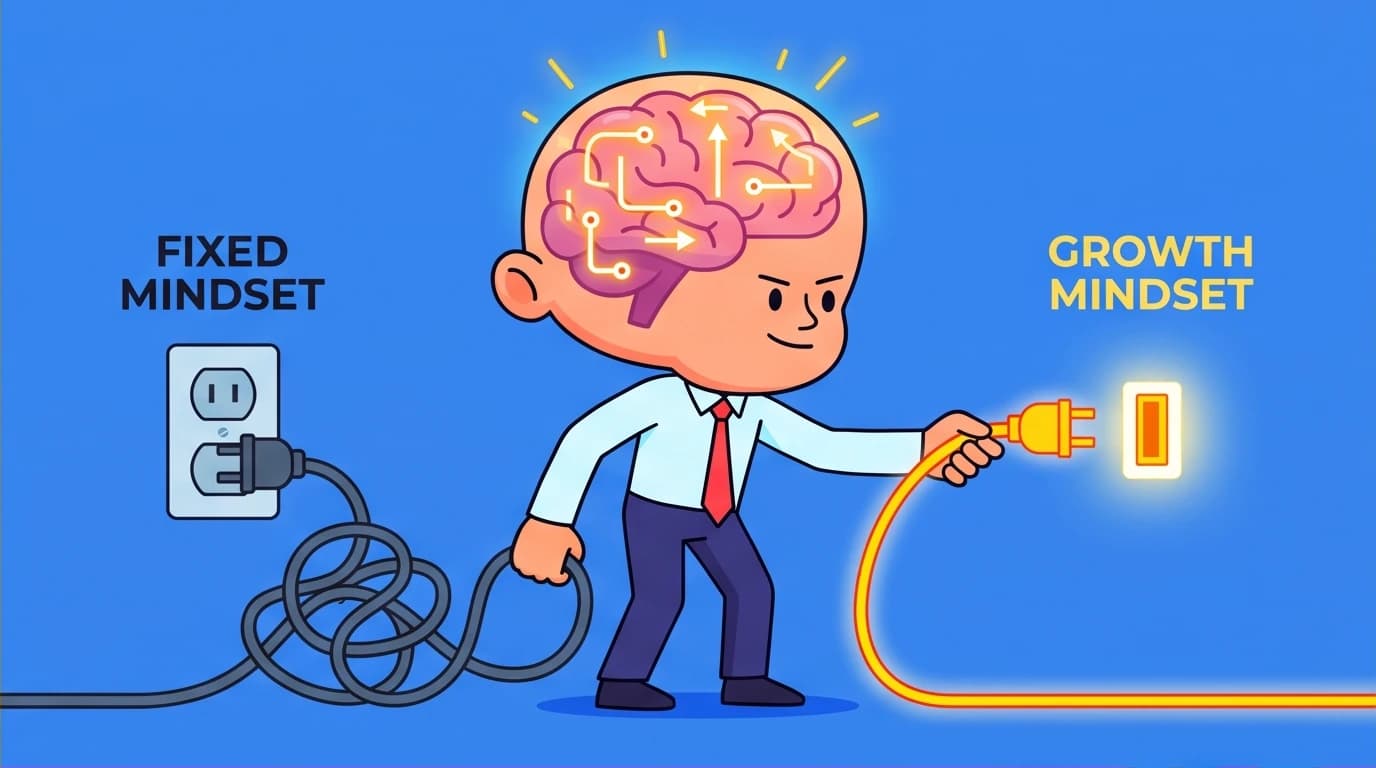
Before you can fix your business, you have to fix how you perceive your own capabilities. The foundation of any lasting company relies on the founder's ability to adapt. If you are looking for psychology of success books to lay down a healthy mental baseline, start here.
1. Mindset: The New Psychology of Success by Carol S. Dweck
If you feel like every business setback is a personal indictment of your intelligence or worth, you are stuck in a "fixed mindset." Dr. Carol Dweck’s research is mandatory reading for anyone running a business. She breaks down the difference between believing your abilities are static versus believing they can be developed through hard work and strategy.
- The Psychological Shift: You will stop viewing a failed product launch as "I am a terrible founder" and start viewing it as "This specific strategy did not work; what is the data telling me?"
- When to Read It: When you are terrified of taking a necessary risk because you are afraid of looking foolish.
If you are ready to fundamentally rewrite how you approach failure and growth in your startup journey, picking up this foundational text is the perfect starting line. Dweck's research has helped thousands of business owners break out of self-limiting beliefs and embrace the learning curve. If you want to dive deeper into these transformative principles, grab a copy below and start rewiring your entrepreneurial brain today.

Mindset
Carol S. Dweck
 51 Duration
 8 Key Points
 4.6 Rate
2. The Alter Ego Effect by Todd Herman
Imposter syndrome is the silent killer of great businesses. You land a massive client or step onto a stage, and a voice in your head says, They are going to find out I am a fraud. Todd Herman works with elite athletes and business leaders to overcome this exact paralysis. He teaches you how to create a secret identity—an alter ego—that you step into when the pressure is on.
- The Psychological Shift: It separates your personal insecurities from your professional execution. You realize you don't have to feel brave to act brave.
- When to Read It: Before a major pitch, a critical negotiation, or whenever you feel deeply unqualified for the room you are standing in.
Surviving the Dark Days: Books for Dealing with Business Failure
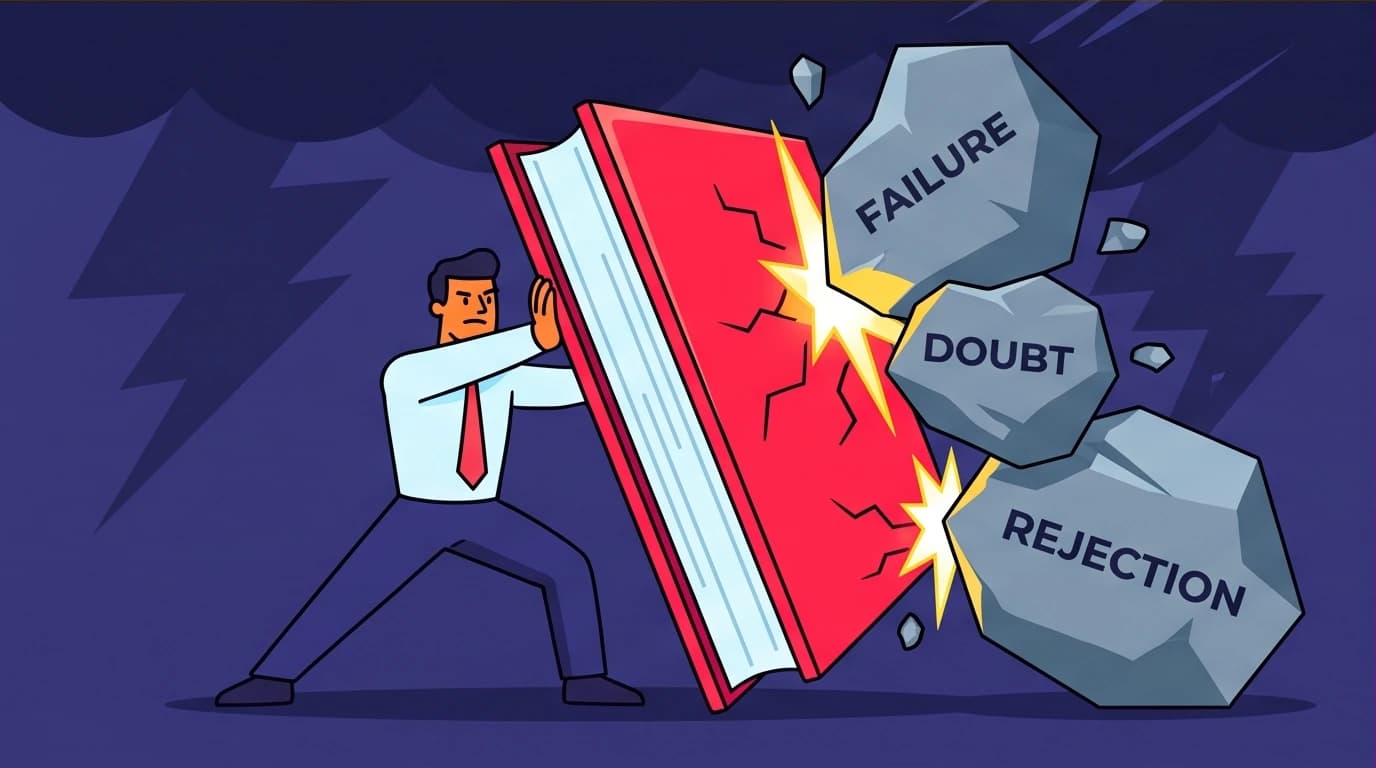
Every entrepreneur gets punched in the mouth. Deals fall through. Co-founders quit. Market trends shift overnight. When you are in the trenches, traditional business motivation books filled with relentless toxic positivity will only irritate you. You need raw, honest accounts of survival. These are the top books for dealing with business failure.
3. The Hard Thing About Hard Things by Ben Horowitz
There is no sugarcoating here. Ben Horowitz strips away the glamour of Silicon Valley and talks about the sheer terror of running a startup when everything is collapsing. He covers the psychological toll of firing your friends, managing extreme anxiety, and making impossible choices when there are no good options left.
- The Psychological Shift: You will realize that the agonizing struggle you are experiencing is not a sign that you are failing—it is simply the reality of being a CEO.
- When to Read It: When your company is bleeding cash, morale is at rock bottom, and you feel entirely isolated.
Sometimes, the most comforting thing an entrepreneur can hear is the unfiltered truth about how difficult building a company actually is. If you're tired of toxic positivity and need a mentor who has survived the absolute worst-case startup scenarios, Horowitz delivers exactly that. For founders navigating the darkest, most stressful days of business ownership, this incredibly honest playbook is an absolute must-read to help you keep pushing forward.
The Hard Thing About Hard Things
Ben Horowitz
38 Duration8 Key Points4.6 Rate4. The Obstacle Is the Way by Ryan Holiday
Based on the ancient Greek philosophy of Stoicism, this book is a masterclass in emotional regulation. Holiday uses historical examples to show how catastrophic situations can be flipped into advantages. When a competitor steals your idea or a key supplier drops you, panic is a natural response. Stoicism teaches you to bypass the panic and immediately look for the hidden leverage in the situation.
- The Psychological Shift: You stop asking "Why is this happening to me?" and start asking "What can I do with this?"
- When to Read It: When external circumstances beyond your control are threatening your business and you need to regain emotional sovereignty.
5. Shoe Dog by Phil Knight
Nike is a global titan today, but for its first decade, it was a chaotic mess constantly teetering on the edge of bankruptcy. Phil Knight’s memoir is a deeply human look at the long-term stress, the legal battles, and the profound doubts that plagued him. It is a phenomenal reminder that the road to building an empire is incredibly messy.
- The Psychological Shift: It provides long-term perspective. The crisis that feels like the end of the world today is just a chaotic chapter in your future memoir.
- When to Read It: Grab this on Audible or Apple Books and listen during a long drive when you need to remember why you started this journey in the first place.
Building the mental fortitude to survive failure is one half of the battle; the other is learning how to lead your team through those dark times with clarity and conviction.
Guarding Your Focus and Preventing Burnout

You cannot out-work bad mental health forever. Hustle culture tells you to sleep four hours a night and grind until you collapse. That is a fast track to destroying both your body and your equity. The best entrepreneurial mindset books teach you how to manage your energy, not just your time.
6. Essentialism: The Disciplined Pursuit of Less by Greg McKeown
Founders are naturally ambitious, which means they are prone to saying yes to everything: new product features, podcast interviews, endless coffee meetings. This scatters your energy and dilutes your impact. McKeown’s framework forces you to relentlessly edit your life and your business down to only what is absolutely essential.
- The Psychological Shift: You stop measuring your worth by how exhausted you are and start measuring it by the actual impact of your focused work.
- When to Read It: When you are working 80 hours a week but feel like your business is completely stagnant.
Reclaiming your time and focus is arguably the most profitable investment you can make as a founder. By systematically eliminating the noise, you create room for the high-leverage activities that actually move the needle in your business. If you are ready to step off the hamster wheel of endless tasks and start executing with laser-like precision, diving into McKeown's framework is your next logical step.

Essentialism
Greg McKeown
32 Duration10 Key Points4.6 Rate7. Atomic Habits by James Clear
Relying on sheer motivation to run a business is dangerous because motivation disappears the moment you hit a real crisis. James Clear explains how to build automated systems for your behavior. By focusing on tiny, marginal gains rather than massive overnight overhauls, you protect your mental bandwidth.
- The Psychological Shift: You stop fixating on the massive goal (e.g., hitting $1 million in revenue) and start obsessing over the daily systems that make failure to reach that goal impossible.
- When to Read It: When your days feel chaotic, unstructured, and reactive, and you need to regain control over your daily operations.
Motivation is a finite resource, but solid daily routines will carry your business through the toughest seasons. When you build the right micro-habits, achieving your massive revenue goals becomes the natural byproduct of your daily operations rather than a stressful uphill battle. If you want a step-by-step guide to installing these automated behaviors into both your personal life and your company culture, you will want to keep this bestseller on your desk.

Atomic Habits
James Clear
26 Duration8 Key Points4.7 Rate8. The Courage to Be Disliked by Ichiro Kishimi and Fumitake Koga
Entrepreneurs often subconsciously build their businesses to seek approval—from parents, peers, or society. Based on Adlerian psychology, this book is framed as a conversation between a philosopher and a young man. It aggressively challenges the idea that you need anyone else's validation to be successful or happy.
- The Psychological Shift: You will sever the mental chain that links your self-worth to the opinions of your critics, competitors, or even your customers.
- When to Read It: When you are afraid to pivot your business or launch a controversial product because you are terrified of what people on LinkedIn or Twitter will say about you.
Once your mindset is solid, the next step is to build systems that protect your focus and amplify your impact. Books like Essentialism and Atomic Habits are foundational for this.
How to Actually Apply These Books to Your Business
Reading business motivation books can easily become a sophisticated form of procrastination. You read, you feel inspired for two days, and then you revert to your old stress patterns. To extract real value from these resources, execute this simple protocol:
- Stop buying books in bulk. Pick exactly one book from the list above that directly addresses your current heaviest mental burden.
- Read with a specific problem in mind. If you are reading The Obstacle is the Way, hold your current biggest business crisis in your mind as you read every chapter. Apply the author's framework to your specific problem in real-time.
- Use the environment that works for you. If you are too exhausted to read a physical book at night, get the audiobook on Audible or borrow it via Libby. Listen to it while doing the dishes or walking your dog.
If even a full audiobook feels like too big a commitment on your busiest days, you can get the core ideas from these mindset-shifting books in about 15 minutes.


Helps busy entrepreneurs absorb key lessons from bestselling business books, turning a short commute or workout into a valuable mindset-building session.
 LeapAhead
- Write down one rule. After finishing the book, extract one single behavioral rule. Write it on a sticky note and put it on your monitor. (e.g., "Is this essential?" from Essentialism).
Your mind is the primary engine of your business. If the engine is completely seized up with anxiety, fear, and exhaustion, the vehicle will not move forward, no matter how much fuel you pour into it. Invest in your psychological resilience first.
FAQ
Do I really have time to read while running a business?
You don't have time not to. However, sitting down with a hardcover isn't always realistic for a founder. Use audiobooks during dead time—commuting, working out, or waiting in line. Even 15 minutes of a perspective-shifting book a day can disrupt a spiral of negative thinking and give you the mental clarity needed to save hours of wasted, anxious work.
You don't have time not to. However, sitting down with a hardcover isn't always realistic for a founder. Use audiobooks during dead time—commuting, working out, or waiting in line. Even 15 minutes of a perspective-shifting book a day can disrupt a spiral of negative thinking and give you the mental clarity needed to save hours of wasted, anxious work.
What is the single best book for a first-time founder?
If you can only pick one, start with The Hard Thing About Hard Things by Ben Horowitz. First-time founders are often hit with a massive reality shock when things go wrong. This book normalizes the chaos and proves that feeling overwhelmed doesn't mean you are failing; it just means you are doing the job.
If you can only pick one, start with The Hard Thing About Hard Things by Ben Horowitz. First-time founders are often hit with a massive reality shock when things go wrong. This book normalizes the chaos and proves that feeling overwhelmed doesn't mean you are failing; it just means you are doing the job.
How do I stop feeling like an imposter even when my business is growing?
Growth often triggers imposter syndrome because the stakes get higher. You are constantly in rooms you've never been in before. Read The Alter Ego Effect to learn how to compartmentalize your personal doubts from your professional role. Acknowledge that feeling like an imposter is a feature of high achievers who push their boundaries, not a bug.
Growth often triggers imposter syndrome because the stakes get higher. You are constantly in rooms you've never been in before. Read The Alter Ego Effect to learn how to compartmentalize your personal doubts from your professional role. Acknowledge that feeling like an imposter is a feature of high achievers who push their boundaries, not a bug.
Are standard self-help books useful for entrepreneurs?
They can be, but many generic self-help books rely on vague positivity which shatters upon contact with real business problems like payroll shortages or lawsuits. The entrepreneurial mindset books listed above are rooted in actionable psychology, historical philosophy, and actual startup battle scars, making them much more effective for business owners.
They can be, but many generic self-help books rely on vague positivity which shatters upon contact with real business problems like payroll shortages or lawsuits. The entrepreneurial mindset books listed above are rooted in actionable psychology, historical philosophy, and actual startup battle scars, making them much more effective for business owners.