

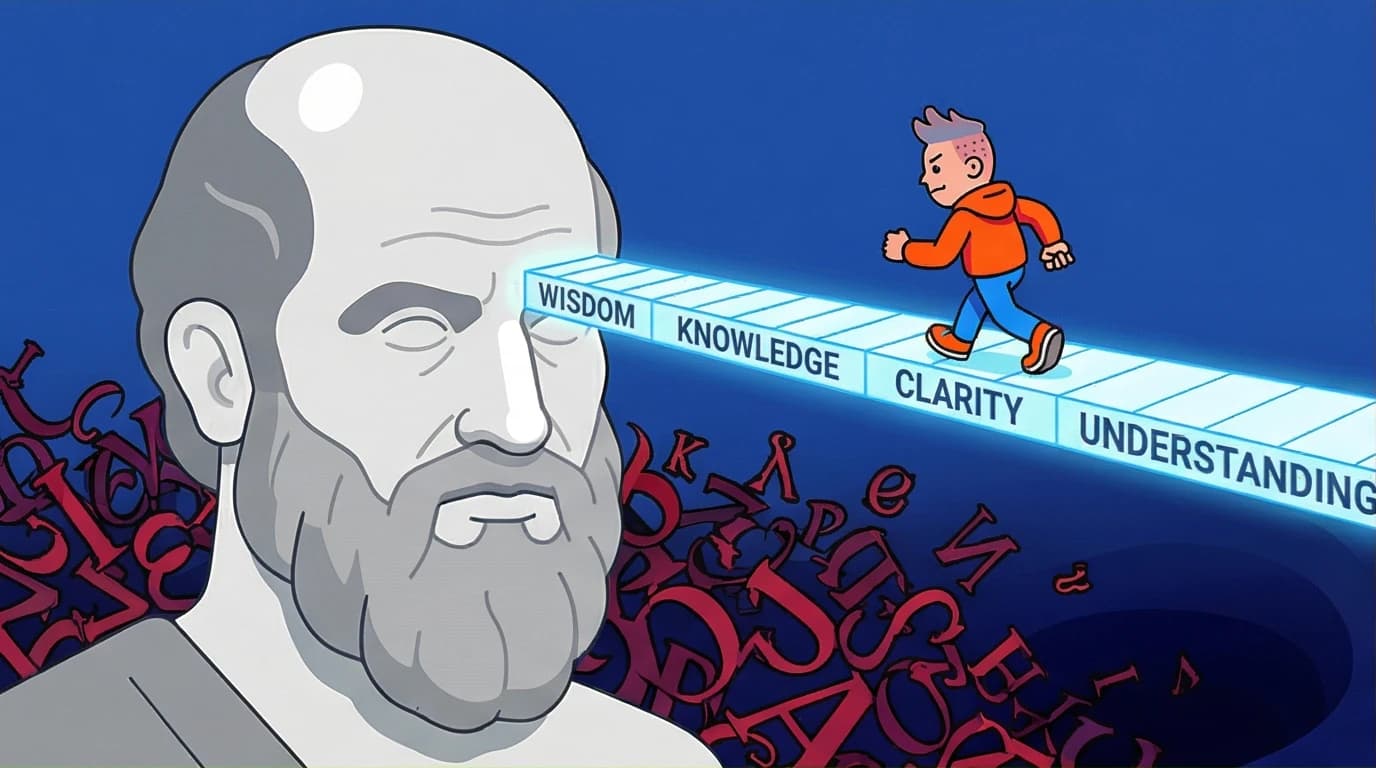
You finally decided to read Meditations. You went to Amazon or Apple Books, downloaded a free or 99-cent version, and opened it up. Instantly, you hit a brick wall. The text is packed with words like "thou," "hath," and "doth." The sentences drag on for paragraphs. Instead of finding practical life advice, you feel like you are decoding a 19th-century legal document.
You are not alone. This is the exact trap almost every new reader falls into.
Because the original text is nearly 2,000 years old, early English translations are now in the public domain. Publishers package these old, clunky translations with new covers and sell them cheap. But reading a dense Victorian translation defeats the entire purpose of the book. Marcus Aurelius did not write this text for publication. He wrote it in a tent on the front lines of war. It was his private diary. It should sound like a person talking to himself, not a priest giving a sermon.
If you are trying to figure out which version of Meditations to read, you need a version that gets out of its own way.
The Core Problem: Why Most Free Versions Fail You
To understand why the right translation matters so much, you need to know a quick fact about how this book was created. Marcus Aurelius was a Roman Emperor, but he wrote Meditations in Koine Greek. It was essentially bullet-point journaling.
When translators in the 1600s or 1800s tackled the text, they treated it like a sacred religious document. They used elevated, formal language. The most common public domain version you will find online was translated by George Long in 1862. It is historically significant, but for a modern reader, it is a massive headache.
If you are reading to improve your life, manage stress, or understand Stoicism, you do not want to parse through Victorian grammar. You want the raw ideas. You need a Meditations modern translation.
If you are ready to skip the frustrating Victorian translations and dive straight into the timeless wisdom of Marcus Aurelius, picking up a dedicated copy of his personal diary is a must. Holding the physical book allows you to underline his most powerful insights and reference them whenever you face a difficult day. It is an essential cornerstone for any modern reader's personal development library.
Meditations
Marcus Aurelius
 34 Duration
 7 Key Points
 4.6 Rate
The Gold Standard: Gregory Hays Meditations
When people ask for the best translation of Meditations, the universal answer among modern Stoic readers, authors, and entrepreneurs is the translation by Gregory Hays. Published in 2002 by Modern Library, this edition completely revolutionized how everyday people read Marcus Aurelius.
Hays stripped away the artificial formality. He looked at the original Greek and realized Marcus was writing quick notes to himself. The resulting translation is punchy, direct, and sometimes incredibly blunt.
Here is exactly why the Gregory Hays Meditations stands above the rest:
- Clear, Conversational English: Hays uses modern vocabulary and sentence structures. There are no "thees" or "thous."
- Formatting that Makes Sense: Hays breaks up massive blocks of text into readable paragraphs and bullet points, matching the fragmented style of a personal journal.
- An Incredible Introduction: The book includes a highly readable 50-page introduction that explains who Marcus Aurelius was, what Stoicism actually means, and the historical context of the Roman Empire. It sets you up for success before you even read the first meditation.
George Long vs Gregory Hays: A Direct Comparison
To truly grasp why the translation you buy matters, you need to see them side by side. Let’s look at how both translators handle the exact same passage (Book 4, Section 23).
The George Long Translation (1862):
"Everything harmonizes with me, which is harmonious to thee, O Universe. Nothing for me is too early nor too late, which is in due time for thee. Everything is fruit to me which thy seasons bring, O Nature: from thee are all things, in thee are all things, to thee all things return."
The Gregory Hays Translation (2002):
"Everything harmonizes with me that is harmonious to you, O Universe. Nothing is too early or too late for me that is in time for you. Everything is fruit to me that your seasons bring, Nature. All things come from you, subsist in you, go back to you."
Let’s look at a more aggressive, practical passage (Book 2, Section 5).
George Long:
"Every moment think steadily as a Roman and a man to do what thou hast in hand with perfect and simple dignity, and feeling of affection, and freedom, and justice; and to give thyself relief from all other thoughts."
Gregory Hays:
"Concentrate every minute like a Roman—like a man—on doing what’s in front of you with precise and genuine seriousness, tenderly, willingly, with justice. And on freeing yourself from all other distractions."
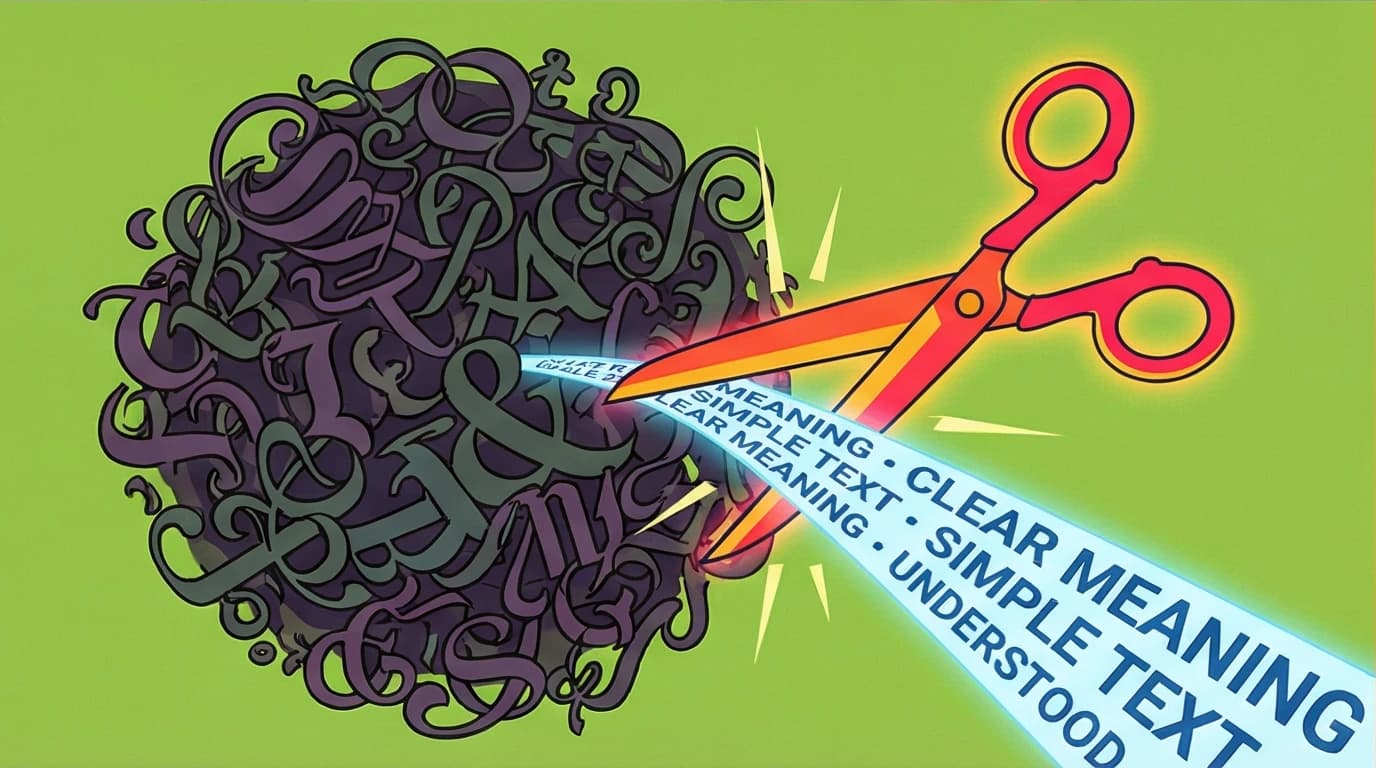
Notice the difference? Long’s version makes you pause to translate the English into modern ideas. Hays’s version hits you right in the chest. It tells you exactly what to do: Concentrate on doing what's in front of you. It is active, sharp, and highly practical.


Want the wisdom of Meditations without reading the whole book? Get 15-minute summaries of Stoic classics on LeapAhead.
 LeapAhead
Once you experience the sharp, practical nature of Stoicism through a great translation, you might want to explore how other modern thinkers apply these ancient concepts today. If you are looking for a way to weave this philosophy into your daily routine without reading massive historical volumes, bite-sized daily lessons can be incredibly effective. It’s a fantastic way to build a resilient mindset one morning at a time.
The Daily Stoic
Ryan Holiday & Stephen Hanselman
48 Duration9 Key Points4.6 RateOther Modern Alternatives to Consider
While Hays is the default recommendation, there are a few other excellent modern translations depending on what exactly you want out of the reading experience.
1. The Annotated Approach: Robin Waterfield (2021)
If you love history and want heavy context, Robin Waterfield’s translation is fantastic. It is slightly more formal than Hays but highly readable. What makes Waterfield’s version special is the extensive annotations. He provides notes explaining the specific people, places, and philosophical concepts Marcus mentions. If you want to study the text like a scholar, buy this one.
2. The Smooth Reader: C. Scot Hicks and David V. Hicks (The Emperor’s Handbook)
Published under the title The Emperor’s Handbook, this translation by the Hicks brothers is heavily focused on making the text flow smoothly. It is a brilliant, elegant read. If you cannot find the Hays version at your local Barnes & Noble, this is a phenomenal backup choice.
3. The Literal Modernist: Robin Hard (Wordsworth Classics)
Robin Hard’s translation is very accurate to the original Greek but slightly more rigid than Hays. It strikes a balance between academic accuracy and modern readability. It lacks the punchy poetic rhythm of Hays, but it is deeply respected by classicists.
4. The Microlearning Approach: LeapAhead App
For those who want the core wisdom of Meditations but struggle to find time for reading, a book summary app like LeapAhead offers a powerful alternative. Instead of a full translation, it provides 15-minute audio and text summaries that extract the key philosophical takeaways. This is ideal for busy commuters or anyone looking to build a consistent learning habit. While a summary can't replace the experience of reading Marcus's full journal, it’s an incredibly effective way to absorb Stoic principles when you’re short on time. Its mobile-first design makes it easy to fit learning into your day, but may feel limiting for those who prefer to study on a desktop.
How to Decide Which Version of Meditations to Read
If you are still stuck on which edition to put in your Amazon cart, use this simple checklist to make your decision:
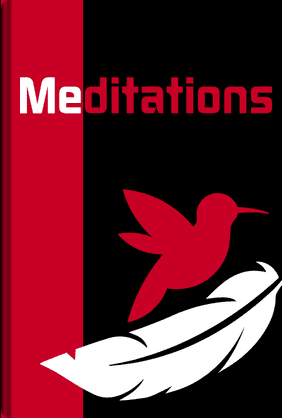
- Choose Gregory Hays if: You want the most direct, engaging, and practical version. You want to read it on your commute, highlight passages, and actually apply the advice to your life today. (Look for the Modern Library edition with the red bird on the cover).
- Choose Robin Waterfield if: You are a history buff. You want deep footnotes explaining Roman politics and the background of Stoic philosophy alongside the text.
- Choose C. Scot Hicks if: You want a beautifully flowing, literary reading experience that still uses modern English.
- Avoid George Long and older public domain versions if: You value your time and get easily frustrated by old-fashioned, biblical-sounding grammar.
Turn Stoic philosophy into a daily habit. Listen to key ideas from Meditations and other great books in just 15 minutes with LeapAhead.
LeapAheadIf you find yourself captivated by Marcus Aurelius and want to explore more heavy hitters of Roman Stoicism, you do not have to stop at Meditations. Another foundational figure from that era wrote brilliant, highly accessible advice in the form of letters to his friends. Reading correspondence from one of the wealthiest and most powerful men in Rome offers a fascinating, practical look at how to handle wealth, anxiety, and the shortness of life.
Seneca's Letters from a Stoic
Lucius Annaeus Seneca, Classics HQ
38 Duration8 Key Points4.7 RateA Quick Guide to Reading Meditations Effectively
Buying the best translation of Meditations is only the first step. You also need to know how to read it. This is not a novel. It has no plot, no chapters, and no narrative arc. If you try to read it cover-to-cover in one weekend, your brain will glaze over.

1. Skip Book 1 on your first read.
Book 1 is essentially a list of acknowledgments where Marcus thanks his family, teachers, and gods. It is highly repetitive and historically dense. Start directly at Book 2, where the actual Stoic advice begins. You can always go back to Book 1 later.
Book 1 is essentially a list of acknowledgments where Marcus thanks his family, teachers, and gods. It is highly repetitive and historically dense. Start directly at Book 2, where the actual Stoic advice begins. You can always go back to Book 1 later.
2. Read it in small pieces.
Leave the book on your nightstand or your desk. Read two or three pages a day. Because it is a collection of journal entries, you can open it to a random page, read a single paragraph, and spend the rest of the day thinking about how to apply that specific idea.
Leave the book on your nightstand or your desk. Read two or three pages a day. Because it is a collection of journal entries, you can open it to a random page, read a single paragraph, and spend the rest of the day thinking about how to apply that specific idea.
3. Use a pen.
Marcus Aurelius wrote this book to process his own thoughts. You should process yours right on top of his. Highlight the sentences that strike a nerve. Write your own notes in the margins. Treat it like a workbook, not a sacred artifact.
Marcus Aurelius wrote this book to process his own thoughts. You should process yours right on top of his. Highlight the sentences that strike a nerve. Write your own notes in the margins. Treat it like a workbook, not a sacred artifact.
Choosing the right version removes the friction between you and one of the greatest minds in history. Grab the modern translation, open it up, and let the ideas do the heavy lifting.
Marcus Aurelius essentially used his private diary to clear his mind and organize his thoughts—a practice that is just as relevant in our fast-paced modern world. If treating your books like a workbook and jotting down quick, impactful notes sounds appealing, you might benefit from learning a structured way to journal. Building a personalized system for your thoughts and tasks is one of the best ways to turn philosophical ideas into real-world action.
The Bullet Journal Method
Ryder Carroll
38 Duration9 Key Points4.4 RateFAQ
Is the Gregory Hays translation accurate to the original Greek text?
Yes. While Hays prioritizes readability and impact over word-for-word literal translation, he accurately captures the philosophical meaning and tone of Marcus Aurelius's original Koine Greek. Scholars agree that Hays correctly interprets the Stoic principles, even if he modernizes the phrasing.
Yes. While Hays prioritizes readability and impact over word-for-word literal translation, he accurately captures the philosophical meaning and tone of Marcus Aurelius's original Koine Greek. Scholars agree that Hays correctly interprets the Stoic principles, even if he modernizes the phrasing.
Where can I buy the Gregory Hays translation?
You can find it at almost any major bookstore like Barnes & Noble, or online at Amazon. You are looking for the edition published by Modern Library. It usually has a minimalist red and white cover featuring a bird or a statue.
You can find it at almost any major bookstore like Barnes & Noble, or online at Amazon. You are looking for the edition published by Modern Library. It usually has a minimalist red and white cover featuring a bird or a statue.
Should I listen to Meditations as an audiobook?
Audiobooks are a great way to consume Stoicism, but Meditations is often better read physically. Because the text consists of short, dense philosophical fragments, you will frequently want to stop, re-read a sentence, or highlight a passage. If you do use Audible, ensure the version you buy explicitly states it is a modern translation, otherwise, you will be listening to hours of archaic 19th-century English.
Audiobooks are a great way to consume Stoicism, but Meditations is often better read physically. Because the text consists of short, dense philosophical fragments, you will frequently want to stop, re-read a sentence, or highlight a passage. If you do use Audible, ensure the version you buy explicitly states it is a modern translation, otherwise, you will be listening to hours of archaic 19th-century English.
Why are there so many different versions of the exact same book?
Because the original text is ancient, there is no single copyright holder. Anyone who speaks ancient Greek can translate it and publish their own version. Over the last 400 years, dozens of translators have taken a crack at it, each bringing the popular language style of their own decade to the text.
Because the original text is ancient, there is no single copyright holder. Anyone who speaks ancient Greek can translate it and publish their own version. Over the last 400 years, dozens of translators have taken a crack at it, each bringing the popular language style of their own decade to the text.