


You just picked up a copy of Meditations after seeing it highly rated on Goodreads or spotting it on a display table at your local Barnes & Noble. You open it up, ready for profound, life-changing advice, only to hit a wall of fragmented thoughts, disjointed paragraphs, and obscure ancient Roman references.
You are not alone. Most first-time readers feel completely lost trying to decode this text. It feels repetitive. It lacks a clear narrative. The structure is confusing.
If you are feeling overwhelmed, take a deep breath. You are not missing the point—you are just trying to read it the wrong way. Figuring out how to read Meditations requires a complete mindset shift. You are not reading a polished manuscript meant for publication. You are reading the private, unedited diary of a Roman Emperor who was trying to keep his own sanity intact during wars, plagues, and immense political stress.
Here is your comprehensive Meditations reading guide. Let's break down exactly how to approach this text so you can extract its timeless wisdom without getting frustrated.
The Secret to Understanding Marcus Aurelius (It's Not a Book)
Before you read another page, you need to understand the context. The key to truly understanding Marcus Aurelius lies in the original Greek title of this work: Ta eis heauton. Translated, this simply means "To Himself."
Marcus Aurelius never intended for you to read this. He never intended for his friends, his family, or his political rivals to read it either. He wrote these passages in the dark, in military tents on the front lines of Germania, as a form of personal psychological therapy. He was actively coaching himself through difficult days, dealing with annoying people, managing his temper, and facing his own mortality.
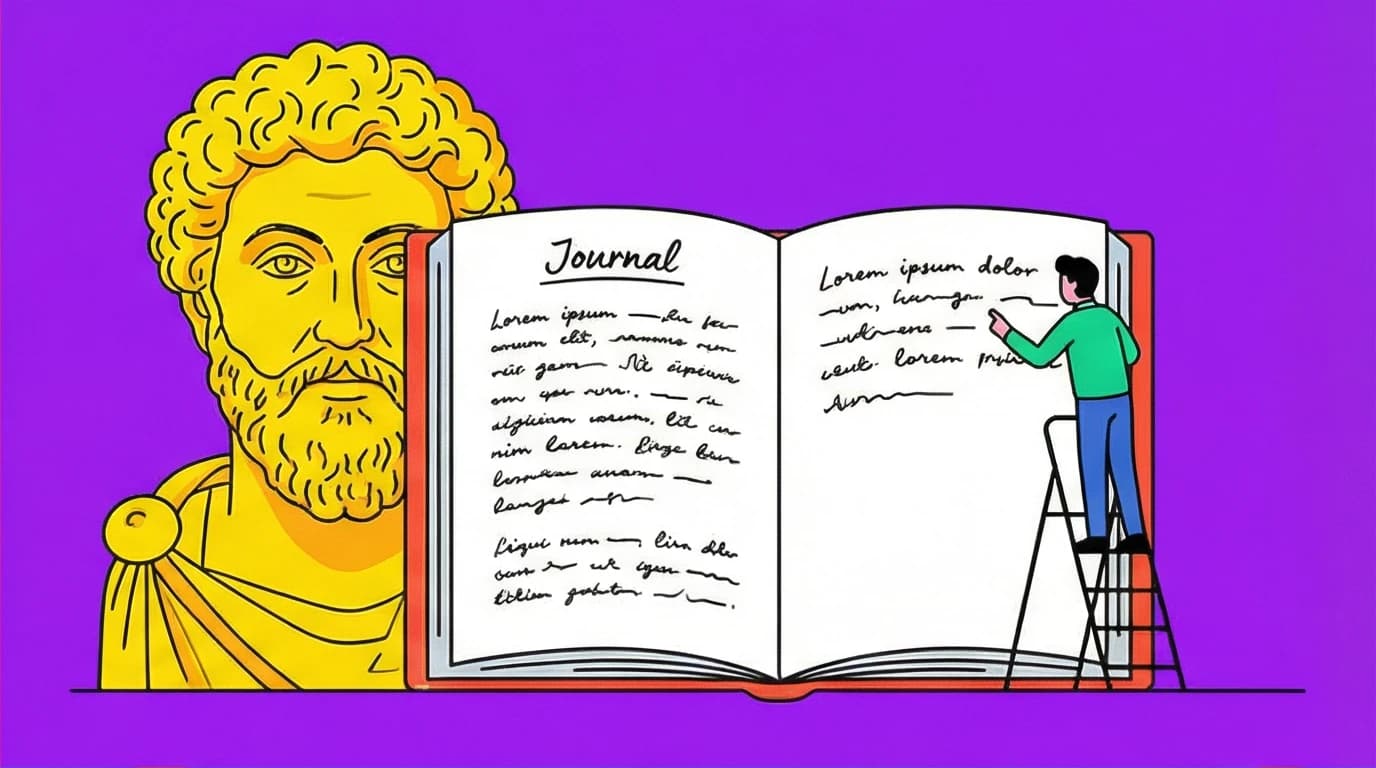
Once you realize this is a private journal, the strange, non-linear structure makes perfect sense. He repeats himself because he needed to hear the lesson again. He writes in fragments because he was jotting down quick reminders. Treat this text like you are snooping through the private diary of the most powerful man in the ancient world.
The Ultimate Meditations Reading Guide: 6 Rules for Beginners
If you want to pull genuine value from this masterpiece, you need to follow a few simple rules. Think of this as your playbook for navigating the text.
1. Choose the Right Translation (This is Make or Break)
The number one reason people quit reading Meditations is that they download a free or $0.99 public domain version on Amazon Kindle. Those versions typically use the translation by George Long from the 1800s. It is packed with "thee," "thou," "hast," and dense Victorian-era language. It turns a practical philosophy into a confusing slog.
You need a modern translation. The absolute best choice for a modern reader is the translation by Gregory Hays (published by Modern Library). Hays strips away the archaic fluff and translates Marcus's thoughts into punchy, direct, and aggressive American English. It feels like reading the thoughts of a modern CEO or a seasoned coach.
If you cannot get the Hays translation, the versions by Robin Waterfield or Martin Hammond are also excellent, highly readable alternatives.
If you are ready to dive into the mind of a Roman emperor, having a solid copy of his private journal is your necessary first step. Whether you are looking for a fresh, highly readable modern translation or just want to finally add this timeless masterpiece to your permanent physical library, grabbing a high-quality edition of this text will change the way you see the world. It’s an absolute must-have foundational book for anyone interested in Stoicism, effective leadership, or personal development.
Meditations
Marcus Aurelius
 34 Duration
 7 Key Points
 4.6 Rate
While Gregory Hays is a fantastic starting point, the world of Stoic translations has its own nuances. Understanding the different approaches translators take can help you find the version that truly speaks to your modern sensibilities.
2. Stop Trying to Read It Cover to Cover
When we buy a book, we are trained to start at page one and read until the end. Do not do this here. Meditations is divided into 12 "Books" (which are essentially just chapters).
Book 1 is titled "Debts and Lessons." It is a long, tedious list of everyone Marcus was thankful for—his grandfather, his tutors, his parents. While historically interesting, it contains almost zero practical Stoic philosophy. If you start at Book 1, you will likely get bored and quit within ten pages. Skip it entirely for now.
3. Consume It in Bite-Sized Pieces
Do not try to read fifty pages in one sitting. You will burn out, and the lessons will blur together. Meditations is deeply dense with insight. A single paragraph might contain enough philosophical weight to occupy your thoughts for an entire week.
Read one or two passages a day. Make it part of your morning routine. Read a paragraph while you drink your morning coffee, close the book, and let the idea simmer in your brain while you commute, work, and interact with people.
4. Use a Modern Tool to Absorb the Core Ideas
Let's be realistic: in a world of constant notifications and fragmented attention, even sitting down for 15 minutes with a dense book can feel like a monumental task. If you're struggling to build a habit with the physical text, a modern learning tool can serve as an excellent bridge to the core ideas.
Apps like LeapAhead are designed for this exact problem. LeapAhead provides 15-minute summaries of bestselling nonfiction books, including many on philosophy and Stoicism, available in both audio and text. This allows you to grasp the fundamental concepts of Meditations during a commute, at the gym, or on a short break. It's a way to engage with the philosophy even on days when your energy or focus is low.
While a summary can't fully replace the experience of reading Marcus's own reflective prose, it's an incredibly effective way to get the "big picture" and make the wisdom accessible. For beginners, it can serve as a primer, making the full text less intimidating when you do decide to dive in.


Struggling to find time for dense philosophy? Absorb the key ideas from Meditations and thousands of other books in just 15 minutes a day.
 LeapAhead
For those who want a text-based overview before starting the book itself, getting a concise rundown of the major themes can be incredibly helpful.
5. Write Back to Marcus
Because this is a journal, you should treat it interactively. Do not keep your copy pristine. Use a pen. Highlight lines that hit you hard. Write your own thoughts in the margins.
When Marcus writes about dealing with annoying people, write down the name of the difficult coworker you have to deal with today. Connect his ancient struggles to your modern reality. Active reading turns this ancient text into a living, breathing tool.
Taking notes in the margins is a great start, but if Marcus Aurelius has inspired you to start your own practice of reflective writing, you might want to explore intentional journaling. Writing down your thoughts isn't just about preserving memories; it’s a powerful way to declutter your mind and focus on what truly matters. If you are looking for a structured, customizable way to track your goals, manage daily anxieties, and catalog your own life lessons, learning a proven journaling system can be an absolute game-changer.
The Bullet Journal Method
Ryder Carroll
38 Duration9 Key Points4.4 Rate
6. Ignore the Ancient Trivia
You will occasionally run into names like Antoninus, Rusticus, or references to ancient Roman geography. Do not stop to look them up. You do not need a degree in ancient history to grasp the core message. If a passage feels too bogged down in specifics you don't understand, just skip to the next one.
Should I Read Meditations in Order? (Your First-Pass Roadmap)
One of the most common questions from beginners is: should I read Meditations in order? The short answer is absolutely not.
Because the book is a collection of private notes, there is no overarching narrative arc. The books are not chronological. You can open to a random page, point your finger at a paragraph, and extract value instantly. However, if you prefer a structured approach to ease yourself into the philosophy, here is an optimized roadmap.
Step 1: Start with Book 2
Book 2 is where the actual philosophy begins. It opens with one of the most famous and practical Stoic quotes in history, advising you on how to prepare for difficult people in the morning. This book instantly proves the modern relevance of Marcus's thoughts.
Book 2 is where the actual philosophy begins. It opens with one of the most famous and practical Stoic quotes in history, advising you on how to prepare for difficult people in the morning. This book instantly proves the modern relevance of Marcus's thoughts.
This opening passage is a perfect example of the practical, grounding advice found throughout the journal. It's just one of many powerful quotes that have guided leaders and thinkers for centuries.
Step 2: Read Books 3 and 4
These two sections are packed with short, hard-hitting reflections on mortality, focusing on what you can control, and ignoring the opinions of others. They are incredibly accessible and will give you a solid foundation in basic Stoic concepts.
These two sections are packed with short, hard-hitting reflections on mortality, focusing on what you can control, and ignoring the opinions of others. They are incredibly accessible and will give you a solid foundation in basic Stoic concepts.
Step 3: Jump to Books 7 and 8
These sections deal heavily with resilience, anxiety, and dealing with pain. If you are going through a stressful period at work or in your personal life, the passages here are incredibly comforting and grounding.
These sections deal heavily with resilience, anxiety, and dealing with pain. If you are going through a stressful period at work or in your personal life, the passages here are incredibly comforting and grounding.
Step 4: Browse the Rest Freely
Once you have tackled the books above, you will have a strong feel for Marcus's rhythm and tone. From here, flip around. Read Book 11 for thoughts on anger management. Go back to Book 1 when you finally want to see who shaped the mind of this great emperor.
Once you have tackled the books above, you will have a strong feel for Marcus's rhythm and tone. From here, flip around. Read Book 11 for thoughts on anger management. Go back to Book 1 when you finally want to see who shaped the mind of this great emperor.
Once you have developed a rhythm with Marcus Aurelius, you will likely find yourself craving more practical, hard-hitting ancient wisdom. If Meditations resonates with you, your next logical step into the world of Roman philosophy should be the works of Seneca. Unlike Marcus, who wrote primarily to coach himself, Seneca wrote letters specifically intended to advise his friends on how to handle grief, wealth, and the shortness of life. His writing is incredibly conversational, making it another perfect, highly accessible gateway into Stoic thinking.
Seneca's Letters from a Stoic
Lucius Annaeus Seneca, Classics HQ
38 Duration8 Key Points4.7 RatePractical Tips for Reading Meditations
To truly integrate these ancient insights into your modern life, you need to build a system around your reading habit. Here are some actionable tips for reading Meditations effectively.
Keep It Visible on Your Nightstand or Desk
Out of sight is out of mind. Meditations is the perfect reference book. Leave your physical copy somewhere you will see it daily—on your nightstand, on your office desk, or next to your coffee maker. When you feel stressed, angry, or overwhelmed, open it to a random page. It works like an emotional reset button.
Pair it with an Audiobook
If you are an auditory learner, consider picking up the audiobook version on Audible. Listening to Meditations while driving your car or going for a run can be an incredibly meditative experience. Hearing the words spoken out loud highlights the coaching tone of the text. However, always keep a physical copy at home so you can revisit and highlight the passages that stood out to you during your listen.
Adopt the "Morning Preparation" Mindset
Marcus wrote many of his entries in the morning to prepare himself for the chaos of the day. You should read him the same way. Use his writings defensively. Before you open your email inbox, before you check social media, read a single Stoic passage to anchor your mind. Decide what kind of person you want to be that day before the world tries to decide for you.
Turn your commute or morning coffee into a powerful learning habit. Listen to the core wisdom of Stoicism and other life-changing books with LeapAhead.
LeapAheadBuilding a consistent morning reading habit can be challenging, especially if you are not used to digesting dense philosophical concepts before your first cup of coffee. If you love the idea of starting your day with a grounding thought but want something structured specifically for modern daily life, there are fantastic resources that do the heavy lifting for you. A curated daily devotional that breaks down Stoic principles into bite-sized, day-by-day lessons can help you maintain your momentum and keep your mind anchored all year long.
The Daily Stoic
Ryan Holiday & Stephen Hanselman
48 Duration9 Key Points4.6 RateDo Not Judge the Repetition
As you read, you will notice Marcus returning to the same themes over and over: death is natural, fame is worthless, people are flawed but you must work with them, focus only on your own actions. Do not view this repetition as bad writing. View it as proof of his humanity. Just like us, Marcus struggled to learn his own lessons. He had to remind himself constantly. Let his repetition serve as reinforcement for your own brain.
The Payoff: Why This Effort Matters
Learning how to read Meditations takes a little bit of friction initially, but the payoff is massive. You are not just reading a book; you are installing a new operating system for your mind.
You are learning to separate your internal peace from external chaos. You are learning to view obstacles as raw material for growth. By applying the roadmap above, bypassing the dense translations, and treating the text as a daily workbook, you will unlock one of the most powerful guides to human resilience ever written.

Grab your copy, grab a pen, skip to Book 2, and start a conversation with the Emperor.
FAQ
Is Meditations hard to read?
It is only hard to read if you choose an outdated translation or try to read it cover-to-cover like a novel. If you choose a modern translation (like Gregory Hays) and read it in short, single-paragraph bursts, it is actually incredibly straightforward and highly relatable to modern life.
It is only hard to read if you choose an outdated translation or try to read it cover-to-cover like a novel. If you choose a modern translation (like Gregory Hays) and read it in short, single-paragraph bursts, it is actually incredibly straightforward and highly relatable to modern life.
Which translation of Meditations is best for beginners?
The Gregory Hays translation (Modern Library) is universally recommended for first-time readers. It uses contemporary American English, removing archaic phrasing, which makes Marcus Aurelius's thoughts feel punchy, relevant, and easy to digest.
The Gregory Hays translation (Modern Library) is universally recommended for first-time readers. It uses contemporary American English, removing archaic phrasing, which makes Marcus Aurelius's thoughts feel punchy, relevant, and easy to digest.
How long does it take to read Meditations?
Technically, it is a short book (around 150 to 200 pages depending on the edition) and could be read in a few hours. However, doing so defeats the purpose. It is designed to be read slowly over months or even years. Reading one or two passages a day is the optimal pace.
Technically, it is a short book (around 150 to 200 pages depending on the edition) and could be read in a few hours. However, doing so defeats the purpose. It is designed to be read slowly over months or even years. Reading one or two passages a day is the optimal pace.
What is the main point of Marcus Aurelius's book?
The core message is that you cannot control what happens to you in life, but you have absolute control over how you react to it. It is a personal guide on how to manage emotions, treat others with empathy, endure hardship without complaining, and live a life driven by reason rather than impulse.
The core message is that you cannot control what happens to you in life, but you have absolute control over how you react to it. It is a personal guide on how to manage emotions, treat others with empathy, endure hardship without complaining, and live a life driven by reason rather than impulse.