

You finally realize you are the obstacle holding yourself back. The mountain is not your circumstances, your past, or other people—it is your own subconscious resistance. But awareness is only the first step. The real work of dismantling deep-rooted behavioral loops, healing your inner child, and doing the heavy lifting of shadow work is just beginning. You need actionable, high-quality follow-up reads that guide you through emotional regulation without drowning you in toxic positivity.

Reading another book will not instantly fix your life, but feeding your mind with the right psychological frameworks will give you the tools to stop standing in your own way. Here is a carefully curated guide to the best follow-up reads and tools, categorized by the specific inner work you need to tackle next.
Best Books About Self Sabotage and Inner Healing
When you finish Brianna Wiest's masterpiece, your immediate need is usually to understand why you keep ruining good things in your life. Self-sabotage is a protective mechanism, and these books about self sabotage dive straight into the clinical and spiritual aspects of rewiring that protection into productive growth.
1. How to Do the Work by Dr. Nicole LePera
If you highlighted every page about subconscious trauma in The Mountain Is You, this is your mandatory next read. Dr. LePera (The Holistic Psychologist) provides a practical framework for identifying trauma bonds, healing your inner child, and actively doing "the work."
- The Core Connection: While Wiest focuses on the philosophy of self-sabotage, LePera gives you the physiological and psychological workbook to fix it.
- Standout Concept: Reparenting yourself. You learn how to set the boundaries your caregivers failed to set for you.
If you are truly ready to stop merely reading about self-sabotage and start taking concrete steps to heal your inner child, this is your starting line. Dr. LePera's approach shifts you from a passive consumer of psychology to an active participant in your own healing journey. Want to dive into the exact framework that has helped millions break their trauma bonds?
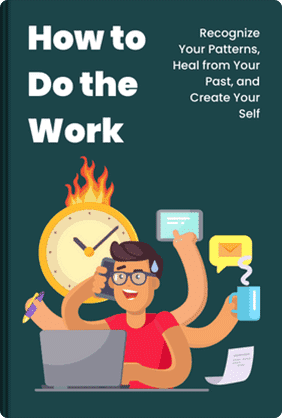
How to Do the Work
Dr. Nicole LePera
 47 Duration
 10 Key Points
 4.6 Rate
2. Stop Sabotaging Yourself by Dr. Judy Ho
Sometimes you need to step away from poetic prose and look at hard clinical psychology. Dr. Judy Ho provides a highly structured, scientifically backed guide to understanding the triggers that cause you to derail your own progress.
- The Core Connection: This book breaks down the exact cognitive behavioral therapy (CBT) techniques needed to stop self-sabotage in its tracks.
- Standout Concept: The L.I.F.E. framework, which helps you identify which of your core needs (Love, Importance, Freedom, Experience) is driving your self-destructive behavior.
3. The Shadow Effect by Deepak Chopra, Debbie Ford, and Marianne Williamson
Wiest frequently touches on the concept of the "shadow"—the parts of ourselves we repress and deny. This book is the ultimate guide to shadow work. It teaches you that trying to be "positive" all the time is exactly what fuels your darkest self-sabotaging behaviors.
- The Core Connection: It answers the question: "How do I make peace with the parts of myself I hate?"
- Standout Concept: Embracing your dark side as a source of power rather than a shameful secret to be locked away.
Before diving deeper into related works, it can be helpful to revisit the core principles that started this journey. For a refresher on the key takeaways from Brianna Wiest's foundational book, take a look at our complete summary.
Top Books Similar to The Mountain Is You for Emotional Mastery
If your favorite aspect of Wiest's writing was her ability to articulate the exact emotional turbulence you were feeling, these books similar to The Mountain Is You will give you that same sense of clarity and validation.
4. Atlas of the Heart by Brené Brown
You cannot heal what you cannot name. Brené Brown maps out 87 human emotions and experiences, giving you the vocabulary to understand exactly what you are feeling when you feel triggered.
- The Core Connection: Emotional intelligence is the foundation of overcoming self-sabotage. You cannot move the mountain if you do not know what the rocks are made of.
- Standout Concept: The distinction between stress and overwhelm, and how identifying the correct emotion completely changes your biological response.
Emotional clarity is your best defense against self-destructive habits. When you can accurately pinpoint what you are feeling—whether it is resentment, grief, or just everyday burnout—you immediately regain control over your reactions. If you are tired of feeling overwhelmed and want a beautifully illustrated masterclass in emotional intelligence, this roadmap of the human experience is an absolute must-have for your bookshelf.

Atlas of the Heart
Brené Brown
21 Duration8 Key Points4.6 Rate5. The Untethered Soul by Michael A. Singer
If the spiritual undertones of The Mountain Is You resonated deeply with you, Michael A. Singer's work will take you a step further. This book is about consciousness and untethering your identity from your erratic thoughts.
- The Core Connection: It teaches you how to step back and observe the voice in your head that insists on sabotaging your life, rather than identifying with it.
- Standout Concept: "The inner roommate." Treat your internal monologue like a neurotic roommate rather than the undeniable truth.
Sometimes the most profound breakthrough happens when you realize you are not the loud, hyper-critical voice in your head—you are simply the one listening to it. Learning to step back and quiet that internal roommate can completely transform the way you navigate anxiety. Ready to untether yourself from those exhausting, limiting thoughts and discover a much deeper sense of everyday peace?
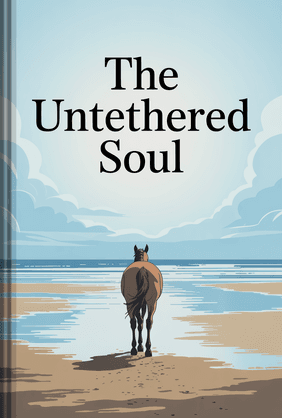
The Untethered Soul
Michael A. Singer
26 Duration9 Key Points4.6 Rate6. LeapAhead (A Microlearning App)
What if the biggest obstacle isn't the mountain, but the time and energy to read the manual? LeapAhead addresses this modern problem by condensing the key ideas from over 30,000 bestselling nonfiction books into 15-minute audio and text summaries. It's a tool designed to help you clear your "reading debt" and consistently absorb the core concepts from books like Atomic Habits or How to Do the Work during a commute or workout.
- The Core Connection: It directly combats the "passive consumption" pitfall by delivering actionable insights in a format that's easy to retain. Instead of letting books gather dust, you can absorb their main lessons in minutes.
- Standout Concept: The app's use of themed learning collections and daily goal-setting helps you build a structured, consistent learning habit—perfect for translating the ideas in these books into real-world change.
While its summaries are not a substitute for the depth of a full book, it's an incredibly effective tool for pre-reading, reinforcement, or for anyone whose packed schedule is their primary form of self-sabotage. Its mobile-first experience is perfect for on-the-go learning but may feel limiting for those who prefer to study on a desktop.
7. Good Vibes, Good Life by Vex King
For a more modern, highly accessible take on emotional regulation, Vex King delivers a straightforward guide to self-love and vibrational alignment.
- The Core Connection: Like Wiest, King emphasizes that your external reality is a direct reflection of your internal state.
- Standout Concept: Practical self-care that goes beyond bubble baths, focusing heavily on boundary setting and toxic relationship removal.
If it was Wiest's powerful and memorable writing style that resonated with you, you might enjoy revisiting some of her most insightful words.


Feeling overwhelmed by your reading list? LeapAhead helps you absorb the core ideas from bestselling self-help books in just 15 minutes. Turn your commute into a powerful learning session and continue your healing journey, one insight at a time.
 LeapAhead
Best Books for Feeling Stuck and Taking Action
Insight without action is just entertainment. If you are experiencing analysis paralysis and need to translate your mental breakthrough into physical reality, these are the best books for feeling stuck.
8. Atomic Habits by James Clear
Self-sabotage is rarely a massive explosion; it is usually a series of tiny, terrible daily habits. James Clear’s definitive guide to habit formation is required reading for anyone who wants to stop ruining their own progress.
- The Core Connection: Wiest tells you to stop self-sabotaging; Clear shows you exactly how to build the systems to make that happen.
- Standout Concept: Identity-based habits. You do not just decide to stop smoking; you adopt the identity of a non-smoker.
Motivation alone might get you started, but your daily systems are what actually move the needle over time. You do not have to overhaul your entire life overnight; in fact, trying to do so is a classic form of self-sabotage. Instead, mastering tiny, one-percent improvements will yield massive long-term results. Ready to finally build the bulletproof habits that will sustain your success?

Atomic Habits
James Clear
26 Duration8 Key Points4.7 Rate
9. Breaking the Habit of Being Yourself by Dr. Joe Dispenza
Dr. Dispenza bridges the gap between quantum physics, neuroscience, and personal development. If you feel stuck because your body physically craves the stress and anxiety of your old self-sabotaging loops, this book explains why.
- The Core Connection: It provides the scientific explanation for why change feels impossible and gives you the meditative tools to rewire your brain.
- Standout Concept: Your brain does not know the difference between a real event and an imagined one. You can rehearse your new, non-sabotaging future into existence.
10. The War of Art by Steven Pressfield
Though marketed primarily to creatives, this book is fundamentally about "Resistance"—the universal force that prevents us from doing the things we know we need to do.
- The Core Connection: Pressfield’s "Resistance" is just another word for "The Mountain."
- Standout Concept: The concept of turning pro. Amateurs wait for inspiration to overcome self-sabotage; professionals show up and do the work regardless of how they feel.
Exploring More from the Author: Brianna Wiest Books in Order
When readers finish The Mountain Is You, their first instinct is often to check Amazon or Barnes & Noble for everything else the author has written. Brianna Wiest has a distinct, poetic, and piercing style. If you want to dive deeper into her mind, it helps to read her work progressively.
Here is the optimal Brianna Wiest books in order of reading to maximize your personal growth:
1. 101 Essays That Will Change The Way You Think
- When to read it: Before or immediately after The Mountain Is You.
- Why read it: This is the book that put Wiest on the map. It consists of short, highly digestible essays covering everything from routine and emotional intelligence to cognitive biases. It is perfect for daily reading or listening on Audible during your morning commute.
For those who find listening to be the most effective way to learn, an audio version can be a powerful tool.
2. The Mountain Is You: Transforming Self-Sabotage Into Self-Mastery
- When to read it: When you are ready to tackle your deepest behavioral loops.
- Why read it: This is her most cohesive, structured book. It moves from essays into a complete, overarching framework for personal transformation.
3. Ceremony
- When to read it: When you need a breather from heavy psychological work.
- Why read it: This is a collection of poetry and short prose. It is designed to be felt rather than studied. If you are experiencing emotional fatigue from intensive shadow work, Ceremony offers a gentle, beautiful space to process your feelings.
4. The Pivot Year
- When to read it: When you are actively in a transition phase.
- Why read it: Her most recent major release offers 365 daily meditations. Once you have stopped self-sabotaging (The Mountain) and shifted your mindset (101 Essays), The Pivot Year acts as a daily anchor to help you build the actual life you want over the course of twelve months.
How to Maximize Your Next Reading Experience
Grabbing the next book off Goodreads or Apple Books is easy, but actually absorbing the material requires intention. Avoid the common pitfall of "passive consumption"—reading ten self-help books in a row without changing a single behavior in your life.
To prevent this:
- Read with a physical pen: Do not just highlight. Write in the margins. Argue with the author. Connect their concepts to your specific self-sabotaging behaviors.
- Use the Whispersync technique: If you struggle to focus, buy both the Kindle and Audible versions. Listening to the audiobook while your eyes track the text drastically increases comprehension and retention.
- Implement the "One Chapter, One Action" rule: Do not start chapter two until you have taken one physical action based on chapter one. If the chapter was about identifying triggers, write your triggers down before turning the page.

Struggling to turn reading into action? LeapAhead summarizes key takeaways from books like the ones on this list, making it easier to remember and apply transformative concepts. Build a consistent learning habit, even on your busiest days.
LeapAheadChoosing your next book is about matching your current level of awareness with the exact tool you need. If you need spiritual grounding, grab The Untethered Soul. If you need hard systems, get Atomic Habits. The mountain is still there, but now you have the equipment to climb it.
FAQ
What is the best book to read immediately after The Mountain Is You?
If you want to stay within the same tone and author, 101 Essays That Will Change The Way You Think by Brianna Wiest is the perfect immediate follow-up. If you want to take the concept of self-sabotage and apply rigorous action to it, Atomic Habits by James Clear is the most practical next step.
If you want to stay within the same tone and author, 101 Essays That Will Change The Way You Think by Brianna Wiest is the perfect immediate follow-up. If you want to take the concept of self-sabotage and apply rigorous action to it, Atomic Habits by James Clear is the most practical next step.
Are there other books about self sabotage by Brianna Wiest?
The Mountain Is You is Wiest's primary, dedicated deep-dive into the specific topic of self-sabotage. However, her book 101 Essays That Will Change The Way You Think heavily touches on the cognitive biases and emotional blind spots that lead to self-sabotaging behaviors.
The Mountain Is You is Wiest's primary, dedicated deep-dive into the specific topic of self-sabotage. However, her book 101 Essays That Will Change The Way You Think heavily touches on the cognitive biases and emotional blind spots that lead to self-sabotaging behaviors.
Is shadow work safe to do alone through books?
For minor behavioral loops and general self-improvement, guided books like How to Do the Work are excellent resources for solitary shadow work. However, if your self-sabotage is rooted in severe trauma, C-PTSD, or clinical depression, books should supplement—not replace—professional therapy with a licensed counselor.
For minor behavioral loops and general self-improvement, guided books like How to Do the Work are excellent resources for solitary shadow work. However, if your self-sabotage is rooted in severe trauma, C-PTSD, or clinical depression, books should supplement—not replace—professional therapy with a licensed counselor.
Where is the best place to get these titles for active learning?
For self-help books, physical copies from Amazon or Barnes & Noble are highly recommended so you can take notes in the margins. If you are an auditory learner, Audible is excellent, but keep a physical journal nearby to pause and write down key reflections.
For self-help books, physical copies from Amazon or Barnes & Noble are highly recommended so you can take notes in the margins. If you are an auditory learner, Audible is excellent, but keep a physical journal nearby to pause and write down key reflections.