

You set a strict goal, map out the perfect plan, and immediately do the exact opposite. You know exactly what you need to do to advance your career, improve your relationships, or get your health in order, yet you stay paralyzed in procrastination or blow up your own success just as things start looking good. This is not laziness. It is not a lack of willpower. It is self-sabotage.

If you are looking for a definitive self sabotage book summary, Brianna Wiest’s work is the modern standard. The metaphor is simple: the mountain standing in front of you is not an external obstacle. The mountain is you. Your unresolved trauma, your limiting beliefs, and your protective mechanisms have stacked up to block your path forward.
This comprehensive The Mountain Is You summary breaks down Wiest’s psychological framework so you can stop fighting yourself and start climbing.
Demystifying Self-Sabotage: Why We Destroy Our Own Success
Before looking at specific actions, we have to understand the mechanics of the problem. Self-sabotage is essentially a coping mechanism. It is an unconscious act of self-preservation.
When you try to change your life, you step into the unknown. The human brain perceives the unknown as a threat. Even if your current situation is miserable, it is familiar. Your subconscious mind prefers a familiar misery over an unknown success.
Therefore, you sabotage yourself. You pick fights with your partner when the relationship gets too intimate. You miss deadlines when you are up for a promotion. You binge junk food on day four of a diet. Your brain is hitting the emergency brake to pull you back into your comfort zone.
Wiest argues that you cannot hate yourself into changing. You have to understand what your self-sabotaging behaviors are trying to protect you from, thank them for their service, and then choose a better path.

The Mountain Is You Chapter Summaries
To fully grasp the architecture of Wiest's argument, we need to look at how she structures the journey from denial to self-mastery. Here are the core The Mountain Is You chapter summaries detailing the step-by-step process of inner transformation.
Chapter 1: The Mountain Is You
The opening chapter introduces the central metaphor. In nature, mountains are formed by two tectonic plates colliding. In your life, the mountain is formed by two conflicting needs: your conscious desire to move forward and your unconscious desire to stay safe. You cannot ignore the mountain, and you cannot walk around it. You must climb it. The process of climbing requires letting go of the old version of yourself to make room for who you are becoming.
Chapter 2: There’s No Such Thing As Self-Sabotage
This is the paradigm shift of the book. Wiest claims that self-sabotage does not actually exist as a malicious force. Every self-destructive action fulfills a legitimate underlying need. Procrastination is a need for rest or fear of failure. Perfectionism is a desire to avoid criticism. When you stop viewing your actions as "sabotage" and start viewing them as "misguided self-care," you remove the shame. Once the shame is gone, you can find healthier ways to meet those underlying needs.
Chapter 3: Your Triggers Are Your Guides
When something offends you, irritates you, or sends you into a spiral, your immediate reaction is usually to blame the external trigger. Wiest flips this: triggers are mirrors. If someone else’s success makes you fiercely jealous, it highlights a suppressed ambition inside you. If a minor criticism ruins your week, it points to a deep-seated insecurity. Your triggers are an exact roadmap to the trauma you still need to heal.
If you find yourself struggling to understand why certain triggers cause such intense physical and emotional reactions, it often helps to look at the science of trauma. Unresolved past experiences don't just live in your mind; they get trapped in your nervous system. For a deeper understanding of how your physical body holds onto these invisible wounds and how to gently release them, Bessel van der Kolk’s groundbreaking work is a must-read. It perfectly complements Wiest’s philosophy by explaining the biological side of healing.
The Body Keeps The Score
Bessel Van Der Kolk
 32 Duration
 10 Key Points
 4.5 Rate
Chapter 4: Building Emotional Intelligence
You cannot think your way out of a feeling. This chapter tackles the mechanics of processing emotions. Most people suppress their feelings, numb them out, or project them onto others. Emotional intelligence requires sitting with the physical sensation of an emotion until it passes. Wiest explains that emotions are energy in motion. If you let them flow through your body without fighting them, they naturally dissipate. When you refuse to feel them, they get trapped and mutate into anxiety or physical illness.
Learning to sit with uncomfortable emotions rather than running from them is one of the hardest skills to develop. If you are used to numbing out or suppressing your feelings, you might need a dedicated framework to help you navigate this internal turbulence. Susan David offers an incredible science-backed approach to doing just this. Her insights will teach you how to face your inner critics, accept your emotions without being controlled by them, and align your daily actions with your deepest values.
Emotional Agility
Susan David, Ph.D.
48 Duration8 Key Points4.5 RateChapter 5: Releasing the Past
You cannot carry your historical baggage up the mountain. Releasing the past does not mean forgetting it or pretending it did not hurt. It means recognizing that the past is no longer happening. Many people keep their trauma alive through repetitive thoughts because holding onto the pain feels like honoring the injury. Wiest provides strategies for closure, emphasizing that true closure is a personal decision, not an apology you extract from someone else.
Chapter 6: Building a New Future
Once you clear the emotional debris, you must replace it with a new vision. This chapter focuses on radical accountability. You are the only person coming to save yourself. Wiest advises readers to construct a daily routine that serves their future self rather than their present impulses. She advocates for the concept of "micro-shifts"—tiny, sustainable daily actions that compound over time, completely rewiring your default behaviors.
Wiest’s concept of "micro-shifts" is incredibly powerful because it relies on sustainability rather than sudden, massive life overhauls. If you want to put this exact idea into practice, focusing on small, 1-percent improvements is the most reliable way to rewire your daily routine. James Clear’s masterclass on habit formation is the ultimate companion guide for this chapter. It provides the actionable systems you need to lock in those tiny positive changes, ensuring your new behaviors compound over time and permanently replace your self-sabotaging patterns.

Atomic Habits
James Clear
26 Duration8 Key Points4.7 RateChapter 7: From Self-Sabotage to Self-Mastery
Self-mastery is the summit. It is the point where you no longer act out of compulsion, fear, or unresolved trauma. You make conscious, deliberate choices. You still feel fear, but it no longer dictates your actions. You trust your intuition over your anxiety. Self-mastery is not a state of constant happiness; it is a state of deep internal stability. You have climbed the mountain, and now you possess the tools to navigate any terrain.
Core The Mountain Is You Takeaways
Understanding the chapter flow is great, but applying the concepts is what actually moves the needle. If you want actionable steps, here are the most critical The Mountain Is You takeaways that you can implement immediately.
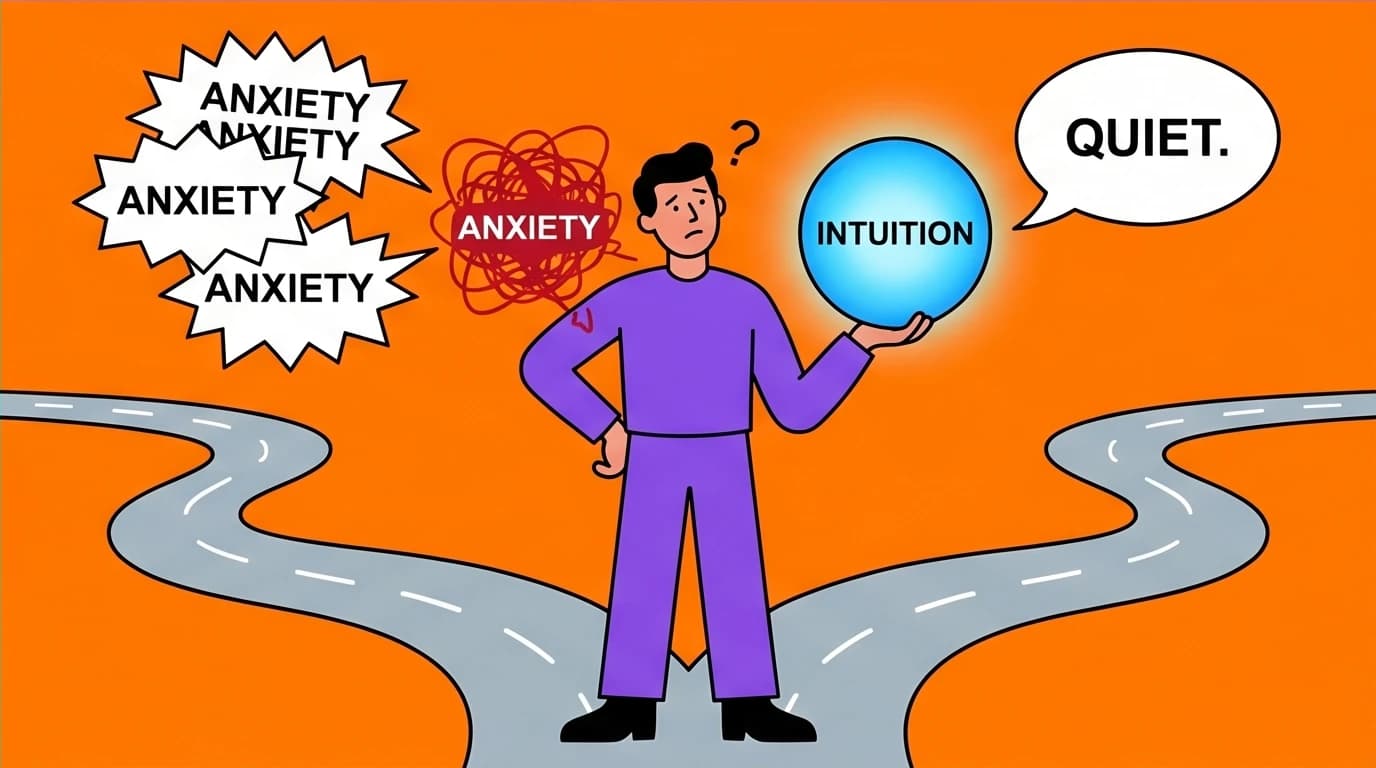
1. Differentiate Between Intuition and Anxiety
People constantly confuse anxiety with a "gut feeling." Wiest provides a clear distinction.
- Anxiety is loud, frantic, and panicked. It focuses on the worst-case scenario and demands immediate action or escape.
- Intuition is quiet, calm, and grounded. It communicates in simple truths.
When you are about to make a major decision—like quitting a job or ending a relationship—pause and evaluate the internal voice. If it feels like an emergency alarm, it is trauma and anxiety speaking. If it feels like a heavy, quiet truth, it is your intuition.
2. Beware of the Upper Limit Problem
We all have a baseline level of happiness and success that we are comfortable with. When things get too good, we unconsciously panic because the reality exceeds our "upper limit." To restore our familiar baseline, we sabotage. You land a massive client, then immediately pick a fight with your spouse. You hit your fitness goal, then go on a three-day junk food bender. To stop this, you must actively practice tolerating positive emotions. When things are going well, recognize the urge to ruin it, and consciously choose to sit in the discomfort of success.
3. Purpose Over Passion
Chasing passion is a trap. Passion is an emotion, and emotions are inherently volatile. If you build your career or life around passion, you will abandon ship the moment it gets boring or difficult. Instead, Wiest recommends building your life around purpose. Purpose is rooted in values. You can wake up on a Tuesday morning feeling absolutely zero passion for your work, but your sense of purpose will keep you moving forward.
4. Stop Waiting for Motivation
Motivation is a byproduct of action, not a prerequisite. If you wait until you "feel like it" to go to the gym, write your business plan, or have a hard conversation, you will wait forever. Your brain is designed to conserve energy, so it will never organically signal you to do something difficult. You must act first. The action creates momentum, and the momentum generates the motivation to keep going.
Beating your brain's natural tendency to conserve energy is an ongoing battle. Since you now know that action must come before motivation, you need a reliable tool to force yourself into motion when hesitation strikes. Mel Robbins has developed a brilliantly simple mental hack to bypass that internal resistance. Her strategy gives you a foolproof way to interrupt your excuses in real-time, push through procrastination, and take immediate action before your self-sabotaging instincts have a chance to take over.
The 5 Second Rule
Mel Robbins
36 Duration8 Key Points4.6 RateThese takeaways offer a powerful starting point, but they are just that—a start. For those who connect with these ideas, it's helpful to remember that they are direct distillations from the book. Seeing them in their original context can provide even greater clarity.
Skip the Shady Downloads: Why You Don't Need a The Mountain Is You PDF
A quick reality check for those hunting for a free The Mountain Is You PDF online. Downloading pirated PDFs from unverified forums exposes your devices to malware, data theft, and aggressive spam. Furthermore, reading a poorly formatted, bootlegged PDF on a tiny screen fundamentally detracts from the absorption of these heavy psychological concepts.
You do not need a risky download. The comprehensive breakdown above gives you the exact psychological blueprint Wiest teaches. If you want to dive deeper into the nuances of her storytelling, buy the official physical copy from Barnes & Noble or Amazon. Highlight it. Write in the margins. Better yet, get the audiobook on Audible or Apple Books and listen to it during your daily commute. Investing a few dollars in the legitimate format ensures you actually commit to the material instead of letting a free file rot in your downloads folder.
If you prefer listening to books, understanding the format and narrator's style is key to getting the most out of the experience, especially with a book this dense.
If you are ready to stop standing in your own way, this is the exact moment to commit to the climb. By grabbing the official copy, you give yourself the chance to truly absorb Wiest's life-changing lessons on your own terms. Whether you prefer to dog-ear the physical pages with a highlighter in hand or listen to the profound insights during your morning commute, diving into the full text is an investment in your future self that you will not regret.

The Mountain Is You
Brianna Wiest
41 Duration7 Key Points4.6 RateThe Path Forward: Doing the Work
Reading about self-mastery is infinitely easier than achieving it. The friction you feel right now—the resistance to doing the deep, unglamorous internal work—is the exact mountain Wiest is talking about. When you're already exhausted from fighting your own internal battles, finding the energy to read dense books on the subject can feel impossible. If you need a lighter way to absorb these crucial ideas, an app can help you get started.

LeapAhead delivers the core lessons from transformative books on psychology and self-mastery in 15-minute audio or text summaries, helping you grow even when you feel too overwhelmed to read.

Download LeapAhead App now
You cannot outsmart your trauma. You cannot life-hack your way out of self-sabotage. You have to face the conflicting parts of your psyche, validate their fears, and firmly decide that your future is worth more than your comfort zone.
Start small. Identify one behavior you use to self-sabotage. Ask yourself what uncomfortable emotion that behavior is helping you avoid. Sit with that emotion for two minutes today. That is the first step up the mountain.
Once you've absorbed the lessons from this book, the journey doesn't have to end. If you're looking for your next transformative read, there are many other authors who tackle the themes of self-sabotage and personal growth from different angles.
FAQ
What is the main point of The Mountain Is You?
The central thesis is that self-sabotage is not a flaw in your character; it is a misguided coping mechanism meant to protect you from the pain of change. By understanding your underlying fears, processing trapped emotions, and taking radical accountability, you can turn your self-destructive habits into a blueprint for self-mastery.
The central thesis is that self-sabotage is not a flaw in your character; it is a misguided coping mechanism meant to protect you from the pain of change. By understanding your underlying fears, processing trapped emotions, and taking radical accountability, you can turn your self-destructive habits into a blueprint for self-mastery.
Is the book worth reading if I already know I self-sabotage?
Yes. Knowing you self-sabotage is only the diagnosis. The book provides the actual treatment plan. It shifts your perspective from self-loathing to self-compassion, giving you practical tools to process emotions and dismantle the subconscious triggers keeping you stuck.
Yes. Knowing you self-sabotage is only the diagnosis. The book provides the actual treatment plan. It shifts your perspective from self-loathing to self-compassion, giving you practical tools to process emotions and dismantle the subconscious triggers keeping you stuck.
Is this just another generic self-help book?
Unlike many self-help books that preach toxic positivity or rely on sheer willpower, Wiest’s approach is rooted in practical emotional processing. It focuses heavily on doing the uncomfortable "shadow work" rather than just thinking happy thoughts.
Unlike many self-help books that preach toxic positivity or rely on sheer willpower, Wiest’s approach is rooted in practical emotional processing. It focuses heavily on doing the uncomfortable "shadow work" rather than just thinking happy thoughts.
How long does it take to get through the book?
The book is roughly 248 pages. A standard reader can finish it in about 4 to 5 hours. However, because the concepts require heavy introspection, many readers choose to tackle one chapter at a time, spending a few days journaling on the specific triggers and takeaways presented in each section.
The book is roughly 248 pages. A standard reader can finish it in about 4 to 5 hours. However, because the concepts require heavy introspection, many readers choose to tackle one chapter at a time, spending a few days journaling on the specific triggers and takeaways presented in each section.