

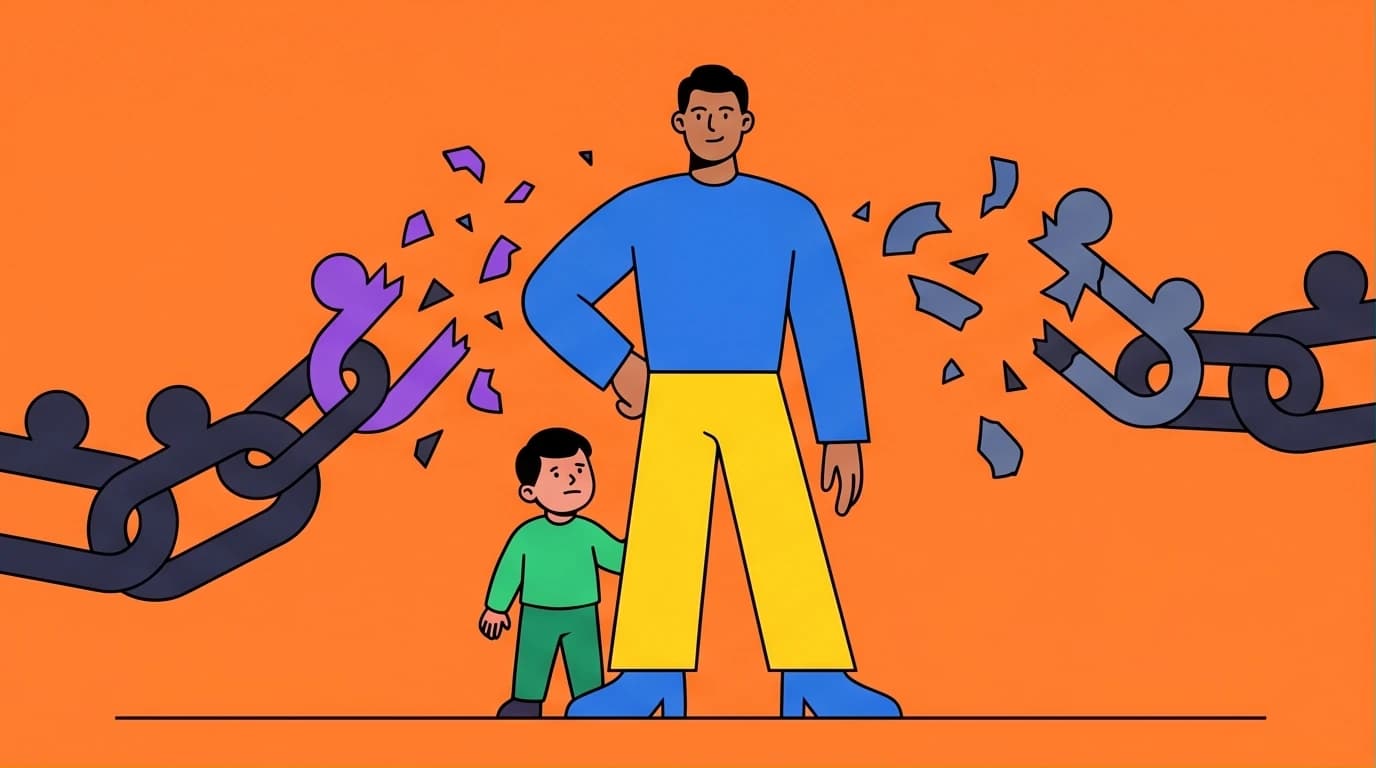
You swear you will never scream at your kids the way your parents screamed at you. But when your toddler throws a massive tantrum over a broken cracker on the kitchen floor, a sudden, terrifying surge of anger rises in your chest. Before you can stop it, you hear your mother's harsh tone spilling out of your own mouth. The heaviest burden of motherhood isn't the sleep deprivation or the physical exhaustion; it is the silent, invisible labor of reparenting your wounded inner child while trying to raise your actual child with compassion.
You are trying to build a healthy home without ever having seen the blueprint.
The Unseen Weight of Cycle Breakers Motherhood
Stepping into the role of a cycle breaker means you are actively swimming against the current of your entire family history. You are choosing to reject the toxic norms of your upbringing—whether that involved emotional unavailability, conditional love, harsh physical discipline, or weaponized guilt.
This work is profoundly lonely. When you choose not to use fear to control your child, your own nervous system often goes into a state of panic. You are dismantling decades of learned survival mechanisms in real-time. Understand that when you feel completely drained at the end of the day, it is not because you are a flawed parent. It is because you are doing double duty: managing your child's emotional regulation while desperately trying to manage your own.

This intense focus on healing and parenting can sometimes lead to losing your own sense of self in the process. It's a common challenge, but rediscovering your identity is crucial for long-term well-being.
The Psychology of Inherited Wounds
To stop a cycle, you must first understand how it operates on a biological level. Generational trauma is not just a psychological concept; it lives in your nervous system.
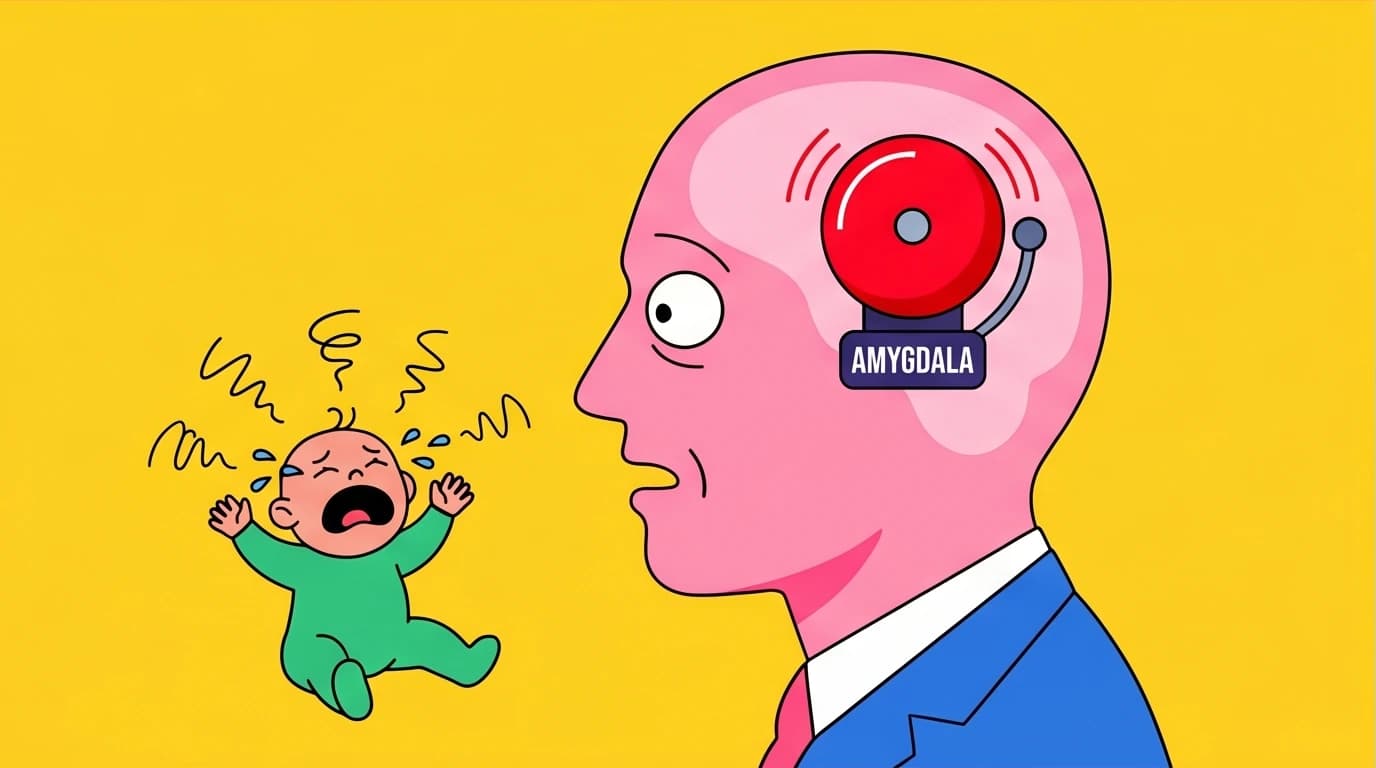
If you grew up in a volatile or emotionally dismissive household, your brain adapted to survive. Your amygdala—the brain's threat-detection center—became hyper-vigilant. You learned to read the slight shifts in your parents' moods, the heavy footsteps in the hallway, or the slamming of a cabinet door.
When your own child exhibits normal, developmentally appropriate behavior—like crying loudly, whining, or pushing boundaries—your nervous system misinterprets this noise and chaos as an immediate threat. Your body goes into an automatic "fight, flight, or freeze" response. You are not reacting to a toddler refusing to put on their shoes; you are having a somatic flashback to a time when disobedience meant danger.
Understanding how generational trauma physically rewires your brain is often the first step in giving yourself some much-needed grace. You aren't just reacting; your body is trying to protect you from past dangers. If you want to dive deeper into the fascinating science of how family trauma is passed down and, more importantly, how to heal it at a biological level, there are some incredible resources available. One of the most eye-opening reads on this topic explores exactly how inherited family trauma shapes our physiological responses today.
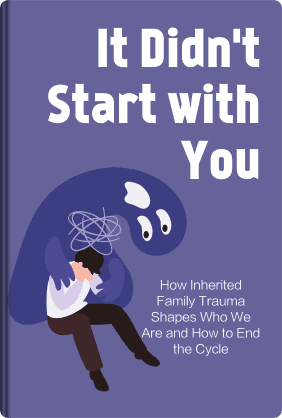
It Didn't Start with You
Mark Wolynn
 21 Duration
 8 Key Points
 4.8 Rate
Recognizing Your Triggers: Healing Childhood Wounds as a Mom
You cannot heal what you refuse to acknowledge. The first practical step in breaking the cycle is mapping out exactly what triggers your ancestral trauma responses. Pay attention to the specific moments your chest tightens, your breathing turns shallow, and you feel the urge to lash out or shut down.
Trigger 1: Big, Messy Emotions
If you were sent to your room for crying, told to "stop being so sensitive," or punished for expressing anger, your child's sadness or rage will feel deeply uncomfortable to you. You might find yourself rushing to fix their problem, bribing them to stop crying, or getting angry at their tears simply to alleviate your own internal anxiety.
Trigger 2: Disrespect and Defiance
For many who grew up in authoritarian households, obedience was tied to safety and love. When your preschooler looks you in the eye and yells, "No!", it triggers a deep-seated panic. Your unhealed inner child views this normal push for autonomy as a profound disrespect and a threat to your authority, triggering a harsh, dominating response.
Trigger 3: Noise and Unpredictability
Kids are loud, messy, and chaotic. If you grew up in a home where silence was the only safe baseline, a chaotic living room can send your nervous system into overdrive, making you snap over spilled milk or scattered toys simply because your brain is desperate to restore order and safety.
Figuring out your unique parenting triggers often requires looking back at the emotional landscape of your own childhood. It can be a tough pill to swallow, but acknowledging that your parents may not have had the emotional tools to support you is vital for breaking the cycle. If you frequently find yourself struggling with feelings of guilt or resentment toward your family of origin as you raise your own kids, you are not alone. Exploring how emotionally distant or reactive upbringings affect us as adults can be incredibly validating and freeing.

Adult Children of Emotionally Immature Parents
Lindsay C. Gibson, Psy.D.
39 Duration8 Key Points4.6 RateActionable Steps for Rewriting Your Family Narrative
Awareness is the foundation, but action rewires the brain. You do not need a perfect childhood to give your kids a healthy one. You just need intention and a new set of tools.
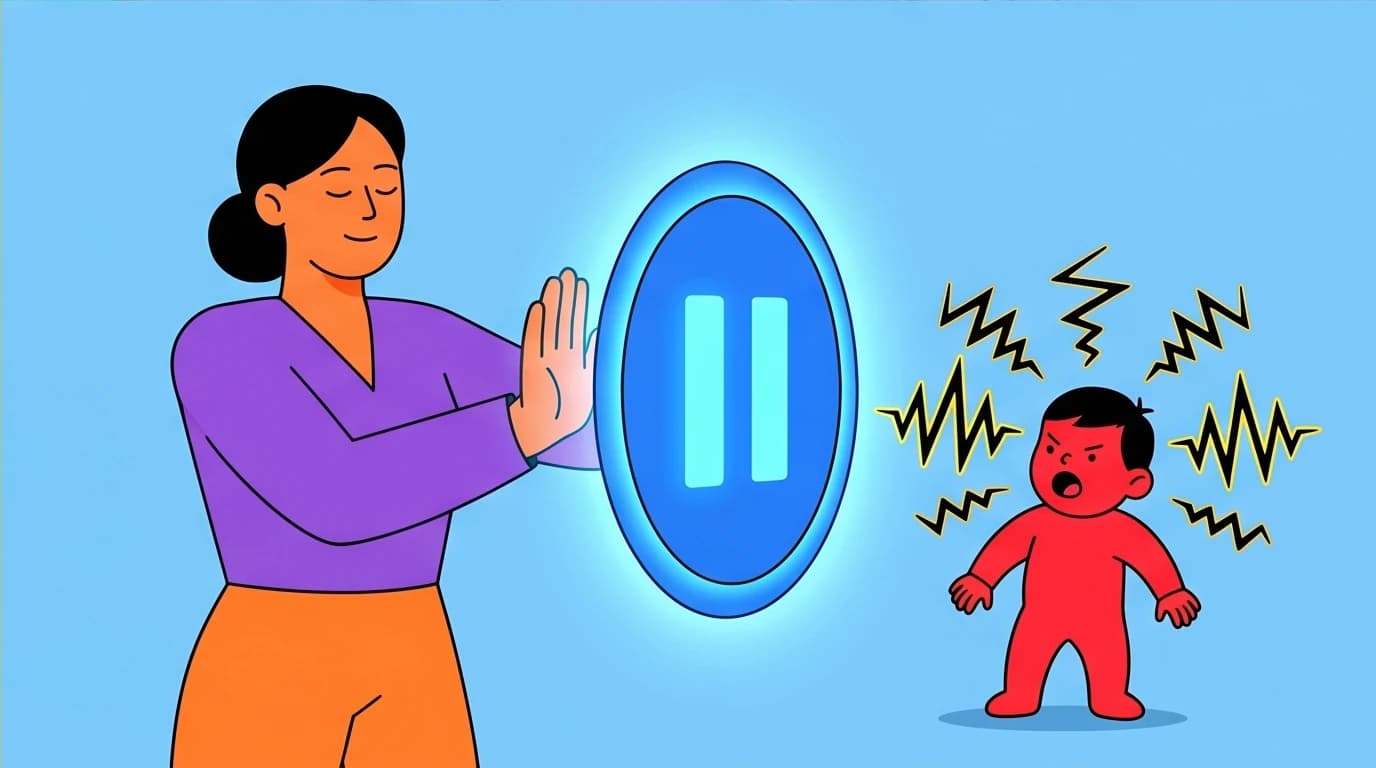
1. Master the "Sacred Pause"
Between your child's triggering behavior and your reaction, there is a split second. Your goal is to widen that gap. When you feel the heat rising in your chest, close your mouth. Take a deep breath. If you need to step into the bathroom for thirty seconds while your child cries safely in their room, do it. That physical separation prevents the immediate projection of your trauma. Tell your nervous system: I am safe. My child is not a threat. I am the adult here.
2. Separate Your Past from Their Present
When you are activated, actively remind yourself who is in front of you. Look at your child's physical size. Notice the color of their shirt. Ground yourself in the present moment. Remind yourself that this is a tired four-year-old having a hard time, not your critical father or your emotionally absent mother.
3. Set Iron-Clad Boundaries with Extended Family
Breaking generational trauma often means rocking the boat with the very people who caused the original wounds. You will inevitably face criticism from grandparents who view your parenting style as "too soft."
Protect your family narrative by drawing clear lines. If a relative insists on forced physical affection ("Give grandma a hug or she will be sad") or uses shaming language ("Big boys don't cry"), you must intervene immediately. A simple, firm response works best: We don't force hugs in our family, or It is perfectly fine for him to cry. You are showing your child that you are a safe, protective barrier between them and toxic behavior.
Protect your family narrative by drawing clear lines. If a relative insists on forced physical affection ("Give grandma a hug or she will be sad") or uses shaming language ("Big boys don't cry"), you must intervene immediately. A simple, firm response works best: We don't force hugs in our family, or It is perfectly fine for him to cry. You are showing your child that you are a safe, protective barrier between them and toxic behavior.
Protecting your children and your own peace often comes down to communication. If you're struggling with how to create and maintain these new rules without feeling overwhelmed, you're not alone.
Navigating pushback from grandparents or extended family members is often the most exhausting part of being a cycle breaker. It is incredibly hard to enforce new rules with the people who raised you, especially if you were brought up to always comply and be a "good kid." Learning to clearly and confidently articulate your limits without feeling crippling guilt is an essential skill for protecting your peace and your children. If you need a practical roadmap for managing difficult family dynamics and holding your ground, this is a must-read for any parent.

Set Boundaries, Find Peace
Nedra Glover Tawwab
29 Duration10 Key Points4.5 RateLearning all these new skills from books can feel daunting, especially when you're already drained. For parents trying to absorb this vital information without the time to read cover-to-cover, there are ways to get the core insights more efficiently.

Grasp key ideas from parenting and psychology books like these in quick 15-minute audio or text summaries, making it easier to learn new strategies on busy days.

Download LeapAhead App now
The Gentle Parenting Cycle Breaker Reality Check
There is a dangerous trap lurking in modern parenting culture. Many cycle breakers discover the concept of gentle parenting and turn it into a new form of perfectionism. They believe that to be a "good" parent, they must speak in a perpetual whisper, curate a beige aesthetic, and never, ever lose their temper.
Perfectionism is just another trauma response. It is the belief that if you perform flawlessly, you can prevent pain.
Real cycle-breaking is not about never making a mistake. You will yell. You will lose your patience. You will occasionally handle things poorly because you are a human being operating on limited sleep and decades of faulty wiring.
The ultimate metric of a healthy family dynamic is not the absence of conflict; it is the presence of repair.
The Art of the Rupture and Repair
When you snap, the cycle is not broken by hiding your mistake. It is broken by the apology.
When you calm down, get on your child's eye level. Make eye contact and say, “I was feeling very overwhelmed earlier, and I yelled. It was not okay for me to yell at you. It is never your fault when I lose my temper. I am sorry, and I am working on using a calmer voice.”
Do you know what this does? It radically rewires your family's blueprint. Your parents likely never apologized to you. By taking accountability, you teach your child that they are worthy of respect, that adults are fallible, and that relationships can withstand conflict and come back together stronger. That is how you rewrite history.
Dropping the goal of perfectionism takes the pressure off both you and your children. A parent who messes up, takes accountability, and actively repairs the connection teaches resilience and true emotional intelligence. For those days when you feel like you are failing because you lost your temper, having a realistic, compassionate parenting framework can make all the difference. If you are looking to build a foundation of connection rather than perfection, here is a highly recommended guide to help you master the art of repair.

Good Inside
Dr. Becky Kennedy
38 Duration7 Key Points4.6 RateFAQ
How do I know if I am accidentally traumatizing my kids?
If you are asking this question, you are highly likely not traumatizing your kids. True generational trauma thrives in denial, silence, and a lack of accountability. The fact that you are self-reflecting, analyzing your behavior, and actively seeking to do better fundamentally breaks the core mechanism of toxic parenting. Focus on your rate of repair rather than aiming for zero mistakes.
Is it too late to break the cycle if my kids are older?
It is never too late. The human brain has high neuroplasticity, and children of all ages crave authentic connection with their parents. If your children are teenagers, you can be more transparent. Sit them down and say, "I have been doing some self-reflection, and I realize I have reacted with anger a lot in the past because of how I was raised. I am actively working to change that, and I apologize for the times I made you feel unsafe." Vulnerability heals at any age.
Why do I feel so exhausted even when nothing "bad" happened today?
Because breaking trauma cycles requires massive amounts of cognitive load. A parent operating on healthy, inherited instincts simply reacts to a child naturally. As a cycle breaker, you are constantly evaluating your child's behavior, suppressing your own trauma triggers, choosing a conscious response, and managing your own anxiety. You are essentially translating a foreign emotional language in your head all day long. Honor your exhaustion; it is the price of profound transformation.