

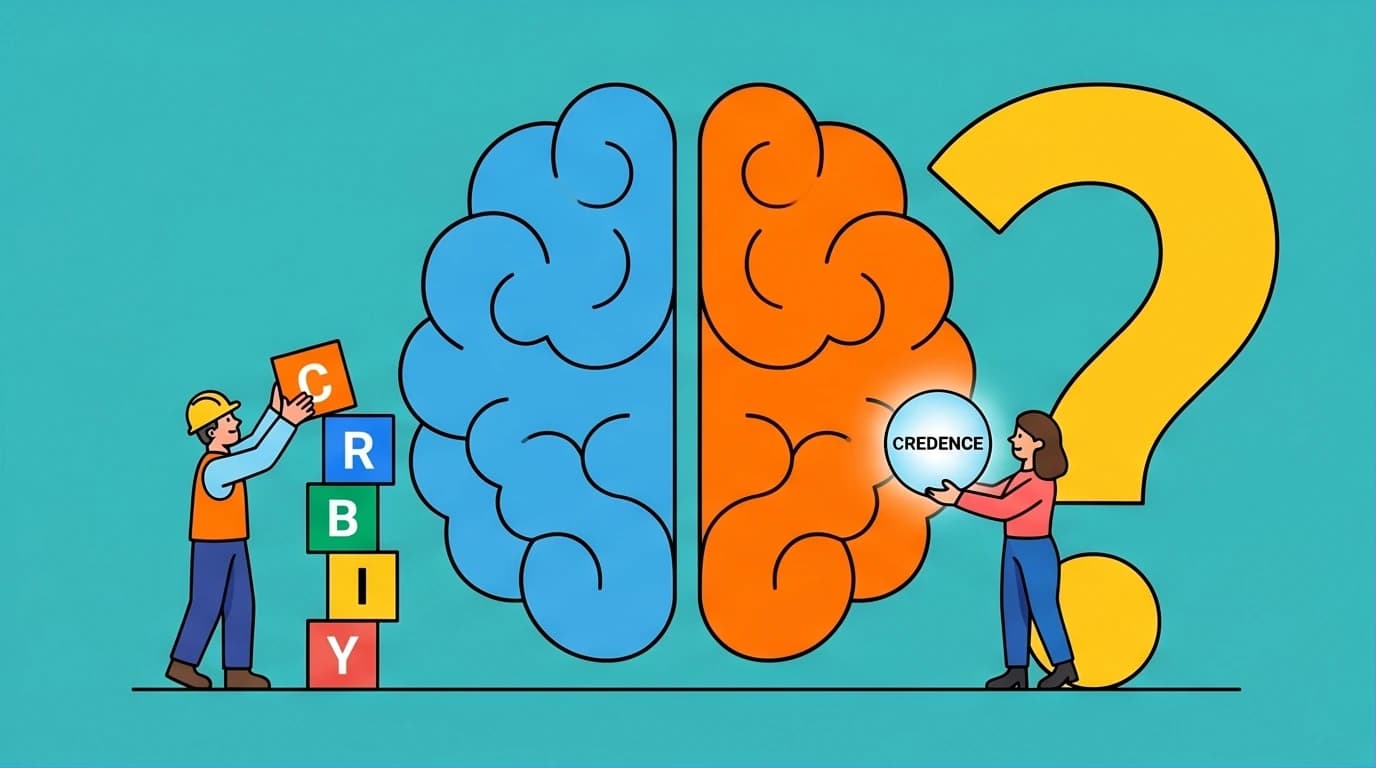
You are staring at a draft of a highly visible email. You want to sound authoritative. You typed the word "credibility," hesitated, and wondered if "credence" sounds sharper. You swap them out, but now the sentence feels awkward.
Using high-level vocabulary incorrectly does the exact opposite of what you want. It undermines your authority. In the US corporate environment, precision matters. When you misuse terms, executives notice. Grasping the exact difference between credence and credibility is a mandatory step in refining your business writing.
Here is the exact breakdown of how to use these two words correctly, every single time.
The Core Difference Between Credence and Credibility
Both words come from the Latin root credere, which means "to believe." That shared origin is exactly why they confuse so many people. However, they function differently in a sentence.
Think of them as two sides of a transaction.
Credibility: The Asset You Own
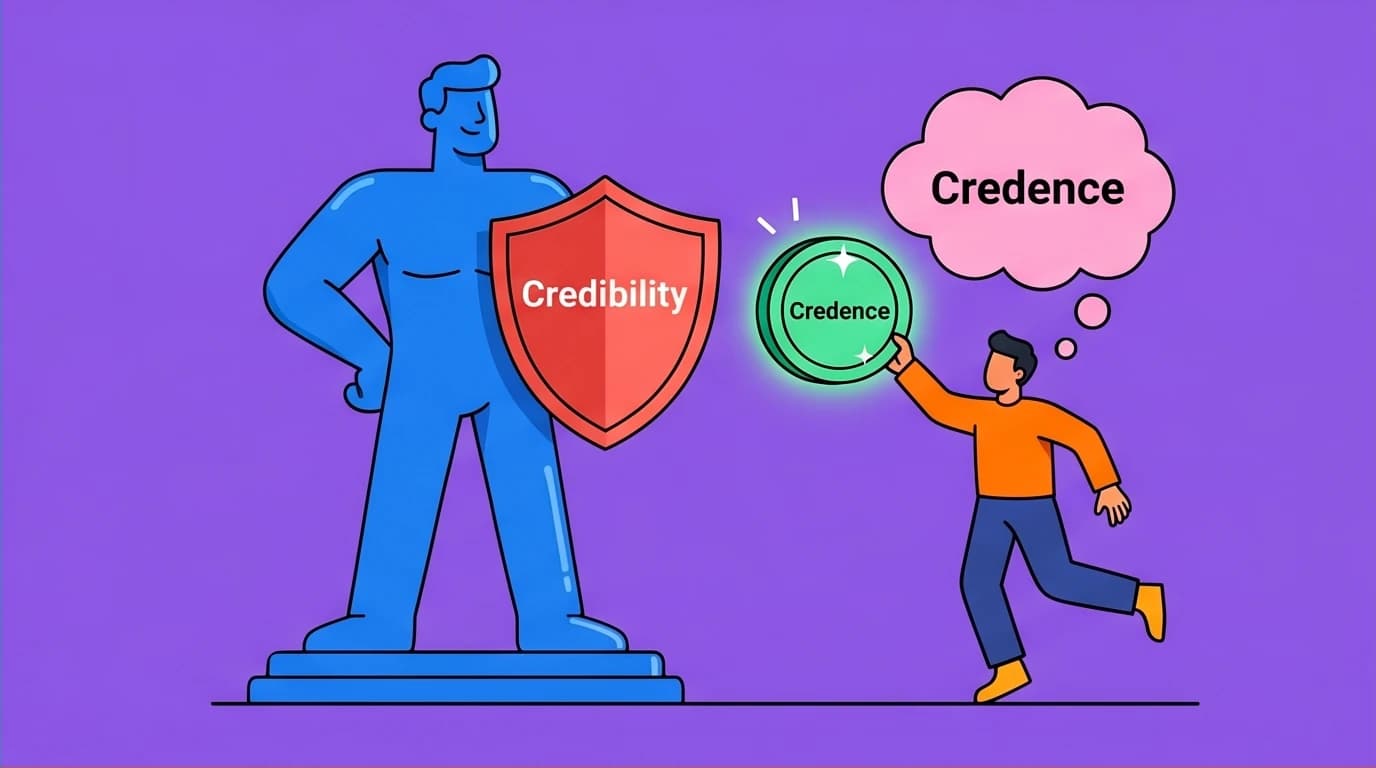
Credibility belongs to the source. It is an inherent trait, reputation, or asset that a person, brand, or document holds. If you have credibility, people trust you. It takes months or years to build, but you can lose it in a single bad press cycle.
When you read a product review on Amazon, you evaluate the credibility of the reviewer. Do they have a verified purchase? Is their tone objective? If a major tech company like Apple releases a white paper on data privacy, the document carries immediate credibility because of the brand's established track record.
This kind of professional trust isn't built by accident. For those in management or executive roles, there are specific communication skills and strategies required to establish your authority.
Earning that foundational credibility is one of the most vital investments you can make in your career. If you are a professional trying to figure out how to proactively build and repair your reputation in the workplace, you have to understand the mechanics of trust. There is actually a highly actionable framework for this. If you want to dive deeper into how trust impacts your bottom line and professional relationships, you might want to check out this classic resource.
The Price of Inequality
Joseph E. Stiglitz
 17 Duration
 6 Key Points
 4.5 Rate
Credence: The Weight You Give
Credence belongs to the receiver. It is an action of the mind. It is the acceptance or belief that you assign to a piece of information, a rumor, or a theory. You do not "have" credence. You give it.
If an anonymous source claims a startup is going bankrupt, you decide whether to give credence to that claim. You are deciding if the claim is believable.
This decision-making process is a core component of critical thinking. Before you lend credence to any piece of information, you need a reliable framework for judging its validity.
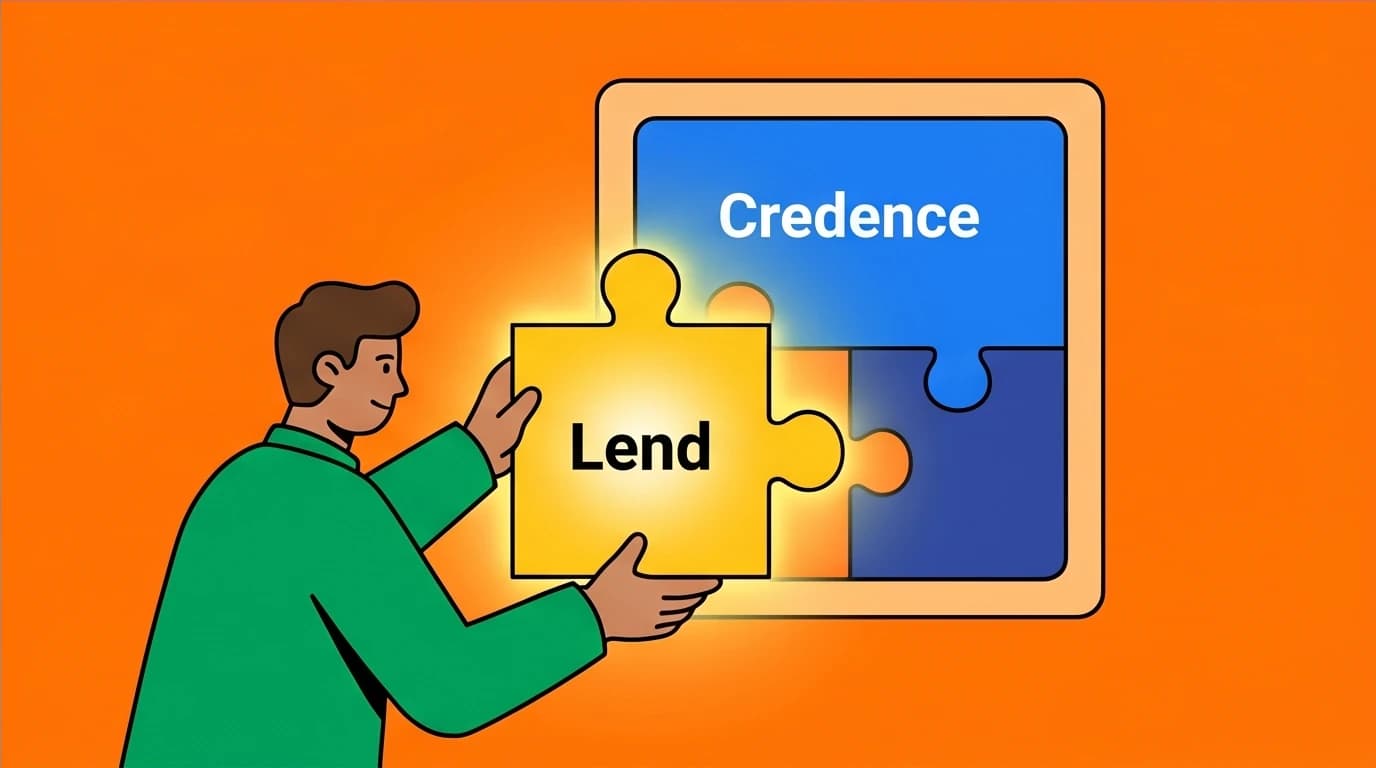
The Quick Test: Build vs. Lend
If you are stuck, use this rapid test to pick the right word:
- Can you build it, lose it, or maintain it? You want credibility.
- Can you lend it, give it, or add it to something else? You want credence.
Credibility vs Credence Examples in the Real World
Seeing these words in context is the fastest way to lock them into your memory. Let’s look at specific credibility vs credence examples across different professional scenarios.
Scenario 1: Evaluating a Market Report
- Incorrect: The analyst’s deep industry knowledge lends credibility to his credence.
- Correct: The analyst’s deep industry knowledge gives his report tremendous credibility. Because of his reputation, executives lend credence to his market predictions.
- Why it works: The analyst owns the credibility. The executives perform the action of lending credence.
Scenario 2: Handling a PR Crisis
- Incorrect: We need to restore the brand’s credence after the product recall.
- Correct: We need to restore the brand’s credibility after the product recall.
- Why it works: A brand cannot have credence. It has a reputation, which is credibility.
Scenario 3: Discussing Workplace Rumors
- Incorrect: I don't think that rumor has any credibility. (Note: This is technically grammatically fine, but slightly imprecise because a rumor itself isn't a trustworthy entity).
- Correct: I don’t give any credence to the rumor that our department is facing layoffs.
- Why it works: You are actively denying belief to a floating idea.
This act of consciously choosing what to believe is a powerful skill, not just for office rumors, but for managing your own mindset. Often, the most damaging stories we give credence to are our own negative thoughts.
Scenario 4: Presenting Data
- Correct: The new survey data from the Pew Research Center adds credence to our theory about shifting consumer habits.
- Why it works: The data itself is credible. Because it is credible, it adds weight (credence) to the theory you are presenting.
Professional Vocabulary Building: Collocations to Memorize
One of the distinct markers of native-level professional vocabulary building is mastering collocations. Collocations are the specific verbs and adjectives that naturally pair with a noun. Memorize these pairings, and your writing will immediately sound more natural.
Verbs to use with Credibility
- Establish: "We need to establish our credibility in the software sector before we raise prices."
- Undermine: "Typos in a legal contract severely undermine your credibility."
- Maintain: "Audible maintains its credibility by consistently delivering high-quality audiobooks."
- Lack: "The junior developer lacked the credibility to push back against the lead engineer's design."
Verbs to use with Credence
- Lend: "The CEO's sudden resignation lends credence to the rumors of internal conflict."
- Give: "The jury did not give credence to the defendant's alibi."
- Gain: "The theory that remote work boosts productivity has gained credence over the last three years."
- Add: "Attaching a peer-reviewed study adds credence to your marketing claims."
Adjectives to use with Credibility
- High / Low
- Professional
- Financial
- Scientific
Prepositions Matter
Syntax is just as critical as vocabulary.
- You have the credibility to do something.
- You evaluate the credibility of someone.
- You give credence to an idea.
Never say "I give credence of." Always pair credence with to.
Enhancing your vocabulary and mastering collocations are just the first steps to leveling up your professional communication. In today’s digital-first workplace, almost every interaction we have—from Slack messages to marketing copy—relies on our ability to write clearly and engagingly. If you want a masterclass in shedding corporate jargon and developing a relatable, authoritative voice, studying modern writing habits is a must. This book is a fantastic guide for anyone looking to refine their everyday writing skills.
Everybody Writes
Ann Handley
34 Duration10 Key Points4.9 RateCommon Mistakes to Avoid
Even seasoned writers trip up when trying to sound authoritative. Here are the most common pitfalls when navigating these terms.
Mistake 1: Using "Credence" as a Synonym for "Credentials"
Do not confuse credence with credentials. Credentials are the tangible qualifications you hold—a degree, a certification, or a specific job title.
Do not confuse credence with credentials. Credentials are the tangible qualifications you hold—a degree, a certification, or a specific job title.
- Wrong: She has the credence to lead the engineering team.
- Right: She has the credentials (and the credibility) to lead the engineering team.
Mistake 2: Saying Someone "Has" Credence
People do not possess credence. Ideas receive credence.
People do not possess credence. Ideas receive credence.
- Wrong: The manager has a lot of credence in the office.
- Right: The manager has a lot of credibility in the office.
Mistake 3: Overcomplicating Simple Sentences
Sometimes, neither word is the best choice. Effective communication skills rely on clarity over complexity. If you are writing a quick Slack message to a colleague, you do not need to say, "I give credence to your proposal." Just say, "I agree with your proposal" or "I think your idea works." Save words like credence and credibility for formal reports, external communications, and high-stakes presentations where nuance carries weight.
Sometimes, neither word is the best choice. Effective communication skills rely on clarity over complexity. If you are writing a quick Slack message to a colleague, you do not need to say, "I give credence to your proposal." Just say, "I agree with your proposal" or "I think your idea works." Save words like credence and credibility for formal reports, external communications, and high-stakes presentations where nuance carries weight.
Avoiding these common vocabulary mistakes will instantly make your emails and reports more polished. However, knowing which words to use is only half the battle; knowing how to structure your thoughts for a busy corporate audience is the other. To truly elevate your corporate correspondence and ensure your ideas are always taken seriously by executives, you need a comprehensive approach to professional communication. This essential guide from Harvard Business Review offers incredibly practical advice for tightening up your business documents.
HBR Guide to Better Business Writing
Bryan A. Garner
15 Duration7 Key Points4.9 RateWhy Precision Elevates Effective Communication Skills
You might wonder if splitting hairs over two similar words is worth the effort. It is.
Effective communication skills are not just about speaking clearly. They are about managing perception. When you write a proposal to secure budget approval, or when you draft a press release addressing a product delay, your audience evaluates your competence through your word choice.
Using "credence" when you mean "credibility" creates cognitive friction. The reader has to pause, re-read the sentence, and figure out what you meant. That tiny moment of friction damages their trust in you. It signals that you are trying to sound sophisticated without fully grasping the tools you are using.
Conversely, precision signals competence. When you naturally write, "The leaked emails lend credence to the accusations, severely damaging the board's credibility," you demonstrate total control over the English language. You provide clear, distinct concepts that guide the reader exactly where you want them to go. You prove that you understand nuance.
As you can see, precision in your language does more than just prevent misunderstandings—it subtly influences how others perceive your intelligence and leadership capability. The exact words you choose at pivotal moments can either open doors or create unnecessary roadblocks. If you are fascinated by the psychology behind word choice and want to learn exactly which phrases trigger positive responses in high-stakes professional conversations, this next recommendation is an absolute game-changer.
Exactly What to Say
Phil M. Jones
44 Duration8 Key Points4.6 RateWith so many powerful books to absorb, the biggest challenge is often just finding the time. If you want to get the key ideas from all these titles and more without clearing your calendar, a summary app can be a huge help.

Get the powerful concepts from nonfiction bestsellers like these in 15-minute reads or listens, so you can build your expertise and credibility on the go.

Download LeapAhead App now
Final Review: Lock It In
Before you hit send on that document, do a final mental check.
Look at the sentence. Are you describing a person or a brand's reputation? Use credibility. Are you describing how much you believe a specific story, rumor, or theory? Use credence.
Look at the sentence. Are you describing a person or a brand's reputation? Use credibility. Are you describing how much you believe a specific story, rumor, or theory? Use credence.
Mastering this distinction removes a layer of uncertainty from your writing. You stop guessing and start executing.
FAQ
Can I use credence and credibility interchangeably?
No. They represent entirely different concepts. Credibility is the trustworthiness of a source. Credence is the belief you give to a specific claim. Swapping them will make your sentence grammatically incorrect and confusing.
No. They represent entirely different concepts. Credibility is the trustworthiness of a source. Credence is the belief you give to a specific claim. Swapping them will make your sentence grammatically incorrect and confusing.
Is credence a formal word?
Yes. "Credence" is highly formal. You will rarely hear it in casual, everyday conversation at a coffee shop. It is primarily used in journalism, legal writing, corporate communications, and academic papers.
Yes. "Credence" is highly formal. You will rarely hear it in casual, everyday conversation at a coffee shop. It is primarily used in journalism, legal writing, corporate communications, and academic papers.
What is the adjective form of credence?
"Credence" does not have a direct, unique adjective form in modern use. The related adjective is "credible," which links directly back to credibility. If an idea is easy to give credence to, it is simply a "credible" idea.
"Credence" does not have a direct, unique adjective form in modern use. The related adjective is "credible," which links directly back to credibility. If an idea is easy to give credence to, it is simply a "credible" idea.
Does "street cred" come from credence or credibility?
"Street cred" is a slang abbreviation of "street credibility." It refers to a person's reputation and authenticity within a specific urban or cultural environment. It has nothing to do with credence.
"Street cred" is a slang abbreviation of "street credibility." It refers to a person's reputation and authenticity within a specific urban or cultural environment. It has nothing to do with credence.