


You pitch a well-researched strategy in a cross-functional sync, only to watch it get picked apart and tabled. Twenty minutes later, a senior colleague suggests a nearly identical approach and gets immediate approval. The problem is not your data or your idea. The problem is the invisible currency of corporate influence. If stakeholders do not trust your judgment or track record, the best strategy in the world will not save your proposal.
Understanding how to build credibility as a leader is the difference between managing a team and actually shaping the direction of your company. It is an active daily practice. You earn it through predictable behavior, sharp communication, and a deep understanding of organizational mechanics.
Here is the exact blueprint for building unshakeable credibility in corporate America.
Before we dive into the blueprint, it's helpful to understand the subtle but important distinction between the terms we use. While "credibility" is the focus here, it's often confused with the related concept of "credence." Knowing how they differ can sharpen your professional communication.
1. Establishing Professional Trust Through Predictable Execution
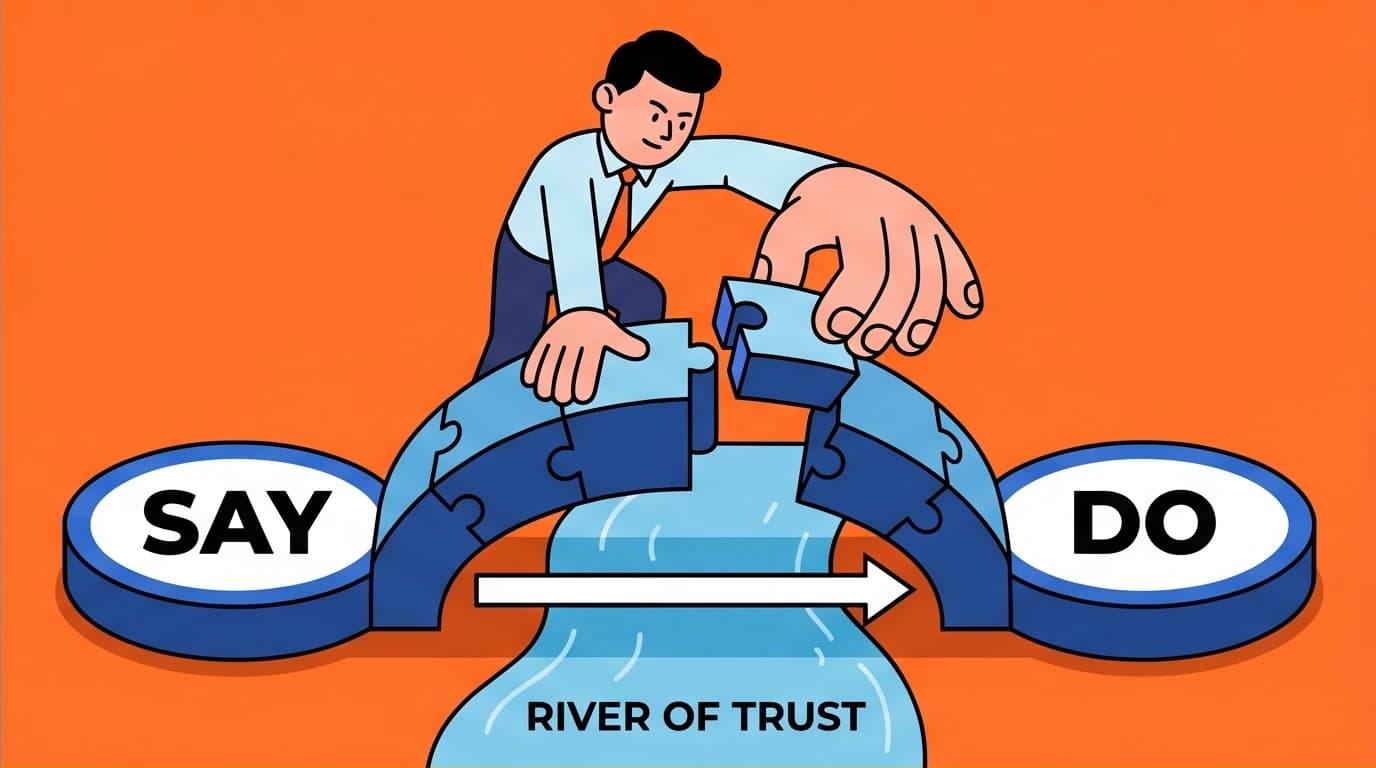
Influence is impossible without trust. You cannot demand that your team or your executive board follow your lead. You have to prove that you are a safe bet. Establishing professional trust comes down to one core concept: the say-do ratio.
Close the Loop on Every Commitment
When you say you will look into a metric, look into it. When you promise to send a brief by Friday at noon, it lands in their inbox at 11:45 AM. Low-level leaders drop balls because they rely on their memory. High-level leaders build systems to track their commitments. A strong say-do ratio makes you predictable. In a fast-moving corporate environment, predictability equals safety. Executives invest in safe bets.
Never Surprise Your Boss (or Your Peers)
Bad news needs to travel faster than good news. If a project is going off the rails, or if a product launch will be delayed by three weeks, you do not wait for the Quarterly Business Review (QBR) to bring it up. You communicate the risk early, along with two potential mitigation plans. Hiding bad news destroys professional trust overnight. Owning it and managing it builds immense respect.
Master the Details, Even If You Delegate
You cannot manage what you do not understand. While micromanaging stifles your team, ignorance destroys your credibility. If a Vice President asks you why a specific marketing channel underperformed last week, "I need to check with my team" is an acceptable answer once. If it becomes your default response, you look like a passenger rather than a driver. Know your core metrics cold.
Understanding the mechanics of trust is the foundation of any successful leadership career. When you master your say-do ratio and consistently deliver on your commitments, you create an environment where executives feel safe investing in your ideas. If you want to dive deeper into how foundational this concept is to organizational success and your own career trajectory, there is an excellent resource that breaks down the tangible ROI of being a high-trust professional. It is a must-read for anyone looking to accelerate their corporate influence.

The Speed of Trust
Stephen M. R. Covey, Rebecca R. Merrill
 20 Duration
 7 Key Points
 4.7 Rate
2. Elevating Your Leadership Communication Skills
How you package your ideas dictates how they are received. Leaders do not have time for suspense. If you want people to take you seriously, you must upgrade your leadership communication skills to match the pace of executive decision-making.
Adopt the BLUF Framework
BLUF stands for Bottom Line Up Front. Most professionals write emails or deliver presentations chronologically: they explain the background, the research, the challenges, and finally, the recommendation.
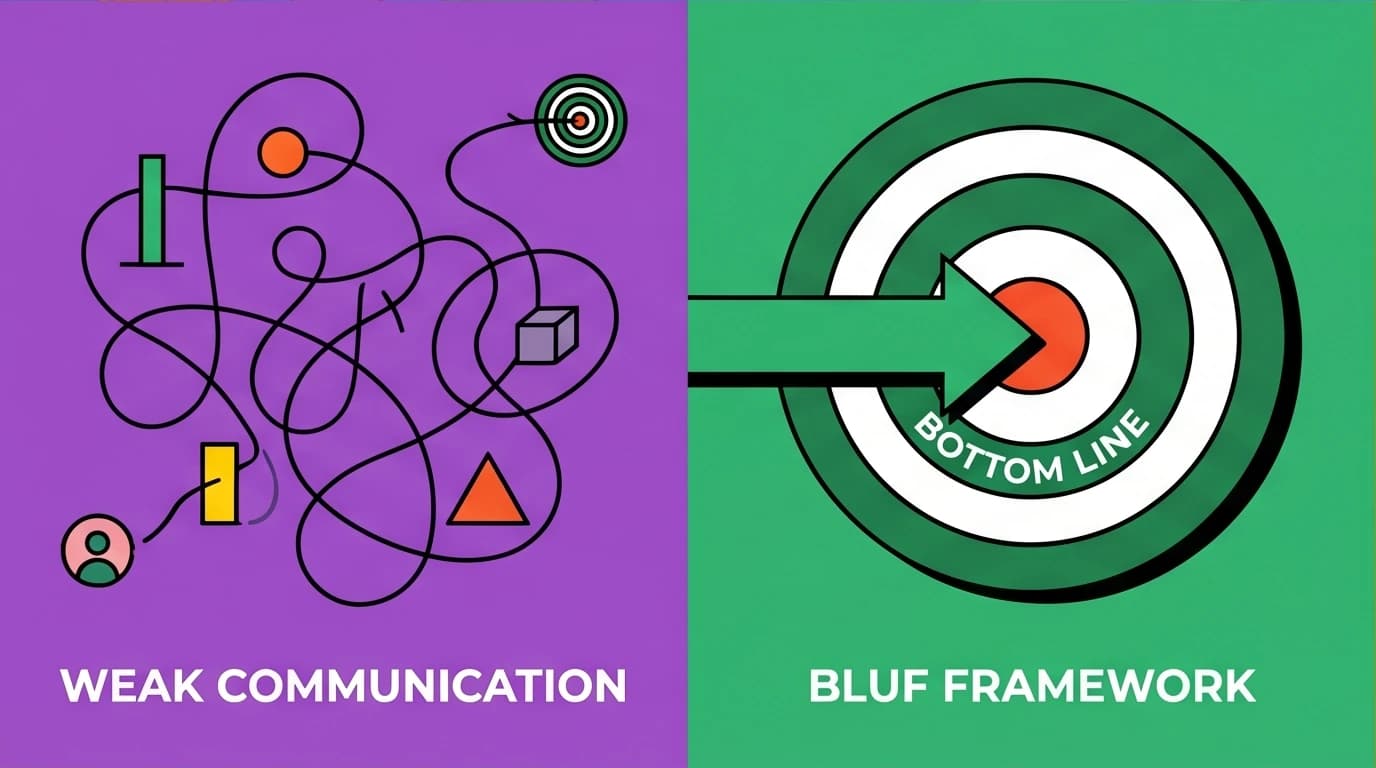
Flip the script. Start with the exact decision you need, the budget required, or the core finding.
- Weak: "We ran several tests over the last month on the new landing page, and we noticed some interesting trends regarding user drop-off..."
- Strong: "We need to redesign the checkout flow. It is costing us $40,000 a week in abandoned carts. Here are the three steps we are taking to fix it."
Stop Hedging Your Language
Remove phrases like "I think," "I feel," or "In my opinion" from your professional vocabulary. These filler phrases dilute your authority. Instead of saying, "I think we should pivot to the enterprise software model," state the facts: "The data shows the enterprise software model yields a 30% higher retention rate. We should pivot."
Master the Strategic Pause
When asked a difficult question, junior employees panic and rush to fill the silence, often rambling and talking themselves into a corner. Credible leaders embrace the pause. When challenged, take two full seconds to breathe and construct your thought. Silence projects confidence. Rambling projects insecurity.
Stripping away filler words and leading with the bottom line can feel unnatural at first, especially if you are used to softening your professional feedback. However, mastering this direct approach is what separates mid-level managers from highly respected executives. If you struggle to find the balance between being fiercely direct and maintaining strong, empathetic relationships with your colleagues, you might want to explore frameworks that teach you how to challenge others directly while still caring personally. Learning this balance will completely transform your leadership communication style.

Radical Candor
Kim Scott
19 Duration7 Key Points4.6 RateThe books mentioned so far are foundational for any leader, but finding the time to read them cover-to-cover can be tough on a packed schedule. For those who want to absorb these powerful concepts more efficiently, an app can help.


LeapAhead

Get the core lessons from essential leadership books on communication and trust in 15-minute summaries you can listen to during your commute.
3. Developing True Executive Presence
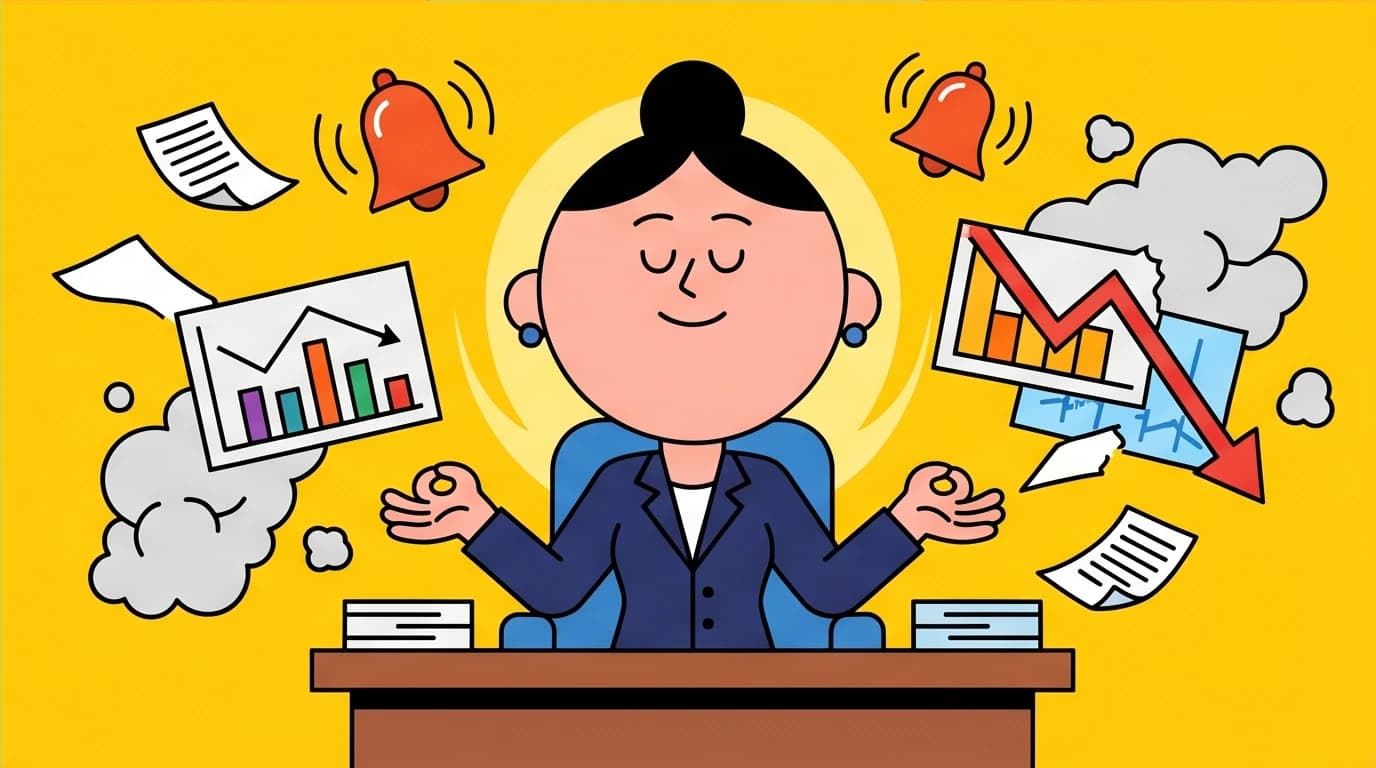
Executive presence is not about wearing an expensive suit or having the loudest voice in the boardroom. It is the ability to project composure, confidence, and clarity, especially when things go wrong. It signals to others that you are capable of handling high-stakes situations.
Maintain Composure Under Fire
The ultimate test of executive presence happens when a server crashes on Black Friday, or when a major client threatens to churn. How do you react? If you panic, point fingers, or raise your voice, your credibility shatters. Leaders with executive presence absorb chaos and project calm. They ask clarifying questions, isolate the root cause, and deploy their teams to execute the fix.
Read the Room
Presence requires profound situational awareness. If you are pitching a new initiative and you notice the Chief Financial Officer checking her phone and frowning, stop your presentation. Acknowledge the shift in energy. "Sarah, you seem concerned about this timeline. Let's pause and address the resource allocation before we move forward." Calling out the unspoken tension in the room demonstrates high emotional intelligence and control over the environment.
Disagree and Commit
In a healthy corporate culture, debate is required. You should push back on bad ideas using data. However, once a final decision is made by the executive team, you must execute it as if it were your own idea. Complaining in Slack channels or telling your direct reports, "Well, management wants us to do this, so we have to," completely undermines your authority. Own the decision.
A common misconception in corporate America is that executive presence is an innate trait—you either have it or you don't. In reality, the ability to read a room, project calm under pressure, and command attention is a set of learned behaviors. You do not need to be the loudest extrovert to project authority. If you are looking to actively cultivate a stronger, more magnetic presence in your organization without faking a personality that isn't yours, there is a fantastic book that decodes the science behind professional magnetism and influence.

The Charisma Myth
Olivia Fox Cabane
50 Duration9 Key Points4.6 Rate4. The Playbook for Getting Buy-In at Work
Great ideas do not win on merit alone. They win because the person presenting them understands the mechanics of corporate alignment. Getting buy-in at work requires strategy, not just a good slide deck.
The "Pre-Wire" Strategy
Never walk into a meeting to pitch a massive change cold. You must pre-wire the room. This means having one-on-one conversations with key decision-makers days before the actual meeting.
If you need the engineering team to build a new feature, take the Head of Engineering out for coffee on Tuesday. Show them the rough draft. Ask for their feedback. Uncover their objections in private. By the time the formal meeting happens on Friday, they already feel like a co-creator of your plan. They will defend it with you.
Tie Your Pitch to Their Metrics
A common mistake ambitious managers make is pitching an idea based on why they care about it. The truth is, the Sales Director does not care about your elegant code architecture. The Finance Director does not care about your beautiful brand guidelines.
To get buy-in, translate your project into their language.
- To Sales: "This architecture will load pages 2 seconds faster, which Amazon studies show increases conversion by 14%."
- To Finance: "This brand refresh requires a $50,000 upfront investment, but it eliminates the $15,000 monthly retainer we pay the external design agency. We break even in less than four months."
Start with a Pilot
Stakeholders fear risk. If you are asking for a massive shift in strategy or budget, reduce the perceived risk by proposing a pilot program. "Give me two engineers for two weeks. If we cannot prove a 10% lift in engagement, we kill the project and return to baseline." This lowers the barrier to entry and makes saying "yes" much easier.
Successfully getting buy-in depends on the quality of your evidence and your ability to present it logically. To make your arguments truly bulletproof, you need to master the art of assessing information and spotting weak points in any proposal—including your own.
5. Fatal Mistakes That Destroy Credibility Overnight
Building influence takes years. Destroying it takes a single meeting. Avoid these critical errors.
- Throwing Your Team Under the Bus: When your team succeeds, give them all the credit. Point out specific individuals in front of executives. When your team fails, take all the blame. "I did not provide them with clear enough requirements. I will fix the process." Leaders absorb blame and deflect praise.
- Operating in Silos: If you only care about your specific department and ignore how your actions affect operations, customer success, or legal, you will be viewed as a tactical manager, not a strategic leader.
- Overpromising to Look Good: It is tempting to promise an aggressive launch date to impress the CEO. When you inevitably miss that date, you are labeled as unreliable. It is always better to under-promise and over-deliver.
Recognizing and eliminating these career-killing habits is crucial for long-term corporate success. Often, the technical skills and relentless drive that helped you secure your first management promotion are the exact traits that can derail your path to the executive suite. As you scale your leadership, behavioral blind spots—like operating in silos or failing to share credit—become your biggest liabilities. If you are ready to identify and break the subtle habits that are secretly capping your professional growth, there is a definitive guide on how successful people navigate this pivotal career transition.

What Got You Here Won't Get You There
Marshall Goldsmith
15 Duration7 Key Points4.3 RateThe Path Forward
Figuring out how to build credibility as a leader is a continuous process of aligning your actions with the company's bottom line. It requires stepping out of the details of your daily tasks and understanding how the entire machine operates. Speak clearly, execute flawlessly, and treat your peers as partners rather than obstacles. When you master these elements, you stop fighting to be heard. People will actively seek out your perspective because your presence guarantees results.
To truly internalize these principles, continuous learning is key. If your demanding schedule makes it hard to keep up with the latest business books, there are tools designed to fit powerful ideas into your busiest days.
LeapAhead
Turn your commute or workout into a leadership masterclass by absorbing key insights from bestselling business books in just 15-minute audio sessions.
FAQ
How long does it take to build leadership credibility in a new role?
It typically takes 90 to 120 days to establish a solid baseline of credibility in a new organization. Focus on securing "quick wins" within your first month—solve a persistent, visible problem that requires low effort but yields high impact. Spend the rest of your time actively listening and understanding the company culture before proposing sweeping changes.
It typically takes 90 to 120 days to establish a solid baseline of credibility in a new organization. Focus on securing "quick wins" within your first month—solve a persistent, visible problem that requires low effort but yields high impact. Spend the rest of your time actively listening and understanding the company culture before proposing sweeping changes.
Can I build credibility if I am not the smartest subject matter expert in the room?
Yes. Leadership credibility is not about knowing every technical detail; it is about judgment, synthesis, and decision-making. Your job is to orchestrate the experts, ask the right probing questions, and clear roadblocks. You build trust by empowering the actual subject matter experts and translating their technical work into business value for executives.
Yes. Leadership credibility is not about knowing every technical detail; it is about judgment, synthesis, and decision-making. Your job is to orchestrate the experts, ask the right probing questions, and clear roadblocks. You build trust by empowering the actual subject matter experts and translating their technical work into business value for executives.
How do I repair my credibility after making a massive mistake?
Own it immediately without caveats. Do not blame the market, the software, or other departments. State clearly what went wrong, why it went wrong, and the exact steps you have already taken to ensure it never happens again. Executives respect leaders who treat failures as rigorous learning opportunities rather than PR problems to cover up.
Own it immediately without caveats. Do not blame the market, the software, or other departments. State clearly what went wrong, why it went wrong, and the exact steps you have already taken to ensure it never happens again. Executives respect leaders who treat failures as rigorous learning opportunities rather than PR problems to cover up.
How can introverts develop a strong executive presence?
Executive presence has nothing to do with being an extrovert. In fact, introverts often excel at presence because they naturally listen more than they speak. Focus on the quality of your input rather than the volume. Speak concisely, use the BLUF framework, and remain physically composed during heated discussions. Quiet confidence is often more commanding than loud charisma.
Executive presence has nothing to do with being an extrovert. In fact, introverts often excel at presence because they naturally listen more than they speak. Focus on the quality of your input rather than the volume. Speak concisely, use the BLUF framework, and remain physically composed during heated discussions. Quiet confidence is often more commanding than loud charisma.