

We spend most of our waking hours chasing metrics—promotions, bank balances, and social validation. Yet, when you pause at the end of a long week, a nagging sense of emptiness often creeps in despite your achievements. You don't need another productivity hack to optimize your schedule. You need a fundamental shift in how you measure a life well-lived.
David Brooks, through his decades as a New York Times columnist and his bestselling books, provides exactly that framework. He gives voice to the quiet realization that success without character is a hollow victory. Instead of asking you to read hundreds of pages right now, we have curated the definitive David Brooks best quotes on life. These are not just words to highlight on your Kindle; they are navigational tools to help you organize your priorities, deepen your relationships, and find your actual purpose.

Building the Soul: The Core Focus of David Brooks Quotes Character
Among the most heavily highlighted David Brooks quotes, character and moral integrity always take center stage. Brooks argues that our culture has lost the vocabulary of moral development. We know exactly how to build a career, but we are stumbling in the dark when it comes to building a soul.
The Résumé vs. The Eulogy
"Résumé virtues are the skills you bring to the marketplace. Eulogy virtues are the ones that are talked about at your funeral — whether you were kind, brave, honest or faithful. Were you capable of deep love?" — The Road to Character
This is arguably the cornerstone of his entire worldview. Society rewards the résumé virtues: your GPA, your job title, your ability to code or close a sale. But your eulogy virtues dictate the actual quality of your existence.
How to use this: Take a piece of paper today. On the left side, list your résumé virtues. On the right, list what you hope your favorite people will say about you at your funeral. If your daily actions are only feeding the left side of the page, it is time to recalibrate.
To truly understand this concept, going straight to the source is incredibly helpful. In his foundational book on the subject, Brooks explores the lives of historical figures who cultivated deep inner lives rather than just outward success. It is a fantastic read if you want to practically shift your focus from professional milestones to building a legacy of genuine moral depth.

The Road to Character
David Brooks
 20 Duration
 8 Key Points
 4.7 Rate
If your schedule feels too packed to dive into the full book right away, you can still absorb its core principles without the time commitment.


LeapAhead

Grasp the key ideas of *The Road to Character* and other profound books in just 15 minutes, perfect for when you're short on time but hungry for wisdom.

The Furnace of Struggle
"Character is built in the course of your inner confrontation. Character is a set of dispositions, desires, and habits that are slowly engraved during the struggle against your own weakness."
Character is not a genetic gift. It is an organized resistance against your own flaws. Brooks removes the shame from having weaknesses. The goal is not perfection from birth, but the willingness to wrestle with your darker impulses—arrogance, selfishness, or cowardice—and forge something solid in the process.
The Shift to Meaning: The Best David Brooks Advice for Mid-Life
If you look at the trajectory of modern American life, there is often a crisis point. You reach the goals you set in your 20s, only to realize the view from the top isn't what you expected. For those navigating this exact transition, the best David Brooks advice centers entirely on the concept of "The Two Mountains."
Shedding the Ego
"The first mountain is about building up the ego and defining the self; the second mountain is about shedding the ego and losing the self. If the first mountain is about acquisition, the second mountain is about contribution." — The Second Mountain

The first mountain is driven by individualistic ambition. You want to be recognized, establish your identity, and secure your financial independence. That is a necessary stage of life. But eventually, a season of suffering, a career failure, or simply intense boredom knocks you off that peak. The second mountain is completely different. It is driven by commitments: to a vocation, a spouse and family, a philosophy or faith, and a community.
The Power of True Commitment
"A commitment is a promise made from love. A commitment is an act of binding yourself to something and then restricting your future choices."
Modern culture is obsessed with keeping options open. We hate committing to weekend plans, let alone lifelong paths, because we fear missing out on something better. Brooks flips this narrative. Ultimate freedom is not having endless options; it is found in the deep roots of a chosen commitment. By locking yourself in, you create the stability required for profound joy.
If you are currently navigating this shift from ego-driven ambition to a life of deep commitment, you might also find profound value in Arthur C. Brooks's work. His research beautifully complements the "two mountains" philosophy by showing how our strengths naturally evolve as we age. It's an incredibly reassuring guide for anyone worried that their best years are behind them, proving that the second half of life can be your most deeply rewarding season yet.
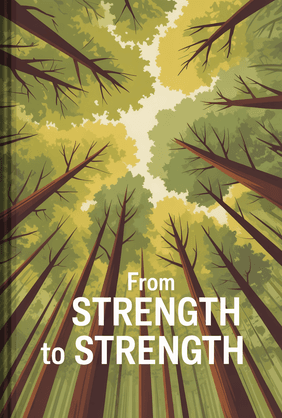
From Strength to Strength
Arthur C. Brooks
20 Duration7 Key Points4.6 RateSeeing and Being Seen: David Brooks on Human Connection
We are living through an epidemic of loneliness. People feel misunderstood, invisible, and isolated, even when surrounded by peers. When reading David Brooks on human connection, you quickly realize that the antidote to loneliness is not just being around people—it is the active, rigorous skill of truly seeing them.
The Ultimate Human Skill
"There is one skill that lies at the heart of any healthy person, family, school, community organization, or society: the ability to see someone else deeply and make them feel seen, heard, and understood." — How to Know a Person
This isn't just sentimental fluff; it is a critical life skill. Think about your favorite manager, your most trusted friend, or the teacher who changed your life. What they had in common was their ability to shine a light on your specific potential and make you feel visible.
Illuminators vs. Dimmers
"Illuminators, on the other hand, have a persistent curiosity about other people. They have been trained or have trained themselves in the craft of understanding others."
Brooks categorizes people into two groups: Dimmers and Illuminators. Dimmers make you feel small, ignored, and stereotyped. They are waiting for their turn to speak. Illuminators shine a light on you. They ask brilliant, open-ended questions.
How to use this: At your next dinner party or networking event, decide to be an Illuminator. Instead of asking the standard "What do you do for a living?", ask questions that add color to the conversation, such as, "What is the most unexpected thing that happened in your industry this year?" or "What do you love most about where you grew up?"
Becoming an "Illuminator" is one of the most effective ways to combat the modern epidemic of isolation. If you want to dive deeper into the science and soul of human connection, Dr. Vivek Murthy’s exploration of loneliness is a must-read. As the former US Surgeon General, he provides a brilliant, heart-centered look at why we are wired for community and how we can intentionally rebuild the social fabric in our own lives and neighborhoods.

Together
Vivek H. Murthy, MD
22 Duration9 Key Points4.4 Rate
Navigating the Hard Seasons: The Core of the David Brooks Philosophy
At the core of the David Brooks philosophy is a profound respect for the difficult seasons of life. He does not offer toxic positivity. He acknowledges that suffering, while painful, is often the most potent catalyst for moral expansion.
The Valley Between Mountains
"You have to go into the valley to get to the second mountain. The valley is the period of suffering when your old self is broken and you have to be remade."
No one volunteers for the valley. It comes in the form of a divorce, a sudden illness, a career collapse, or a deep depressive episode. But the valley is where the ego is crushed. Brooks teaches that you shouldn't try to rush out of the valley too quickly. Sit in it. Let it do its necessary work of expanding your empathy. People who have suffered deeply and healed properly become infinitely more compassionate toward the suffering of others.
True Wisdom
"Wisdom isn't a body of information. It's the moral quality of knowing what you don’t know and figuring out a way to handle your ignorance, uncertainty, and limitation."
In the age of endless podcasts and information overload, we confuse data with wisdom. Brooks reminds us that wisdom is actually about humility. It is the grace with which you handle the unpredictable, messy realities of a human life.
When we find ourselves in those dark valleys, discovering meaning amidst the suffering becomes our most urgent task. Few books capture this profound truth better than Viktor Frankl’s timeless masterpiece. Written by a psychiatrist who survived the horrors of the Holocaust, this classic illustrates how finding a core purpose is the ultimate anchor during our hardest seasons. It perfectly mirrors the idea that true character and wisdom are forged in the fires of our deepest struggles.
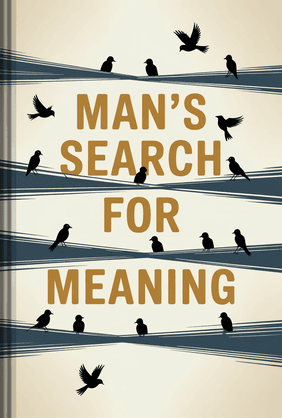
Man's Search for Meaning
Viktor E. Frankl
44 Duration8 Key Points4.6 RateFeeling inspired by all these recommendations but not sure where to start? You can explore the main ideas from all these books to find which one resonates most before you commit to a full read.
LeapAhead
Listen to key insights from authors like David Brooks and Viktor Frankl in 15-minute audio summaries, making it easy to build a learning habit on busy days.
FAQ
What is David Brooks's core philosophy?
His core philosophy revolves around the transition from individual ambition to moral commitment. He argues that modern society over-indexes on professional success (résumé virtues) and individualism, leading to isolation and emptiness. True joy and meaning are found by committing deeply to a vocation, a community, a philosophy, and your family (eulogy virtues).
Which David Brooks book should I read first?
If you are younger or heavily focused on career ambition and wondering why it feels empty, start with The Road to Character. If you are navigating mid-life, transitioning careers, or recovering from a major setback, pick up The Second Mountain. Both are widely available on Amazon, Barnes & Noble, and make for excellent listening on Audible. If you want to improve your immediate relationships, his latest, How to Know a Person, is the most actionable.
What are eulogy virtues?
Eulogy virtues are the moral qualities that people will remember and talk about at your funeral. While résumé virtues are the skills that make you employable (coding, management, accounting), eulogy virtues are about your character: your capacity for loyalty, your courage in the face of adversity, your honesty, and your ability to love others deeply. Brooks emphasizes that we should structure our lives to build these virtues proactively.