

You hit a wall. Your brain starts negotiating, begging you to hit the snooze button, skip the gym, or walk away from a difficult project. Motivation is a cheap, fleeting emotion. When things get dark, you do not need motivation. You need a system.
What Exactly is the David Goggins Cookie Jar?
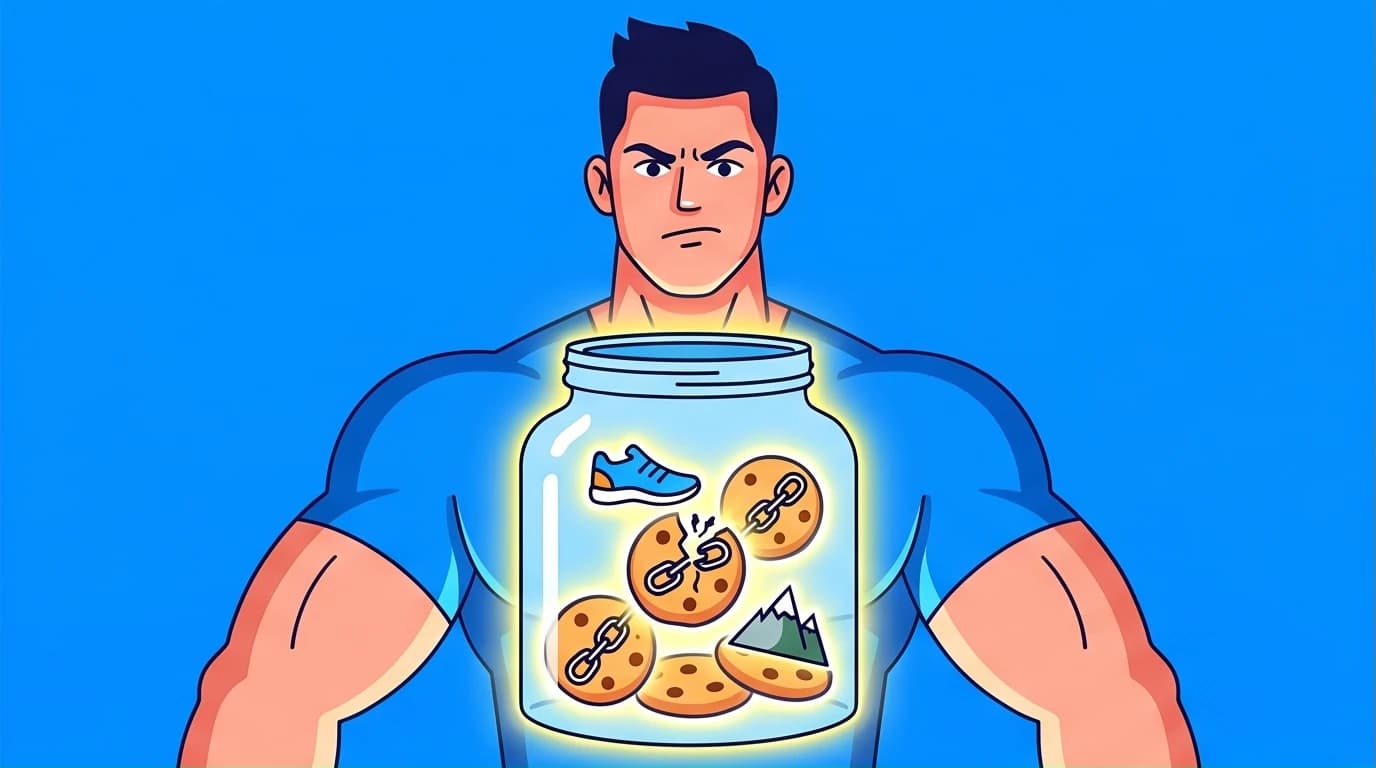
The David Goggins cookie jar is not a physical object you keep in your kitchen. It is a psychological tool designed to hack your brain's natural tendency to seek comfort.
When you are suffering—whether you are running mile 20 of a marathon, grinding through a 14-hour workday, or fighting the urge to fall back into a bad habit—your mind enters a state of panic. It forgets everything you have achieved and focuses purely on the current pain.
The cookie jar is your customized mental archive. It holds every obstacle you have shattered, every failure you have survived, and every time the odds were stacked against you but you won anyway. When you want to quit, you reach into the jar, pull out a "cookie" (a memory of a past victory), and take a bite. That bite reminds your brain: I have survived worse than this. I do not quit.

Step-by-Step: How to Build Your Mental Cookie Jar
You cannot reach into an empty jar. Before you find yourself in the middle of a crisis, you need to stock your inventory. Here is the exact, actionable framework to build yours.
Step 1: Inventory Your Suffering
Sit down with a notebook. Do not use your phone—the distractions will ruin the process. Write down the hardest things you have ever done. Do not limit this to physical achievements.
- Did you survive a brutal breakup and rebuild your life? Write it down.
- Did you study for the bar exam while working a full-time job? Write it down.
- Did you run a 5K in 20-degree Fahrenheit weather when you felt sick? Write it down.
Step 2: Acknowledge the Failures You Survived
The most powerful cookies are not just the shiny gold medals. They are the catastrophic failures that did not kill you. Include the times you got fired, the business that went bankrupt, or the time you completely failed a public speaking event but got back up the next day. Surviving humiliation and defeat builds calluses on your mind.
Step 3: Categorize and Memorize
Organize your list. Read it over until you know it by heart. You cannot carry a piece of paper with you during a grueling workout or a stressful board meeting. You need these memories locked in your mind, ready to be accessed in less than a second.
Before we move to the 40 percent rule, it helps to realize that your past failures aren't just survival stories—they are fuel. If you struggle to see your past hardships as assets to put in your cookie jar, there is a fantastic framework for reframing adversity. Drawing heavily on Stoic philosophy, this next recommendation shows you exactly how to view every roadblock as a stepping stone. It is a perfect companion read for anyone looking to transform their biggest setbacks into their greatest advantages.
The Obstacle Is the Way
Ryan Holiday
 44 Duration
 7 Key Points
 4.6 Rate
The Engine Behind the Jar: The 40 Percent Rule Meaning
To truly weaponize your cookie jar, you must understand the psychological framework that powers it. This requires unpacking the 40 percent rule meaning.
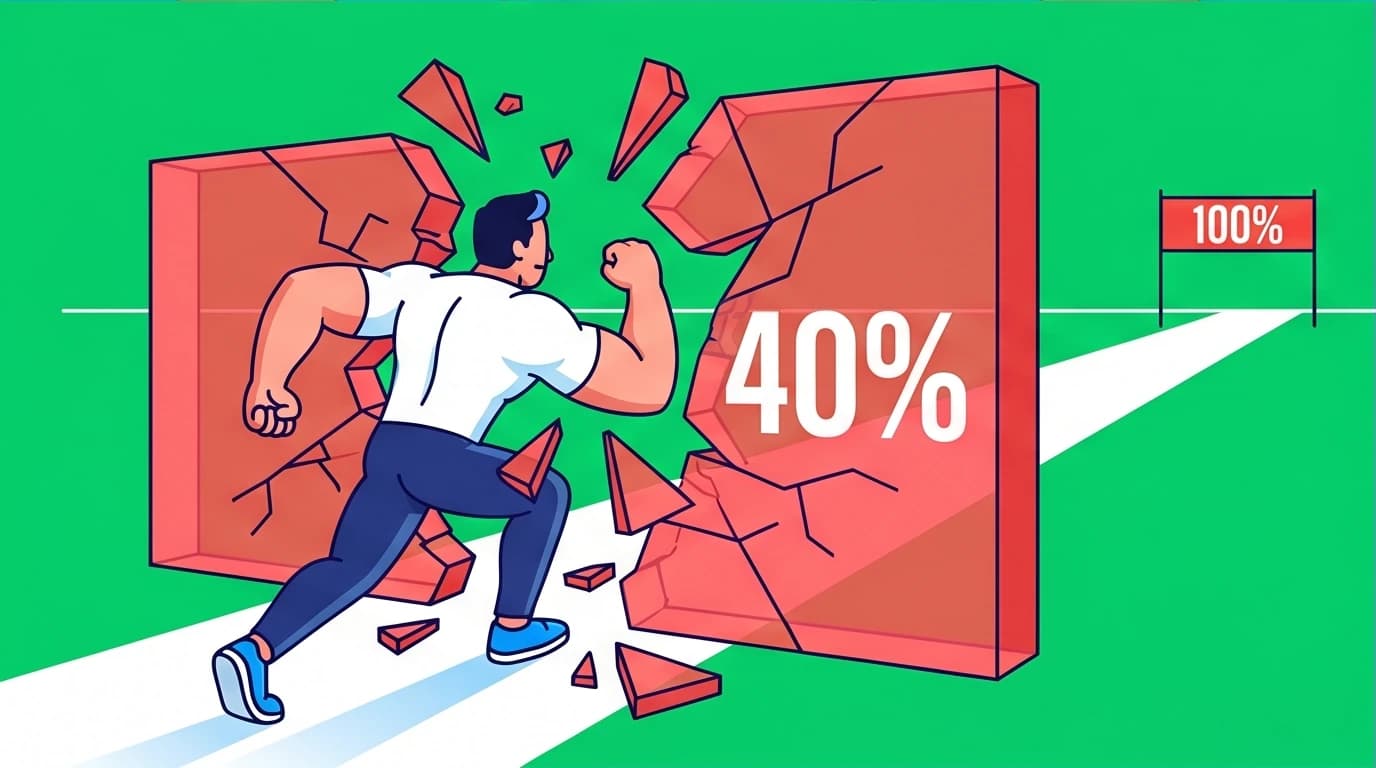
Goggins popularized the idea that when your mind tells you that you are completely exhausted, done, and cannot take another step, you are actually only at 40 percent of your true capacity. Your brain is acting like a governor on a car engine. It limits your speed long before the engine is actually in danger of blowing up. It does this to protect you from pain.
When you hit that 40 percent wall, the pain is real. The desire to quit is overwhelming. This is exactly when you open the cookie jar. The memories you pull out serve as proof to your brain that the governor is lying. The cookie jar is the bridge that gets you from 40 percent to 100 percent.
The 40 Percent Rule is just one of several core concepts Goggins uses to reframe human potential. To see how it fits into his larger philosophy of mental toughness, you can explore the key takeaways from his entire book.
The Prerequisite: The Accountability Mirror Goggins Method
You cannot build a functional cookie jar if you are lying to yourself about who you are. Before you can conquer external challenges, you have to execute the accountability mirror Goggins strategy.
If you are out of shape, lazy, or underperforming, you cannot sugarcoat it. The accountability mirror requires brutal honesty.
How to set it up:
- Buy a pack of Post-it notes (grab them from Target or Amazon).
- Stand in front of your bathroom mirror. Look yourself directly in the eyes.
- Write your insecurities, flaws, and current goals on the notes and stick them to the mirror.
- If you are overweight, write: "I am out of shape and need to lose 20 pounds."
- If you are procrastinating on your career, write: "I am acting lazy and need to apply to 5 jobs today."
You face this mirror every single morning and every single night. You hold yourself accountable for the notes on the glass. There is no positive affirmation nonsense here. It is raw truth. Overcoming the brutal truths on this mirror is what generates the "cookies" you will eventually put into your jar.
Holding yourself absolutely accountable in front of the mirror is a tough pill to swallow, but it is the foundation of genuine transformation. If you want to dive deeper into this level of radical personal responsibility, it helps to learn from leaders who have tested these concepts in the highest-stakes environments. This next book, written by two former Navy SEALs, provides an incredible blueprint for taking absolute control of your life, eliminating excuses, and leading yourself—and others—with unwavering discipline.

Extreme Ownership
Jocko Willink, Leif Babin
45 Duration7 Key Points4.6 Rate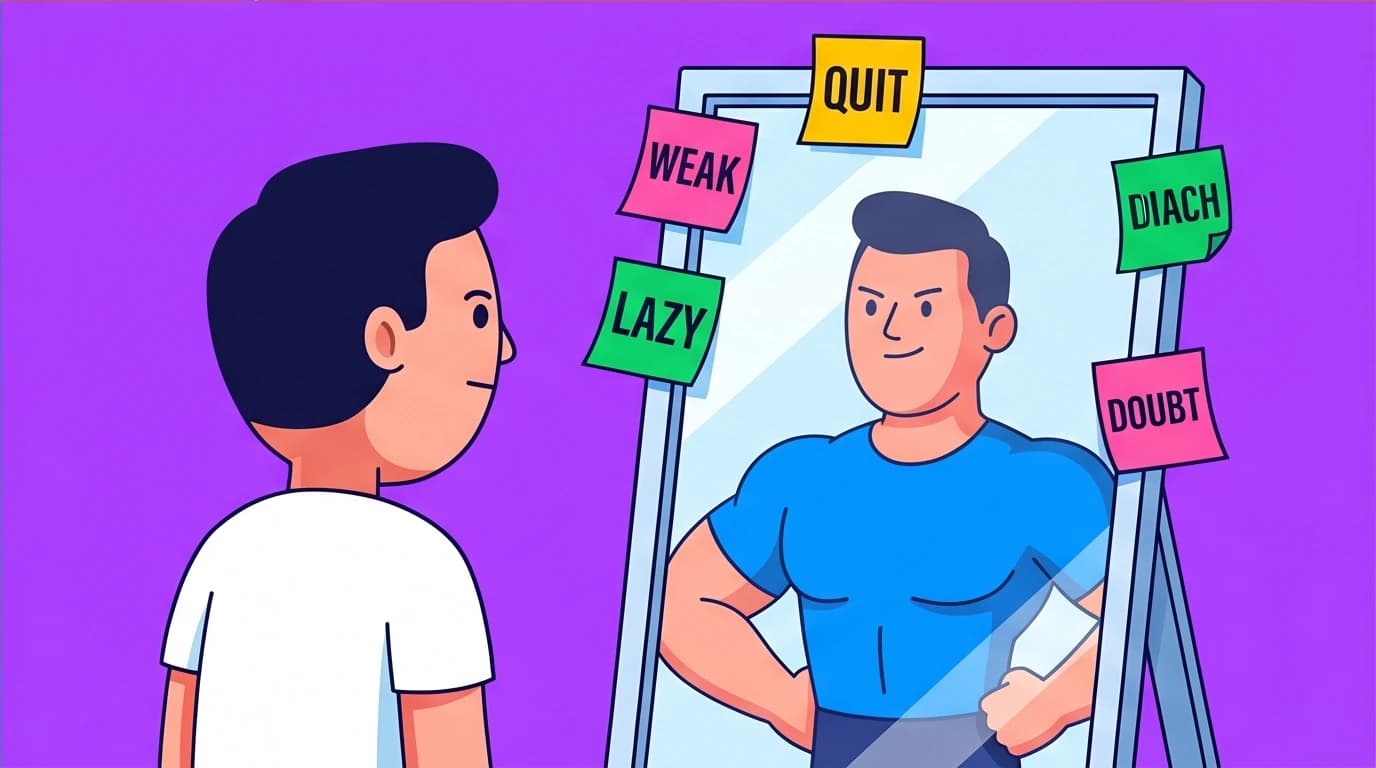
Integrating the "Can't Hurt Me" Challenges
If you have read the book or listened to the audiobook on Audible, you know that the Can't Hurt Me challenges are designed to force you into discomfort.
The audiobook, in particular, offers a unique experience with its podcast-style format, which many find enhances Goggins' raw storytelling. Deciding which version to dive into can depend on how you best absorb this kind of intense material.
You do not build a cookie jar by living a soft life. You have to actively seek friction.
To stock your jar this week, execute one of these micro-challenges:
- The Comfort Zone Audit: Identify something you hate doing. Maybe it is waking up at 4:30 AM, taking a cold shower, or doing 100 pushups. Do it anyway.
- The Extra Mile: If you plan to run 3 miles, run 3.1. If you plan to read 10 pages, read 11. That extra fraction is where you callous your mind.
- Remove the Safety Net: Take away something you rely on for comfort. Drive to work in silence without your favorite podcast. Work out without music. Face your thoughts.
Every time you complete one of these challenges, you bake a new cookie.
Since we have been referencing his methods, there is absolutely no substitute for getting the full story directly from the source. If you want to truly grasp the depth of these challenges and understand the remarkable life story that forged the cookie jar concept in the first place, you need to read his memoir. It chronicles an incredible journey from a depressed, overweight young man to a U.S. Armed Forces icon, offering an unfiltered look at what it really takes to master your mind.

Can't Hurt Me
David Goggins, Adam Skolnick, et al.
26 Duration10 Key Points4.6 RateReading all these powerful books is a challenge in itself, especially after a day of pushing your limits. If you're short on time but want to absorb these lessons, there's a more efficient way to get the core ideas.


Listen to the key ideas from 'Can't Hurt Me' and other essential books on mental toughness in just 15 minutes, turning your commute or workout into a learning session.
 LeapAhead
How to Build Mental Toughness Daily
People constantly ask how to build mental toughness, expecting a magic supplement or a complex morning routine. Mental toughness is not an app you download. It is a lifestyle of voluntary suffering.
Stop Searching for Hacks
There is no shortcut. You build mental toughness by making the harder choice when the easier choice is readily available.
Do Something That Sucks Every Day
Your brain thrives on routine and comfort. Disrupt it. Make your bed with military precision. Eat clean when junk food is right in front of you. Go for a walk outside when the weather drops below freezing.
Change Your Internal Dialogue
When the pain hits, your internal dialogue will shift to a victim mentality. Why is this so hard? I don't need to do this. Catch that voice. Shut it down. Reach into the David Goggins cookie jar, pull out a memory of your past resilience, and change the narrative to: I have been through hell before, and I will dominate this too.
To fuel that powerful internal dialogue, sometimes you need to borrow a line directly from the source. Having a few hard-hitting phrases ready to go can make all the difference when your resolve is tested.
Mental toughness is a perishable skill. If you stop doing hard things, your cookie jar gets stale. Keep grinding, keep facing the accountability mirror, and keep stocking the jar.
Building mental toughness day in and day out is the ultimate test of endurance. If you are fascinated by the psychology behind why some people thrive under this kind of relentless pressure while others quit, you might enjoy exploring the science of perseverance. This heavily researched book proves that extraordinary success isn't about raw talent; it is about a unique blend of passion and long-term stamina. It is an inspiring read to keep you motivated as you continue to stock your cookie jar.

Grit
Angela Duckworth
18 Duration8 Key Points4.6 RateStaying consistent with these principles requires not just physical grit but a constant stream of mental fuel. If your demanding schedule makes it tough to sit down with a book, you can still absorb the knowledge you need to stay sharp.
Fit powerful ideas from books on discipline and perseverance into your packed day. This app breaks down bestsellers into 15-minute reads or listens, so you can keep learning on the go.
LeapAheadFAQ
Does the cookie jar concept only apply to physical fitness and working out?
No. The cookie jar applies to any high-stress situation. You can use it when studying for a massive exam, pitching a difficult client in business, dealing with grief, or trying to break a severe addiction. It is a universal tool for overcoming mental friction.
No. The cookie jar applies to any high-stress situation. You can use it when studying for a massive exam, pitching a difficult client in business, dealing with grief, or trying to break a severe addiction. It is a universal tool for overcoming mental friction.
What if I feel like I haven't accomplished anything significant to put in my jar?
You are overthinking it. A "cookie" does not have to be an Olympic gold medal or a million-dollar business. Small victories matter. Did you show up to work when you were dealing with severe depression? That is a cookie. Did you choose water over alcohol at a party when you were trying to get sober? That is a cookie. Start small.
You are overthinking it. A "cookie" does not have to be an Olympic gold medal or a million-dollar business. Small victories matter. Did you show up to work when you were dealing with severe depression? That is a cookie. Did you choose water over alcohol at a party when you were trying to get sober? That is a cookie. Start small.
How often should I update the Post-it notes on my Accountability Mirror?
Update them as soon as you accomplish a goal, or when a new glaring weakness presents itself. If your note says "Run 10 miles this week" and you accomplish it on Thursday, take it down and immediately replace it with a harder goal for the following week. It is a living, breathing system.
Update them as soon as you accomplish a goal, or when a new glaring weakness presents itself. If your note says "Run 10 miles this week" and you accomplish it on Thursday, take it down and immediately replace it with a harder goal for the following week. It is a living, breathing system.
Is it safe to push past the 40 percent rule if I am feeling physical pain?
There is a distinct difference between the pain of exertion and the pain of an actual injury (like a torn muscle or broken bone). The 40 percent rule targets mental fatigue, muscle burning, and the desire to quit. You must learn your own body's signals to distinguish between your mind being tired and your body being physically broken.
There is a distinct difference between the pain of exertion and the pain of an actual injury (like a torn muscle or broken bone). The 40 percent rule targets mental fatigue, muscle burning, and the desire to quit. You must learn your own body's signals to distinguish between your mind being tired and your body being physically broken.