


You check Zillow. You look at your savings account. You feel sick. High interest rates and heavy inflation have made the US housing market feel like an exclusive club with a massive cover charge. Rent eats up your paycheck, making it nearly impossible to stash away tens of thousands of dollars.
Here is the truth: the idea that you need a 20% down payment to buy a house is dead. The average buyer puts down around 6%, and many put down even less. The real secret to unlocking homeownership without a massive bank account is knowing exactly how to leverage down payment assistance programs (DPAs).
This guide breaks down exactly how these programs work, where the money comes from, and how you can get the keys to your own home without draining your life savings.
What Are Down Payment Assistance Programs?
Down payment assistance programs are funds offered by federal, state, county, or city governments, as well as select non-profits. They are administered through your local Housing Finance Agency (HFA). Their entire purpose is to help working-class Americans bridge the gap between getting approved for a mortgage and actually having the cash to close the deal.
Depending on where you live, DPA funds can be used for the down payment, your closing costs, or sometimes both.
These programs generally fall into four categories:
- Grants: This is the gold standard. First time home buyer grants provide straight cash to cover your down payment. You never have to pay this money back.
- Forgivable Loans: This is a secondary loan that acts like a grant. The agency gives you the money, and as long as you live in the house for a set number of years (usually 5 to 10), the loan is completely forgiven. If you move or sell early, you pay back a prorated amount.
- Deferred-Payment Loans: A zero-interest loan that covers your down payment. You do not make any monthly payments on it. You only pay the money back when you eventually sell the home, refinance, or pay off your main mortgage.
- Low-Interest Secondary Loans: You borrow the down payment money and pay it back monthly at a very low interest rate alongside your primary mortgage.

Figuring Out How to Buy a House With Low Income
A lower paycheck does not disqualify you from buying a house. Mortgage lenders care far more about your Debt-to-Income (DTI) ratio and your credit history than your gross salary. If you make $50,000 a year but carry zero debt, you are often a much safer bet to a lender than someone making $120,000 a year drowning in credit card balances and massive auto loans.
If you are trying to figure out how to buy a house with low income, your strategy should rely on pairing a DPA with a low-down-payment mortgage product.
You do not use conventional loans that demand high credit scores and large down payments. Instead, you look at these standardized options:
- FHA Loans: Backed by the Federal Housing Administration. You only need a 3.5% down payment and a credit score of 580. FHA loans allow you to source that 3.5% entirely from a down payment assistance grant.
- Fannie Mae HomeReady & Freddie Mac Home Possible: These are conventional loans explicitly designed for low-to-moderate-income borrowers. They require just 3% down and offer reduced mortgage insurance costs.
If you are feeling overwhelmed by the prospect of balancing a lower salary with the dream of homeownership, getting your financial foundation in order is the best first step. Managing your debt-to-income ratio and fixing your credit might seem daunting, but it certainly doesn't have to be. For anyone trying to navigate personal finance without a massive paycheck, Broke Millennial by Erin Lowry is a fantastic resource. It breaks down exactly how to take control of your money, crush debt, and build a solid credit profile so that mortgage lenders see you as the ideal, responsible borrower.

Broke Millennial
Erin Lowry
 29 Duration
 10 Key Points
 4.8 Rate
And if your schedule is too packed to sit down with a physical book, you can still get the core lessons from top finance authors.


Absorb the key ideas from personal finance bestsellers in 15-minute audio or text summaries, helping you master your money on the go.
 LeapAhead
The Hidden Shortcut: USDA Home Loans
If you are willing to live outside of a major urban center, USDA home loans are arguably the most powerful home-buying tool in the country. Backed by the US Department of Agriculture, this program is designed to develop rural and suburban areas.
Do not let the word "agriculture" fool you. You do not need to buy a farm or a tractor. Thousands of standard suburban neighborhoods, located just 30 to 40 miles outside of major US cities, qualify for this program.
- Zero Down Payment: USDA loans require 0% down. Nothing.
- Lower Rates: The interest rates are typically lower than standard conventional mortgages.
- Income Caps: This program is strictly for low-to-moderate-income families. If you make too much money, you actually will not qualify.
You can check if a specific house or neighborhood qualifies by typing the address into the official USDA Rural Development property eligibility map online.

Saving for a House on a Tight Budget
Even if a down payment assistance program covers your 3.5% down payment and closing costs, buying a house is not entirely cash-free. You still need liquid funds for upfront expenses like earnest money deposits ($1,000 to $2,000 to show the seller you are serious), home inspections ($400 to $600), and moving expenses.
Saving for a house on a tight budget requires ruthless prioritization for a short period of time.
- Automate Micro-Transfers: Set up your checking account to automatically push $20 or $50 to a separate savings account the exact day your paycheck hits. If you wait until the end of the month to save what is left, there will be nothing left.
- Use a High-Yield Savings Account (HYSA): Stop leaving your money in a traditional bank account earning 0.01% interest. Move your home fund into an FDIC-insured HYSA earning 4% to 5%.
- Pause the Lifestyle Creep: Cancel the Audible subscription, pause Amazon Prime, and cook at home for six months. You are not sacrificing forever; you are temporarily shifting capital to acquire a permanent asset.
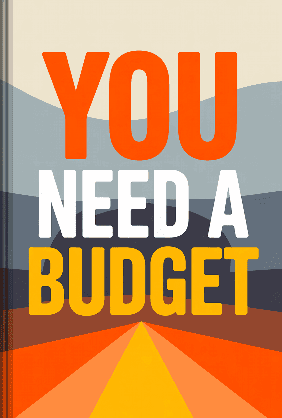
Saving a chunk of cash while covering your monthly rent and bills requires a major shift in how you view your everyday spending. If you struggle with lifestyle creep or find that your bank account is always hovering near zero by the end of the month, you might need a new financial system. You Need a Budget by Jesse Mecham offers a game-changing framework for proactive saving. By teaching you how to "give every dollar a job," this book will help you easily find the hidden cash in your current paycheck to fund those necessary home inspections and earnest money deposits.
You Need a Budget
Jesse Mecham
16 Duration7 Key Points4.7 RateHow to Actually Execute and Apply
Finding and applying for down payment assistance requires doing things in a very specific order. If you do this backward, you will get frustrated and quit.
1. Do Not Go to a Random Bank First
Many big-name retail banks hate down payment assistance programs. The paperwork is tedious, and their loan officers do not get paid enough commission to care. If you walk into a random branch, they might falsely tell you that "those programs do not exist" or "you do not qualify."
2. Find Your Local Housing Finance Agency (HFA)
Go directly to HUD.gov. Navigate to their "Local Homebuying Programs" section and click on your state. This will redirect you to your state or city’s official HFA website. This is where the actual funds are managed.
3. Take the Required Education Course
Almost every single legitimate DPA program requires you to take a HUD-approved homebuyer education course. These are usually done online, cost around $50 to $100, and take a few hours. Get this certificate out of the way early.
4. Pick a DPA-Approved Lender
On your local HFA website, there will be a list of "Approved Lenders." These are local mortgage brokers and loan officers who are specifically trained to process state grants and down payment assistance. Call one of them. Tell them your income, your credit score, and that you want to utilize the state DPA program. They will pull your credit, get you pre-approved, and handle the paperwork for the grant.

Buying a home is one of the biggest financial moves you will ever make, and setting up the right systems beforehand can save you years of stress. Once you have navigated the down payment assistance process and finally gotten your keys, you will want your money working on autopilot to handle the new mortgage and routine maintenance costs. I Will Teach You to Be Rich by Ramit Sethi is an incredible guide that shows you exactly how to automate your saving and spending. It provides a no-nonsense, highly practical blueprint for building wealth, paying off your home, and living a rich life without the guilt.

I Will Teach You to Be Rich
Ramit Sethi
39 Duration8 Key Points4.5 RateFor busy new homeowners, continuing your financial education is key. If you want a simple way to learn from books like this without the time commitment, an app can help.
Turn your commute or downtime into learning opportunities by listening to the core insights from wealth-building books in just 15 minutes.
LeapAheadFAQ
Do I have to be a literal first-time buyer to use these programs?
Not always. In the mortgage industry, a "first-time homebuyer" is simply someone who has not owned a principal residence in the last three years. If you owned a home a decade ago, sold it, and have been renting since, you legally qualify as a first-time buyer again.
Not always. In the mortgage industry, a "first-time homebuyer" is simply someone who has not owned a principal residence in the last three years. If you owned a home a decade ago, sold it, and have been renting since, you legally qualify as a first-time buyer again.
Can I use down payment assistance with an FHA loan?
Yes. FHA loans are the most common type of mortgage paired with down payment assistance. The DPA grant or secondary loan simply covers the 3.5% down payment that the FHA requires.
Yes. FHA loans are the most common type of mortgage paired with down payment assistance. The DPA grant or secondary loan simply covers the 3.5% down payment that the FHA requires.
Are down payment assistance programs a scam?
Legitimate DPA programs administered by state and local governments (HFAs) are entirely real and safe. However, never pay a third-party company a "fee" to find you a grant. All real programs can be found for free via HUD.gov and your local state government websites.
Legitimate DPA programs administered by state and local governments (HFAs) are entirely real and safe. However, never pay a third-party company a "fee" to find you a grant. All real programs can be found for free via HUD.gov and your local state government websites.
What happens if I sell my house after using a forgivable loan?
If you stay in the house past the forgiveness period (usually 5 to 10 years), the loan dissolves and you owe nothing. If you sell the house or refinance before that period ends, you will have to pay back a portion of the assistance out of the profits of your home sale. Your approved lender will explain the exact timeline before you sign any documents.
If you stay in the house past the forgiveness period (usually 5 to 10 years), the loan dissolves and you owe nothing. If you sell the house or refinance before that period ends, you will have to pay back a portion of the assistance out of the profits of your home sale. Your approved lender will explain the exact timeline before you sign any documents.