

You pay your landlord on the first of the month. You check your bank app. The idea of scraping together tens of thousands of dollars for a down payment feels like a bad joke. The math just does not seem to work when inflation eats your grocery budget, rent keeps climbing, and the housing market feels entirely out of reach.

You are not doing anything wrong. The economic landscape for young buyers is brutal. But getting the keys to your own place does not require a trust fund, and it does not mean you have to eat instant ramen for the next five years. Figuring out how to save for a house comes down to breaking old real estate myths and setting up a mechanical, emotionless money system.
Here is exactly how to build your down payment while you are still dealing with a landlord.
Stop Believing the 20% Down Payment Myth
The biggest reason renters give up on buying is a math error. They look at a $350,000 starter home, calculate 20% ($70,000), look at their savings account, and surrender.
You do not need 20% down. In fact, the National Association of Realtors reports that the typical down payment for a first-time buyer is around 6%.
- Conventional Loans: Can require as little as 3% down.
- FHA Loans: Backed by the government, requiring just 3.5% down (and they are much more forgiving on credit scores).
- VA or USDA Loans: Can require 0% down if you meet military or rural geographic requirements.
Let's rerun the math on that $350,000 home using a 3% conventional loan:
You need $10,500 for the down payment. You will also need about 3% for closing costs (appraisals, loan origination fees, title insurance), which is another $10,500.
You need $10,500 for the down payment. You will also need about 3% for closing costs (appraisals, loan origination fees, title insurance), which is another $10,500.
Your real target is $21,000.
Saving $21,000 is a tangible, manageable 18-to-24-month project. Saving $70,000 is a decade-long pipe dream. Adjust your target line first.
Getting past the initial shock of down payment math is often the biggest hurdle for first-time buyers. If you are feeling overwhelmed by the sheer volume of personal finance advice out there, it helps to start with an approachable foundation. A great resource for young professionals trying to get their financial lives organized without giving up everything they love is The Financial Diet. It strips away the intimidating jargon and offers practical, easy-to-digest advice on how to start managing your money, building credit, and preparing for major milestones like buying a home.

The Financial Diet
Chelsea Fagan and Lauren Ver Hage
 34 Duration
 9 Key Points
 4.7 Rate
Saving for a House While Renting: The Action Plan
Rent is your biggest obstacle. It eats up the exact cash you need to buy your way out of renting. To break the cycle, you have to treat your future house like a bill that is already due.
1. Run the "Practice Mortgage" Drill
Budgeting for a home starts months before you talk to a lender. You need to know if you can actually afford the monthly cost of owning.
Find out what your estimated future mortgage payment will be (including taxes, insurance, and HOA fees) using an online calculator. Let’s say your current rent is $1,600, but your future mortgage payment will be $2,200. You have a $600 gap.
Starting this month, you must live as if your housing cost is already $2,200. On the day you pay your rent, instantly transfer that $600 difference into your house fund. If you can survive six months doing this without going into credit card debt, two things happen: you prove you can handle the future mortgage, and you just saved $3,600 effortlessly.
2. Open a High-Yield Savings Account for House Funds
Do not keep your down payment money in your daily checking account. You will accidentally spend it on an Amazon Prime Day sale or a weekend trip.
You also should not invest this money in the stock market. If you plan to buy a house in the next three years, the stock market is far too volatile. A sudden market dip could wipe out your ability to close on a home.
The exact tool you need is a high-yield savings account (HYSA). Open a high-yield savings account for house funds at an online bank like Marcus by Goldman Sachs, Ally, or Capital One. These accounts currently offer Annual Percentage Yields (APYs) around 4% to 5%. If you park $10,000 in an account earning 4.5%, the bank pays you $450 a year just for leaving it there.
Name the account "My Future House." Make it highly inconvenient to transfer money back to your checking account.
3. Automate the Process
Willpower fails. Systems do not. Set up your direct deposit so that a specific percentage of your paycheck routes directly to your HYSA before you ever see it. If the money never hits your main checking account, your brain assumes it does not exist, and you will naturally adjust your lifestyle to live on what is left.
Setting up these invisible transfers is the ultimate secret to building real wealth. When your savings happen in the background, you never feel the pinch of "missing" money. If you want to dive deeper into the mechanics of setting up a hands-off financial system, The Automatic Millionaire is an absolute must-read. David Bach outlines a powerful framework for paying yourself first and putting your financial goals—including your future home down payment—on total autopilot, proving that you do not need incredible discipline to achieve massive financial success.
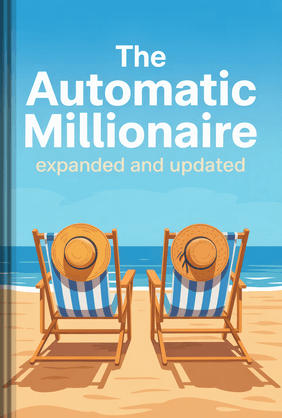
The Automatic Millionaire, Expanded and Updated
David Bach
38 Duration9 Key Points4.6 RateIf finding time to read essential finance books like this feels like another major hurdle, you don't have to miss out on the knowledge.


Absorb the core lessons from finance bestsellers in 15-minute audio sessions, perfect for turning your commute into a productive money masterclass.
 LeapAhead
Where to Find the Cash: Smart Budgeting for a Home
You cannot budget your way out of a severe income problem, but most people bleed hundreds of dollars a month without realizing it. Here are the most effective levers to pull.
Attack the "Big Two" Expenses
Cutting out an occasional $5 coffee is fine, but it will not buy you real estate. To make massive progress, you have to attack housing and transportation.
- The Rent Downsize: When your lease is up, can you move to a smaller unit in the exact same building? Can you rent a slightly older apartment for 12 months? Saving $300 a month on rent equals $3,600 a year straight into your house fund.
- The Car Payment Trap: Do not buy a new car while saving for a house. A $600 car payment completely destroys your debt-to-income (DTI) ratio, which dictates how much house a bank will let you buy. Keep your current car running.
Hijack Your Windfalls
Over the next two years, you will likely receive money outside your standard paycheck. This includes tax refunds, annual bonuses at work, cash gifts for holidays, or money from selling old furniture.
Create a strict rule right now: 80% of all windfalls go instantly into your house fund. You keep 20% to treat yourself. The average American tax refund is around $3,000. Funneling that directly into your HYSA wipes out months of required saving.
Finding extra cash for your house fund requires a shift in how you view your monthly income and those unexpected bonuses. It is all about giving every single dollar a specific job before it even hits your checking account. For a masterclass on taking total control of your cash flow, check out You Need a Budget. Jesse Mecham’s proven system will radically change how you look at your expenses, helping you prioritize your housing goals while still allowing you to spend guilt-free on the things that actually matter to you.
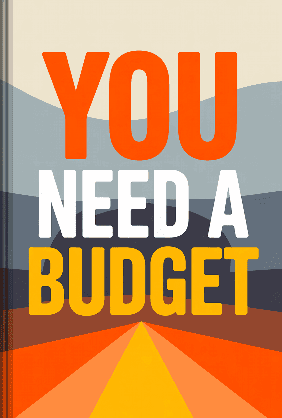
You Need a Budget
Jesse Mecham
16 Duration7 Key Points4.7 RateFirst Time Home Buyer Tips: Mistakes to Avoid
As your account balance grows, you enter the danger zone. Avoid these common traps that ruin the home buying process at the finish line.

Do not open new lines of credit.
Six months before you plan to apply for a mortgage, freeze your credit activity. Do not finance a new couch. Do not open a new travel credit card. Mortgage lenders scrutinize every hard inquiry on your credit report. New debt signals risk and can tank your mortgage pre-approval.
Six months before you plan to apply for a mortgage, freeze your credit activity. Do not finance a new couch. Do not open a new travel credit card. Mortgage lenders scrutinize every hard inquiry on your credit report. New debt signals risk and can tank your mortgage pre-approval.
Do not forget the emergency fund.
Never drain your bank account to absolute zero to make a down payment. The moment you move in, the water heater will break. The roof will leak. If you have zero cash left, you will end up financing repairs on a credit card at 24% interest. Ensure you have at least three months of living expenses left over after handing over your closing costs.
Never drain your bank account to absolute zero to make a down payment. The moment you move in, the water heater will break. The roof will leak. If you have zero cash left, you will end up financing repairs on a credit card at 24% interest. Ensure you have at least three months of living expenses left over after handing over your closing costs.
Your down payment is just the first major expense. For a full picture of the other fees you'll need to cover before closing day, from appraisals to title insurance, it's essential to plan ahead.
Do not job hop right before applying.
Lenders want to stability. They typically look for two consecutive years of employment history in the same industry. If you quit your salaried job to start a freelance business three months before applying for a loan, the bank will likely deny your application.
Lenders want to stability. They typically look for two consecutive years of employment history in the same industry. If you quit your salaried job to start a freelance business three months before applying for a loan, the bank will likely deny your application.
The Reality of the Journey
Saving for a house requires you to be slightly uncomfortable for a short period of time. It means saying no to a few expensive group trips. It means driving the older car while your friends lease new ones.
But every dollar you move into that high-yield savings account is buying you options. It is buying you distance from landlords, unpredictable rent hikes, and pet deposits. Lock in your target number, automate your transfers, and let time do the heavy lifting.
Even if saving the full amount feels like a major hurdle, don't lose hope. Many government and local programs are designed to help you bridge the gap.
Pushing through those uncomfortable moments of saving requires a strong mental game. Real estate and wealth building are rarely just about the math; they are deeply tied to your behaviors, biases, and patience. If you want to better understand your own relationship with money as you save for your first home, The Psychology of Money is a phenomenal read. Morgan Housel brilliantly explains how financial success is less about what you know and more about how you behave, offering timeless wisdom to keep you grounded during your homebuying journey.
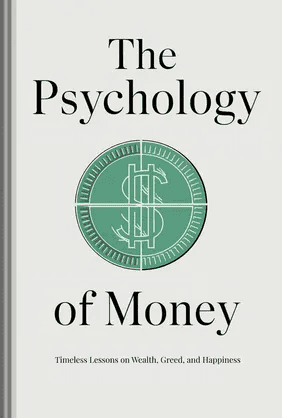
The Psychology of Money
Morgan Housel
48 Duration7 Key Points4.6 RateWith a full reading list of powerful financial advice, the next challenge is finding the time to get through them all. If your days are already packed, an app can help you absorb these key ideas much more efficiently.
Tackle your financial reading list by getting the key insights from these books in 15-minute summaries, helping you learn the strategies faster while you save.
LeapAheadFor a more detailed breakdown of the different loan types and why the 20% rule is outdated, this guide is an excellent next step.
FAQ
Should I pause my 401(k) contributions to save for a house?
No, but you should adjust them. At a bare minimum, contribute exactly enough to get your employer's full matching contribution. That is free money yielding an immediate 100% return. Anything beyond the match can temporarily be redirected to your house savings fund to speed up your timeline.
No, but you should adjust them. At a bare minimum, contribute exactly enough to get your employer's full matching contribution. That is free money yielding an immediate 100% return. Anything beyond the match can temporarily be redirected to your house savings fund to speed up your timeline.
How long does it realistically take to save a down payment?
If you are targeting a 3% down payment plus closing costs on a standard starter home, a disciplined renter can usually save this amount in 18 to 36 months, depending on their income and willingness to cut current living expenses.
If you are targeting a 3% down payment plus closing costs on a standard starter home, a disciplined renter can usually save this amount in 18 to 36 months, depending on their income and willingness to cut current living expenses.
Can I use a 401(k) loan or withdrawal for my down payment?
While the IRS allows first-time homebuyers to withdraw up to $10,000 penalty-free from an IRA, pulling money from a 401(k) usually triggers heavy taxes and penalties. A 401(k) loan is an option, but it adds another monthly debt payment to your budget right as you take on a mortgage. Rely on cash savings whenever possible to protect your retirement growth.
While the IRS allows first-time homebuyers to withdraw up to $10,000 penalty-free from an IRA, pulling money from a 401(k) usually triggers heavy taxes and penalties. A 401(k) loan is an option, but it adds another monthly debt payment to your budget right as you take on a mortgage. Rely on cash savings whenever possible to protect your retirement growth.
Does my credit score matter more than my down payment size?
They are equally critical. A high credit score (740+) will qualify you for the lowest possible interest rate. Even a 1% difference in your mortgage rate can cost or save you tens of thousands of dollars over the life of the loan, drastically altering your required monthly budget. Focus on paying off credit cards on time while you build your down payment.
They are equally critical. A high credit score (740+) will qualify you for the lowest possible interest rate. Even a 1% difference in your mortgage rate can cost or save you tens of thousands of dollars over the life of the loan, drastically altering your required monthly budget. Focus on paying off credit cards on time while you build your down payment.