


You are browsing Amazon or standing in the aisle of a Barnes & Noble, staring at the clean, minimalist cover of Essentialism: The Disciplined Pursuit of Less. You are probably wondering if this is just another self-help book that stretches a single good idea into 270 pages of corporate anecdotes. Your reading time is limited. You want to know if this book provides genuine, applicable value to fix your overloaded schedule, or if it just rehashes standard productivity advice you have already heard a dozen times.
Let's cut straight to the facts. This essentialism review (Greg McKeown) breaks down the actual value of the book, the valid criticism against it, and whether you should buy the full version or just listen to a 15-minute summary on your favorite app.
The Core Premise: What is Essentialism Anyway?
Before deciding if you should read it, you need to understand what McKeown is selling. Essentialism is not a time management book. It does not teach you how to do more things in less time. Instead, it teaches you how to get only the right things done.
McKeown argues that most of us are "non-essentialists." We make a millimeter of progress in a million different directions. The essentialist, by contrast, operates on the principle of Less but better (a concept borrowed from legendary industrial designer Dieter Rams). By directing all your energy toward one or two core pursuits, you make significant progress on the things that actually matter.

The book is structured around three steps:
- Explore: Discerning the trivial many from the vital few.
- Eliminate: Cutting out the non-essentials ruthlessly.
- Execute: Building systems that make doing the essential things almost effortless.
Sounds great in theory. But how does it hold up in practice?
Understanding the theory is the first step. But to truly benefit, you need to put these ideas into action. For a detailed guide on integrating these principles into your daily routine, from saying 'no' gracefully to identifying your vital few, explore our practical walkthrough.
Essentialism Book Pros and Cons
To give you a balanced view, we need to strip away the marketing hype and look at the actual mechanics of the book. Here are the essentialism book pros and cons.
The Pros: Where the Book Shines
1. The 90 Percent Rule
This is arguably the most actionable takeaway in the book. McKeown suggests that when evaluating an opportunity, you rate it on a scale of 0 to 100. If you rate it lower than a 90, you automatically change the score to a zero and reject it. This binary thinking kills the "maybe" mindset that clutters our calendars. It forces you out of people-pleasing and into aggressive prioritization.

This is arguably the most actionable takeaway in the book. McKeown suggests that when evaluating an opportunity, you rate it on a scale of 0 to 100. If you rate it lower than a 90, you automatically change the score to a zero and reject it. This binary thinking kills the "maybe" mindset that clutters our calendars. It forces you out of people-pleasing and into aggressive prioritization.
2. Reframing the Word "No"
Many productivity books tell you to say no, but McKeown explains how to do it without burning bridges. He frames "no" not as a rejection of a person, but as a commitment to your current priorities. The book provides scripts and mental models for pushing back on demanding bosses, needy colleagues, and social obligations.
Many productivity books tell you to say no, but McKeown explains how to do it without burning bridges. He frames "no" not as a rejection of a person, but as a commitment to your current priorities. The book provides scripts and mental models for pushing back on demanding bosses, needy colleagues, and social obligations.
3. The Power of Trade-offs
We live in an "I can have it all" culture. McKeown shatters this myth. He forces the reader to realize that every time you say yes to something, you are implicitly saying no to something else. Making trade-offs explicit is a harsh but necessary wake-up call for chronically overcommitted people.
We live in an "I can have it all" culture. McKeown shatters this myth. He forces the reader to realize that every time you say yes to something, you are implicitly saying no to something else. Making trade-offs explicit is a harsh but necessary wake-up call for chronically overcommitted people.
If the thought of pushing back on your boss or telling a coworker "no" makes your stomach tie into knots, you might need more than just a quick communication script. Essentialism tells you what to cut, but actually enforcing those cuts requires deep psychological boundary-setting. For those who chronically people-please and struggle with guilt when declining requests, diving into a dedicated guide on personal limits can be a game-changer. Here is a phenomenal resource that will give you the courage to protect your time and emotional energy without feeling like a bad colleague or friend.

Boundaries
Dr. Henry Cloud and Dr. John Townsend
 47 Duration
 10 Key Points
 4.7 Rate
The Cons: Where the Book Stumbles
1. The Classic Self-Help Padding
Like many American business and self-help books, Essentialism suffers from severe padding. The core philosophy could comfortably fit into a 15-page PDF. To hit the word count required by major publishers, McKeown fills the pages with repetitive anecdotes about Silicon Valley executives, historical figures, and generic corporate scenarios. If you read a lot of non-fiction, you will recognize this formula immediately, and it can feel tedious.
Like many American business and self-help books, Essentialism suffers from severe padding. The core philosophy could comfortably fit into a 15-page PDF. To hit the word count required by major publishers, McKeown fills the pages with repetitive anecdotes about Silicon Valley executives, historical figures, and generic corporate scenarios. If you read a lot of non-fiction, you will recognize this formula immediately, and it can feel tedious.
If you want the core principles without the corporate stories, a condensed version is your best bet.
If you're intrigued by the book's philosophy but wary of the fluff, getting the key insights in a condensed format is a smart way to start.


LeapAhead

Grasp the core principles of books like Essentialism in just 15 minutes, cutting through the padding to deliver only the most valuable, actionable ideas.
2. Oversimplification of Complex Lives
The book assumes you have a massive amount of control over your schedule. It works beautifully if you are a freelance consultant, a high-level executive, or an entrepreneur. But what if you are a mid-level manager, a junior employee, or a single parent? The rigid frameworks sometimes fail to account for the messy, unpredictable nature of real life where saying "no" isn't just a mindset issue—it’s a survival issue.
The book assumes you have a massive amount of control over your schedule. It works beautifully if you are a freelance consultant, a high-level executive, or an entrepreneur. But what if you are a mid-level manager, a junior employee, or a single parent? The rigid frameworks sometimes fail to account for the messy, unpredictable nature of real life where saying "no" isn't just a mindset issue—it’s a survival issue.
Deep Dive: Essentialism Criticism and Flaws
Any honest review must address the elephant in the room. When you look up essentialism criticism online, one major theme consistently surfaces: Privilege.
Critics rightly point out that the ability to ruthlessly eliminate tasks is a luxury. McKeown tells a story about an executive who decided to stop attending meetings and just stayed in his office to do "deep work." The executive was rewarded for his focus. In reality, if a regular employee tried this, they would likely be fired for insubordination.

The book fails to provide a realistic roadmap for people who lack autonomy in their jobs. When your boss hands you an urgent project at 4:30 PM on a Friday, quoting Dieter Rams and saying "I am choosing to focus on my vital few" is a quick way to lose your paycheck.
Furthermore, the book occasionally borders on toxic individualism. While prioritizing your own goals is important, teamwork, community, and relationships often require us to do things we don't necessarily want to do. Absolute essentialism can sometimes look a lot like selfishness.
You need to apply a heavy filter when reading. Take the mental models, but adjust the execution based on your actual leverage at work and at home.
If you love the idea of doing "deep work" but cannot fathom hiding in your office all day without getting fired, you might want to look at the actual source material for that concept. While Essentialism touches on focus, Cal Newport’s philosophy provides a much more granular, realistic blueprint for cultivating intense concentration in a distracted world. Newport acknowledges the realities of corporate communication and offers practical strategies to train your brain for deep focus, even if your calendar is currently drowning in shallow administrative tasks and endless email threads.
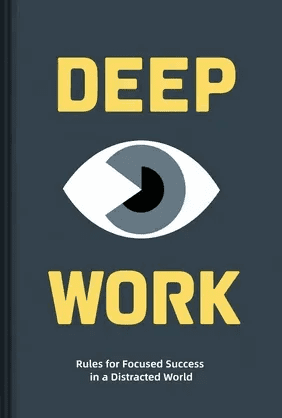
Deep Work
Cal Newport
47 Duration8 Key Points4.6 RateIs Essentialism Worth Reading? The Decision Matrix
Now for the core question: is essentialism worth reading, or should you just skip it?
Here is your decision matrix.
Buy the full book (Print, Kindle, or Audible) if:
- You are a chronic people-pleaser who cannot stop saying yes to every request.
- You suffer from severe FOMO (Fear Of Missing Out) and need a complete psychological reset.
- You know how to prioritize but struggle to actually do it. The repetitive nature of the book serves as necessary brainwashing. Reading it slowly over two weeks will force you to internalize the mindset.
- You hold a leadership position or run your own business, giving you the autonomy to actually implement extreme boundaries.
Skip the book and read/listen to a summary if:
- You are a seasoned reader of productivity literature (if you have already read Atomic Habits, Deep Work, and The ONE Thing, you will find much of this highly redundant).
- You just want the tactics. A summary on apps like Blinkist, Headway, or a good YouTube video will give you the 90% Rule and the decision-making matrices in 15 minutes.
- You have low tolerance for repetitive corporate anecdotes and "fluff."
For those who want to absorb these powerful concepts without committing to a full book, a summary app is the most efficient path forward.
LeapAhead
Use LeapAhead to get the essential takeaways from this and thousands of other non-fiction books, perfect for when you value the ideas more than the anecdotes.
If you realize that you fall into the "skip it" category because you just want practical execution without the fluff, you might prefer a book that zeroes in on singular focus with less corporate storytelling. Gary Keller's approach is often compared to McKeown's, but many readers find it slightly more grounded in daily application. It teaches you how to identify the absolute most important task in front of you and arrange your entire day around executing it. It is an excellent alternative if you want the true benefits of prioritization.

The ONE Thing
Gary Keller, Jay Papasan
22 Duration10 Key Points4.5 RateFinal Verdict
Essentialism is not a perfect book. It is repetitive, heavily padded, and assumes a level of workplace autonomy that most people do not possess.
However, the core message is incredibly vital for the modern professional. We live in an era of infinite distraction and endless obligations. McKeown provides a necessary permission slip to stop trying to do it all. If you are exhausted, spread too thin, and feeling productive but never productive on the right things, the philosophy of essentialism will change your life.
Just know that you are buying an idea, not a dense manual. Treat it as a mindset shift rather than a rigid instruction book, and you will extract massive value from it.
Ultimately, identifying what is essential is only half the battle; the other half is building the daily routines required to stick to those priorities. If you know exactly what you need to focus on but continually fall back into old patterns of distraction and over-commitment, you need a highly reliable system for behavior change. Transforming into an essentialist requires overhauling your daily routines. For a practical, step-by-step framework on how to lock in good behaviors and effortlessly reject bad ones, this next recommendation is the perfect companion to your new focused mindset.

Atomic Habits
James Clear
26 Duration8 Key Points4.7 RateAs you delve into the 'less but better' mindset, you might wonder how it stacks up against other popular philosophies. While Essentialism focuses on your calendar and commitments, it's often compared to a lifestyle focused on physical possessions.
FAQ
What is the difference between Essentialism and Minimalism?
Minimalism focuses primarily on physical possessions and lifestyle—removing excess stuff from your home and life. Essentialism focuses on your time, energy, and decisions. While a minimalist removes clutter from their closet, an essentialist removes clutter from their calendar.
Minimalism focuses primarily on physical possessions and lifestyle—removing excess stuff from your home and life. Essentialism focuses on your time, energy, and decisions. While a minimalist removes clutter from their closet, an essentialist removes clutter from their calendar.
Is this book practical for regular employees who don't have much authority?
Yes and no. You cannot use the extreme tactics (like outright refusing assignments from your boss), but you can use the communication frameworks. Instead of a flat "no," the book teaches you how to negotiate priorities, such as saying, "I can take on this new project, but which of my current tasks should I deprioritize to make room for it?"
Yes and no. You cannot use the extreme tactics (like outright refusing assignments from your boss), but you can use the communication frameworks. Instead of a flat "no," the book teaches you how to negotiate priorities, such as saying, "I can take on this new project, but which of my current tasks should I deprioritize to make room for it?"
How long does it take to read Essentialism?
The book is about 272 pages. For an average reader, it takes about 4 to 5 hours to read cover to cover. The Audible audiobook is approximately 6 hours long.
The book is about 272 pages. For an average reader, it takes about 4 to 5 hours to read cover to cover. The Audible audiobook is approximately 6 hours long.
Should I read Essentialism or Effortless first?
Read Essentialism first. Essentialism (McKeown’s first book) teaches you how to figure out what to do. Effortless (his follow-up book) teaches you how to make doing those things easier. You need the foundation of knowing what is essential before you can try to make it effortless.
Read Essentialism first. Essentialism (McKeown’s first book) teaches you how to figure out what to do. Effortless (his follow-up book) teaches you how to make doing those things easier. You need the foundation of knowing what is essential before you can try to make it effortless.