


You are drowning in meeting invites, side projects, and endless email threads. You constantly say yes to keep the peace, yet end every week feeling exhausted, overworked, and entirely unproductive. The problem isn't a lack of time management or bad productivity apps. The problem is your lack of relentless filtering. You need a paradigm shift.
The irony is, when you're this overwhelmed, finding the time to read an entire book—even one that can help—feels impossible. For those who want to absorb these essentialist principles quickly, there are new ways to learn on the go.

This app helps you grasp the core ideas of books like *Essentialism* in just 15-minute audio or text sessions, perfect for reclaiming your time even on the busiest days.

Download LeapAhead App now
This summary provides a high-level overview of McKeown's ideas. But is the full book a worthwhile investment of your time? For a balanced look at its core arguments, potential drawbacks, and who it's best for, a detailed review can help you decide.
The Core Philosophy: What is an Essentialist?
To get the most out of this essentialism greg mckeown summary, you first need to understand the fundamental difference between how an Essentialist and a Non-Essentialist operate.
The Non-Essentialist believes almost everything is essential. They view opportunities as equal and try to do it all. The result is a millimeter of progress in a million directions.
The Essentialist believes almost everything is noise. They understand that only a few things truly matter. By focusing energy on a single, deliberate path, they make significant progress on the things that actually move the needle.

Essentialism is not about getting more things done; it’s about getting the right things done. It is a systematic discipline for discerning what is absolutely essential, then eliminating everything that is not, so you can make the highest possible contribution toward the things that really matter.
If you're resonating with the idea that almost everything is noise and want to take the Essentialist mindset a step further, narrowing your focus is the ultimate game-changer. Discovering the single most impactful task in your professional or personal life can instantly cut through the clutter. For a deep dive into prioritizing that single needle-moving activity, this bestselling guide is a perfect companion read.

The ONE Thing
Gary Keller, Jay Papasan
 22 Duration
 10 Key Points
 4.5 Rate
Essentialism Chapter Summary: The Four-Part Framework
McKeown divides the journey to becoming an Essentialist into four distinct phases. This essentialism chapter summary breaks down the exact progression from mindset shift to daily execution.
Part 1: Essence (The Core Mindset)
Before you can change your behavior, you must rewrite your operating system. Three realities form the core of the Essentialist mindset:
- Individual Choice: We often forget that we have the power to choose. When we surrender our right to choose, we give others the power to dictate our lives and schedules.
- The Prevalence of Noise: Almost everything in the world is worthless noise. A very few things are exceptionally valuable. The Pareto Principle (80/20 rule) applies deeply here.
- The Reality of Trade-offs: We cannot have it all. Saying yes to one thing fundamentally means saying no to another. An Essentialist asks, "Which problem do I want to solve?" instead of "How can I do both?"
Part 2: Explore (Discerning the Vital Few)
You cannot filter out the noise if you don't step back to look at the big picture. Essentialists spend more time exploring, listening, and thinking than Non-Essentialists.
- Create Space: You need physical and mental space to concentrate. Bill Gates famously took "Think Weeks" away from Microsoft just to read and process ideas. Carve out distraction-free time on your calendar.
- Look for the Lead: Stop taking information at face value. Search for the underlying narrative or the core issue in your business or personal life.
- Play and Sleep: American corporate culture often glorifies burnout and sleep deprivation. Essentialists view sleep as a strategic asset. Play sparks creativity; sleep protects your most valuable asset—your brain.
- The 90 Percent Rule: When evaluating an option, assign it a score from 0 to 100. If it scores lower than 90, automatically change the score to 0 and reject it. If it isn't a clear yes, it is a clear no.
Part 3: Eliminate (Cutting Out the Trivial Many)
This is where the friction happens. Knowing what to do is easy; having the courage to cut the rest is hard.

- The Power of the Graceful No: People respect those who push back with clear boundaries. Saying no might cause a moment of social awkwardness, but it prevents months of resentment.
- Kill Sunk Costs: Just because you have already invested time or money into a failing project doesn't mean you should keep going. Ask yourself: "If I weren't already involved in this project, how hard would I work to get into it?"
- Editing Your Life: Think of yourself as an editor. An editor’s job is not just to add, but to cut relentlessly until only the most impactful message remains.
- Set Clear Boundaries: Boundaries are empowering. If you don't set them, colleagues and clients will simply consume your time without a second thought.
Of course, knowing what to eliminate is only half the battle—actually communicating those boundaries is where most people freeze up. It’s hard to disappoint your boss or turn down a friend without feeling guilty. If you struggle with the people-pleasing tendencies that come from American workplace culture, it helps to learn actionable strategies for delivering a graceful pushback without burning your professional bridges.
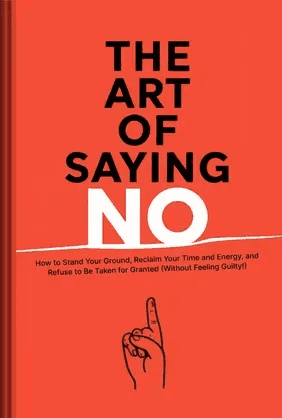
The Art of Saying NO
Damon Zahariades
16 Duration9 Key Points4.6 RatePart 4: Execute (Making it Effortless)
Once you have figured out what matters and eliminated the rest, you need a system to make execution smooth and frictionless.
- Build Buffers: Things go wrong. Projects take longer than expected. Essentialists add a 50% buffer to their time estimates to account for the unexpected.
- Remove Obstacles: Instead of forcing execution, ask: "What is the single biggest obstacle preventing this from happening?" Remove that constraint first.

- Small Wins: Do not go for the flashy, massive overhaul. Focus on minimal viable progress. Build momentum through small, consistent victories.
- Design Routines: Routine makes the essential default. When you build the right habits, doing the essential work requires zero willpower.
Mastering these four stages—Essence, Explore, Eliminate, and Execute—is the key to reclaiming your time. To put this knowledge into action, it helps to have a clear set of daily habits and strategies.
Once you've stripped away the non-essentials, the final hurdle is actually getting the important work done without burning yourself out. Interestingly, Greg McKeown realized that even Essentialists sometimes push themselves too hard on the right tasks. If you want to learn his advanced strategies for making your most critical projects not just possible, but genuinely easy to execute, his follow-up deep dive is an absolute must-read.

Effortless
Greg McKeown and Random House Audio
39 Duration9 Key Points4.5 RateEssentialism Key Takeaways
If you only have a few minutes to process the core message of the book, these essentialism key takeaways are the non-negotiable principles you must adopt:
- If it isn’t a clear yes, then it’s a clear no. Stop settling for mediocre opportunities just because you have free space on your calendar.
- Protect your assets. You are your highest-value asset. Sacrificing sleep, health, and family for incremental work output is a losing strategy.
- Embrace the trade-off. You cannot do everything. Choose what you are willing to sacrifice upfront.
- Edit your life constantly. Priorities shift. A project that was essential six months ago might be noise today. Audit your commitments regularly.
- Separate the decision from the relationship. Denying a request from a colleague or boss feels like rejecting the person. It is not. You are rejecting the task, not the relationship.
Putting these takeaways into practice is the real challenge, especially when it means adding more books to an already long reading list. If you want to clear that "reading debt" and absorb the wisdom from multiple books without the overwhelm, a summary tool can be a game-changer.
LeapAhead helps you master the key lessons from bestselling nonfiction, letting you tackle your reading list in minutes a day during your commute or workout.
Download LeapAhead App now
Essentialism Cliff Notes: Real-World Application
Understanding the theory is one thing. Execution is another. This section of our essentialism cliff notes provides direct, actionable scripts to handle the most difficult part of the philosophy: saying no.
How to politely decline at work
The Calendar Check:
"I would love to help with this. Let me check my calendar and get back to you by noon." (This buys you time to apply the 90 Percent Rule and stops you from the knee-jerk "yes".)
"I would love to help with this. Let me check my calendar and get back to you by noon." (This buys you time to apply the 90 Percent Rule and stops you from the knee-jerk "yes".)
The Prioritization Pivot (For Managers/Bosses):
"Yes, I can take on this new project. However, right now my top priorities are Project A and Project B. Which of these should I deprioritize to make room for this new request?" (This forces the requester to acknowledge the trade-off).
"Yes, I can take on this new project. However, right now my top priorities are Project A and Project B. Which of these should I deprioritize to make room for this new request?" (This forces the requester to acknowledge the trade-off).
The Soft No / Alternate Solution:
"I don't have the bandwidth to commit to the steering committee right now, but I can review the final deck and provide 15 minutes of feedback next Thursday."
"I don't have the bandwidth to commit to the steering committee right now, but I can review the final deck and provide 15 minutes of feedback next Thursday."
The Direct Decline:
"Thank you for thinking of me for this. Unfortunately, I have to pass as I am heads-down on a major quarterly goal right now."
"Thank you for thinking of me for this. Unfortunately, I have to pass as I am heads-down on a major quarterly goal right now."
The "Zero-Based" Time Budget
Similar to zero-based budgeting in finance, do not assume a meeting should exist just because it has always existed. Look at your recurring calendar invites. Delete the ones that lack a clear agenda or where your presence does not directly impact the outcome. Let people request your presence back if it's truly essential.
Applying these scripts and embracing a zero-based time budget will inevitably mean stepping away from projects and social events you used to attend automatically. While the fear of missing out might spike at first, you'll quickly realize that reclaiming your schedule gives you a profound sense of freedom. If you're ready to flip the script and actually find genuine happiness in opting out of the daily hustle, this powerful read will help you redefine productivity on your own terms.

The Joy of Missing Out
Tanya Dalton
22 Duration9 Key Points4.6 RateAs you begin to apply these principles, you might notice similarities to other popular philosophies. Many people wonder how Essentialism's focus on contribution differs from Minimalism's focus on possessions.
FAQ
Is Essentialism just an excuse to be lazy and avoid hard work?
No. Essentialism is not about working less; it is about working better. It actually requires intense discipline and hard work to say no, negotiate priorities, and focus deeply on complex tasks. You are choosing to invest heavy effort into a few massive goals rather than spreading weak effort across dozens of trivial tasks.
No. Essentialism is not about working less; it is about working better. It actually requires intense discipline and hard work to say no, negotiate priorities, and focus deeply on complex tasks. You are choosing to invest heavy effort into a few massive goals rather than spreading weak effort across dozens of trivial tasks.
How do I apply Essentialism when I am junior in my career and don't have the authority to say no?
When you lack authority, you use transparency. Instead of a flat "no," use the "Prioritization Pivot" script mentioned above. Show your manager your current task list and ask them to help you prioritize. This demonstrates strategic thinking and protects you from silent burnout while ensuring you execute what your boss actually values most.
When you lack authority, you use transparency. Instead of a flat "no," use the "Prioritization Pivot" script mentioned above. Show your manager your current task list and ask them to help you prioritize. This demonstrates strategic thinking and protects you from silent burnout while ensuring you execute what your boss actually values most.
What is the difference between Essentialism and Minimalism?
Minimalism focuses primarily on reducing physical possessions and external clutter to create a simpler life. Essentialism is a broader cognitive framework about energy and contribution. It focuses on identifying the highest point of leverage in your work and life, and systematically eliminating the commitments, tasks, and habits that distract from that leverage.
Minimalism focuses primarily on reducing physical possessions and external clutter to create a simpler life. Essentialism is a broader cognitive framework about energy and contribution. It focuses on identifying the highest point of leverage in your work and life, and systematically eliminating the commitments, tasks, and habits that distract from that leverage.
I suffer from severe FOMO (Fear Of Missing Out). How do I deal with missing opportunities?
McKeown advocates trading FOMO for JOMO (Joy Of Missing Out). You must anchor yourself to the fact that every time you say no to a good opportunity, you are preserving your time and energy for a great opportunity. The discomfort of missing out fades quickly, but the exhaustion of a bad commitment lasts for months.
McKeown advocates trading FOMO for JOMO (Joy Of Missing Out). You must anchor yourself to the fact that every time you say no to a good opportunity, you are preserving your time and energy for a great opportunity. The discomfort of missing out fades quickly, but the exhaustion of a bad commitment lasts for months.