

You are reading an op-ed on your favorite news app, or maybe you are highlighting a nonfiction bestseller on your Kindle. You stumble across a sentence like: "The latest market data gives credence to the CEO's turnaround strategy."
You understand the general point. The data supports the strategy. But when you sit down to write your own college essay or a quarterly business report, you hesitate. Can you use this phrase exactly like you use the word "believe"? Do you "give" credence or "lend" it?
Using advanced vocabulary incorrectly can hurt your credibility faster than sticking to simple words. Let's break down exactly what this phrase means, how to structure it in your writing, and the common grammatical traps you need to avoid.
How Do We Define Credence?
To properly
define credence, we have to look at its origins. The word stems from the Latin root credere, which means "to believe" or "to trust." This is the exact same root that gives us everyday English words like credit, incredible, and credentials.Credence is a noun. It represents the mental act of believing that something is true, or the quality of being believable.

However, you rarely see the word "credence" floating around by itself. It almost always partners with specific verbs—usually "give" or "lend." You do not just have credence; you bestow it upon something else. Think of it as a stamp of approval that you place on an idea, a theory, or a piece of gossip.
Real-World Credence Examples
Context is everything. You will rarely hear someone yell this phrase across a noisy sports bar. It belongs in formal, analytical, or professional environments. Here are a few practical
credence examples broken down by the scenarios where you are most likely to use them.Scenario 1: The Corporate Workplace
In business, you rarely deal with absolute certainties. You deal with forecasts, consumer data, and risk assessments.
- Example: "The sudden spike in our Amazon storefront traffic gives credence to the marketing team's theory that influencer partnerships drive immediate sales."
- Why it works: You aren't saying the theory is an undeniable law of physics. You are saying the new data makes the theory highly believable.
Mastering vocabulary like "give credence to" is just the beginning of elevating your professional communication. If you frequently write emails, reports, or proposals that need to sound polished and persuasive without feeling overly academic, tightening up your overall business writing strategy is a must. A great resource to help you strike that perfect balance between formal and accessible is this highly recommended guide from Harvard Business Review.
HBR Guide to Better Business Writing
Bryan A. Garner
 15 Duration
 7 Key Points
 4.9 Rate
Scenario 2: Academic Writing
Professors and researchers love this phrase. It allows them to support a hypothesis without sounding unscientific or overly emotional.
- Example: "The discovery of ancient trade logs in the region gives little credence to the idea that the civilization was completely isolated."
- Why it works: Notice the use of "gives little credence." Using the phrase negatively is one of the most effective ways to politely tear down an opposing argument in a research paper.
Scenario 3: Media and Journalism
Reporters use this phrase to discuss rumors or allegations without legally confirming them as absolute facts.
- Example: "The police department refused to give credence to the anonymous tips circulating on social media."
- Why it works: It shows that the authorities are actively choosing not to trust the unverified information.
Deciding whether to give credence to a claim—whether it's from a coworker, a research paper, or a news report—is a fundamental skill. It requires you to carefully assess the information you're given.
How to Use Credence in a Sentence Correctly
If you are wondering exactly
how to use credence in a sentence without sounding awkward, you just need to follow a few basic formulas. The grammar rules are actually quite strict.Formula 1: The Affirmative (Agreeing/Believing)
Structure: [Subject] + gives credence to + [Noun Phrase]
Structure: [Subject] + gives credence to + [Noun Phrase]
- Correct: "I give credence to the reports that the housing market is cooling down."
- Correct: "The committee gives credence to her proposal."
Formula 2: The Negative (Doubting/Rejecting)
Structure: [Subject] + gives no/little credence to + [Noun Phrase]
Structure: [Subject] + gives no/little credence to + [Noun Phrase]
- Correct: "As a seasoned investor, he gives no credence to get-rich-quick schemes."
- Correct: "The judge gave little credence to the defendant's messy alibi."
Formula 3: The Interrogative (Questioning)
Structure: Does/Do + [Subject] + give credence to + [Noun Phrase]?
Structure: Does/Do + [Subject] + give credence to + [Noun Phrase]?
- Correct: "Do you actually give credence to the rumors about the company laying off staff?"
The Golden Rule: Ideas, Not People
This is the most common mistake writers make. You do not give credence to a person; you give credence to what a person produces or says.
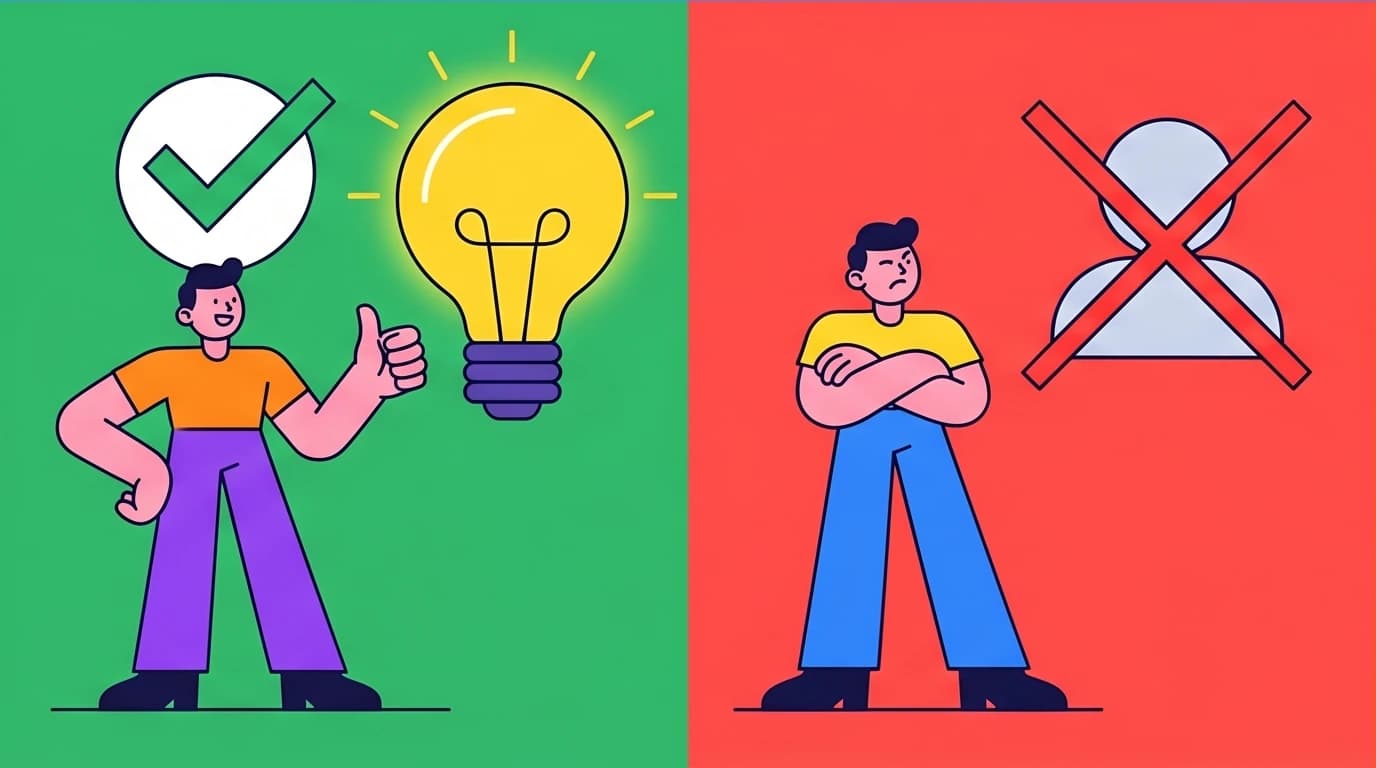
- Wrong: "I give credence to John." (This sounds incredibly unnatural to a native speaker).
- Right: "I give credence to John's testimony."
- Right: "I give credence to the author's findings."
Understanding the nuanced rules behind specific phrases is what separates average writers from exceptional ones. If you want to continue refining your grammar and eliminating awkward sentence structures, returning to the fundamentals is always a smart move. For generations, American writers have relied on this timeless manual to cut the clutter, choose the exact right words, and compose sentences that carry genuine impact.
The Elements of Style
William Strunk Jr., E.B. White
35 Duration10 Key Points4.5 RateBut classic guides like The Elements of Style can be dense. If you find it challenging to get through foundational books on writing or any other complex topic, there’s a way to get the main takeaways without the struggle.

LeapAhead helps you grasp the core ideas from difficult but essential books in easy-to-digest 15-minute summaries, perfect for when you need the knowledge but are short on time.

Download LeapAhead App now
Exploring the "Lend Credence To" Synonym and Variations
As you expand your vocabulary, you will inevitably look for a
lend credence to synonym to avoid repeating yourself in a long essay or report.First, let's address the elephant in the room: What is the difference between "give credence" and "lend credence"?
They mean exactly the same thing, but they are used with different types of subjects.
- Give credence: Usually used when a person is doing the believing. ("I give credence to that idea.")
- Lend credence: Usually used when a thing, fact, or piece of evidence is doing the supporting. ("The DNA evidence lends credence to the detective's theory.")
If you need a direct synonym to swap into your writing, choose from this list based on your exact intent:
1. Validate
Use this when you want to say something proves an idea is legitimate or legal.
Use this when you want to say something proves an idea is legitimate or legal.
- Instead of: "The survey gives credence to our concerns."
- Try: "The survey validates our concerns."
2. Corroborate
Use this specifically in legal, journalistic, or scientific contexts when a second piece of evidence backs up the first.
Use this specifically in legal, journalistic, or scientific contexts when a second piece of evidence backs up the first.
- Instead of: "The witness gave credence to the timeline."
- Try: "The witness corroborated the timeline."
3. Give weight to
This is a slightly less formal alternative that works perfectly in conversational business English.
This is a slightly less formal alternative that works perfectly in conversational business English.
- Instead of: "The drop in temperature gives credence to the weather warning."
- Try: "The drop in temperature gives weight to the weather warning."
4. Substantiate
Use this when you need a highly formal word that means providing concrete evidence to support a claim.
Use this when you need a highly formal word that means providing concrete evidence to support a claim.
- Instead of: "The lab results lend credence to his medical claim."
- Try: "The lab results substantiate his medical claim."
Finding the exact right synonym is crucial when you are trying to craft compelling nonfiction, whether it is an op-ed, a college essay, or a corporate white paper. If you are passionate about elevating your prose and learning how to choose words that breathe life into your arguments, exploring a classic guide on nonfiction writing can completely transform your process. This beloved book offers invaluable advice on clarity, style, and maintaining your reader's attention.
On Writing Well
William Zinsser
46 Duration10 Key Points4.7 RateCrucial Pitfalls to Avoid in Your Writing
To truly master this phrase, you need to know where writers typically trip up. Keep these three rules in mind before hitting publish on your next article or sending that email to your boss.
Don't confuse Credence with Credibility.
These words share a root, but they operate differently. Credibility is a trait that a person or institution possesses. Credence is the belief you hand over to a specific claim.
These words share a root, but they operate differently. Credibility is a trait that a person or institution possesses. Credence is the belief you hand over to a specific claim.
- Correct: "The New York Times has a lot of credibility."
- Correct: "I give credence to the article published by The New York Times."
This distinction is vital for clear and professional communication.
Don't use it for undeniable facts.
You give credence to things that require a degree of judgment, faith, or analysis—like theories, rumors, hypotheses, or strategies. You do not give credence to hard, proven facts.
You give credence to things that require a degree of judgment, faith, or analysis—like theories, rumors, hypotheses, or strategies. You do not give credence to hard, proven facts.
- Awkward: "I give credence to the fact that water boils at 212 degrees Fahrenheit."
- Better: "I accept the fact that water boils at 212 degrees Fahrenheit."
Don't drop the "to".
The phrase operates as a fixed idiom. You cannot just say "I give credence the idea." The preposition "to" must always bridge the gap between the phrase and the object you are believing in.
The phrase operates as a fixed idiom. You cannot just say "I give credence the idea." The preposition "to" must always bridge the gap between the phrase and the object you are believing in.
Avoiding these common grammatical traps will immediately make your work sound more authoritative and polished. But grammar is only half the battle—the rest is about actively engaging your audience. In today's digital landscape, whether you are drafting a corporate memo, an SEO article, or a weekly newsletter, your words act as your frontline brand representatives. If you want a modern, practical playbook to help you produce ridiculously good content that people actually want to read, check out this fantastic resource.
Everybody Writes
Ann Handley
34 Duration10 Key Points4.9 RateBy now, you have a solid list of books to help you become a more powerful writer. If the thought of adding four more books to your 'to-read' pile feels overwhelming, there’s a more efficient way to absorb their key lessons.
Use LeapAhead to get the essential insights from bestselling nonfiction books in just 15 minutes a day, helping you clear your reading list and apply new knowledge faster.
Download LeapAhead App now
FAQ
Are "give credence" and "lend credence" completely interchangeable?
Functionally, yes, they mean the same thing. However, native American English speakers tend to use "give credence" when the subject is a human being (e.g., "The jury gave credence to the witness"). They use "lend credence" when the subject is an inanimate object or a piece of evidence (e.g., "The security footage lends credence to the witness's story").
Is "give credence to" too formal for everyday conversation?
Yes, it is generally too stiff for a casual chat with friends. If you are ordering coffee or talking about a movie, just use "believe," "buy into," or "trust." Save "give credence to" for cover letters, academic papers, formal debates, or professional business emails.
Can I say "add credence to" instead?
Yes, "add credence to" is a grammatically correct and widely accepted variation. It is used when an idea is already somewhat believable, and a new piece of information makes it even stronger. For example: "Finding the original blueprints added credence to the historian's theory about the building's architecture."
What is the opposite of giving credence to something?
The most natural way to express the opposite is to use negative constructions like "give no credence to," "give little credence to," or "refuse to give credence to." If you want a single word that acts as an antonym, you could use "dismiss," "reject," or "discount."