

You hire brilliant people, yet in critical meetings, everyone instinctively defers to the highest-paid person in the room. Office politics, fragile egos, and rigid hierarchies are suffocating your company's true potential. When rank outshines data, your best talent checks out, and your biggest blind spots remain hidden until it is too late.

To fix this, you need a fundamental shift in how your organization processes information and makes choices. You need to learn how to build an idea meritocracy.
This is not about creating a utopian workplace where everyone holds hands. It is about engineering a rigorous, slightly uncomfortable, but highly effective system designed to extract the absolute best thinking from your team.
The Foundation of an Idea Meritocracy
An idea meritocracy sits perfectly between an autocracy (where the leader decides everything) and a democracy (where everyone's vote counts equally). In a true idea meritocracy, the best ideas win, but "best" is not determined by popular vote or by who shouts the loudest. It is determined by a systematic evaluation of evidence, logic, and track record.
If you study the core concepts behind Ray Dalio management principles, you will find that a successful idea meritocracy rests on three non-negotiable pillars:
- Radical Truth
- Radical Transparency
- Believability-Weighted Decision Making
You cannot implement one without the others. Radical truth requires people to speak their minds without fear of retribution. Radical transparency ensures everyone has access to the same data and context so their opinions are informed. Believability-weighting ensures that while everyone has a voice, not every voice holds the same weight when the final call is made.
These pillars are drawn directly from his book, Principles. To understand the full context of his life and work philosophies, it's helpful to start with a high-level overview of his core ideas.
If you want to dive deeper into the exact mechanics of believability-weighted decision making, examining the primary source is essential. Ray Dalio outlines the exact frameworks he used at Bridgewater Associates to cultivate a culture where the best answers win. His insights offer a comprehensive guide on bridging the gap between typical corporate politics and a highly functional, radically transparent organization.
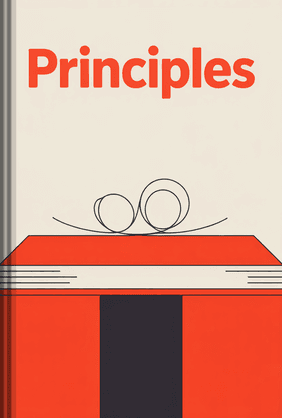
Principles
Ray Dalio
 32 Duration
 6 Key Points
 4.6 Rate
For leaders who want to internalize the frameworks from dense books like Principles but are short on time, finding a way to absorb the core concepts is key.


LeapAhead

LeapAhead distills essential business books into 15-minute audio or text summaries, helping you grasp powerful ideas during your commute or between meetings.

Rewiring Your Corporate Culture: Step-by-Step
Transitioning a traditional top-down organization into a functioning idea meritocracy requires a deliberate, step-by-step approach. You are breaking decades of conditioned corporate behavior.
1. Establish the Rules of Radical Transparency
You cannot expect employees to generate brilliant, business-saving ideas if they are kept in the dark about the company's financials, strategic failures, or executive board discussions. Information asymmetry is the lifeblood of office politics.
Start by opening up your data. Share the runway, the burn rate, the user churn metrics, and the board decks. If there is a problem with a specific product line, do not sugarcoat it in internal memos. State the problem clearly.
When outlining your principles for navigating work, make it explicitly clear that withholding relevant information or talking behind someone's back is a fireable offense. People must learn to say directly to a colleague exactly what they would say about them to a third party.
Demanding this level of direct communication requires more than just an executive mandate; it requires deep-rooted psychological safety. When you ask employees to challenge the status quo or critique management, they need to know their jobs are not in jeopardy for speaking up. For leaders looking to cultivate an environment where people feel completely secure bringing their boldest, most transparent thoughts to the table, mastering the dynamics of workplace safety is crucial.

The Fearless Organization
Amy C. Edmondson
53 Duration10 Key Points4.6 Rate2. Institutionalize "Thoughtful Disagreement"
Conflict is usually viewed as a negative force in American corporate culture. In an idea meritocracy, productive conflict is mandatory.
You must train your leadership team to detach their egos from their ideas. When someone challenges a VP's strategy, the VP must not view it as a personal attack. The framework for thoughtful disagreement involves two steps:
- State your case clearly: Bring data, historical context, and logical projections.
- Actively try to prove yourself wrong: Ask the team, "What am I missing?" or "Why might this fail?"
As a founder or C-suite executive, you must model this behavior. The Ray Dalio leadership style is highly dependent on leaders openly admitting their mistakes and aggressively seeking out dissenting opinions. If the CEO does not welcome pushback, no one else will.
This mindset of embracing challenges is central to Dalio's philosophy. He codified his approach to overcoming obstacles and achieving ambitious goals into a systematic framework designed to turn pain into progress.

3. Implement Believability-Weighted Decision Making
This is the mechanism that prevents your idea meritocracy from turning into a chaotic democracy. Not all opinions are equal.
If you are deciding on a complex Amazon Web Services architecture, the opinion of a senior backend engineer with ten years of zero-downtime deployments carries significantly more weight than the opinion of a brilliant marketing director.
To operationalize this, you need a system to assess "believability." A believable person on a specific topic is someone who has:
- Successfully accomplished the thing in question at least three times.
- Demonstrated the ability to logically explain the cause-and-effect relationship behind their successes.
When a decision is deadlocked, you do not take a simple headcount. You weigh the votes based on the believability of the individuals voting.

4. Digitize the Feedback Loop
To track believability and keep feedback objective, you need tools. The most famous example of this is the Bridgewater Associates Dot Collector—an iPad app used during meetings where employees rate each other in real-time on dozens of attributes (like open-mindedness, assertiveness, or strategic thinking).
You likely do not have the budget or desire to build custom proprietary software to track internal feedback. However, you can replicate the mechanics using tools you already have.
How to replicate the Dot Collector methodology:
- Post-Meeting Audits: Use a simple Google Form after major strategic meetings. Ask attendees to rate the meeting's effectiveness and flag anyone who was overly defensive or particularly insightful.
- Public Slack Channels for Feedback: Create a specific channel dedicated to post-mortems and candid feedback. Normalize the process of publicly analyzing what went wrong on a project without attacking the individuals involved.
- Matrix Rubrics in 1-on-1s: Instead of generic quarterly reviews, use tools like Lattice or 15Five to continuously track specific attributes. Over time, you build a data profile of who is consistently right about product design, who excels at financial forecasting, and who is prone to panic under pressure.
Navigating the Transition: Pain Points and Pitfalls
Building an idea meritocracy is painful. You are dealing with human nature, pride, and the fear of looking incompetent. Many organizations abandon the process within the first six months. Here is what you need to watch out for.
The "Brutal Honesty" Excuse
Radical truth is not a license to be a jerk. When you implement this culture, some employees will use "transparency" as a weapon to mask their lack of empathy or to settle personal vendettas. You must rigorously enforce the boundary between critiquing the work and attacking the person. Feedback must always be actionable and aimed at finding the best outcome for the company, never at tearing someone down.
One of the toughest challenges in an idea meritocracy is maintaining that strict boundary between constructive feedback and destructive bluntness. To keep your culture healthy, leaders must learn the delicate art of caring personally while challenging directly. Exploring proven communication frameworks will help your managers deliver tough, actionable insights that foster genuine professional growth without accidentally weaponizing their words.
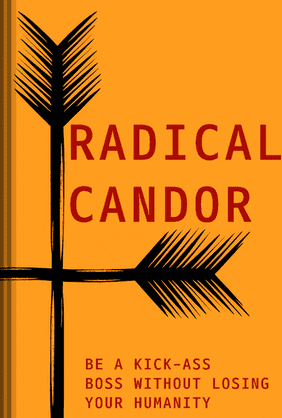
Radical Candor
Kim Scott
19 Duration7 Key Points4.6 RateParalysis by Analysis
A common failure mode is teams getting stuck in endless debates. People think that because it is an idea meritocracy, every single person must be heard on every single issue before a decision is made.
You must define the escalation path. Give the debate a time limit. If a consensus cannot be reached, the person with the highest believability-weight on that specific topic makes the final call. Once the decision is made, Amazon's famous "disagree and commit" principle must take over. You can disagree during the debate phase, but once the path is chosen, sabotage or passive-aggressive resistance is unacceptable.
To successfully enforce the "disagree and commit" philosophy and prevent endless debates, it is incredibly helpful to study the specific mechanisms of companies that operate this way at scale. Unpacking the actual internal processes and metrics used by massive, high-performing tech giants can give your leadership team concrete strategies for keeping meetings focused. Learning how to standardize your company's decision-making timeline will ensure everyone stays aligned and executes flawlessly.

Working Backwards
Colin Bryar, Bill Carr, et al.
21 Duration7 Key Points4.8 RateThe Turnover Spike
Expect turnover. When you transition to an idea meritocracy, you will quickly expose the people who have been hiding behind their titles. Managers who rely on rank rather than competence to lead will feel threatened. Employees who prefer a quiet, predictable 9-to-5 without intellectual friction will become exhausted.
Do not panic when they resign. This is the system working as intended. You are filtering out the individuals who are incompatible with high-performance transparency, making room for talent that thrives on accountability and continuous learning.
It's important to acknowledge that this high-intensity, radically transparent environment isn't for everyone, and Dalio's methods have faced their share of criticism. Before fully committing, it's wise to consider both sides of the story.
Measuring Your Success
How do you know if you have successfully built an idea meritocracy? Look at your meetings.
In a traditional company, the meeting ends when the boss speaks. In an idea meritocracy, the best ideas routinely come from junior analysts, data scientists, or mid-level managers, and the executives frequently change their minds publicly based on that new information.
You will notice a sharp decline in back-channel complaining and post-meeting gossip. Decisions will be made faster because the hidden agendas are placed out in the open. Most importantly, your error rate on major strategic moves will drop, because your blind spots are continuously being illuminated by your own team.
Building this structure requires relentless discipline. It requires leaders who prioritize being right over looking right. But once the system is dialed in, it becomes an unbeatable competitive advantage, allowing your company to adapt, execute, and scale faster than any hierarchy ever could.
Staying on top of the latest management strategies and leadership principles is a continuous process, but finding the time to read can feel like a job in itself.
LeapAhead
Make continuous learning fit your schedule by getting the main takeaways from bestselling books on leadership and high-performance cultures in just a few minutes a day.
FAQ
Is an idea meritocracy just another term for a democratic workplace?
No. In a democracy, every vote counts equally. In an idea meritocracy, opinions are believability-weighted. The input of someone with a proven, repeated track record of success in a specific domain carries significantly more weight than the input of someone with no experience in that area.
No. In a democracy, every vote counts equally. In an idea meritocracy, opinions are believability-weighted. The input of someone with a proven, repeated track record of success in a specific domain carries significantly more weight than the input of someone with no experience in that area.
How do you prevent radical transparency from destroying team morale?
By detaching ego from the work. You must train your team to view critique as an optimization tool, not a personal attack. Morale actually improves long-term because top performers no longer have to tolerate incompetence or navigate toxic office politics. Clear expectations and fairness breed higher morale than artificial politeness.
By detaching ego from the work. You must train your team to view critique as an optimization tool, not a personal attack. Morale actually improves long-term because top performers no longer have to tolerate incompetence or navigate toxic office politics. Clear expectations and fairness breed higher morale than artificial politeness.
Do we need expensive custom software to track believability?
No. While custom apps can automate the process, you can start by simply keeping records of decision-making. Write down who predicted what outcome and why, then review those notes six months later. Use regular peer-review surveys and transparent performance management platforms to build out your team's believability profiles over time.
No. While custom apps can automate the process, you can start by simply keeping records of decision-making. Write down who predicted what outcome and why, then review those notes six months later. Use regular peer-review surveys and transparent performance management platforms to build out your team's believability profiles over time.
What happens when the team cannot agree on whose idea is best?
The debate phase must have a strict time limit. When time runs out, the designated decision-maker (usually the person with the highest believability in that specific area) makes the final call. After that, everyone must commit to executing the decision, even if they initially disagreed with it.
The debate phase must have a strict time limit. When time runs out, the designated decision-maker (usually the person with the highest believability in that specific area) makes the final call. After that, everyone must commit to executing the decision, even if they initially disagreed with it.