

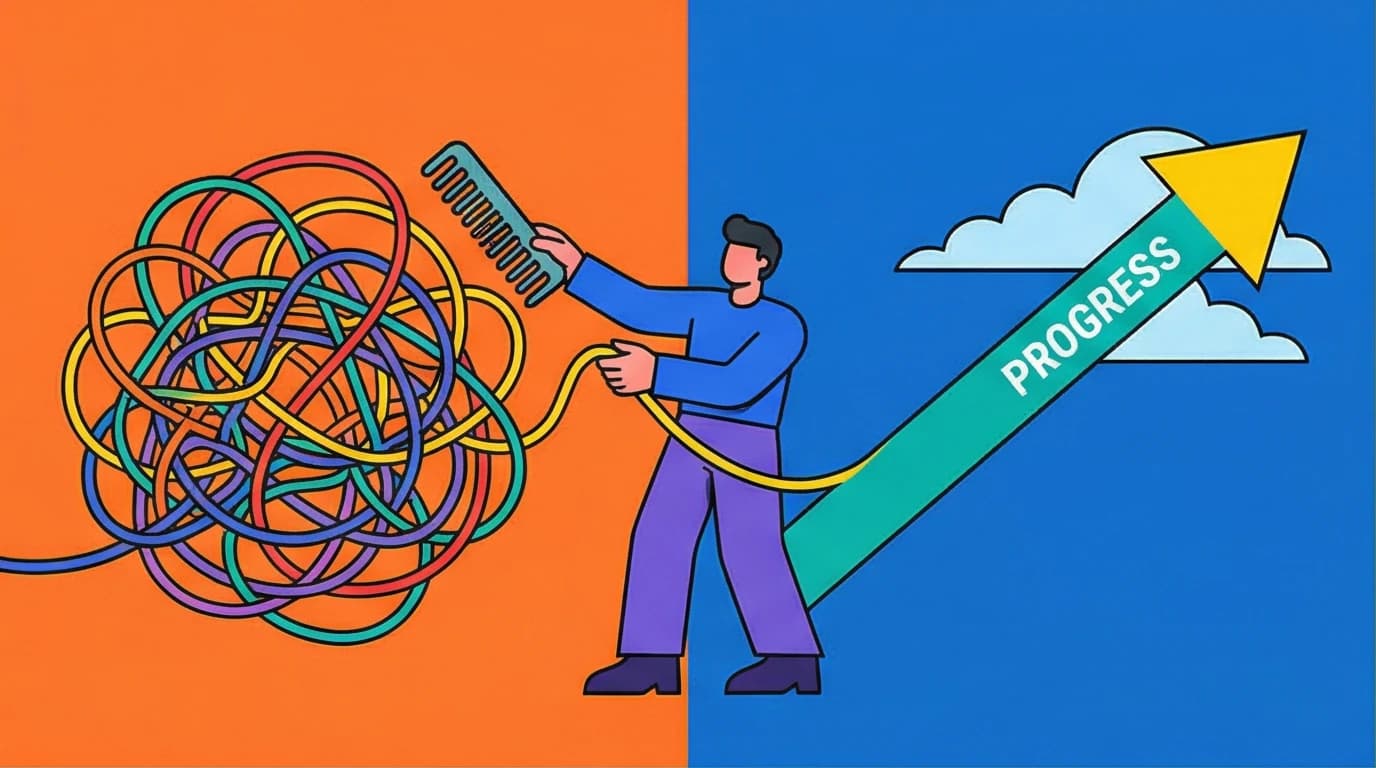
You just hit a wall. Maybe you lost a major client, bombed a critical project, or realized your current career path is heading nowhere. Emotion takes over. You feel frustrated, embarrassed, or entirely stuck.
Your immediate instinct is probably to look away from the failure or blame circumstances outside your control. You tell yourself the market was bad, your boss was unreasonable, or you just did not have enough time. But treating failure as something to hide is exactly what keeps you trapped in the same cycle.
If you want to stop repeating mistakes, you need a system. Found within the broader Ray Dalio life principles, there is a ruthless, highly effective mechanism designed to force you out of your emotional fog and into execution mode.
For a complete overview of his philosophy, it helps to understand the foundational ideas that shape this process.
The Core Concept: Reality and Pain
Before you can execute the steps, you have to adopt a specific mindset. At the core of the Ray Dalio decision making framework is the removal of emotion. Dalio built Bridgewater Associates into one of the most successful hedge funds in the United States by treating his business—and his life—like a machine.
When your machine breaks down, you do not get mad at the machine. You open it up, find the broken part, and replace it.
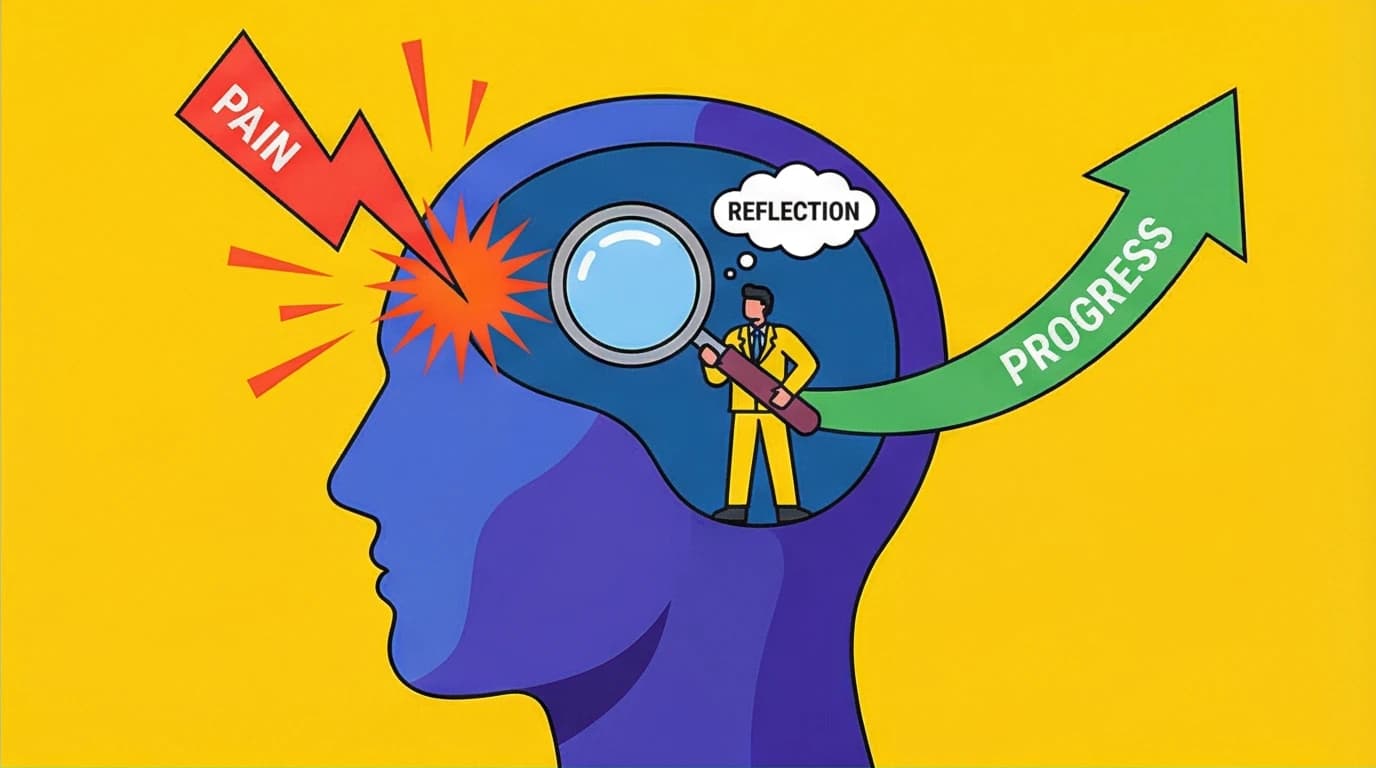
To do this, you have to face facts exactly as they are, not as you wish they were. If you are wondering how to embrace reality, Ray Dalio style, it starts with radically accepting your weaknesses and mistakes. Failures hurt. But that pain is actually a signal that something is misaligned. He coined a simple equation to explain this: pain plus reflection equals progress.
Without the pain, you would not know there is a problem. Without the reflection, you will just suffer the pain again.
If you want to dive deeper into the exact framework that built Bridgewater Associates into a financial powerhouse, there is no better source than Ray Dalio himself. His foundational book expands on the idea of radical transparency and treating your life like a well-oiled machine. It is packed with hundreds of practical rules for making better decisions, stripping away emotional biases, and turning painful failures into your biggest competitive advantages.

Principles
Ray Dalio
 32 Duration
 6 Key Points
 4.6 Rate
And if a 600-page book feels daunting, you can get a head start by absorbing its core ideas first.


LeapAhead helps you grasp the key takeaways from dense books like *Principles* in just 15 minutes, making it easier to start applying powerful ideas right away.
 LeapAhead
Breakdown of the Ray Dalio 5 Step Process
This process works sequentially. You cannot skip a step, and you cannot blend them together. You must complete each phase before moving on to the next.
Step 1: Have Clear Goals
You cannot figure out what is going wrong if you do not know where you are actually trying to go. Goal setting is about prioritizing. You can have virtually anything you want, but you cannot have everything you want.
- Pick a direction: Be specific. "I want to be rich" is a terrible goal. "I want to build a software business doing $500,000 in annual recurring revenue within three years" is a clear goal.
- Do not confuse goals with desires: A goal is something you really need to achieve. A desire is something you want that might actually prevent you from reaching your goal. For instance, you might desire to spend your weekends binge-watching shows on Amazon Prime, but your goal is to pass your CPA exam. You have to reconcile the two.
- Do not rule out goals based on current limitations: Set the goal first. Figure out how to achieve it later. Do not lower your expectations just because you do not currently have the skills or the money.
Setting a clear, singular direction is often the hardest part of any journey. When everything feels important, you can easily spread your energy too thin and achieve nothing. If you struggle to narrow down your focus, learning how to prioritize your ultimate goal can be life-changing. There is an excellent resource that helps you cut through the daily noise, avoid distractions, and concentrate your efforts on the single most impactful task that will drive your success forward.

The ONE Thing
Gary Keller, Jay Papasan
22 Duration10 Key Points4.5 RateStep 2: Identify and Don't Tolerate Problems
Once you start moving toward your goal, you will inevitably smash into problems. Most people hate acknowledging problems because it highlights their inadequacies. Successful people drag their problems out into the open.
- Spot the pain: Every time you feel stressed, angry, or disappointed, a problem has surfaced. Treat it like a flashing red dashboard light in your car.
- Be hyper-specific: "My team is lazy" is not a problem; it is a complaint. "My team missed three critical shipping deadlines this month" is an identified problem.
- Zero tolerance: Do not get used to living with bad situations. If your workspace is highly disorganized and costs you an hour a day in lost productivity, do not just accept it. Label it as a problem that must be eradicated.
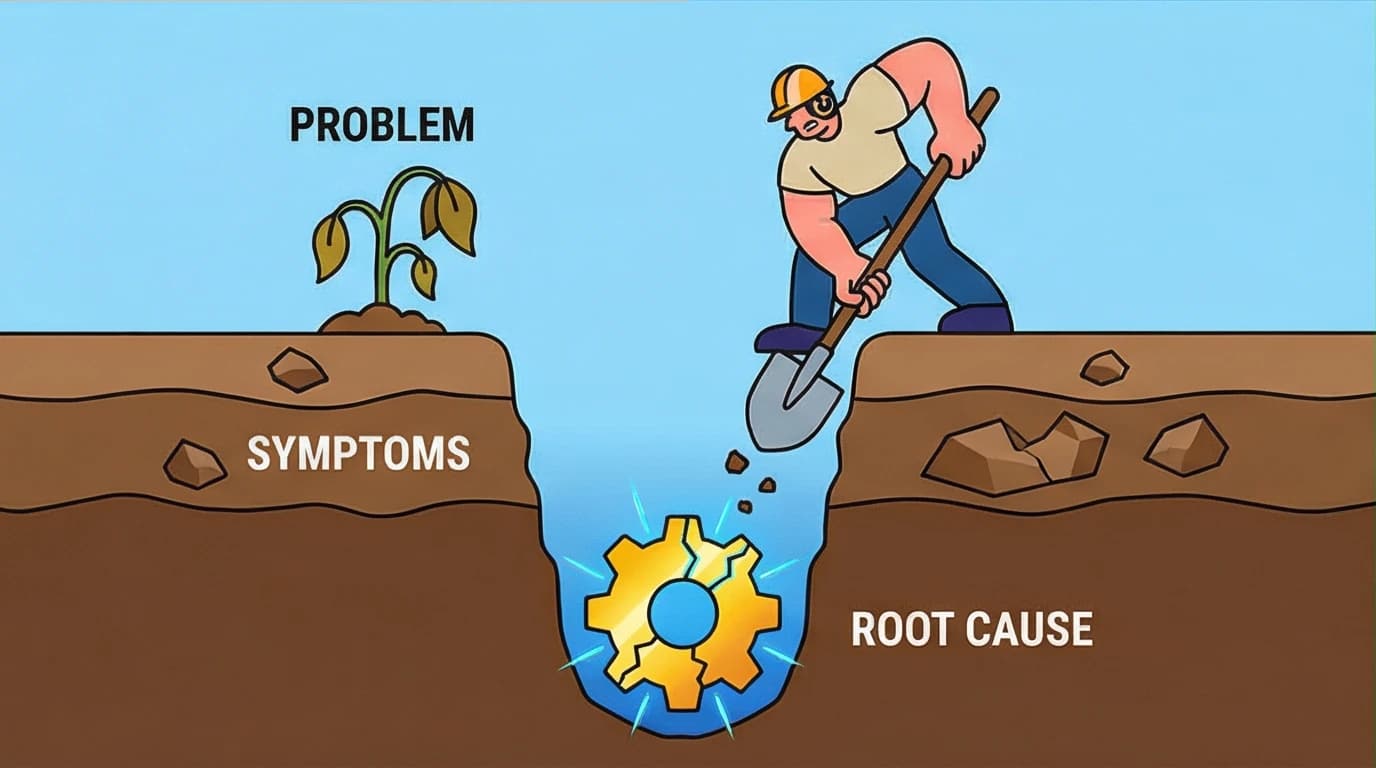
Step 3: Diagnose Problems to Get at Their Root Causes
This is where most ambitious professionals fail. When you encounter a problem, your reflex is to immediately scramble for a solution. Stop. You must separate diagnosing the problem from deciding what to do about it.
Mastering the Ray Dalio 5 step process requires you to stop confusing symptoms with the actual disease.
- Ask "Why" repeatedly: Let's say you missed your quarterly sales target. Why? Because you didn't make enough cold calls. Why? Because you spent too much time on administrative tasks. Why? Because you are terrible at delegating. The root cause isn't a bad market; the root cause is your inability to delegate.
- Look in the mirror: Often, you are the root cause. Your ego will try to protect you from this realization. You must push past your ego. If you are bad at accounting, admit it. Once you know the actual root cause, the problem is incredibly easy to fix.
Diagnosing your own shortcomings is an incredibly uncomfortable process. Our natural instinct is to protect our self-esteem by pointing fingers at external circumstances. However, as Dalio points out, getting out of your own way is mandatory for growth. If you find that your pride is preventing you from having these honest reflections, it might be time to explore how unchecked arrogance limits potential. Recognizing and managing this internal resistance is a crucial skill for long-term professional survival.

Ego Is the Enemy
Ryan Holiday
18 Duration7 Key Points4.6 RateStep 4: Design a Plan
Now that you know the root cause of your problem, you can design a machine to get around it. The plan does not have to be overly complicated, but it must be actionable.
- Write it down: Treat your plan like a movie script. Who is doing what, and by when?
- Design around your weaknesses: If the root cause from Step 3 was that you are terrible at delegating, your plan should not be "try harder to delegate." Your plan should be to hire an operations manager, or to implement a strict software system that automatically routes tasks to your team members every Monday morning.
- Visualize the steps: See yourself executing the sequence. Think of it as a blueprint.
Step 5: Push Through to Completion
A brilliant plan is worthless without execution. This step requires nothing but pure discipline and good work habits.
- Track your metrics: You need clear indicators to know if you are actually executing your plan. If your plan involves making 20 prospect calls a day, track the numbers on a whiteboard.
- Establish accountability: Do not rely solely on motivation. Motivation fades when things get hard. Set up systems of accountability. Share your metrics with a trusted colleague or mentor who will call you out if you start slipping.
This systematic approach is a core part of Dalio's management philosophy, where the best ideas win out over hierarchy or ego.
Building a brilliant plan is only half the battle; the real magic happens during relentless, day-to-day execution. Tracking metrics and maintaining strict accountability systems can feel overwhelming if you do not have a structured approach. To help bridge the gap between high-level strategy and daily action, you might want to explore frameworks specifically designed for team and personal execution. Mastering these operational habits will ensure your biggest goals do not just end up as forgotten ideas on a whiteboard.

The 4 Disciplines of Execution
Chris McChesney, Sean Covey, and Jim Huling
20 Duration9 Key Points4.6 RateHow to Make the Framework Stick
Knowing the steps is easy. Living them is hard. The biggest barriers you will face are your own ego and your blind spots. Your ego prevents you from admitting your flaws in Step 3, and your blind spots prevent you from seeing opportunities in Step 4.
To make this framework functional, rely on radical truth and radical transparency.
Ask colleagues for harsh feedback. When a project fails, host a post-mortem meeting where the only rule is that no one gets defensive.
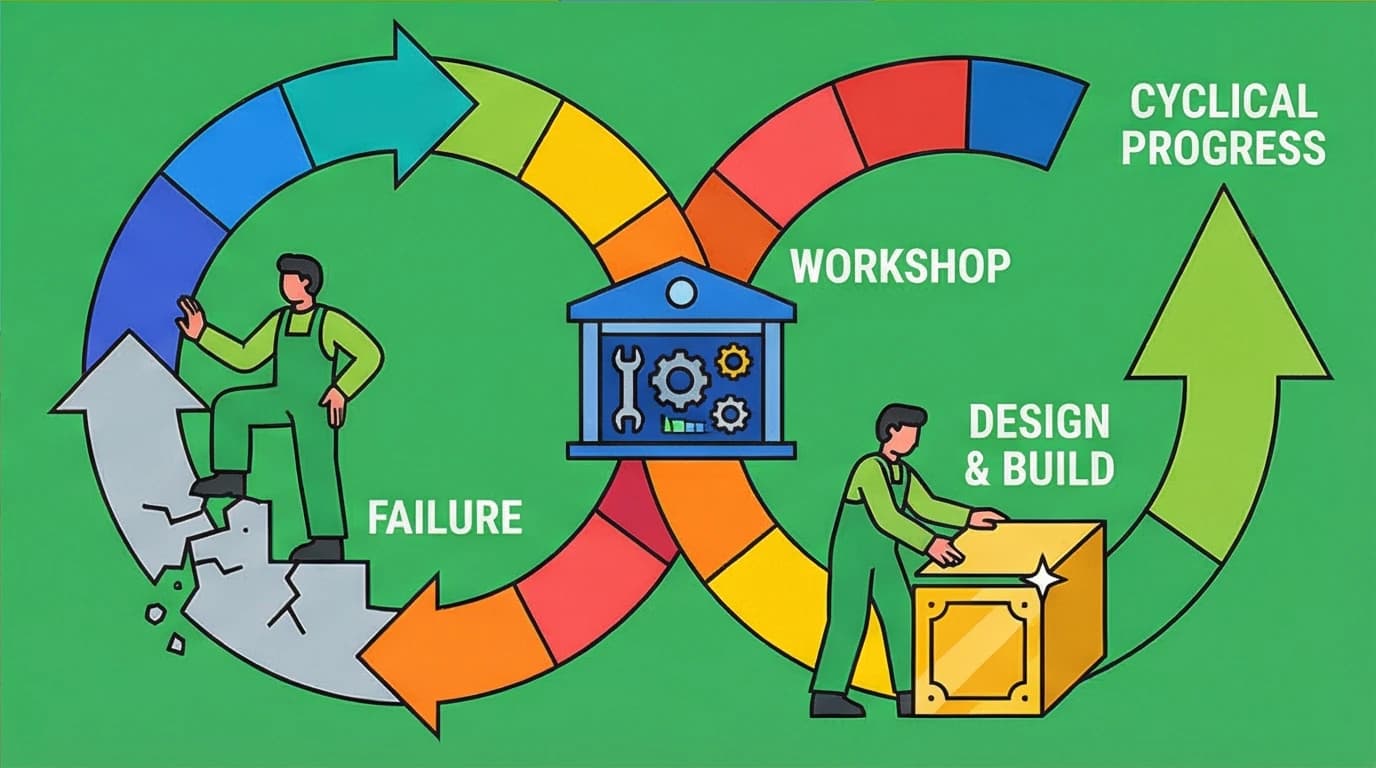
Success is not about avoiding mistakes. It is about building a systematic loop where every failure feeds directly into your next iteration of progress. Run the 5 steps continuously.
Making continuous learning a part of your daily routine is essential for this loop, but it can feel impossible when you're already short on time and energy.
Making continuous learning a part of your daily routine is essential for this loop, but it can feel impossible when you're already short on time and energy.
Fit powerful ideas into your day with LeapAhead, which distills bestselling business and self-improvement books into 15-minute audio or text summaries for your commute.
LeapAheadFAQ
How long does it take to run through the 5 steps?
It depends on the scale of the goal or problem. Diagnosing a missed daily deadline might take five minutes of reflection. Diagnosing a failed startup could take weeks of analyzing financial models, market feedback, and personal misjudgments. The key is not speed; the key is not skipping any steps.
It depends on the scale of the goal or problem. Diagnosing a missed daily deadline might take five minutes of reflection. Diagnosing a failed startup could take weeks of analyzing financial models, market feedback, and personal misjudgments. The key is not speed; the key is not skipping any steps.
What if I get stuck on Step 3 and can't find the root cause?
If you cannot find the root cause, your ego or blind spots are likely in the way. You need an outside perspective. Bring in someone you trust—a mentor, a coach, or a direct colleague—and ask them to objectively analyze the situation. Give them permission to be brutally honest with you.
If you cannot find the root cause, your ego or blind spots are likely in the way. You need an outside perspective. Bring in someone you trust—a mentor, a coach, or a direct colleague—and ask them to objectively analyze the situation. Give them permission to be brutally honest with you.
Can I use the Ray Dalio 5 step process for my personal life?
Absolutely. The framework is completely agnostic. You can use it to improve your physical fitness, organize your personal finances, or fix a struggling relationship. A problem is a problem, whether it happens in a Wall Street boardroom or at your own kitchen table.
Absolutely. The framework is completely agnostic. You can use it to improve your physical fitness, organize your personal finances, or fix a struggling relationship. A problem is a problem, whether it happens in a Wall Street boardroom or at your own kitchen table.
How do I handle the emotional pain of admitting my own weaknesses?
Shift your perspective. View your life as a video game. When your character fails a level, you don't cry about the character's flaws; you figure out a new strategy to beat the boss. Treat your weaknesses as objective data points. Acknowledging them doesn't make you inferior; it makes you dangerous, because now you know exactly what to fix.
Shift your perspective. View your life as a video game. When your character fails a level, you don't cry about the character's flaws; you figure out a new strategy to beat the boss. Treat your weaknesses as objective data points. Acknowledging them doesn't make you inferior; it makes you dangerous, because now you know exactly what to fix.