


You are exhausted. You have hit a wall—whether it is a sudden corporate layoff, a brutal personal loss, or the grinding weight of prolonged daily burnout. You do not need another motivational quote telling you to stay positive; you need concrete, biological and psychological tools to keep from breaking under the pressure.
When the ground falls out from under you, sheer willpower is not enough. Resilience is not about ignoring pain or pasting a smile over a disaster. It is a systematic process of adapting, recovering, and moving forward.
The Reality of Building Mental Resilience
Building mental resilience is the process of training your brain to handle stress without getting stuck in a prolonged fight-or-flight response. When a crisis hits, your amygdala—the brain’s alarm system—hijacks your cognitive processing. Panic sets in. Tunnel vision takes over.
Resilience is your ability to widen that tunnel.

It is the gap between a traumatic stimulus and your reaction to it. People often mistake resilience for emotional numbness. They think tough people simply do not feel the pain of a failure or a breakup. This is a dangerous misconception. Resilient people feel the full weight of the blow. The difference is their recovery time. They have systems in place to process the shock, evaluate their options, and take the next logical step.
To build these systems effectively, it's helpful to first understand the psychological underpinnings of mental fortitude. For a more foundational overview, explore the core traits that define a resilient person.
You cannot control the economy, corporate restructuring, or the actions of others. You can only control your recovery systems.
Habits of Highly Resilient People
If you study individuals who thrive in high-pressure environments—from emergency room nurses to startup founders—you will notice they share specific behavioral patterns. Adopting the habits of highly resilient people is the fastest way to upgrade your own mental software.
They Practice Radical Acceptance
Resilient people do not waste time arguing with reality. When faced with a crisis, they do not dwell on "Why is this happening to me?" or "This isn't fair." They operate on the Stockdale Paradox: confronting the brutal facts of their current reality while maintaining an unwavering belief that they will prevail in the end. Acknowledging a bad situation immediately frees up the mental calories needed to fix it.
If the concept of the Stockdale Paradox resonates with you, it is worth exploring where this powerful mental framework originated. While typically viewed as a business book, Jim Collins’s classic work is packed with insights on organizational and personal endurance. Understanding how top-tier leaders confront the brutal facts of reality without losing faith can completely shift how you navigate your own setbacks. It is an essential read for anyone trying to build a foundation of radical acceptance.
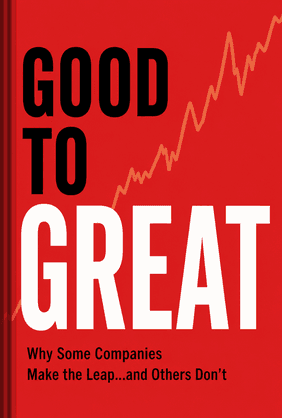
Good to Great
Jim Collins
 45 Duration
 7 Key Points
 4.6 Rate
They Relentlessly Protect Their Recovery
You cannot pour from an empty cup. Resilient individuals treat physical recovery as a non-negotiable professional and personal requirement. Chronic stress spikes cortisol, which physically destroys your brain's ability to problem-solve. By prioritizing seven to eight hours of sleep, regular movement, and healthy nutrition, they build a biological armor against stress. They know that a two-mile walk outside often does more for mental clarity than sitting at a desk agonizing over a problem for three hours.
They Compartmentalize Stress
When a major project fails or a relationship ends, it is easy to let that failure bleed into every other aspect of your life. Resilient people build firewalls. They recognize that failing at one specific task does not make them a failure as a human being. They isolate the issue, address it during designated times, and refuse to let it ruin their evening downtime or their weekends.
How to Bounce Back from Adversity: A Step-by-Step Approach
When disaster strikes, the immediate aftermath is critical. If you want to know how to bounce back from adversity without burning out, follow this sequence.
Step 1: Hit the Tactical Pause
When you receive bad news, your body dumps adrenaline into your bloodstream. Do not make decisions in this state. Implement the 24-hour rule for major setbacks. Draft the angry email, but do not send it. Write down your panic-induced thoughts, then step away. Go to the gym, read a chapter of a book on Barnes & Noble's app, or listen to an Audible podcast. Give your prefrontal cortex time to come back online.
Step 2: Map Your Concentric Circles of Control
Take a blank piece of paper. Draw a small circle inside a larger circle.
Inside the smaller circle, write down everything you have absolute control over right now: your effort, your attitude, your diet, how many jobs you apply to today.
In the outer circle, write down what you cannot control: the job market, inflation, what your ex thinks of you, or the timeline of a medical recovery.
Inside the smaller circle, write down everything you have absolute control over right now: your effort, your attitude, your diet, how many jobs you apply to today.
In the outer circle, write down what you cannot control: the job market, inflation, what your ex thinks of you, or the timeline of a medical recovery.

Focus 100% of your daily energy on the inner circle. Starve the outer circle of your attention.
Step 3: Audit and Activate Your Support Network
Isolation is the enemy of resilience. When we fail, shame often pushes us to hide. Bouncing back requires social capital. This does not mean broadcasting your problems on social media. It means texting two close friends, scheduling a coffee, or speaking to a therapist. Borrow strength from your network when your own reserves are low.
Bouncing back is rarely a neat, linear process. Sometimes, despite your best efforts to map out what you can control and lean on your network, the emotional weight of a failure can still pull you under. If you want a deeper dive into the mechanics of vulnerability and how we rise after a fall, Dr. Brené Brown provides a phenomenal roadmap. Her research breaks down the exact emotional progression of getting back up when you have been knocked face-down in the arena.
Rising Strong
Dr. Brené Brown
22 Duration9 Key Points4.8 RateResilience Exercises for Adults
You can actively train your brain to become more robust. These resilience exercises for adults are practical, evidence-based, and designed to fit into a busy schedule.
Exercise 1: Cognitive Reframing (The ABCDE Model)
Developed by psychologist Dr. Albert Ellis, this exercise forces you to challenge the stories you tell yourself when things go wrong.
- A (Activating Event): You get passed over for a promotion at work.
- B (Belief): You think, "My boss hates me. I am terrible at my job. I will never advance my career."
- C (Consequence): You feel depressed, resentful, and stop putting in effort.
- D (Disputation): Challenge that belief. "Is it true I'm terrible? No, I hit all my KPIs last quarter. The person promoted had three more years of specific software experience."
- E (Effect): You replace the catastrophic belief with a practical one: "I missed this one, but I have a strong track record. I need to ask for a skills-gap analysis so I am ready for the next opening."
This model is particularly powerful for navigating professional challenges. If you're looking for more strategies to handle career setbacks and office stress, we've got you covered.
Mastering the art of cognitive reframing is much easier when you draw inspiration from history’s greatest resilient thinkers. The ancient Stoics built their entire philosophy around the idea that we cannot control outside events, only our reactions to them. Ryan Holiday revitalizes these timeless principles, showing how historical icons transformed their biggest trials into their greatest triumphs. If you want to train your brain to see a major roadblock not as a dead-end, but as a unique opportunity for growth, this is a must-read.
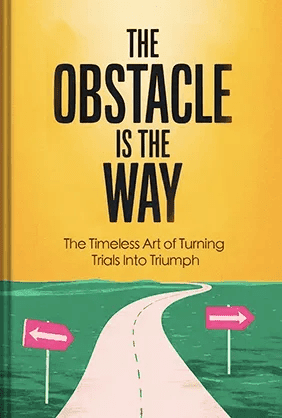
The Obstacle Is the Way
Ryan Holiday
44 Duration7 Key Points4.6 RateExercise 2: Fear-Setting
We often suffer more in imagination than in reality. When you are paralyzed by a potential setback, write down your absolute worst-case scenario. Be incredibly specific. If you lose your business, what exactly happens? You lose your income, maybe you have to move into a cheaper apartment, maybe you have to take a job you do not love for a year to pay bills.
Once you clearly define the nightmare, write down the exact steps you would take to rebuild from it. Realizing that even your worst-case scenario is survivable instantly dials down your daily anxiety.
Once you clearly define the nightmare, write down the exact steps you would take to rebuild from it. Realizing that even your worst-case scenario is survivable instantly dials down your daily anxiety.

Exercise 3: The "Three Hard Things" Daily Win
Resilience is a muscle built through micro-exposures to discomfort. Do not wait for a life crisis to practice it. Incorporate three small, intentionally difficult things into your daily routine. This could be taking a cold shower for sixty seconds, running an extra half-mile when your legs burn, or having a difficult conversation you have been avoiding. You are teaching your brain a vital lesson: I can voluntarily endure discomfort, and I will survive it.
If you are ready to take the concept of voluntary discomfort to the absolute limit, there is no better guide than David Goggins. His life story is a masterclass in callousizing the mind and pushing past self-imposed boundaries. While you might not need to run ultra-marathons on broken feet like he did, his strategies for holding yourself accountable and mastering your inner dialogue are incredibly potent. It is the perfect playbook for anyone who wants to stop running from hardship and start building an unbreakable mindset.
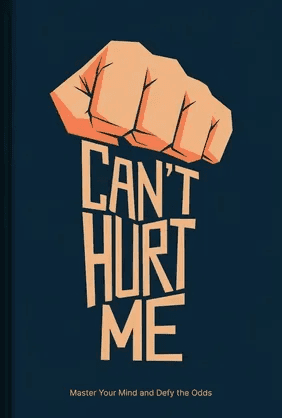
Can't Hurt Me
David Goggins, Adam Skolnick, et al.
26 Duration10 Key Points4.6 RateWith a reading list full of powerful but dense books, it's easy to feel overwhelmed. If you want to absorb these lessons on mental fortitude but struggle to find the time, a microlearning app can be a great solution.

Get the core ideas from bestselling books on resilience and psychology in 15-minute audio or text sessions, helping you build mental armor on a busy schedule.

Download LeapAhead App now
Common Pitfalls: What NOT to Do
Knowing what to avoid is just as critical as knowing what to execute. Avoid these traps when trying to build your mental fortitude.
Forcing Toxic Positivity
Telling yourself "everything happens for a reason" or "good vibes only" right after a devastating loss is counterproductive. It invalidates your actual emotional state. It is perfectly fine to be angry, sad, or frustrated. Process the negative emotion; just do not unpack your bags and live there forever.
Telling yourself "everything happens for a reason" or "good vibes only" right after a devastating loss is counterproductive. It invalidates your actual emotional state. It is perfectly fine to be angry, sad, or frustrated. Process the negative emotion; just do not unpack your bags and live there forever.
Numbing Out
A glass of wine, four hours of doomscrolling on your phone, or binge-watching television feels like recovery, but it is actually avoidance. Numbing out pauses your processing. The stress is still waiting for you when you wake up. Choose active recovery (walking, journaling, talking to a friend) over passive avoidance.
A glass of wine, four hours of doomscrolling on your phone, or binge-watching television feels like recovery, but it is actually avoidance. Numbing out pauses your processing. The stress is still waiting for you when you wake up. Choose active recovery (walking, journaling, talking to a friend) over passive avoidance.
Playing the Lone Wolf
American culture often romanticizes the self-made, rugged individual who battles through the storm completely alone. This is terrible advice for mental health. Refusing to ask for help is not a sign of toughness; it is a sign of ego. Utilize your community.
American culture often romanticizes the self-made, rugged individual who battles through the storm completely alone. This is terrible advice for mental health. Refusing to ask for help is not a sign of toughness; it is a sign of ego. Utilize your community.
Building mental armor is a daily practice. It requires consistency. You will stumble, you will have days where the stress feels unbearable, and you will make mistakes. That is part of the blueprint. Every time you face a disruption, apply these tools, step back into the arena, and you will find yourself slightly harder to break than you were the day before.
Building this mental armor often means consistently learning from the experts, but it's tough to find the energy to read after a draining day.
Turn your commute or workout into a learning session by listening to key ideas from bestselling books on resilience and personal growth in just 15 minutes.
Download LeapAhead App now
FAQ
Can resilience be learned, or are you just born with it?
Resilience is absolutely a learned skill, not a fixed genetic trait. While genetics play a minor role in your baseline temperament, the core components of resilience—emotional regulation, cognitive reframing, and problem-solving—are habits that can be developed and strengthened at any age through consistent practice.
Resilience is absolutely a learned skill, not a fixed genetic trait. While genetics play a minor role in your baseline temperament, the core components of resilience—emotional regulation, cognitive reframing, and problem-solving—are habits that can be developed and strengthened at any age through consistent practice.
How do I build resilience when I am already completely burned out?
Start incredibly small. When you are burned out, your nervous system is fried. Do not try to overhaul your entire life. Focus purely on physiological safety first: prioritize sleep, drink water, and take short walks. Once your body feels slightly less threatened, introduce one micro-habit, like writing down one thing you can control each morning.
Start incredibly small. When you are burned out, your nervous system is fried. Do not try to overhaul your entire life. Focus purely on physiological safety first: prioritize sleep, drink water, and take short walks. Once your body feels slightly less threatened, introduce one micro-habit, like writing down one thing you can control each morning.
Is building resilience just ignoring my negative emotions?
No. Ignoring negative emotions leads to suppression, which eventually results in a breakdown. True resilience involves acknowledging and feeling your anger, grief, or frustration fully. The difference is that resilient people process these emotions and then consciously decide on their next logical action, rather than letting the emotion dictate their permanent behavior.
No. Ignoring negative emotions leads to suppression, which eventually results in a breakdown. True resilience involves acknowledging and feeling your anger, grief, or frustration fully. The difference is that resilient people process these emotions and then consciously decide on their next logical action, rather than letting the emotion dictate their permanent behavior.
How long does it take to bounce back from a major setback?
There is no fixed timeline. Bouncing back from a minor work mistake might take an hour; recovering from a divorce or the loss of a career might take a year or more. The goal of resilience is not speed. The goal is continuous, forward momentum, no matter how small the daily steps may be.
There is no fixed timeline. Bouncing back from a minor work mistake might take an hour; recovering from a divorce or the loss of a career might take a year or more. The goal of resilience is not speed. The goal is continuous, forward momentum, no matter how small the daily steps may be.