

You just missed a major quarterly revenue target. A flagship project you championed was abruptly scrapped after six months of development. Your company announced a sudden restructuring, and your team is looking to you for immediate answers.

Workplace stress and unexpected setbacks happen. Letting them derail your career or fracture your team's momentum is a choice. You cannot control market shifts or executive decisions, but you can control your response. This guide breaks down exactly how to absorb professional shocks, process failure objectively, and lead your team through periods of intense uncertainty.
The Core of Professional Resilience Skills
Most people misunderstand resilience. They treat it as the ability to endure endless punishment without complaining. That is not resilience; that is a fast track to burnout. Real resilience in the workplace is an active, strategic process. It requires cognitive agility—the ability to assess a negative situation, emotionally detach from the immediate shock, and quickly formulate a pivot strategy.
Developing professional resilience skills comes down to three operational habits:
- Emotional Decoupling: Separating your self-worth from your current work output. A failed project means the strategy failed, not that you are incompetent.
- Zone of Control Analysis: Immediately mapping out what you can directly influence versus what is out of your hands.
- Realistic Optimism: Acknowledging the brutal facts of your current reality while maintaining a belief that you have the agency to improve the situation over time.
When you master these skills, a crisis stops being a threat to your identity and becomes a complex problem to solve.
To truly master the art of emotional decoupling and cognitive flexibility, it helps to understand the psychology behind our reactions to stress. If you want to dive deeper into how successful professionals navigate setbacks without losing their sense of self-worth, consider exploring Emotional Agility. This insightful read provides practical frameworks for unhooking yourself from negative thoughts, allowing you to face workplace challenges with a clear, objective mindset. It is an excellent resource for anyone looking to build a sustainable, resilient approach to their career.

Emotional Agility
Susan David, Ph.D.
 48 Duration
 8 Key Points
 4.5 Rate
While mastering these skills in a professional setting is crucial, understanding the underlying psychology can provide a stronger foundation.
Dealing with Failure at Work: A Tactical Approach
When a massive mistake happens, the immediate human instinct is to hide it, deflect blame, or spiral into panic. None of these reactions serve you. Dealing with failure at work requires a clinical, systematic approach. Top-tier professionals process failure using structured post-mortems rather than emotional reactions.
Step 1: Acknowledge and Contain
Do not minimize the damage. If you lose a major client, state it clearly. Communicate the failure to stakeholders immediately with a brief summary of what happened, the immediate impact, and a timeline for when you will deliver a recovery plan. Contain the fallout so it does not infect other ongoing operations.
Step 2: The Blameless Autopsy
Schedule a review session within 48 hours of the event. Use a framework similar to Amazon’s "Correction of Errors" document. Ask these exact questions:
- What was the intended outcome?
- What actually happened?
- Where did the process break down? (Focus on the system, not the person).
- What specific metric or early warning sign did we miss?
- What are the three immediate steps we will take to ensure this exact failure never happens again?

Step 3: The Pivot
Once you extract the data from the failure, discard the emotional baggage. Apply the new constraint to your next iteration. You did not waste six months; you spent six months eliminating a strategy that does not work.
Reframing failure from a career-ending disaster into a valuable data point is a hallmark of elite professionals. If you want to learn more about turning massive setbacks into strategic advantages, The Obstacle Is the Way is a must-read. Drawing on timeless principles, it shows how historical leaders and modern entrepreneurs alike have utilized immense challenges to fuel their greatest successes. It will fundamentally change how you view constraints, failures, and sudden pivots in your professional life.
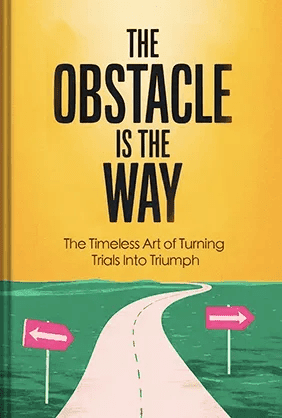
The Obstacle Is the Way
Ryan Holiday
44 Duration7 Key Points4.6 RateIf your reading list is growing but your free time isn't, there are smarter ways to absorb these powerful ideas.


Get the core lessons from resilience-building books like these in just 15 minutes, perfect for busy professionals who want to grow without the heavy time commitment.
 LeapAhead
Resilience in Leadership: Guiding Through Crisis
Managers face a unique burden during a crisis. You have to process your own anxiety while acting as a shock absorber for your entire department. Resilience in leadership is not about pretending everything is fine. It is about providing clarity when certainty is impossible.
When organizational chaos strikes, your team does not need you to have all the answers. They need you to be honest, decisive, and grounded.
Absorb Anxiety, Distribute Focus
A reactive leader amplifies panic. If upper management demands a sudden 20% cut in budget, a weak leader complains to their team about how unfair it is. A resilient leader absorbs the stress, filters out the noise, and presents a clear, defined problem to the team: "We need to reduce our software spend and delay hiring for Q3. Here are the three areas we will focus on first."

High-Frequency, Low-Friction Communication
In a vacuum of information, employees assume the worst. Increase your communication cadence. Replace the long, formal monthly all-hands meeting with brief, weekly 15-minute syncs. Tell your team what you know, tell them what you do not know yet, and tell them exactly when you will follow up. Transparency kills office paranoia.
Protect the Core Assets
During a crisis, you cannot accomplish everything. Resilient leaders ruthlessly prioritize. Identify the essential projects that keep the lights on and generate revenue. Pause everything else. Give your team permission to drop low-impact tasks so they can focus entirely on navigating the storm.
Leading a team through uncertainty requires a unique blend of radical accountability and aggressive prioritization. For leaders who want to master this balance, Extreme Ownership offers an incredible blueprint. Written by former Navy SEALs, the book illustrates how taking absolute responsibility for every outcome—whether a victory or a painful defeat—can transform your department's culture. It is an essential guide for managers learning how to absorb pressure, distribute focus, and execute under the most demanding workplace conditions.

Extreme Ownership
Jocko Willink, Leif Babin
45 Duration7 Key Points4.6 RateBuilding a Resilient Team: Systems Over Motivation
You cannot build a resilient team with trust falls, ping-pong tables, or generic motivational speeches. Resilience is an architectural feature of how your team operates. It requires building systems that can withstand pressure without breaking the people running them.
Establish Psychological Safety
Your team will never innovate or recover from setbacks quickly if they are terrified of being fired for making a mistake. Build a culture where identifying risks and reporting errors is rewarded. When an employee flags a critical issue, your first response should be, "Thank you for catching this. Let's figure out how to fix it."
Cross-Training and Redundancy
A team is fragile if vital knowledge lives entirely in one person’s head. If your lead developer or top sales director leaves, operations should not grind to a halt. Building a resilient team means enforcing strict documentation and cross-training. Every critical function must have a primary owner and a capable backup.
Implement Capacity Buffers
Operating at 100% capacity at all times is a massive risk. If your team is permanently redlining, any minor disruption will cause missed deadlines and burnout. Plan sprints and project timelines at 80% capacity. Leave a 20% buffer to handle emergency requests, unexpected technical debt, or sudden market shifts.
Creating a culture where employees feel secure enough to take risks and admit mistakes is not a soft skill; it is a critical operational advantage. To truly understand how to architect this environment, The Fearless Organization is highly recommended. It dives deep into the science of psychological safety, proving that teams operating without fear of retribution are the ones that innovate faster and catch catastrophic errors before they happen. It is the perfect playbook for leaders serious about building resilient, high-performing systems.
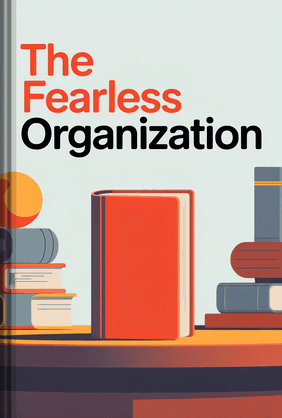
The Fearless Organization
Amy C. Edmondson
53 Duration10 Key Points4.6 RateBuilding a resilient team culture creates an environment where individuals can thrive. To complement these team-based systems, it is also beneficial for individuals to develop their own personal resilience habits.
Common Pitfalls to Avoid
Even well-intentioned professionals make severe mistakes when trying to project strength during difficult times. Watch out for these traps.
Toxic Positivity
Forcing your team to "look on the bright side" when layoffs just happened or a product launch completely failed invalidates their legitimate concerns. It destroys trust. Acknowledge the pain. It is okay to admit that a situation is incredibly difficult before moving to the solution phase.
Forcing your team to "look on the bright side" when layoffs just happened or a product launch completely failed invalidates their legitimate concerns. It destroys trust. Acknowledge the pain. It is okay to admit that a situation is incredibly difficult before moving to the solution phase.
Weaponizing Resilience
Do not use the concept of resilience to justify chronic understaffing, toxic management, or unreasonable hours. If you constantly demand your team work 70-hour weeks to cover systemic business flaws, you do not have a resilient team. You have an abused team that is preparing to quit.
Do not use the concept of resilience to justify chronic understaffing, toxic management, or unreasonable hours. If you constantly demand your team work 70-hour weeks to cover systemic business flaws, you do not have a resilient team. You have an abused team that is preparing to quit.
Paralysis by Analysis
During high-stress periods, leaders often freeze. They wait for perfect data before making a move. In a crisis, perfect data does not exist. A good decision executed aggressively today is vastly superior to a perfect decision made two weeks too late. Gather the available facts, trust your experience, and act.
During high-stress periods, leaders often freeze. They wait for perfect data before making a move. In a crisis, perfect data does not exist. A good decision executed aggressively today is vastly superior to a perfect decision made two weeks too late. Gather the available facts, trust your experience, and act.
FAQ
How long does it take to develop professional resilience skills?
Resilience is not a switch you flip; it is a muscle you train. You can understand the cognitive frameworks immediately, but applying them under stress takes consistent practice. Most professionals see a significant shift in their stress response and decision-making clarity within three to six months of actively applying emotional decoupling and structured failure analysis.
How can I tell if my team lacks resilience or is just burnt out?
A team lacking resilience panics or gives up at the first sign of a new challenge, even when rested. A burnt-out team simply lacks the energy to care. If your historically high-performing team is suddenly missing deadlines, displaying cynicism, and making uncharacteristic errors, they are likely burnt out. They do not need resilience training; they need time off, adjusted workloads, and better resource allocation.
Can resilience in the workplace prevent burnout completely?
No. Resilience extends your operational runway and helps you manage acute stress effectively. However, no amount of resilience can outlast a fundamentally broken work environment, chronic lack of sleep, or continuous, unmanageable workloads. Resilience must be paired with healthy boundaries and adequate rest.
What is the first thing a leader should do after a major team failure?
Pause and regulate your own emotions. Do not immediately call a meeting while you are angry or panicked. Take a few hours to process the event, gather the baseline facts, and transition into a problem-solving mindset. Then, gather the team, take accountability as the leader, and initiate a structured, blameless review to chart the path forward.