

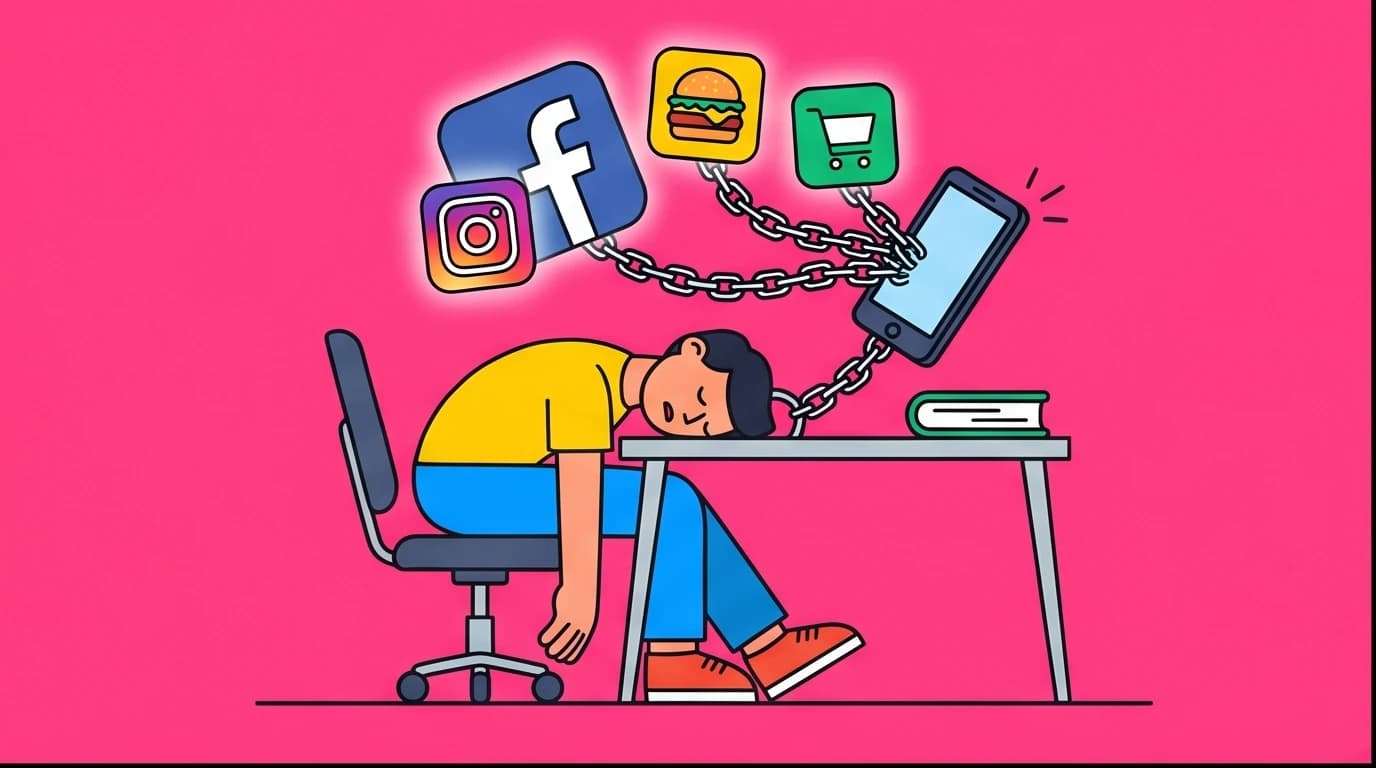
You sit down at your desk with every intention of finishing that project. Then you grab your phone just to check one quick notification. Forty-five minutes later, you are deep in a rabbit hole of social media reels, your brain feels like mush, and your motivation is entirely gone. You are exhausted but wired, constantly craving the next hit of cheap stimulation while watching your real goals slip away.
You do not lack willpower. Your brain’s reward system is hijacked.
Every time you open Amazon to impulse buy, scroll through Instagram, or grab high-sugar junk food, your brain gets a massive, unnatural spike of dopamine. Over time, your brain adapts by reducing its dopamine receptors. This leaves you feeling chronic apathy, anxiety, and an inability to focus on hard, meaningful tasks.
To get your focus back, you need to starve the addiction. You need a hard reset.
The Foundation: The Anna Lembke Dopamine Fast
You cannot fix a hijacked brain by simply "trying harder." You have to change the chemical balance.
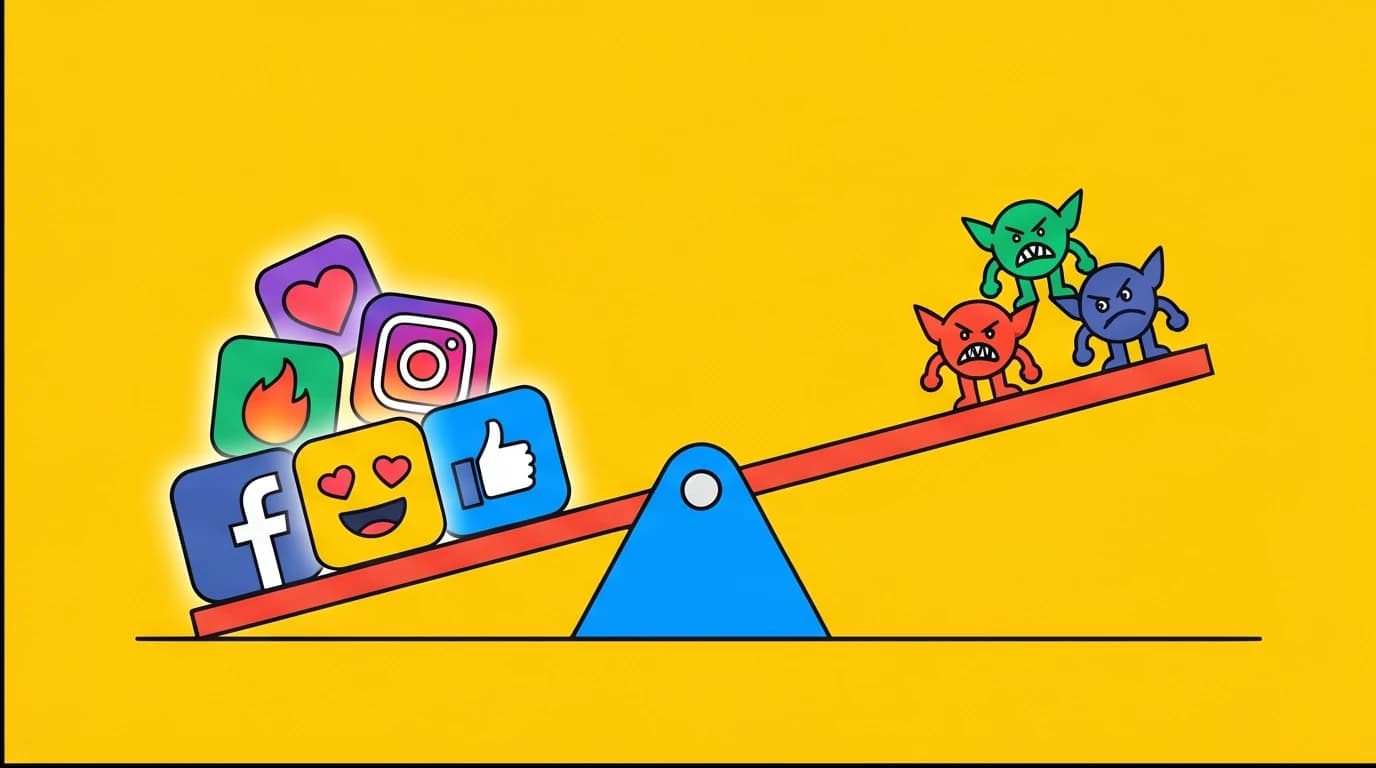
Dr. Anna Lembke, a Stanford psychiatrist and author of Dopamine Nation, popularized the science behind why we are all so miserable in a world of abundance. Her research proves that pleasure and pain are processed in the same overlapping regions of the brain, acting like a seesaw.
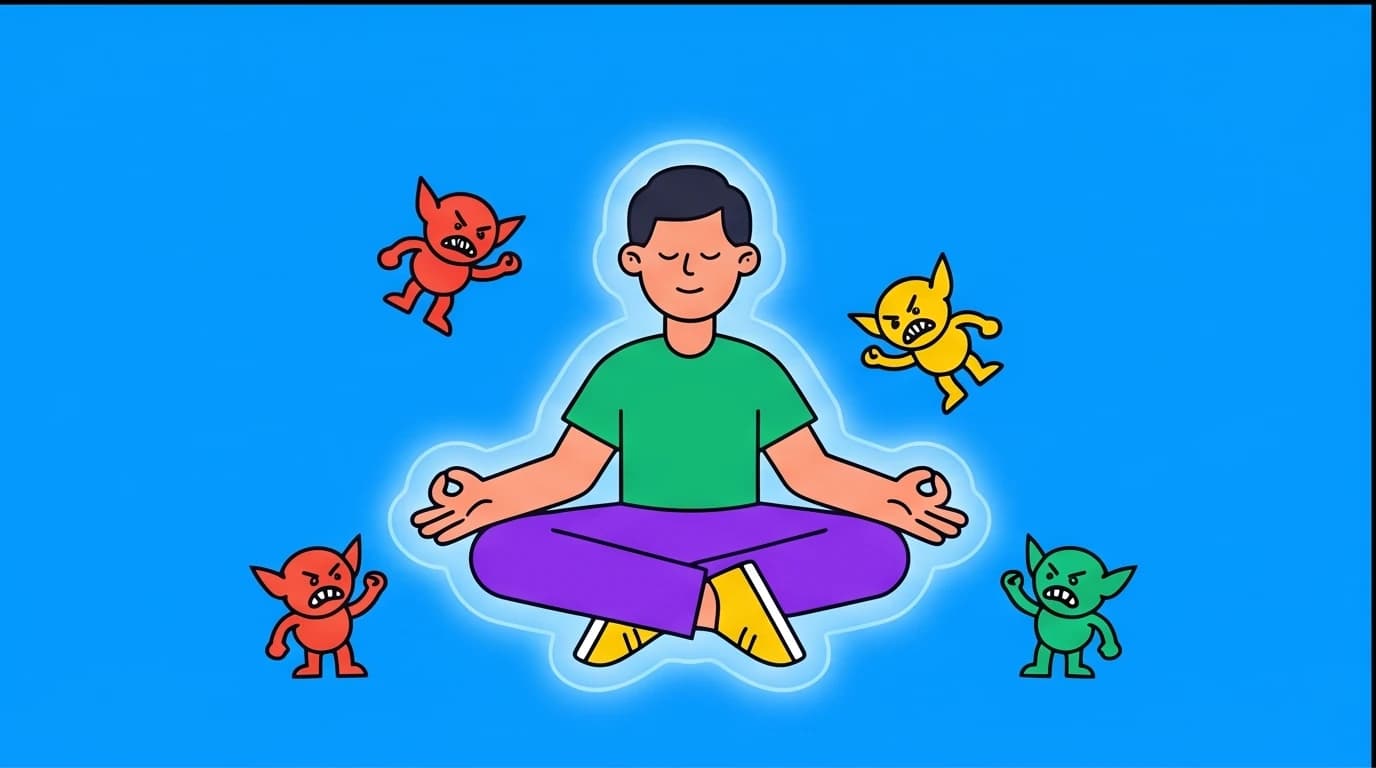
When you flood your brain with cheap pleasure (swiping, streaming, snacking), the seesaw tips heavily to one side. Your brain compensates by adding "gremlins of pain" to the other side to level it out. This is why you feel anxious, irritable, and restless the moment you put your phone down.
This core concept of a self-regulating seesaw is critical to understanding why we feel worse after indulging in too much pleasure. To see a detailed breakdown of the neuroscience, it's worth exploring this dynamic more closely.
An Anna Lembke dopamine fast is not a trendy Silicon Valley productivity hack where you stop talking to people or avoid making eye contact. It is a targeted, clinical approach to abstaining from your specific addictive behaviors long enough for your brain to naturally rebalance its pleasure-pain seesaw.
If you want to dive deeper into the exact science mentioned above, reading Dr. Lembke's groundbreaking work is an absolute must. She brilliantly unpacks how our modern world of instant gratification has fundamentally altered our brain chemistry, leading to the collective anxiety and burnout so many of us feel. It is a fascinating, science-backed look at why we overconsume and, more importantly, how to find balance in an age of overwhelming indulgence. This read will completely reframe how you view your daily habits.
Dopamine Nation
Anna Lembke, M.D.
 20 Duration
 8 Key Points
 4.6 Rate
If diving into a full-length book like Dopamine Nation feels overwhelming while your focus is still recovering, you can start by absorbing its core ideas first.

LeapAhead

Get the key insights from essential books on focus and psychology in just 15 minutes, helping you learn without the need for a long attention span.
The DOPAMINE Framework: Your Blueprint for Execution
To make the detox actionable, Dr. Lembke created the DOPAMINE framework. This is your exact step-by-step roadmap to regaining control over your impulses.
D - Data
Identify the drug. What exactly is draining your time and focus? Look at the hard facts. Check your Apple Screen Time statistics. Look at your credit card statements for DoorDash or Amazon purchases. Quantify the behavior so you can stop lying to yourself about how bad it is.
O - Objectives
Ask yourself what this behavior is doing for you. Are you scrolling to escape work anxiety? Are you binge-eating to numb loneliness? You must understand the emotional void your habit is trying to fill.
P - Problems
List the negative consequences of your high-dopamine habits. Poor sleep, missed deadlines at work, deteriorating health, or ignoring your family. Write them down on a physical piece of paper.
A - Abstinence
This is the core of the fast. You must stop the behavior completely for a set period. Moderation does not work for a hijacked brain. You cannot tell an alcoholic to just have one beer. You cannot tell a TikTok addict to just scroll for five minutes. You need a complete break.
M - Mindfulness
When you remove the cheap dopamine, the pain gremlins will scream. You will feel bored, anxious, and deeply uncomfortable. Mindfulness here simply means observing those cravings without acting on them. Sit in the discomfort. Let it wash over you. It will pass.
I - Insight
After the initial withdrawal phase, the brain fog will lift. You will start to realize how much time you were wasting and how that behavior was masking your true potential.
N - Next Steps
Once the fast is over, how do you live in the modern world? You cannot avoid screens forever. You must create a structured plan for re-engaging with the substance safely, using strict time limits and physical barriers.
E - Experiment
Testing what works for you. Maybe you realize you can handle checking email twice a day, but having Twitter on your phone is an immediate failure. Adjust your environment based on your new insights.
Hearing these principles discussed in a conversational format can also be incredibly insightful. Dr. Lembke has shared her expertise on various platforms, offering a more accessible entry point into the complex world of dopamine regulation.
Establishing Your Dopamine Fasting Rules
A detox only works if you define the boundaries before you start. Vague intentions lead to immediate failure. Your dopamine fasting rules should be tailored to your specific poisons, but a highly effective protocol generally follows these guidelines:
What is BANNED during the fast:
- All Social Media: Delete the apps. Block the websites.
- Infinite Scrolling Content: No YouTube, no TikTok, no news feeds.
- Video Games: Console, PC, and especially mobile games.
- Digital Entertainment: No Netflix, Hulu, or streaming movies.
- Hyper-Palatable Foods: No fast food, processed sugar, or alcohol.
- Pornography: Complete abstinence.
What is ALLOWED (and encouraged):
- Reading Physical Books: Go to Barnes & Noble or a local library. No audiobooks on Audible if you use them to escape silence.
- Writing & Journaling: Pen and paper only.
- Exercise: Weightlifting, running, yoga, or long walks outside without headphones.
- Chores & Organization: Clean your apartment, do the laundry, organize your workspace.
- Deep Work: Working on a computer is allowed only if you are using specific software for your job (e.g., Word, Excel, writing code) without multiple tabs open.
- Socializing in Real Life: Talking to friends and family face-to-face.
Trying to set strict rules for your smartphone usage can feel like a losing battle when these devices are engineered to be as addictive as slot machines. If you are struggling to stick to your newly established boundaries, you might need a dedicated strategy to redefine your relationship with your device. There is an incredibly practical guide that helps you recognize these hidden psychological triggers and provides a realistic, step-by-step plan to take back your time without giving up your phone entirely.
How to Break Up with Your Phone
Catherine Price
45 Duration8 Key Points4.6 RateThe Timeline: Executing a Dopamine Reset 30 Days Challenge
If you want permanent neuroplastic changes, Dr. Lembke recommends a dopamine reset 30 days protocol. It takes approximately one month for the brain's reward pathways to upregulate dopamine receptors and restore baseline levels.
Here is what you will experience, week by week.
Week 1: The Crash
The first 3 to 7 days will be miserable. You will experience actual withdrawal symptoms. You will feel exhausted, irritable, and your brain will trick you into thinking you need to check your phone for an "emergency." Expect a drop in productivity. Push through. This is the pain necessary for the reset.
Week 2: The Leveling
The intense cravings will start to subside. You will catch yourself reaching for a phone that isn't there, but the panic will be gone. You will start noticing details in your environment. The silence will feel less intimidating.
Week 3: The Awakening
This is where the magic happens. You will find yourself actually wanting to do hard things. Organizing your garage or reading a challenging book will suddenly feel highly rewarding. Your baseline dopamine has reset. You no longer need a digital explosion to feel satisfied.
Week 4: The Integration
You feel calm, focused, and in control. Now, you must plan your rules for Day 31. Do not go back to your old ways. Reintroduce technology carefully.
The 24-Hour Weekend Alternative
If a 30-day reset feels impossible given your job requirements, start with a 24-hour weekend fast. From Friday night at 8:00 PM to Saturday night at 8:00 PM, put your smartphone in a drawer, unplug your router, and strip your environment of all digital stimulation. Even 24 hours can provide a massive shift in perspective and break the cycle of compulsive consumption.
Completing a reset challenge is a fantastic first step, but integrating those lessons into a noisy, notification-heavy workplace is where the real work begins. To truly bulletproof your attention span going forward, you need a system to manage internal triggers and external interruptions. If you want to master the skill of deep, sustained focus and learn how to proactively design your day so you follow through on your biggest goals, this insightful playbook on mastering your attention is an essential next read.
Indistractable
Nir Eyal
23 Duration10 Key Points4.5 RateAs you transition back to a more balanced digital life, it's crucial to replace low-value scrolling with high-value learning. If you're too busy to read full books after a long workday, a structured micro-learning approach can be a powerful tool.
LeapAhead
Turn your commute into productive learning time by listening to summaries of career-boosting books, helping you maintain focus and grow professionally.
Common Pitfalls That Will Ruin Your Detox
1. The Swap Trap
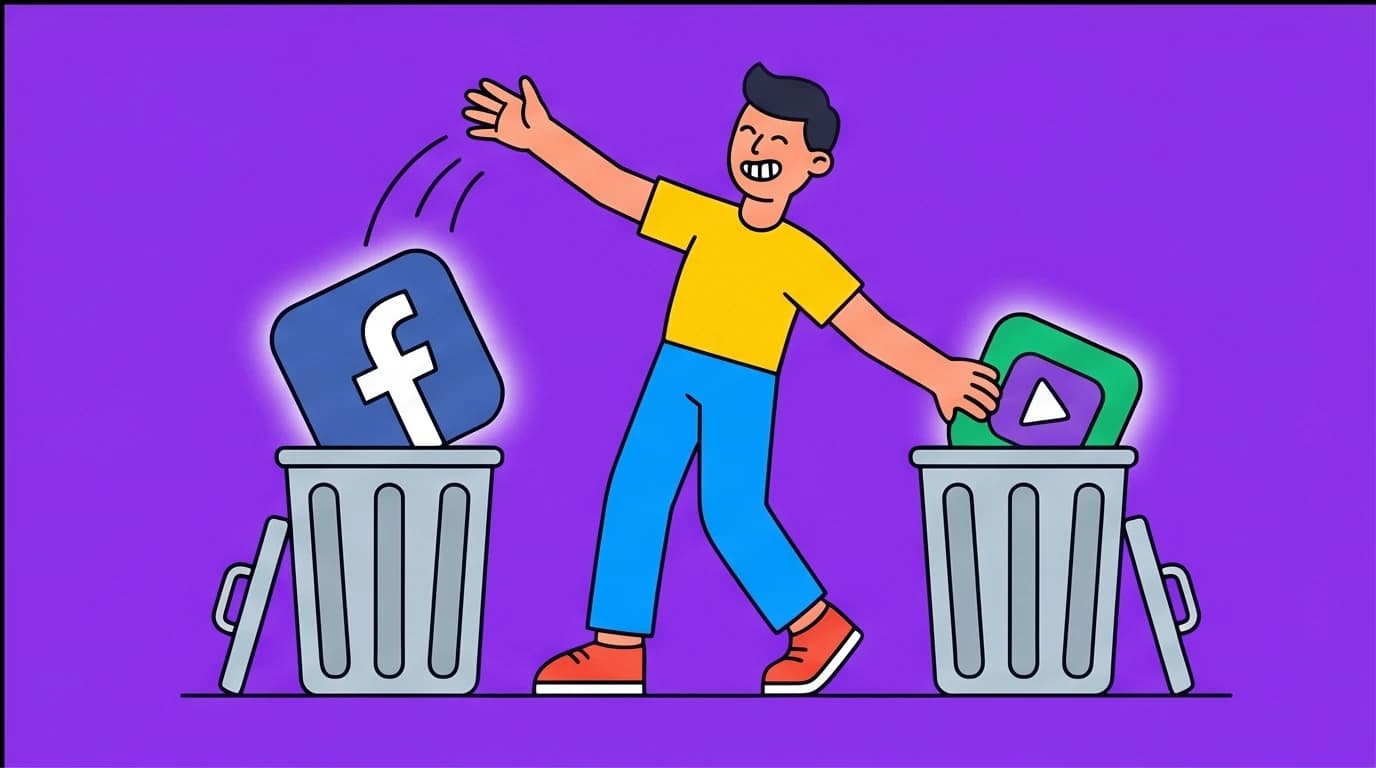
You delete Instagram, but you spend six hours organizing your Spotify playlists or reading random Wikipedia articles. Your brain is just looking for a different vehicle to deliver the same cheap dopamine hit. You must block the behavior, not just the specific app.
You delete Instagram, but you spend six hours organizing your Spotify playlists or reading random Wikipedia articles. Your brain is just looking for a different vehicle to deliver the same cheap dopamine hit. You must block the behavior, not just the specific app.
2. Relying on Willpower Instead of Environment
If you keep junk food in your pantry or leave your smartphone on your desk, you will fail. Your willpower depletes by the hour. Change your environment. Put the phone in another room. Block the websites at the router level. Make the bad habit physically difficult to execute.
If you keep junk food in your pantry or leave your smartphone on your desk, you will fail. Your willpower depletes by the hour. Change your environment. Put the phone in another room. Block the websites at the router level. Make the bad habit physically difficult to execute.
3. Panicking at the Boredom
People often quit the detox on day two because they feel dead inside. They mistake the withdrawal for depression. Understand that boredom is a feature, not a bug. Boredom is the exact mechanism that forces your brain to heal. Embrace it. Stare at a wall if you have to.
People often quit the detox on day two because they feel dead inside. They mistake the withdrawal for depression. Understand that boredom is a feature, not a bug. Boredom is the exact mechanism that forces your brain to heal. Embrace it. Stare at a wall if you have to.
As you have probably realized by now, relying purely on willpower to avoid bad habits is a recipe for exhaustion. The secret to long-term success isn't punishing yourself; it is redesigning your environment so that doing the right thing becomes the path of least resistance. If you want a masterclass in how to effortlessly build positive routines while permanently breaking the cycle of cheap dopamine hits, learning the mechanics of habit formation will be your ultimate superpower.

Atomic Habits
James Clear
26 Duration8 Key Points4.7 RateFAQ
Can I still use my phone or computer for work during a dopamine detox?
Yes. A practical detox focuses on removing unearned dopamine. If you need your laptop to write a report, send professional emails, or design a project, do it. The rule is strictly no browsing, no background entertainment, and no social media while working. Use website blockers to restrict your computer to work-only functions.
Yes. A practical detox focuses on removing unearned dopamine. If you need your laptop to write a report, send professional emails, or design a project, do it. The rule is strictly no browsing, no background entertainment, and no social media while working. Use website blockers to restrict your computer to work-only functions.
Is listening to music allowed?
It depends on how you use it. If you constantly pump high-energy music into your ears via AirPods every second of the day to avoid being alone with your thoughts, you should cut it out. If you listen to an album intentionally while sitting in your living room, it is fine. When in doubt, default to silence.
It depends on how you use it. If you constantly pump high-energy music into your ears via AirPods every second of the day to avoid being alone with your thoughts, you should cut it out. If you listen to an album intentionally while sitting in your living room, it is fine. When in doubt, default to silence.
How do I know if I actually need a 30-day reset?
If you experience "time blindness" (losing hours to a screen without realizing it), if you feel anxious when you leave the house without your phone, or if you consistently abandon long-term goals for short-term comfort, your receptors are compromised. A 30-day reset will give you the objective distance needed to evaluate your habits.
If you experience "time blindness" (losing hours to a screen without realizing it), if you feel anxious when you leave the house without your phone, or if you consistently abandon long-term goals for short-term comfort, your receptors are compromised. A 30-day reset will give you the objective distance needed to evaluate your habits.