

You sit down at your desk at 8 AM, blink, and suddenly it is 5 PM. Your inbox is clean, you attended four meetings, and you replied to dozens of messages—but that one critical project you needed to finish hasn't moved an inch. Being busy is not the same as being productive, and the constant feeling of overwhelming exhaustion at the end of the day is exactly what we need to fix.

If you are constantly battling a never-ending to-do list, doing more of the same will not work. You need a system. Here is the ultimate playbook on how to increase productivity, cut through the daily noise, and take your time back.
The Foundation of Improving Personal Productivity
Before diving into specific daily productivity hacks, we need to fix how you look at work. Most people measure productivity by volume: how many tasks they crossed off today. This is a trap. Crossing off twenty low-value tasks like organizing digital folders or replying to minor emails will not move the needle on your career or your grades.
Improving personal productivity is about value, not volume. It is about identifying the vital few tasks that yield the biggest results and ignoring the trivial many. You have a limited amount of focus each day. If you spend your peak mental energy deciding what to wear, hunting for an email, or scrolling social media, you will have nothing left for deep, impactful work.
To rebuild your workflow, you must treat your attention like a bank account. Every distraction is a withdrawal. Every focused block of work is a deposit.
If you find yourself constantly busy but never truly productive, mastering the art of doing less but better is an absolute game-changer. Learning to distinguish the "vital few" tasks from the "trivial many" will save you countless hours of busywork. For a deeper dive into this exact philosophy, I highly recommend checking out Greg McKeown’s modern classic on reclaiming your time and energy. It will fundamentally change how you view your daily commitments and help you say no to things that don’t move the needle.
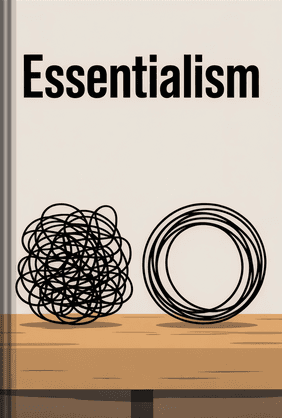
Essentialism
Greg McKeown
 32 Duration
 10 Key Points
 4.6 Rate
If your packed schedule makes it tough to get through all these recommended books, you can still learn their core principles without adding another big task to your list.

Grasp the key ideas from essential productivity books in just 15 minutes, turning your commute or coffee break into powerful learning time.
 LeapAhead
With this foundational mindset in place, you can start applying specific tactics to your professional life, especially when navigating a busy office environment filled with constant interruptions.

Best Productivity Tips to Restructure Your Day
If you want to know how to be more productive, start by changing how you plan and structure your workday. A good day is built the night before, and a solid structure prevents decision fatigue.
1. Adopt Ruthless Prioritization (The Ivy Lee Method)
The fastest way to fail is to wake up and ask yourself, "What should I do today?"
Instead, use the Ivy Lee Method. At the end of every workday, write down the six most important things you need to accomplish tomorrow. Do not write down more than six. Prioritize those six items in order of their true importance. The next morning, focus entirely on the first task. Work until the first task is finished before moving on to the second.
If six feels like too many, use the 1-3-5 Rule:
- 1 Big Task: The heavy lift (e.g., writing a proposal, studying for a midterm).
- 3 Medium Tasks: Important but less demanding (e.g., reviewing a peer's work, a 30-minute meeting).
- 5 Small Tasks: Quick admin work (e.g., sending invoices, replying to specific emails).
2. Implement Strategic Time Blocking
Your calendar should not just be for meetings; it should be for your work, too. Time blocking means assigning specific chunks of time to specific tasks.
If you just leave a task on a list, it will expand to fill the time you give it. But if you block out 9:00 AM to 10:30 AM on your Google Calendar exclusively for "Drafting Q3 Report," you are far more likely to sit down and do it. Treat this block like a meeting with your boss. You would not check your phone or walk away to do laundry during an important meeting. Give your own work the same respect.
3. Separate "Maker" Time from "Manager" Time
Paul Graham famously coined the concept of the Maker's Schedule versus the Manager's Schedule.
Managers operate on 30-minute or 60-minute blocks. They jump from a call to a quick review to an email sync. Makers (writers, programmers, designers, students) need half-day blocks of uninterrupted time to get into a flow state. If you are a Maker, a single 30-minute meeting right in the middle of your morning can ruin your entire productivity flow.
Protecting your "Maker" time is just the first step; knowing how to maximize those uninterrupted hours is what separates top performers from the rest of the pack. If you want to train your brain to achieve a state of highly concentrated focus in our hyper-connected, distraction-filled world, Cal Newport’s research on the subject is a must-read. His insights will teach you how to ruthlessly eliminate digital noise and produce your best work in a fraction of the time.
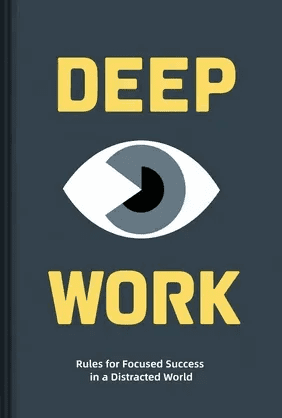
Deep Work
Cal Newport
47 Duration8 Key Points4.6 Rate
Batch your meetings to the afternoon or designate one or two "meeting-free" days a week. Protect your deep work windows aggressively.
Daily Productivity Hacks to Eliminate Friction
Now that your day is structured, let's look at the micro-level. Daily productivity hacks are small, actionable adjustments that remove friction and keep your momentum going.
Apply the 2-Minute Rule
If a task takes less than two minutes to complete, do it immediately. Do not schedule it. Do not write it down on a to-do list. Just do it.
Replying to a simple yes/no email, putting your coffee mug in the dishwasher, or approving a calendar invite takes seconds. If you add these to your to-do list, the cognitive load of remembering them takes more energy than actually doing the task. Keep your lists clean by destroying small tasks on impact.
The 2-Minute Rule is actually a foundational concept from one of the most famous productivity frameworks ever created. If you want to build a comprehensive, foolproof system for organizing every single thought, project, and to-do list in your life, you need to read the book that started it all. David Allen's groundbreaking methodology will teach you how to clear your mind of mental clutter, capture tasks effectively, and achieve a state of stress-free productivity.
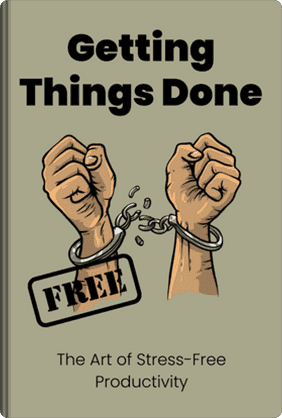
Getting Things Done
David Allen
43 Duration7 Key Points4.5 RateBatch Your Shallow Work
Shallow work includes emails, Slack messages, paying bills, and filling out expense reports. It does not require deep cognitive focus, but context switching between deep work and shallow work will destroy your focus.
Turn off your email notifications. Stop leaving your inbox open in a background tab. Instead, check your email in batches: once at 9 AM, once at 12 PM, and once at 4 PM. You will process messages faster, and you will not break your concentration every time a new message chimes.
Optimize Your Environment
Willpower is a finite resource. If your phone is sitting face-up on your desk, your brain is actively burning energy trying to ignore it.
Design an environment where doing the right thing is the path of least resistance.
- Hide the phone: Put your phone in a drawer or in another room while doing deep work.
- Block distracting sites: Use tools to block social media and news sites during your core working hours.
- Clean your workspace: A cluttered desk leads to a cluttered mind. Spend five minutes at the end of the day clearing your physical and digital workspace so you can start fresh tomorrow.
How to Be More Productive by Managing Your Energy
Time management is useless if you do not have the energy to execute. You can block out four hours to write a strategy brief, but if you are exhausted, dehydrated, and running on four hours of sleep, you will just stare at a blinking cursor.
Work in Sprints (The Pomodoro Technique)
The human brain cannot maintain intense focus for eight hours straight. It is biologically impossible.
Work in short, intense bursts followed by real recovery. The Pomodoro Technique is highly effective for this: work completely uninterrupted for 25 minutes, then take a strict 5-minute break. After four cycles, take a 15-to-30-minute break.
During your breaks, step away from your screen. Do not just switch from a work tab to a social media tab. Stand up, stretch, get a glass of water, or walk around the block. Give your eyes and your brain a break.
While the basic concept of working in 25-minute sprints sounds simple, there is a whole science behind why this specific timing maximizes human cognitive performance. If you struggle with procrastination or find your attention drifting halfway through a project, exploring the official guide to this time-management method is incredibly helpful. Francesco Cirillo breaks down exactly how to structure your sprints, handle unavoidable interruptions, and maintain a high level of focus without burning yourself out by Friday.
The Pomodoro Technique
Francesco Cirillo
19 Duration8 Key Points4.4 RateMap Your Energy Levels
Are you a morning person or a night owl?
If your brain is sharpest at 8 AM, do not waste that peak mental clarity reading industry newsletters or sorting emails. Use that time for your most difficult, complex task. Save the easy, low-effort work for 3 PM when your energy naturally dips. Aligning your work type with your natural energy rhythm is one of the most effective ways to get more done with less effort.

Stop Trying to Multitask
Multitasking is a myth. Your brain cannot process two complex tasks at the same time. Instead, it rapidly switches back and forth between them. This "context switching" drains your energy, increases your mistake rate, and makes both tasks take longer.
If you are on a conference call, close your email. If you are writing a document, mute your phone. Single-tasking is the ultimate productivity hack. Focus on one thing, finish it, and then move on.
Aligning tasks with your energy is crucial, but what about self-improvement? When you're too drained after a long day for heavy reading, you can still invest in your growth.
Use LeapAhead to listen to summaries of top business and self-improvement books, making it easy to learn new skills during your commute or workout, even when you're low on energy.
LeapAheadCommon Pitfalls to Avoid
As you build your productivity system, beware of these common traps that can derail your progress.
1. The "Perfect System" Trap:
You do not need to spend three days color-coding a Notion dashboard to start working. A notebook and a pen are often enough. The tool does not do the work; you do. Pick a simple system and stick to it.
You do not need to spend three days color-coding a Notion dashboard to start working. A notebook and a pen are often enough. The tool does not do the work; you do. Pick a simple system and stick to it.
2. Toxic Productivity:
Do not confuse working hard with being productive. You do not need to wake up at 4 AM and take ice baths to be successful. Rest is not the opposite of productivity; it is a vital part of it. Sleep deprivation will destroy your focus, memory, and decision-making skills faster than any distraction.
Do not confuse working hard with being productive. You do not need to wake up at 4 AM and take ice baths to be successful. Rest is not the opposite of productivity; it is a vital part of it. Sleep deprivation will destroy your focus, memory, and decision-making skills faster than any distraction.
3. Planning Without Executing:
Planning your week is great. Endlessly reorganizing your lists without actually starting a task is just a sophisticated form of procrastination. At some point, you just have to sit down and do the work.
Planning your week is great. Endlessly reorganizing your lists without actually starting a task is just a sophisticated form of procrastination. At some point, you just have to sit down and do the work.
While this article covers individual techniques, combining them into a cohesive framework is the next step. Understanding popular, time-tested systems can help you build a more robust approach.
Of all the pitfalls, procrastination is often the most difficult to overcome because it’s tied to our psychology. If this is your main struggle, addressing it directly is the most productive thing you can do.
FAQ
How do I stay productive when working from home?
Working from home blurs the line between personal and professional life. The best way to stay productive is to create clear physical and temporal boundaries. Have a dedicated workspace (even if it is just a specific corner of the kitchen table) and set strict start and stop times. When the workday is over, shut your laptop and physically leave the space.
Working from home blurs the line between personal and professional life. The best way to stay productive is to create clear physical and temporal boundaries. Have a dedicated workspace (even if it is just a specific corner of the kitchen table) and set strict start and stop times. When the workday is over, shut your laptop and physically leave the space.
What is the most effective productivity method?
There is no single "best" method, but Time Blocking combined with Ruthless Prioritization (like the Ivy Lee method) consistently yields the best results. The core mechanic is always the same: decide what matters most, allocate protected time for it, and eliminate distractions until it is done.
There is no single "best" method, but Time Blocking combined with Ruthless Prioritization (like the Ivy Lee method) consistently yields the best results. The core mechanic is always the same: decide what matters most, allocate protected time for it, and eliminate distractions until it is done.
How can I stop procrastinating on big tasks?
Procrastination usually happens because a task feels too big or ambiguous, triggering anxiety. Break the big task down into laughably small, actionable steps. Do not put "Build new website" on your list. Put "Buy domain name" or "Write the first 100 words of the homepage." Lower the barrier to entry so much that you cannot say no.
Procrastination usually happens because a task feels too big or ambiguous, triggering anxiety. Break the big task down into laughably small, actionable steps. Do not put "Build new website" on your list. Put "Buy domain name" or "Write the first 100 words of the homepage." Lower the barrier to entry so much that you cannot say no.
Does taking breaks really help me get more done?
Yes. Trying to push through mental fatigue leads to diminishing returns. A task that takes one hour when you are fresh might take three hours when you are exhausted. Taking a 10-minute walk or stepping away for a proper lunch break resets your cognitive load, allowing you to work much faster and more accurately when you return.
Yes. Trying to push through mental fatigue leads to diminishing returns. A task that takes one hour when you are fresh might take three hours when you are exhausted. Taking a 10-minute walk or stepping away for a proper lunch break resets your cognitive load, allowing you to work much faster and more accurately when you return.