

You already know mindfulness is good for you. You have probably downloaded the apps, listened to the podcasts, and maybe even strung together a three-day streak before life got in the way. The problem isn't a lack of desire. The problem is that carving out 20 minutes of absolute silence feels impossible when your schedule is already stretched to the breaking point.

You do not lack discipline. You are just relying on the wrong system. Figuring out how to make meditation a daily habit requires behavioral psychology, not sheer willpower. Let’s break down exactly how to integrate this practice into your life, even if your calendar is chaos.
The Willpower Trap: Why You Keep Quitting
Most people approach a new daily meditation routine like a New Year’s resolution. They decide they will sit cross-legged on the floor for 30 minutes every morning at 5:00 AM.
This works for about two days. On day three, you sleep poorly, hit snooze, and skip it. The guilt sets in. By day four, the habit is dead.
Willpower is a finite resource. By the time you navigate morning traffic, manage your inbox, and handle family obligations, your brain's capacity to force itself into doing something difficult is near zero. To succeed, you must remove friction. You need to make the act of sitting down to meditate easier than the act of skipping it.
If you constantly find yourself relying on sheer willpower only to burn out a few days later, it might be time to rethink how you approach behavioral change altogether. Behavioral scientist BJ Fogg has spent decades studying why human beings fail to adopt healthy routines. His research proves that motivation is fleeting, but designing your life around incredibly small, easy-to-accomplish actions creates lasting transformation. If you want a deep dive into the science of removing friction and engineering success without needing iron-clad discipline, his groundbreaking guide is a must-read.
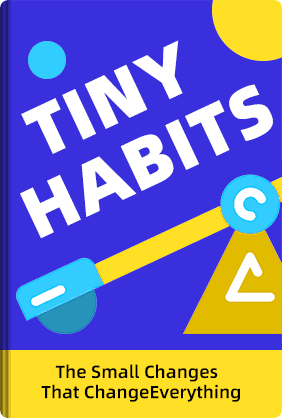
Tiny Habits
BJ Fogg, Ph.D.
 40 Duration
 8 Key Points
 4.7 Rate
The 4-Step Framework for a Daily Meditation Routine
Building an automatic behavior requires a specific architecture. Here is how you engineer a routine that actually sticks.
1. Start Embarrassingly Small
If you want to learn how to meditate every day, you have to shrink the commitment. Your brain views a 20-minute task as a major event. It views a 2-minute task as an afterthought.
Set your initial goal to just two minutes. That is it. 120 seconds.
You can find two minutes while the shower water warms up, or sitting in your car in the driveway before you walk into the house. The goal right now isn't spiritual enlightenment; the goal is simply casting a vote for your new identity as someone who meditates. Once the two-minute mark feels automatic—usually after a few weeks—you can gradually increase it to five, then ten.
2. Use "Habit Stacking"
Do not put "meditate" on your to-do list at a random time like 3:00 PM. Instead, tie the new behavior to a habit you already do automatically every single day.
Look at your current morning sequence:
- You wake up.
- You walk to the kitchen.
- You turn on the coffee maker.
Stack your meditation right in the middle of that existing sequence. “After I press the start button on the coffee maker, I will sit at the kitchen table and focus on my breath for two minutes.”
The coffee maker becomes your trigger. You don't have to remember to meditate; you just have to want coffee.

3. Design Your Environment
Visual cues drive human behavior. If your phone is in your hand, you will scroll social media. If a meditation cushion is sitting right next to your bed, you are much more likely to use it.
Prepare your environment the night before. If you plan to use an app, put it on your phone's home screen. Leave your headphones right next to your toothbrush. Make the "right" choice the path of least resistance.
4. Track the Streak (But Forgive the Slips)
Keep a visual tracker. A simple wall calendar where you cross off the days with a red marker works wonders. The visual progress releases a small hit of dopamine, reinforcing the habit loop.
However, life happens. You will miss a day. The golden rule of habit formation is: Never miss twice. Missing one day is an anomaly; missing two days is the start of a new, bad habit. If you skip Tuesday, your only priority on Wednesday is getting back on track, even if it is just for 60 seconds.
The concepts of habit stacking, environment design, and focusing on the system rather than the goal are fundamental pillars of modern behavioral psychology. If you want to master these frameworks and apply them not just to your meditation practice, but to your fitness, productivity, and personal finances, there is one book that stands above the rest. James Clear’s masterclass on habit formation explains exactly how tiny, seemingly insignificant changes compound into remarkable results over time. It is the ultimate playbook for building good habits and breaking bad ones.

Atomic Habits
James Clear
26 Duration8 Key Points4.7 RateFinding the time to read foundational books like these can be a challenge in itself. If your schedule is tight, you can start applying their core lessons much faster.

Listen to the key ideas from books like Atomic Habits in just 15 minutes, helping you apply life-changing concepts without the time commitment.

Download LeapAhead App now
Finding the Best Time of Day to Meditate
People constantly ask about the best time of day to meditate. The physiological answer varies, but the behavioral answer is simple: The best time is the time you will actually do it consistently.
The Morning Advantage
For the vast majority of successful practitioners, morning is the most reliable window. Your willpower is highest, and the day's emergencies haven't hijacked your schedule yet.
- Best for: People who control their morning routines, early risers, and those who experience high anxiety immediately upon waking.
- The Setup: Do it before you check your phone. The moment you open your email or the news, your brain enters reactive mode.
The Mid-Day Reset
Sometimes mornings are a chaotic rush to get kids to school. A mid-day session can act as a circuit breaker for stress.
- Best for: Corporate professionals, remote workers, or people who hit a severe energy slump around 2:00 PM.
- The Setup: Block off 10 minutes on your work calendar. Close your office door or sit in your parked car. It resets your nervous system before the afternoon push.
The Evening Wind Down
Using meditation to transition from the stress of the day into restful sleep is highly effective, though it comes with a risk of falling asleep during the practice.
- Best for: Night owls, people who struggle with racing thoughts before bed, or those with highly unpredictable day jobs.
- The Setup: Stack it with your bedtime routine. After brushing your teeth, sit on the edge of the bed for five minutes.
While finding the right time is crucial, it's also important to tailor your practice to your specific needs. Many people turn to meditation specifically to manage feelings of overwhelm and unease.
Troubleshooting: How to Meditate Every Day When Your Brain Refuses
Sticking to a meditation practice means navigating the days when your mind absolutely rebels against sitting still. Here is how you handle the most common roadblocks.
"My mind won't stop racing"
This is the number one reason people quit. They sit down, close their eyes, and immediately start thinking about an upcoming meeting, an unpaid bill, or an awkward conversation from 2015. They conclude: "I'm bad at this."
Recognizing that your mind has wandered is not a failure—it is the exact mechanism of meditation. Every time you notice you are distracted and bring your attention back to your breath, you are doing a "rep" for your brain. It is like a bicep curl for your focus. A session filled with wandering thoughts isn't a bad session; it is a heavy workout.
This mental 'workout' is incredibly powerful. For those looking to specifically sharpen their mental clarity and improve their ability to concentrate, certain meditation styles are particularly effective.

"I literally do not have time today"
On days when a 10-minute sit is genuinely impossible, do not skip it entirely. Downshift. Take three deep, conscious breaths while sitting at a red light. Or practice active mindfulness: wash the dishes and focus entirely on the temperature of the water and the texture of the soap. You maintain the continuity of the habit even if the format changes.
"I find it incredibly boring"
Sitting in silence isn't for everyone, especially in the beginning. Leverage technology. Use guided meditations from apps, or look up free tracks on Amazon Music, Apple Podcasts, or YouTube. Having a voice direct your attention provides guardrails for an active mind.
If this feels like a good next step, but you're unsure which style to try first, exploring your options can make the practice more engaging.
Even with the right system in place, sitting in absolute silence can feel agonizingly dull or frustratingly difficult for a highly active mind. If you are naturally restless, cynical about mindfulness, or convinced that your brain is simply too chaotic to ever experience a moment of zen, you are not alone. News anchor Dan Harris felt the exact same way before a live, on-air panic attack forced him to explore the practice. His incredibly relatable, no-nonsense guide strips away the spiritual jargon and offers practical meditation advice for the rest of us.
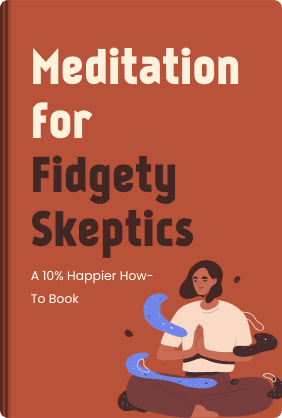
Meditation for Fidgety Skeptics
Dan Harris, Jeff Warren, Carlye Adler
36 Duration9 Key Points4.6 RateThe Long Game: Moving from Action to Identity
The ultimate secret to sticking to a meditation practice is shifting how you view yourself.
In the beginning, you are a person trying to meditate. It requires effort. But as the days turn into weeks, and the weeks into months, a shift occurs. You become a meditator.
When the habit becomes part of your identity, it no longer requires willpower. You brush your teeth because you are a person who values hygiene. You meditate because you are a person who protects their mental peace.
Focus entirely on the first two minutes. Anchor it to your morning coffee. Forgive yourself when you miss a day, but get right back to it the next morning. The profound benefits of mindfulness do not come from one perfect 60-minute session; they come from a thousand imperfect, messy, yet consistent 5-minute sessions.
As your new meditation habit solidifies into a core part of your identity, you will likely discover that mindfulness begins to bleed into your everyday life. You stop just practicing on the cushion and start bringing presence to your daily commute, your conversations, and your chores. To help you cultivate this deeper level of everyday awareness, consider picking up Jon Kabat-Zinn’s classic text on mindfulness. It offers beautiful, bite-sized wisdom on how to fully inhabit the present moment, no matter how busy or chaotic your schedule might be.

Wherever You Go, There You Are
Jon Kabat-Zinn
19 Duration8 Key Points4.6 RateThis article has mentioned several powerful books to guide your journey. If you're eager to learn from them all but don't know where to start, an app can help you digest the most important insights first.
Explore summaries of all the books recommended here, from Tiny Habits to Meditation for Fidgety Skeptics, to kickstart your learning habit.
Download LeapAhead App now
FAQ
Can I meditate lying down?
Yes, but with a major caveat. If you meditate lying down in bed, your brain heavily associates that posture with sleep. You are highly likely to drift off. If your goal is to fall asleep, this is perfect. If your goal is to build mental clarity and focus, sit upright in a chair or on a cushion.
Yes, but with a major caveat. If you meditate lying down in bed, your brain heavily associates that posture with sleep. You are highly likely to drift off. If your goal is to fall asleep, this is perfect. If your goal is to build mental clarity and focus, sit upright in a chair or on a cushion.
What if I keep falling asleep during my daily routine?
If you are consistently nodding off, it is a sign of sleep deprivation, not a meditation problem. Try shifting your practice to an earlier part of the day, meditating with your eyes slightly open (gazing at a spot on the floor), or ensuring the room is well-lit and slightly cool.
If you are consistently nodding off, it is a sign of sleep deprivation, not a meditation problem. Try shifting your practice to an earlier part of the day, meditating with your eyes slightly open (gazing at a spot on the floor), or ensuring the room is well-lit and slightly cool.
Do I have to clear my mind completely?
No. Trying to force your mind to go completely blank is impossible and will only cause frustration. The goal of meditation is simply to notice where your attention is. When you realize you are thinking about dinner, just acknowledge the thought and gently bring your focus back to your breath.
No. Trying to force your mind to go completely blank is impossible and will only cause frustration. The goal of meditation is simply to notice where your attention is. When you realize you are thinking about dinner, just acknowledge the thought and gently bring your focus back to your breath.
Are guided meditation apps actually effective?
Absolutely. For beginners, guided audio is highly recommended. It acts like training wheels for your attention. Once you understand the mechanics and feel comfortable sitting with yourself, you can slowly transition to unguided, silent sessions if you prefer.
Absolutely. For beginners, guided audio is highly recommended. It acts like training wheels for your attention. Once you understand the mechanics and feel comfortable sitting with yourself, you can slowly transition to unguided, silent sessions if you prefer.