


Your brain feels like a web browser with fifty tabs open. The music is playing, an ad is looping, and you cannot figure out where the noise is coming from. You know you need to unplug and find some quiet. You sit down, close your eyes, and within ten seconds, you are thinking about an embarrassing thing you said at a party five years ago. You open your eyes, frustrated, convinced you just do not have the right brain for this.
You are not alone.
Learning how to meditate for beginners usually comes with a massive, unfair expectation: the idea that you must instantly clear your mind. That is entirely false. Meditation is not about turning off your thoughts or forcing your mind into absolute silence. It is simply about observing them without getting swept away.
The Biggest Myth: You Do Not Have to Clear Your Mind
Before you even pick a spot to sit, you need to understand the underlying mechanics of meditation.
Most people quit on day one because they sit down, think about what to make for dinner, and tell themselves they failed. Thoughts will happen. Your brain is a thinking machine; asking it to stop thinking is like asking your heart to stop beating.
The true mechanism of meditation is a cycle:
- You focus on your breath.
- Your mind wanders.
- You realize your mind has wandered.
- You gently return your focus to your breath.
Step 3 and Step 4 are the actual practice. Every time you catch your mind wandering and pull it back, you are doing a "bicep curl" for your brain. You are building the muscle of self-awareness.
If the idea of meditating still feels a little too mystical for your liking, you are not alone. Many successful people start out as massive skeptics, assuming they are too high-strung or analytical to sit still. If you want a hilariously relatable take on how to tame the voice in your head without losing your edge, there is an excellent read that breaks down the neuroscience and practical benefits of meditation for those who think it is just not for them.
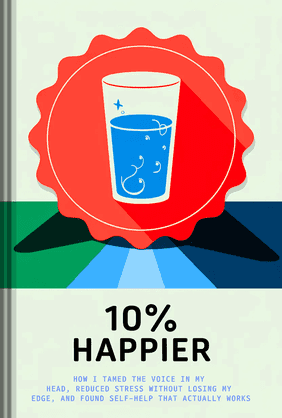
10% Happier
Dan Harris
 39 Duration
 9 Key Points
 4.6 Rate
How to Start Meditating at Home (Zero Equipment Needed)
You do not need to order a $100 velvet floor cushion off Amazon or download an expensive premium app to figure out how to start meditating at home. You just need yourself, a timer, and a corner of your house where you will not be interrupted.
1. Pick a Realistic Time and Place
Choose a spot that feels neutral. It can be a living room chair, the edge of your bed, or even a spot on your couch. Try to tie this new habit to an existing routine. Meditating for three minutes while your coffee maker brews in the morning is far more effective than planning a 30-minute session that you will keep putting off.
2. Ditch the Pretzel Posture
You do not need to sit cross-legged on the floor. If sitting on the floor makes your back ache, your brain will focus exclusively on the pain instead of the practice.
- Use a chair: Sit with your feet flat on the ground.
- Keep your back straight: Sit up naturally, as if a string is gently pulling the top of your head upward. Do not force it to be stiff.
- Rest your hands: Place your hands lightly on your thighs or in your lap.
3. Start Small (The 3-Minute Rule)
Set your phone timer for three to five minutes. That is it. Do not aim for twenty minutes on your first try. You are building a new mental habit, and endurance takes time. Make the goal so incredibly easy that you cannot say no to it.
The reason starting with just three minutes works so well is that consistency always beats intensity when you are rewiring your behavior. If you struggle to make your new meditation routine stick, it often has nothing to do with your willpower and everything to do with your system. For a deeper dive into the science of habit formation and learning how to seamlessly attach a new behavior—like your morning breathwork—to your existing daily schedule, this next recommendation is an absolute game-changer.

Atomic Habits
James Clear
26 Duration8 Key Points4.7 RateIf you find that even with a great system, you're still too busy to fit in full books, you can apply the same micro-habit principle to your reading.

Build a consistent learning habit by absorbing the core ideas of books like Atomic Habits in just 15 minutes, making personal growth fit your schedule.

Download LeapAhead App now
Once you have found a system that works for you, the next step is ensuring your practice sticks. Consistency is key to unlocking the long-term benefits of meditation.
Meditation for Beginners Step by Step
Now that you are seated and comfortable, here is the exact process of what to do next. Follow this meditation for beginners step by step to get through your first session.
Step 1: Close Your Eyes and Settle In
Hit start on your timer. Close your eyes gently. Take three deep, exaggerated breaths. Inhale through your nose, letting your belly expand, and sigh it out through your mouth. This acts as a physical signal to your nervous system that you are transitioning into a state of rest.
Hit start on your timer. Close your eyes gently. Take three deep, exaggerated breaths. Inhale through your nose, letting your belly expand, and sigh it out through your mouth. This acts as a physical signal to your nervous system that you are transitioning into a state of rest.
Step 2: Return to Natural Breathing
After those deep breaths, close your mouth and breathe normally through your nose. Do not force your breath to be deeper or slower than it wants to be. Just let your body breathe itself.
After those deep breaths, close your mouth and breathe normally through your nose. Do not force your breath to be deeper or slower than it wants to be. Just let your body breathe itself.
Step 3: Pick an Anchor
An anchor is where you focus your attention. For most people, the breath is the best anchor. Notice where you feel the breath most distinctly. It might be the cool air brushing the inside of your nostrils, the rising and falling of your chest, or the expansion of your stomach. Pick one spot and keep your attention there.
An anchor is where you focus your attention. For most people, the breath is the best anchor. Notice where you feel the breath most distinctly. It might be the cool air brushing the inside of your nostrils, the rising and falling of your chest, or the expansion of your stomach. Pick one spot and keep your attention there.
Step 4: The Inevitable Distraction
Within seconds, a thought will pop up. You will hear a car drive by outside, or you will wonder if you remembered to lock the front door.
Within seconds, a thought will pop up. You will hear a car drive by outside, or you will wonder if you remembered to lock the front door.
Step 5: The Return
The moment you realize you are thinking about the front door, pause. Do not get mad at yourself. Mentally say the word "thinking" to label the distraction, let the thought go, and bring your attention right back to the feeling of your chest rising and falling.
The moment you realize you are thinking about the front door, pause. Do not get mad at yourself. Mentally say the word "thinking" to label the distraction, let the thought go, and bring your attention right back to the feeling of your chest rising and falling.
Repeat steps 4 and 5 until your timer goes off. Open your eyes slowly. Notice how your body feels before you immediately grab your phone.

Simple Meditation Techniques You Can Try Today
If focusing purely on the breath feels too abstract or makes you feel anxious, you can switch up your approach. Here are a few simple meditation techniques that give your brain a slightly different task to handle.
The Body Scan
Instead of focusing on your breath, you focus on physical sensations. This is incredibly effective if you hold a lot of physical tension or sit at a desk all day.
- Start at the top of your head. Actively notice if you are furrowing your brow or clenching your jaw. Consciously release those muscles.
- Slowly move your attention down your body. Notice your neck, your shoulders, your arms.
- Whenever you find a pocket of tension, take a deep breath and imagine sending relaxation directly to that area.
- Continue all the way down to your toes.
Counting the Breath
This gives your analytical brain a job to do, which can drastically reduce how often it wanders.
- Inhale and silently think "One."
- Exhale and silently think "Two."
- Continue this up to "Ten."
- Once you hit ten, start over at one.
- If you lose count because you got distracted, just start over at one.
The Body Scan and Breath Counting are excellent starting points for beginners. However, the world of meditation is vast, with many different paths to achieve a state of calm and focus.
Integrating Basic Mindfulness Exercises
Meditation is formal practice—sitting down with intention. Mindfulness is the informal application of that awareness in your daily life. You can practice basic mindfulness exercises while doing chores or commuting.
- Mindful Walking: Next time you walk to your car or take the dog out, leave your phone in your pocket. Pay attention to the physical sensation of your feet hitting the pavement. Notice the temperature of the air (whether it is a freezing 20 degrees Fahrenheit or a warm summer breeze). Listen to the sounds around you without judging them.
- Mindful Drinking: When you drink your morning coffee or tea, do nothing else for the first three sips. Feel the warmth of the mug. Smell the roast. Notice the exact temperature and taste on your tongue.

These micro-moments train your brain to snap back to the present reality rather than dwelling on the past or worrying about the future.
Finding moments of calm while waiting in traffic or doing the dishes is often where mindfulness yields the biggest rewards. It is about realizing that you do not need a serene retreat to find a little peace; you can cultivate it right in the middle of a busy American commute or a hectic workday. If you are looking for simple, profound ways to weave this kind of gentle awareness into your everyday routine, this beautifully practical guide will show you how to transform mundane tasks into moments of joy.
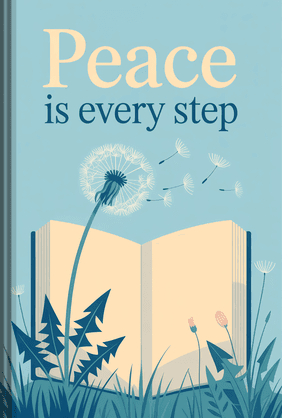
Peace is Every Step
Thich Nhat Hanh
37 Duration8 Key Points4.6 RateFor those busy commutes, another way to invest in your mental well-being is by absorbing powerful ideas when you don't have the energy to read. Instead of scrolling, you can use that time to learn.
Use your commute to listen to 15-minute summaries of bestselling books on mindfulness and personal growth, making it easy to learn on the go.
Download LeapAhead App now
Common Obstacles and How to Overcome Them
Your first few attempts at meditating will likely feel clunky. Here are the most common roadblocks and exactly how to handle them.
"I keep falling asleep."
Meditation is supposed to relax you, but the goal is "relaxed alertness." If you are nodding off, it means you are likely sleep-deprived. Try meditating earlier in the day rather than right before bed. Also, ensure you are sitting up relatively straight, not slouching deeply into a soft couch.
"I have an itch. Can I scratch it?"
Yes, but do not do it automatically. If your nose itches, pause. Notice the sensation of the itch. Often, if you just observe it for ten seconds, the urge will fade. If it becomes unbearable and is completely distracting you, consciously decide to move your hand, scratch it, put your hand back, and immediately return to your breath. The key is making the movement a conscious choice, not a reflex.
"I am too restless to sit still."
If your anxiety is peaking, sitting completely still might feel like a pressure cooker. In this case, try a walking meditation first to burn off some of that kinetic energy, or do some light stretching before you sit down.
For many, this feeling of restlessness is directly tied to underlying stress or anxiety. If this is your main reason for exploring meditation, focusing on practices specifically designed for calming the nervous system can be incredibly effective.
Dealing with restlessness, racing thoughts, and physical discomfort is all part of the journey. The goal is never perfection—it is simply learning how to be present in whatever chaotic or calm state you find yourself in. If you are ready to explore how to fully inhabit your life, regardless of the distractions around you, consider picking up one of the foundational texts on modern mindfulness. It is a brilliant resource for learning to embrace the present moment, exactly as it is.

Wherever You Go, There You Are
Jon Kabat-Zinn
19 Duration8 Key Points4.6 RateFAQ
How long does it take to see the benefits of meditation?
Consistency matters more than duration. You will likely feel a brief sense of calm immediately after your first few sessions. However, the lasting neurological benefits—like reduced baseline anxiety, better focus, and improved emotional regulation—typically start becoming noticeable after two to four weeks of consistent, daily practice.
Consistency matters more than duration. You will likely feel a brief sense of calm immediately after your first few sessions. However, the lasting neurological benefits—like reduced baseline anxiety, better focus, and improved emotional regulation—typically start becoming noticeable after two to four weeks of consistent, daily practice.
Do I need a quiet room to meditate?
While a quiet room is helpful for beginners, it is absolutely not required. The sounds around you—a dog barking, the refrigerator humming, traffic outside—are not enemies of meditation. They are just objects of awareness. If a loud noise happens, notice it, accept it, and return to your breath.
While a quiet room is helpful for beginners, it is absolutely not required. The sounds around you—a dog barking, the refrigerator humming, traffic outside—are not enemies of meditation. They are just objects of awareness. If a loud noise happens, notice it, accept it, and return to your breath.
What if my mind is racing too fast to even focus on one breath?
On days when your stress levels are incredibly high, switch from a silent breath focus to a guided meditation. Hearing someone else's voice giving you gentle instructions gives your brain an external anchor to hold onto, which can temporarily override the internal noise.
On days when your stress levels are incredibly high, switch from a silent breath focus to a guided meditation. Hearing someone else's voice giving you gentle instructions gives your brain an external anchor to hold onto, which can temporarily override the internal noise.
Should I use an app to start?
Apps can be excellent training wheels. Platforms with beginner courses provide structure and guidance. However, do not become reliant on them. The ultimate goal is to know how to drop into a mindful state using only your breath, no matter where you are. Use an app to learn the ropes, but practice sitting in silence at least a few times a week.
Apps can be excellent training wheels. Platforms with beginner courses provide structure and guidance. However, do not become reliant on them. The ultimate goal is to know how to drop into a mindful state using only your breath, no matter where you are. Use an app to learn the ropes, but practice sitting in silence at least a few times a week.