


You are watching your team hit a wall. Deadlines are slipping, enthusiasm is flatlining, and your best performers seem one bad day away from handing in their two weeks' notice. When traditional annual bonuses and office perks stop working, you need a strategy that actually makes people want to show up and do their best work.
Understanding how to motivate employees is not about cheerleading or forced corporate fun. It is about diagnosing the friction in your daily operations and creating an environment where high performance is the natural outcome of how your team operates.
The Foundation: Why the Old Playbook is Dead
For decades, the American corporate standard relied heavily on the "carrot and stick" method. You do the work, you get the paycheck; you miss the target, you get written up. While this transactional approach works for highly repetitive, mechanical tasks, it fails miserably in modern knowledge work.
Today's business environment requires problem-solving, creativity, and critical thinking. When you need your team to navigate complex challenges, purely extrinsic rewards—like a $50 Amazon gift card or the threat of termination—actually narrow focus and stifle innovation.
Effective workplace motivation strategies require a shift toward intrinsic motivation. This means structuring work so that the act of doing the job fulfills basic human psychological needs: the desire to direct our own lives (autonomy), the urge to get better at something that matters (mastery), and the yearning to do what we do in the service of something larger than ourselves (purpose).
If you want to dive deeper into the science behind this shift from "carrot and stick" rewards to intrinsic motivation, Daniel H. Pink’s groundbreaking work is a must-read. He completely breaks down the psychological mechanisms of autonomy, mastery, and purpose that are crucial for today's knowledge workers. It’s an eye-opening resource that will challenge everything you thought you knew about corporate compensation and help you build a workplace where high performers naturally thrive.

Drive
Daniel H. Pink
 24 Duration
 11 Key Points
 4.5 Rate
Of course, understanding why your team seems unmotivated requires a deeper look into the underlying psychology. If you're observing a widespread lack of drive, it's helpful to explore the scientific reasons behind it.

Actionable Strategies for Motivating a Team
You do not need a massive budget to turn a disengaged group into a proactive powerhouse. You need consistency, clarity, and genuine respect for their time and effort. Here is how you execute.
1. Default to Autonomy and Ownership
Micromanagement is the fastest way to kill morale. When you dictate exactly how, when, and where every task must be done, you signal to your employees that you do not trust them.
Instead of managing the process, manage the outcomes. Give your team a clear goal, define the boundaries, and then get out of their way.
- Flexible Work Execution: If an employee delivers exceptional results, it should not matter if they took a two-hour lunch break or adjusted their hours to pick up their kids. Flexibility in how work gets done is a massive driver of loyalty.
- Decision-Making Power: Push decision-making down to the lowest possible level. If a frontline customer service rep can resolve a client issue under $100 without manager approval, let them. Ownership breeds accountability.
Giving up control can be terrifying for managers, especially in high-stakes environments where every dollar and deadline counts. If you are struggling to transition from a top-down micromanager to a leader who empowers their team, former U.S. Navy Captain L. David Marquet offers an incredible blueprint. His story of transforming a poorly performing nuclear submarine crew by pushing leadership and decision-making down the chain of command perfectly illustrates how to foster genuine workplace accountability.
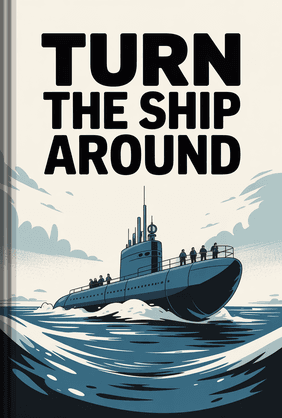
Turn The Ship Around
L. David Marquet
23 Duration10 Key Points4.6 Rate2. Master the Art of Meaningful Recognition
When examining leadership skills, motivation often hinges on how well a manager recognizes their team. A generic "Good job, team!" dropped into a Slack channel on Friday afternoon is lazy. It does not reinforce the specific behaviors you want to see repeated.
To make recognition work, it must be timely, specific, and tied to business impact.
- The SBI Model: Use the Situation, Behavior, and Impact framework. "During the Tuesday client call (Situation), you handled the objection about pricing perfectly (Behavior). It saved the account and secured a six-month renewal (Impact)."
- Public vs. Private: Not everyone wants to be praised in front of the whole company. Some introverted top performers prefer a private note or a quiet word during a 1-on-1. Know your people and tailor your praise.

3. Build Clear Paths for Career Advancement
People rarely quit companies; they quit bad managers and dead-end jobs. If an employee looks at their future in your organization and sees a brick wall, their motivation will drop to zero.
You must show them a clear path forward. This does not always mean a promotion to a management role. Many highly skilled individual contributors have no desire to manage people.
- Skill Development: Fund their growth. Pay for the online certification, buy the management books from Barnes & Noble, or send them to an industry conference.
- Stretch Assignments: Give them projects that force them out of their comfort zone but align with where they want to take their career. If a junior marketing associate wants to learn data analytics, let them shadow the analytics team for five hours a week.
Of course, simply buying books doesn't guarantee they'll be read. For busy professionals, finding the time to get through dense management theory is a major hurdle.


LeapAhead

LeapAhead makes it easier by summarizing key leadership and business books into 15-minute reads or listens, helping your team absorb crucial knowledge on their commute.
4. Connect Daily Labor to the Bigger Picture
It is incredibly difficult to stay motivated if you feel like your work is pointless. Figuring out how to inspire others starts with providing context.
If your team is formatting spreadsheets or writing code modules all day, they need to know why it matters. Connect their daily, tedious tasks to the overarching mission of the company. Show them how their specific code improved the user experience for thousands of customers, or how their financial modeling saved the company enough money to avoid layoffs. Context creates purpose.
Learning how to articulate the overarching mission of your organization isn't always easy, especially if you are bogged down in quarterly metrics and daily fires. To get better at connecting those tedious daily tasks to a larger vision, Simon Sinek’s classic framework is incredibly helpful. It teaches leaders how to communicate with purpose, ensuring that every employee—from the frontline workers to the C-suite—understands the core reason behind what they do and feels inspired to contribute.
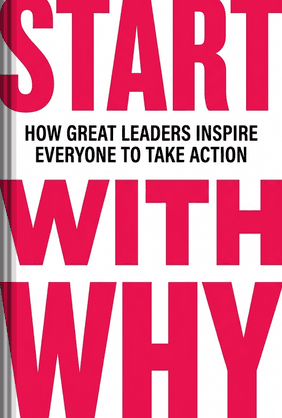
Start with Why
Simon Sinek
45 Duration7 Key Points4.6 RateThe Manager's Mirror: Evaluating Your Own Leadership
A team's energy is a direct reflection of their leader's energy. If you are constantly panicked, visibly stressed, or completely detached, your team will mirror that behavior.
For managers developing their leadership skills, motivation techniques provide the highest return on investment. But you have to set the baseline.
- Protect Their Time: Be a shield for your team. Block unnecessary meetings, fight back against scope creep from other departments, and protect their focus time.
- Run Effective 1-on-1s: Your weekly 1-on-1 is not a status update. It is a dedicated time to clear roadblocks, discuss career trajectory, and check in on their mental bandwidth. Ask direct questions: "What is the most frustrating part of your job right now, and how can I remove that obstacle?"
Mastering those weekly 1-on-1s and learning how to give feedback without destroying morale requires a delicate balance. You have to care about your employees personally while being willing to challenge them directly. Kim Scott’s exceptional guide on being a kick-ass boss without losing your humanity is the perfect resource for managers navigating this tightrope. It will teach you how to build a culture of honest feedback, eliminate passive-aggressive behavior, and become a leader your team actually wants to follow.
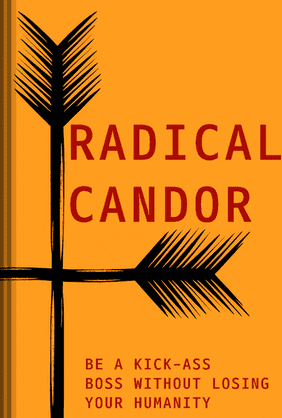
Radical Candor
Kim Scott
19 Duration7 Key Points4.6 RateRemember, a manager's consistent energy sets the tone for the entire team. To lead effectively, you must first master your own drive and discipline.
Red Flags: What Demotivates a Team?
Even the best motivation strategies will fail if you are simultaneously pouring water on the fire. Avoid these toxic leadership habits at all costs:
- Moving the Goalposts: Changing targets without communicating the why breaks trust. If the strategy pivots, explain the business reality behind it immediately.
- Stealing Credit: If the project succeeds, the team did it. If the project fails, the manager takes the hit. Reversing this rule will destroy your credibility overnight.
- Tolerating Brilliant Jerks: Allowing a high performer to treat their colleagues poorly sends a message that performance excuses toxicity. This will drain the motivation from everyone else in the room.
- Hustle Culture Hypocrisy: Expecting your team to answer emails at 10 PM while you take unlimited PTO is a recipe for resentment. Model the boundaries you want them to keep.

Motivating a workforce is an ongoing process of alignment. By treating your employees as capable adults, removing unnecessary friction, and directly connecting their effort to meaningful outcomes, you build a resilient, self-driven team that requires far less management and delivers far more value.
The leadership books mentioned throughout this article offer powerful frameworks, but making time to read them all can be a challenge for any manager.
LeapAhead
To get the core insights from books like Drive and Radical Candor quickly, an app like LeapAhead can help you learn the key ideas in just 15 minutes a day.
FAQ
How do you motivate a burned-out employee?
Burnout cannot be fixed with motivation; it requires recovery. First, acknowledge the burnout. Temporarily reduce their workload, assist in prioritizing tasks, and mandate they use their PTO to disconnect completely. Once they are rested, re-engage them by focusing on tasks that align with their core strengths and interests, rather than just piling on more work.
Is money the best way to motivate employees?
Money is a baseline requirement, not a long-term motivator. If you pay people below market rate, they will be demotivated regardless of your leadership. However, once you pay them fairly and take the issue of money off the table, throwing more cash at them yields diminishing returns. Autonomy, respect, and growth opportunities become much stronger drivers of daily engagement.
How often should I give feedback to keep my team motivated?
Feedback should be continuous. Do not wait for the annual performance review to tell someone they are doing a great job or need to adjust their approach. Offer micro-feedback weekly during 1-on-1s or immediately after a major project milestone. Frequent, low-stakes feedback normalizes the process and keeps the team aligned and motivated in real time.