

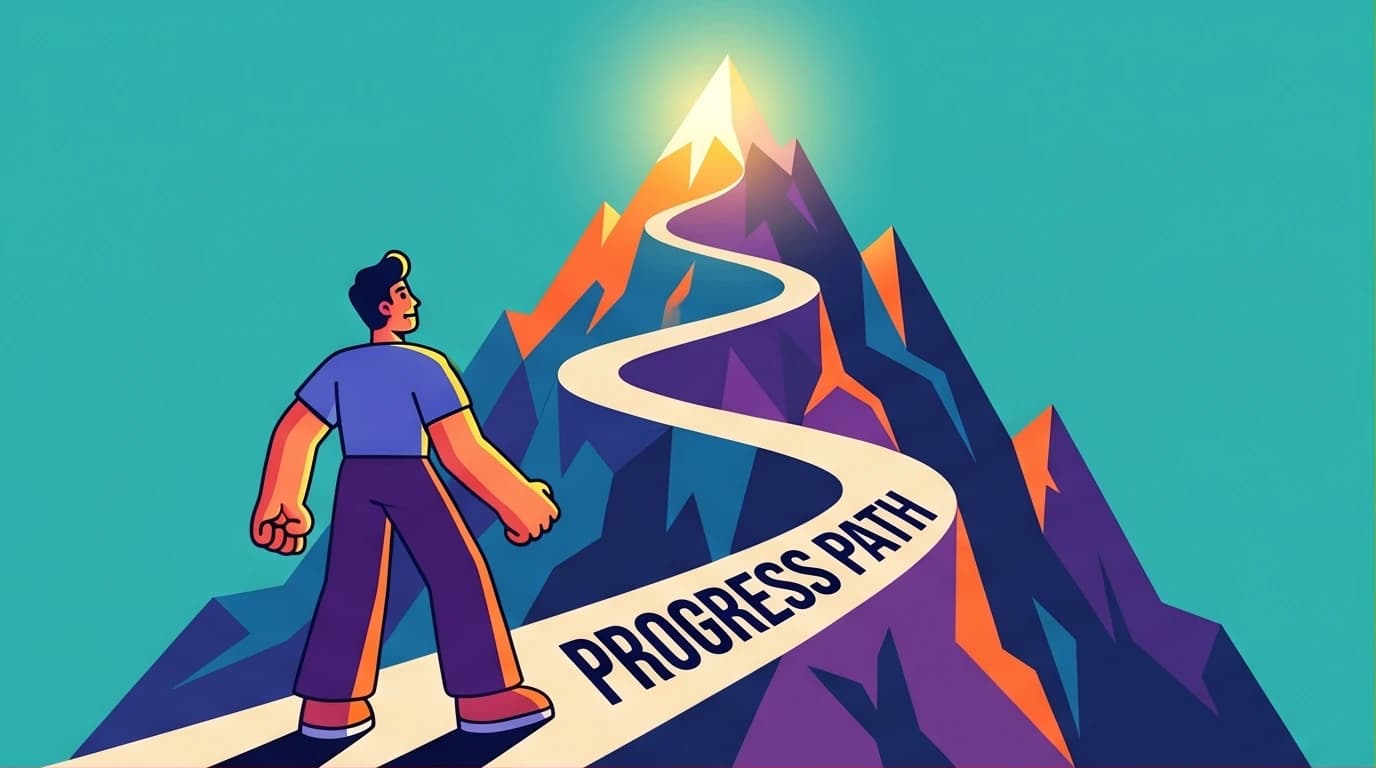
You set a strict budget, then immediately blow it on an Amazon shopping spree. You finally land a healthy relationship, only to pick fights over things that do not matter. You have a massive project due, but you scroll social media until 2 AM.
You are not stupid, and you are not inherently lazy. You are simply stuck in a loop of self-sabotage. You know exactly what you need to do to succeed, yet you consistently make choices that guarantee you fail. This is the exact moment you need to stop beating yourself up and start looking at the mechanics of your mind. Let’s break down exactly how to stop self sabotage and take back control of your life.
What is Subconscious Self Sabotage?
Self-sabotage is not a character flaw. It is a misguided bodyguard.
At its core, subconscious self sabotage occurs when your conscious goals clash with your subconscious fears. You consciously want to lose 20 pounds, get the promotion, or write a book. But your subconscious mind views the changes required to achieve those goals as a threat.
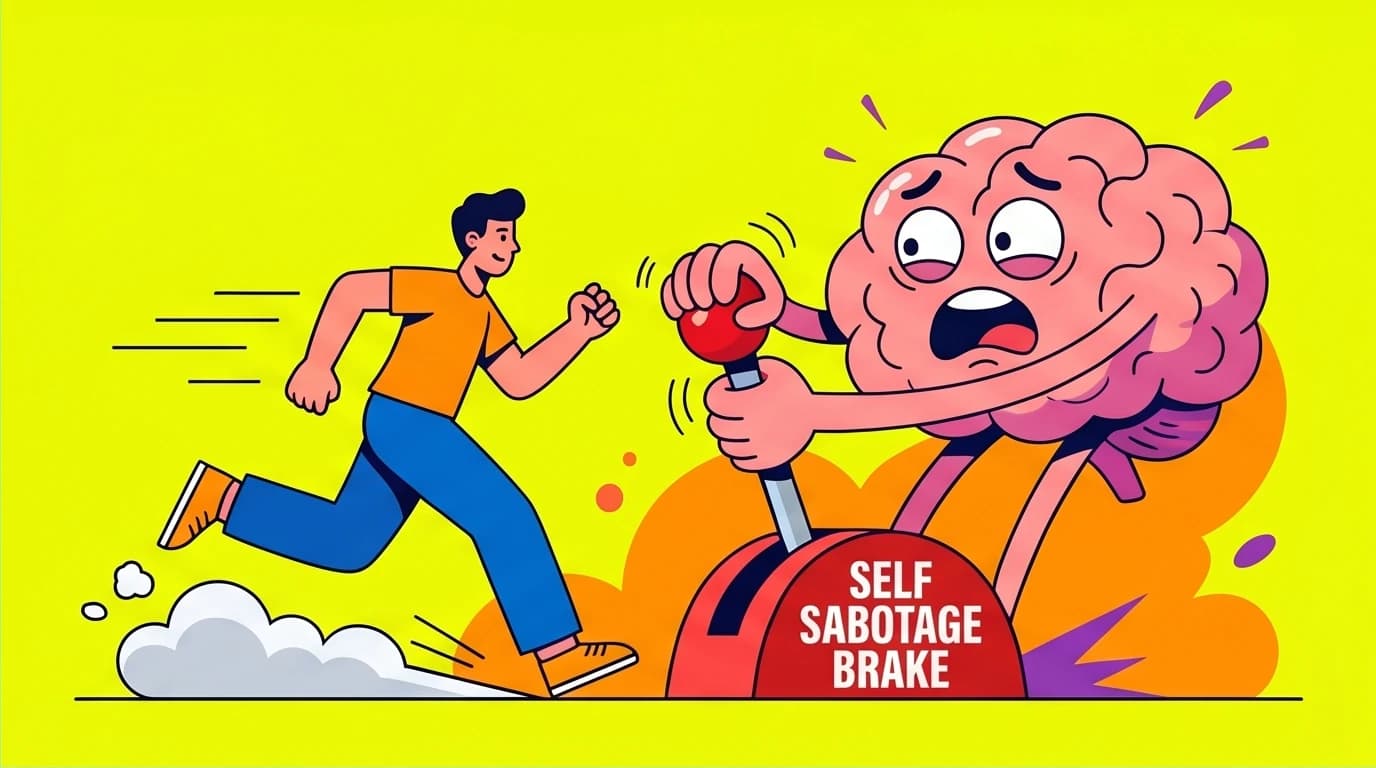
Your brain prefers the familiar, even if the familiar is miserable. Success brings new responsibilities, the risk of failure, and the vulnerability of being truly seen. To keep you "safe" in your familiar comfort zone, your brain triggers behaviors designed to derail your progress. It acts as an emergency brake just as you start gaining momentum.
Until you realize that your toxic habits are just coping mechanisms designed to soothe anxiety, you will never break the cycle.
The Mountain Is You: Self Sabotage Signs to Watch For
You cannot fix an issue you refuse to acknowledge. According to the core concepts in Brianna Wiest’s hit book The Mountain Is You, self sabotage signs are rarely as obvious as simply quitting. They usually wear clever disguises. For a more detailed breakdown of the book's core arguments and chapter-by-chapter insights, exploring a summary can be incredibly helpful.
Look at this list and identify which strategies your brain uses to keep you small:
- Perfectionism: You refuse to launch your business, publish your website, or hand in a project because it is not "perfect" yet. Perfectionism is not about high standards; it is a shield you use to avoid criticism. If you never finish, you can never be judged.
- Procrastination: You wait for the "right mood" or the "right time" to start. Procrastination is not laziness; it is emotional dysregulation. You are avoiding the task because it triggers feelings of incompetence or anxiety.
- Upper-Limiting: Coined by Gay Hendricks and highly relevant to this topic, this is when you hit your maximum tolerance for happiness. If things are going too well, you unconsciously create drama—like picking a fight with your partner or making a reckless financial decision—to bring your baseline back down to a familiar level of stress.
- Numbing: Using alcohol, binge-eating, endless scrolling, or hyper-fixating on other people's drama to avoid sitting alone with your own thoughts and feelings.
- Over-committing: Saying yes to every project, favor, and social event. You pack your schedule so tight that you inevitably drop the ball, giving yourself a built-in excuse for why you could not achieve your actual goals.
If you resonated with the concept of upper-limiting mentioned above, it’s worth diving deeper into the exact mechanics of why we cap our own happiness. Gay Hendricks coined this term in his groundbreaking work that explores how we subconsciously manufacture roadblocks just as we reach new levels of success. Uncovering your hidden upper limit is often the missing key to finally breaking through your self-imposed ceiling.
The Big Leap
Gay Hendricks
 17 Duration
 7 Key Points
 4.7 Rate
The Root Cause: Why We Ruin Our Own Lives
Why do we build these mountains in front of ourselves?
Usually, it comes down to unresolved trauma and a lack of emotional processing skills. At some point in your life, you experienced a situation that overwhelmed your nervous system. To survive it, you developed a coping mechanism.
Maybe you grew up in a chaotic household, so you learned to stay quiet and invisible to avoid conflict. Now, as an adult, that same coping mechanism prevents you from speaking up in meetings or asking for a raise. What once saved you is now suffocating you.
Your inner mountain is made of accumulated trauma, outdated beliefs, and unprocessed pain. Overcoming it requires you to stop ignoring the mountain and start climbing it.
Understanding that self-sabotage is often a trauma response rather than a lack of willpower can be incredibly liberating. To truly dismantle these outdated survival mechanisms, you have to look at how past pain physically wires itself into your nervous system. For anyone wanting to explore the deep connection between unprocessed trauma and chronic behavioral loops, there is an authoritative resource that explains exactly how our bodies hold onto the past—and how we can safely release it.
The Body Keeps The Score
Bessel Van Der Kolk
32 Duration10 Key Points4.5 Rate
How to Overcome Self Sabotage
Learning how to overcome self sabotage is not about forcing yourself to have more willpower. Willpower is a finite resource; it will always run out when you are tired, hungry, or stressed. You need a systemic shift in how you process fear.
Here is the direct, step-by-step approach to dismantling your destructive patterns.
1. Identify the Payoff
Every self-sabotaging behavior has a hidden payoff. If you chronically procrastinate, your payoff might be the temporary relief from the pressure of doing the work. If you push away a loving partner, your payoff is avoiding the devastating pain of potentially being abandoned later.
Ask yourself directly: What does this bad habit protect me from? Once you name the fear, it loses half its power.
Ask yourself directly: What does this bad habit protect me from? Once you name the fear, it loses half its power.
2. Feel the Feelings You Are Running From
Self-sabotage is essentially an avoidance strategy. You are running away from an uncomfortable emotion—usually fear, shame, or grief.
Next time you feel the urge to derail yourself (e.g., reaching for your phone instead of working, or opening the fridge when you are not hungry), set a timer for two minutes. Sit perfectly still. Do not act on the urge. Just feel the physical sensation of the anxiety in your body. Notice how your chest tightens or your stomach drops. Let the wave of emotion crash over you. You will quickly realize that an emotion cannot kill you, and you do not need to sabotage yourself to escape it.
Next time you feel the urge to derail yourself (e.g., reaching for your phone instead of working, or opening the fridge when you are not hungry), set a timer for two minutes. Sit perfectly still. Do not act on the urge. Just feel the physical sensation of the anxiety in your body. Notice how your chest tightens or your stomach drops. Let the wave of emotion crash over you. You will quickly realize that an emotion cannot kill you, and you do not need to sabotage yourself to escape it.
3. Change Your Self-Concept
You act in accordance with who you believe you are. If you internally identify as "a procrastinator," "a mess," or "someone who is bad with money," your brain will execute behaviors to prove that identity correct.
You must intentionally upgrade your self-concept. Stop saying, "I am a procrastinator." Start saying, "I am someone who is learning to take action."
You must intentionally upgrade your self-concept. Stop saying, "I am a procrastinator." Start saying, "I am someone who is learning to take action."
Upgrading your self-concept and understanding your inner resistance are foundational steps. If you want to master these concepts and stop standing in your own way, Brianna Wiest’s acclaimed book—which inspired many of the core ideas in this article—is an absolute must-read. It beautifully breaks down why we act against our own best interests and provides actionable strategies for stepping out of your own way to reach your true potential.

The Mountain Is You
Brianna Wiest
41 Duration7 Key Points4.6 RateThe Mountain Is You Exercises: Rewiring Your Brain
Theory is useless without execution. To fundamentally change your behavior, you need to put pen to paper and do the work. Implement these specific The Mountain Is You exercises into your daily routine to rewire your neural pathways.
Exercise 1: The "Future Self" Audit
Buy a cheap notebook from Barnes & Noble or Amazon and dedicate it solely to this work.
Draw a line down the middle of a page. On the left side, write down the exact behaviors of your current self-sabotaging persona. Be brutally honest. (e.g., "I sleep in until 9 AM, I eat junk food when I get stressed, I ignore my credit card bills.")
On the right side, write down the exact behaviors of the highest version of yourself—the person who has already achieved the goals you want. (e.g., "I wake up at 6 AM, I meal prep on Sundays, I track my expenses in a spreadsheet.")
Draw a line down the middle of a page. On the left side, write down the exact behaviors of your current self-sabotaging persona. Be brutally honest. (e.g., "I sleep in until 9 AM, I eat junk food when I get stressed, I ignore my credit card bills.")
On the right side, write down the exact behaviors of the highest version of yourself—the person who has already achieved the goals you want. (e.g., "I wake up at 6 AM, I meal prep on Sundays, I track my expenses in a spreadsheet.")
Your job is no longer to focus on the massive gap between the two. Your job is to pick one single behavior from the right column and execute it tomorrow.
Exercise 2: Trigger Tracking
You cannot intercept a pattern if you do not know when it starts. For the next seven days, track every time you engage in your self-sabotaging habit.
Write down:
Write down:
- The Time: 2:15 PM
- The Sabotage: Scrolled TikTok for 45 minutes instead of writing my report.
- The Trigger: I looked at the blank page and felt stupid.
- The Root Emotion: Fear of failure.
After a week, you will see a glaringly obvious pattern. You will realize that you do not have a time management problem; you have an emotional management problem triggered by specific tasks.
Exercise 3: The Micro-Shift Strategy
Self-saboteurs love grand gestures. They want to overhaul their entire life overnight. They throw out all the junk food, buy a $200 planner, and swear they will work out seven days a week. That is a recipe for a massive crash.
Instead, practice the Micro-Shift. Make the smallest possible positive choice.
If your goal is to organize your house, do not try to clean the entire garage. Organize one single drawer.
If you want to run five miles, just put on your shoes and walk to the end of the driveway.
Micro-shifts bypass the brain's alarm system. Because the task is so small, your subconscious does not perceive it as a threat, allowing you to build consistency without triggering a sabotage response.
If your goal is to organize your house, do not try to clean the entire garage. Organize one single drawer.
If you want to run five miles, just put on your shoes and walk to the end of the driveway.
Micro-shifts bypass the brain's alarm system. Because the task is so small, your subconscious does not perceive it as a threat, allowing you to build consistency without triggering a sabotage response.
The micro-shift strategy proves that massive success doesn't come from radical, overnight overhauls—it comes from tiny, consistent changes that compound over time. If you want to master the art of making good habits inevitable and bad habits impossible, James Clear's framework is the gold standard. It provides a highly practical, science-backed system for rewiring your daily routines without triggering your brain's internal alarm system.

Atomic Habits
James Clear
26 Duration8 Key Points4.7 RateIf the thought of adding four more dense books to your reading list feels like its own form of self-sabotage, there's a more manageable way to start. You can absorb the core principles from these authors in minutes, not months.


Get the key insights from books like *The Mountain Is You* and *Atomic Habits* in 15-minute audio summaries, making it easier to learn and grow even on your busiest days.
 LeapAhead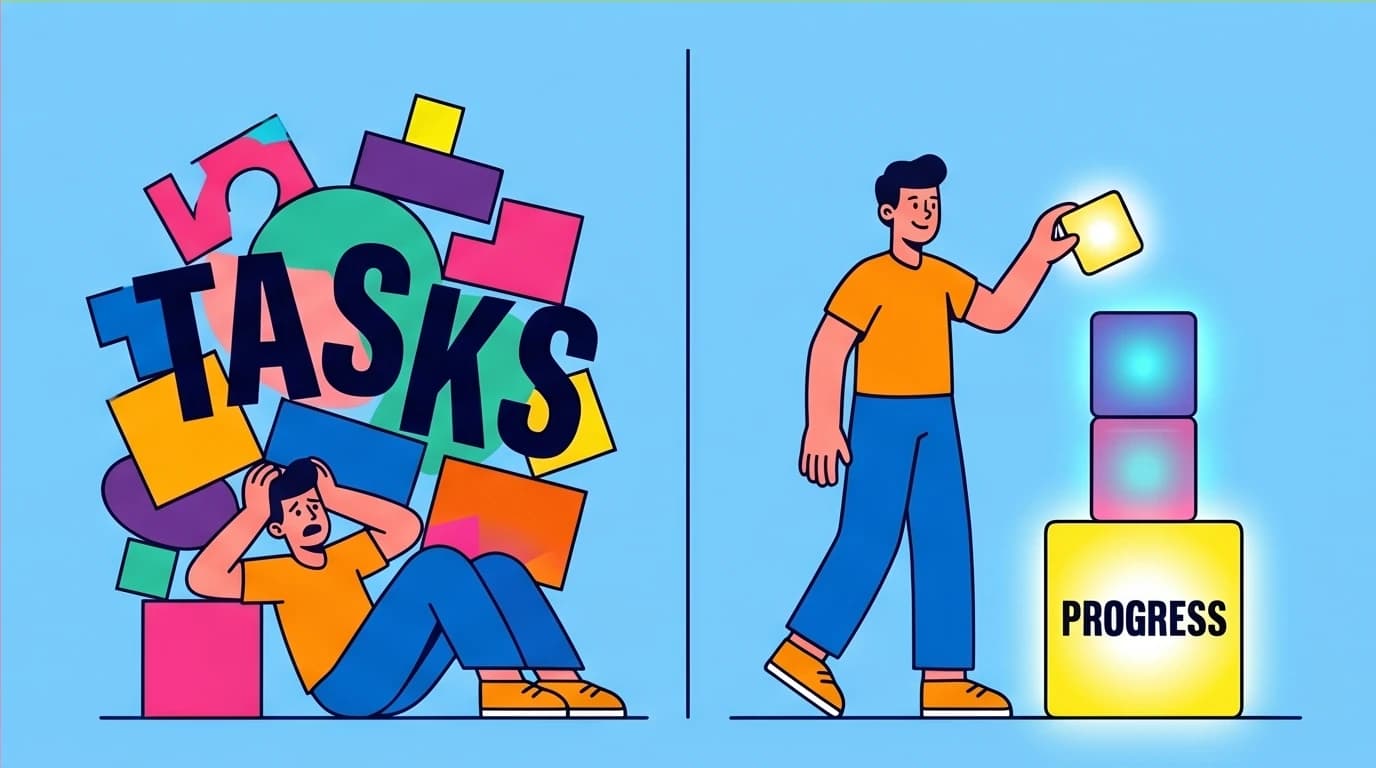
For those looking to build a library of transformative books, the journey doesn't have to stop here. Once you've internalized the lessons on overcoming your inner mountain, you might be looking for your next great read.
Doing the Hard Work
No one is coming to save you. You are the one who built the mountain, which means you are the only one equipped to climb it.
Stopping self-sabotage is not a daily practice of choosing your long-term goals over your short-term comfort. It requires you to sit in the fire of your own anxiety and refuse to flinch. When you finally stop fighting yourself, you redirect all that wasted energy toward building a life you actually want to live.
FAQ
Why do I subconsciously sabotage my relationships?
Most relationship sabotage stems from a deep-seated fear of vulnerability or a core belief that you are unworthy of love. If you secretly believe the relationship will inevitably fail, your brain will push the other person away to control the narrative. You ruin it first so you do not have to wait in anxiety for them to leave you.
Most relationship sabotage stems from a deep-seated fear of vulnerability or a core belief that you are unworthy of love. If you secretly believe the relationship will inevitably fail, your brain will push the other person away to control the narrative. You ruin it first so you do not have to wait in anxiety for them to leave you.
How long does it take to stop self-sabotaging?
There is no fixed timeline, but you can interrupt a specific sabotaging behavior in a matter of seconds by catching the trigger. Rewiring the underlying belief system usually takes consistent effort over a few months. Remember, you spent decades building these defensive habits; it will take time to dismantle them.
There is no fixed timeline, but you can interrupt a specific sabotaging behavior in a matter of seconds by catching the trigger. Rewiring the underlying belief system usually takes consistent effort over a few months. Remember, you spent decades building these defensive habits; it will take time to dismantle them.
Is self-sabotage a trauma response?
Yes, in many cases, it is a highly evolved trauma response. Behaviors that look destructive today were often necessary survival tactics in your past. For example, people-pleasing and suppressing your own needs might have kept you safe in a volatile childhood environment, even though those same traits are sabotaging your adult career.
Yes, in many cases, it is a highly evolved trauma response. Behaviors that look destructive today were often necessary survival tactics in your past. For example, people-pleasing and suppressing your own needs might have kept you safe in a volatile childhood environment, even though those same traits are sabotaging your adult career.
Can I overcome self-sabotage entirely on my own?
While self-guided tools, exercises, and books like The Mountain Is You are incredibly effective for daily maintenance and awareness, severe self-sabotage rooted in deep trauma often requires professional help. Working with a licensed therapist or a specialized coach can provide the safe environment necessary to process the root emotions you are avoiding.
While self-guided tools, exercises, and books like The Mountain Is You are incredibly effective for daily maintenance and awareness, severe self-sabotage rooted in deep trauma often requires professional help. Working with a licensed therapist or a specialized coach can provide the safe environment necessary to process the root emotions you are avoiding.