


For decades, pop culture has reduced one of Hollywood's greatest stars to a wire hanger punchline. If you are trying to find the real woman behind the sensationalism, sifting through endless rumors and biased accounts is exhausting. You want facts, historical accuracy, and a clear picture of her legendary resilience without the Hollywood spin.
The Joan Crawford True Story: Escaping Poverty

To understand the icon, you have to look at where she started. Joan Crawford was not born into Hollywood royalty. She had no family connections, no wealth, and no safety net.
The Harsh Reality of Joan Crawford's Early Life
Born Lucille Fay LeSueur in San Antonio, Texas, in the early 1900s, her childhood was defined by abandonment and severe financial struggle. Her biological father left before she was born. Her mother relocated the family to Lawton, Oklahoma, marrying a theater manager named Harry Cassin. For a brief period, young Lucille enjoyed access to the stage, igniting a quiet ambition.
That stability shattered quickly. The family fell into extreme poverty. To pay for her education at St. Agnes Academy in Kansas City, she scrubbed floors, cooked, and cleaned for the other students. She was essentially a servant disguised as a student. This grueling physical labor forged an ironclad work ethic and a deep-seated fear of poverty that would drive her entire career.
She turned to dance as an escape. Winning local Charleston contests provided a meager income, eventually landing her chorus line gigs in Chicago and Detroit. She danced in freezing theaters, saved every dime, and eventually caught the eye of a producer who brought her to Broadway. In 1925, Metro-Goldwyn-Mayer (MGM) offered her a screen test. She packed her few belongings and took a train to California. Lucille LeSueur was dead. Joan Crawford was about to be born.
Joan Crawford’s harrowing childhood is a testament to how surviving extreme poverty can forge a lifelong, unshakable work ethic. If you are captivated by true stories of people who overcome deeply dysfunctional upbringings and rely entirely on their own grit to build successful lives, you might appreciate exploring other powerful memoirs of survival. Jeannette Walls's critically acclaimed memoir perfectly captures the complex emotional toll—and the extraordinary resilience—required to rise above a chaotic, impoverished childhood.
The Glass Castle
Jeannette Walls
 43 Duration
 9 Key Points
 4.6 Rate
The Hollywood Climb and Masterful Reinvention
At MGM, she was just another stock player earning $75 a week. The studio didn't see her as a leading lady. Instead of waiting for a break, she manufactured one. She entered every dance competition in Los Angeles, networked relentlessly, and demanded better roles.
Her breakthrough came in the 1928 silent film Our Dancing Daughters. She captured the restless, ambitious spirit of the 1920s flapper. When sound arrived and destroyed the careers of many silent film stars, Crawford took elocution lessons, lowered her voice, and transformed into a dramatic actress.
She survived the 1930s by playing working-class women who fought their way to the top—roles that closely mirrored her own life. When theater owners labeled her "Box Office Poison" in 1938, most actresses would have faded into obscurity. Crawford bought her way out of her MGM contract. She walked onto the Warner Bros. lot, swallowed her pride, and tested for a role another actress had turned down. That movie was Mildred Pierce (1945). It won her the Academy Award for Best Actress.
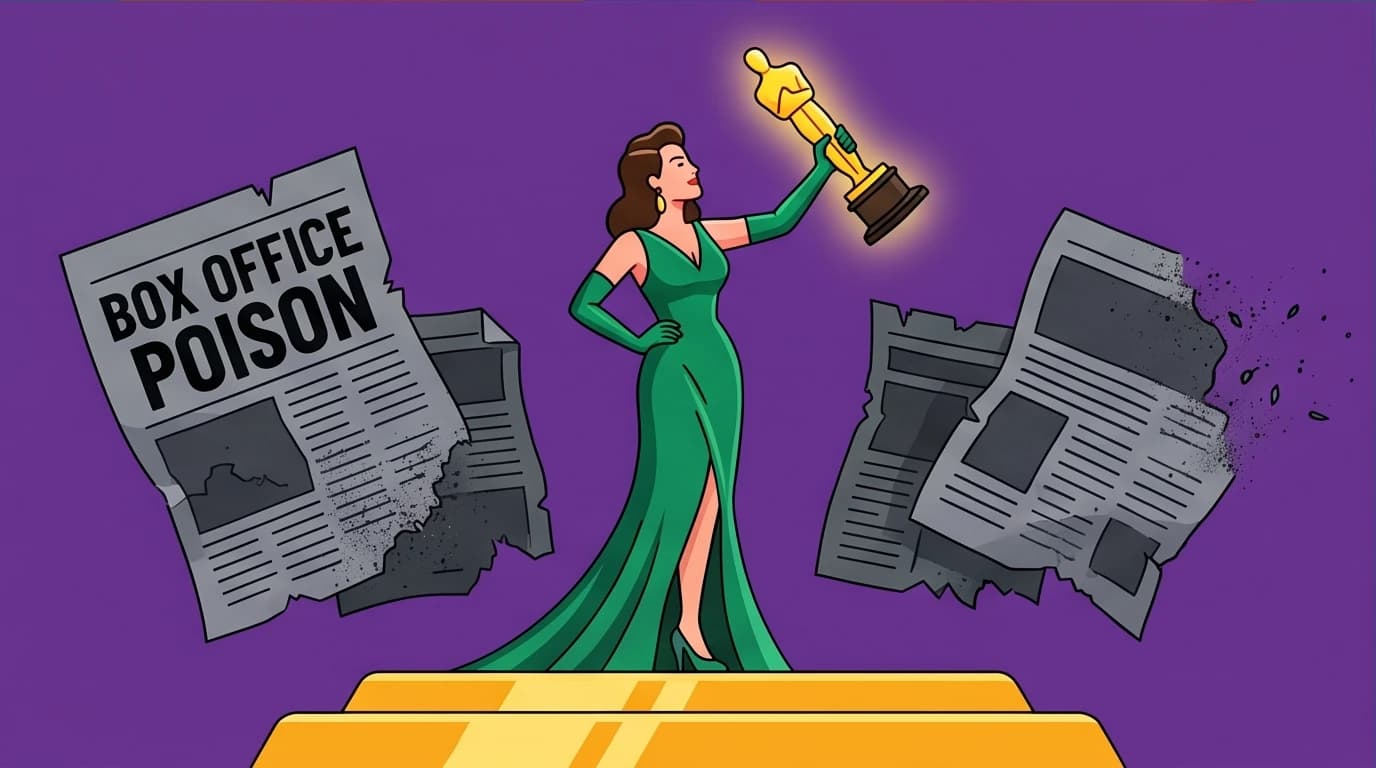
Crawford’s strategic reinvention—from her calculated networking at local Los Angeles dance clubs to buying out her own studio contract—proves just how ruthlessly a woman had to operate to survive Old Hollywood. If you love diving into the glittering, cutthroat world of the Golden Age studio system, there is some incredible fiction that captures this exact energy. For a captivating look at what it took for ambitious female stars to build and protect their empires behind closed doors, this beloved novel is a phenomenal companion read.
The Seven Husbands of Evelyn Hugo
Alma Cuervo, Julia Whelan, et al.
22 Duration8 Key Points4.1 RateThe Best Joan Crawford Books for History Buffs
If you want to bypass the gossip and dig into the actual history, picking the right book is critical. The market is flooded with unauthorized accounts and sensationalized cash-grabs. For biography readers and history buffs, you need well-researched texts that rely on studio archives, primary sources, and verified historical records.
Here is a curated breakdown of the best Joan Crawford books to add to your reading list. You can easily find these titles on Amazon, Barnes & Noble, or listen to them on Audible.
1. Possessed: The Life of Joan Crawford by Donald Spoto
If you only read one Joan Crawford biography, make it this one. Donald Spoto is a respected celebrity biographer known for heavy archival research.
- Why it matters: Spoto actively dismantles many of the myths surrounding her personal life. He focuses heavily on her psychological drive, framing her actions within the context of her traumatic early life.
- What you learn: The book provides excellent details on studio politics. It shows exactly how Crawford negotiated her contracts, handled studio boss Louis B. Mayer, and navigated a male-dominated industry with sharp business acumen.
2. Joan Crawford: The Essential Biography by Lawrence J. Quirk and William Schoell
Readers looking for a deep dive into film history should start here.
- Why it matters: This book centers entirely on her craft. Many books about Joan Crawford focus too much on her marriages or her adopted children. Quirk and Schoell remind the reader that Crawford was, first and foremost, a wildly successful actress who starred in over 80 films.
- What you learn: You get a masterclass in Hollywood's Golden Age production system. The authors break down her acting technique, her transition from silent films to talkies, and her late-career pivot to horror in films like What Ever Happened to Baby Jane?.
3. Not the Girl Next Door: Joan Crawford, A Personal Biography by Charlotte Chandler
For those who want a more intimate, conversational approach to history.
- Why it matters: Chandler relies on extensive personal interviews she conducted with Crawford during the later years of the actress's life.
- What you learn: You hear Crawford's own perspective on her struggles, her rivalries (including the highly publicized feud with Bette Davis), and her relentless pursuit of perfection. It serves as an excellent counter-narrative to the negative press she received posthumously.
4. A Portrait of Joan: The Autobiography of Joan Crawford (with Jane Kesner Ardmore)
For primary source material, her 1962 autobiography is mandatory reading.
- Why it matters: While you must read it with the understanding that it is a carefully curated self-portrait, it offers incredible insight into how Crawford wanted the world to see her.
- What you learn: She speaks candidly about her absolute devotion to her fans. She spent hours every week answering fan mail, a practice she maintained until her death. It showcases her understanding of branding long before the term became corporate jargon.
With such a rich reading list, it can feel daunting to get through all of them. If you want to grasp the core insights from these dense biographies without dedicating weeks to reading, a book summary app can be a great solution.


Get the key ideas from these definitive biographies and other historical bestsellers in minutes, perfect for understanding complex figures when you're short on time.
 LeapAhead
Separating Fact from Fiction: The "Mommie Dearest" Dilemma

No discussion of a Joan Crawford biography is complete without addressing the 1978 publication of Mommie Dearest by her adopted daughter, Christina Crawford. The book portrayed Joan as an abusive, erratic alcoholic. The subsequent 1981 film adaptation starring Faye Dunaway cemented this caricature in the American public's mind.
History requires context. When evaluating the Joan Crawford true story, serious historians urge readers to look at multiple sources.
Many of Crawford's contemporaries, including close friends, co-stars like Myrna Loy, and her two younger adopted daughters (Cathy and Cindy), vehemently denied Christina's accounts. They described a strict but loving mother who expected discipline—a trait entirely consistent with a woman who had to claw her way out of poverty.
Whether the allegations are true, partially true, or entirely fabricated, letting them eclipse a 50-year career of unprecedented success does a disservice to film history. Serious readers read past the scandal to study the strategy. Crawford was a pioneer for women in business. She eventually sat on the board of directors for Pepsi-Cola, breaking corporate glass ceilings in the 1950s and 60s. That resilience is the real story worth studying.
The explosive controversy surrounding Mommie Dearest continues to spark larger conversations about complex family dynamics, generational trauma, and the psychological impact of strict, demanding parenting styles. Whether you believe Christina Crawford's account or side with Joan's defenders, the fascination with their fractured mother-daughter relationship is undeniable. If you want to better understand the deep, lingering effects of complicated parental relationships and how childhood trauma manifests in adulthood, this highly recommended psychological guide offers incredible insight and healing strategies.

Adult Children of Emotionally Immature Parents
Lindsay C. Gibson, Psy.D.
39 Duration8 Key Points4.6 RateIf you're inspired by Crawford's story and want to build your own skills in business, leadership, and personal resilience, finding the time to learn can be the biggest hurdle. For a modern way to absorb these powerful concepts, microlearning apps offer a practical path forward.
Learn the key lessons from bestselling books on business strategy, resilience, and leadership in just 15-minute audio or text sessions on your commute.
LeapAheadFAQ
What is the most historically accurate Joan Crawford biography?
Possessed: The Life of Joan Crawford by Donald Spoto is widely considered the most thoroughly researched and historically objective biography. Spoto relies heavily on verified studio archives rather than hearsay.
Possessed: The Life of Joan Crawford by Donald Spoto is widely considered the most thoroughly researched and historically objective biography. Spoto relies heavily on verified studio archives rather than hearsay.
What was Joan Crawford's early life like before Hollywood?
Her early life was characterized by severe poverty. Born in Texas and raised in Oklahoma and Missouri, she had no industry connections. She paid for her boarding school tuition by working grueling hours scrubbing floors and doing laundry, eventually escaping via local dance competitions.
Her early life was characterized by severe poverty. Born in Texas and raised in Oklahoma and Missouri, she had no industry connections. She paid for her boarding school tuition by working grueling hours scrubbing floors and doing laundry, eventually escaping via local dance competitions.
Did Joan Crawford write her own autobiography?
Yes. In 1962, she released A Portrait of Joan, co-written with Jane Kesner Ardmore. She later published a lifestyle and etiquette book in 1971 titled My Way of Life, which offers fascinating insight into her rigid standards for fashion, entertaining, and public appearance.
Yes. In 1962, she released A Portrait of Joan, co-written with Jane Kesner Ardmore. She later published a lifestyle and etiquette book in 1971 titled My Way of Life, which offers fascinating insight into her rigid standards for fashion, entertaining, and public appearance.
Are there good books about Joan Crawford's business career with Pepsi?
While most biographies cover her corporate era in their final chapters, Possessed offers solid details on how she became the first female director on Pepsi-Cola's board after the death of her fourth husband, Pepsi executive Alfred Steele, and how she vigorously promoted the brand globally.
While most biographies cover her corporate era in their final chapters, Possessed offers solid details on how she became the first female director on Pepsi-Cola's board after the death of her fourth husband, Pepsi executive Alfred Steele, and how she vigorously promoted the brand globally.