

Reading about someone else’s childhood nightmare often brings an unsettling sense of recognition. You pick up a book expecting a Hollywood expose, but instead, you find a terrifyingly accurate mirror of your own living room. Growing up with a parent who demands absolute perfection while delivering unpredictable chaos leaves a lifelong psychological scar. For those raised in the shadow of a parent whose public persona drastically contradicted their private rage, Christina Crawford's experience feels painfully familiar. This isn't just about celebrity gossip. It is a masterclass in recognizing and surviving severe psychological abuse.
Christina Crawford Book Summary: Shattering the Perfect Illusion
Most traditional reviews treat this memoir as a scandalous takedown of a Hollywood legend. A true psychological Christina Crawford book summary requires looking past the glamour of MGM studios and focusing on the systemic abuse detailed on every page. Published in 1978, the book broke a massive cultural taboo. It was one of the first times a child of a powerful public figure openly detailed severe parental abuse, shifting the cultural conversation around family privacy and child welfare.
Christina recounts her adoption by Joan Crawford not as an act of maternal love, but as a calculated public relations maneuver. The memoir chronicles Christina’s life from early childhood through young adulthood, detailing relentless physical punishments, sleep deprivation, emotional manipulation, and financial control. The narrative reveals a home functioning like a totalitarian regime. Love was never freely given; it was a transactional currency used to secure compliance and feed the mother's ego.
By documenting the sheer unpredictability of her mother's moods, Christina provides a definitive survival narrative. She dismantled the myth of the "perfect mother" and gave a voice to millions of children silently enduring similar torments behind closed doors.
Joan Crawford Narcissistic Mother: The Psychological Profile
To understand the environment Christina grew up in, we have to look at the clinical markers of Narcissistic Personality Disorder (NPD) operating unchecked. The Joan Crawford narcissistic mother dynamic is a textbook example of how severe cluster-B personality traits manifest in parenting.
Children as PR Props

For a narcissistic parent, children are not independent human beings with their own needs, boundaries, and emotions. They are extensions of the parent’s ego. Joan adopted Christina and her brother Christopher largely to soften her public image and compete with other Hollywood stars who were settling down. When Christina looked cute for the cameras, Joan played the doting mother. The moment the cameras stopped rolling, Christina was shoved aside or punished for existing outside the script.
The Dr. Jekyll and Mr. Hyde Dynamic
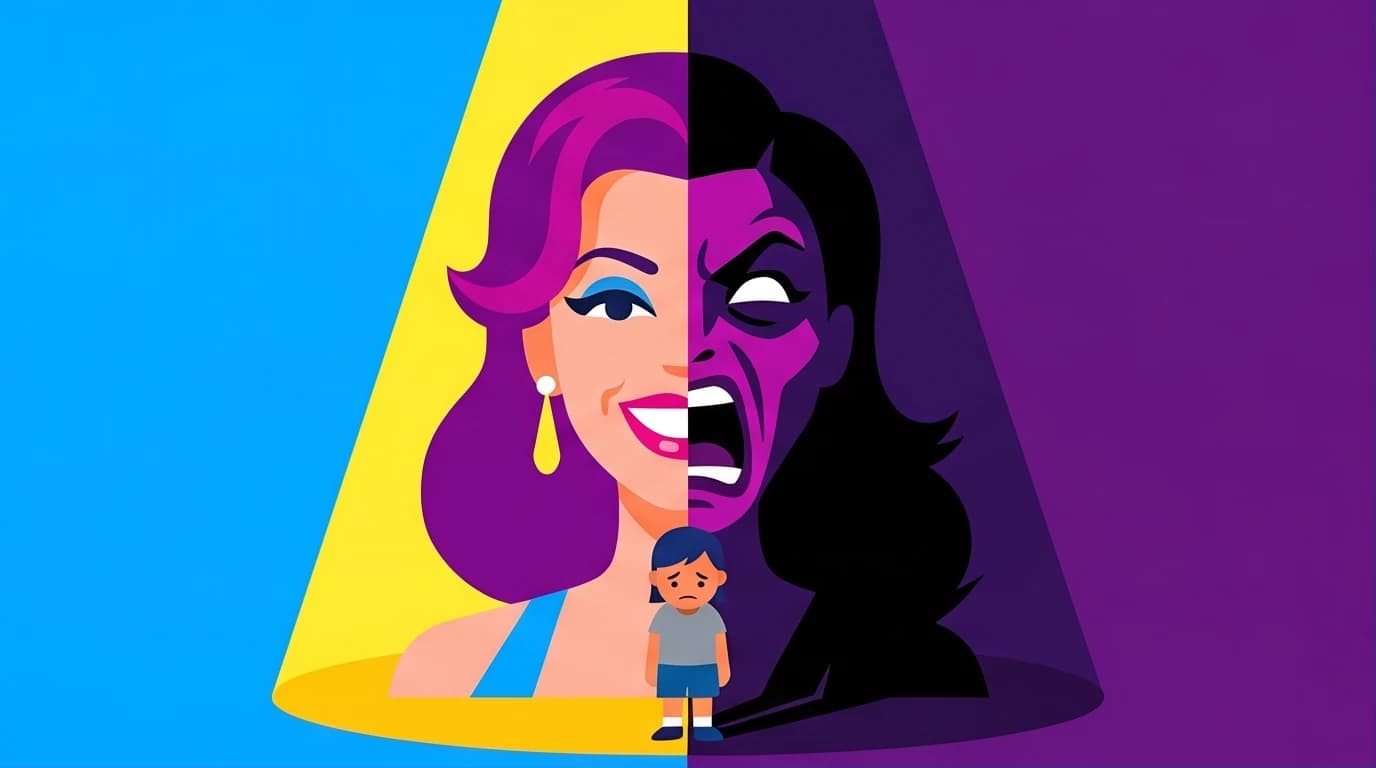
Narcissistic abusers are masters of image crafting. Joan cultivated a meticulous public reputation as a generous, hardworking, and devoted mother. This stark contrast between public adoration and private tyranny creates severe cognitive dissonance for the child. When the rest of the world tells you your mother is an angel, you inevitably internalize the belief that her behind-closed-doors abuse must be your fault.
Absolute Control and Enmeshment
Joan demanded total enmeshment. Any sign of Christina developing her own identity, preferences, or friendships was perceived as a direct threat to Joan’s authority. This resulted in extreme reactions to minor infractions. The narcissistic parent requires absolute psychological submission, and when they feel their control slipping, they escalate their aggression to terrifying heights.
This need for dominance and control wasn't limited to her private life; it famously fueled one of Hollywood's most notorious feuds.
If you recognize this pattern of enmeshment and emotional volatility in your own upbringing, it can be incredibly validating to understand the clinical mechanics behind it. For readers trying to make sense of a parent whose emotional age seemed dangerously stunted, Lindsay C. Gibson's groundbreaking work provides deep clarity on how to navigate these relationships without losing your own identity.
Adult Children of Emotionally Immature Parents
Lindsay C. Gibson, Psy.D.
 39 Duration
 8 Key Points
 4.6 Rate
Real-World Toxic Parenting Examples from the Memoir
Abstract psychological concepts become visceral when looking at the specific interactions described in the book. The memoir is filled with harrowing toxic parenting examples that highlight the mechanisms of coercive control.
Disproportionate Retribution (The Wire Hangers)
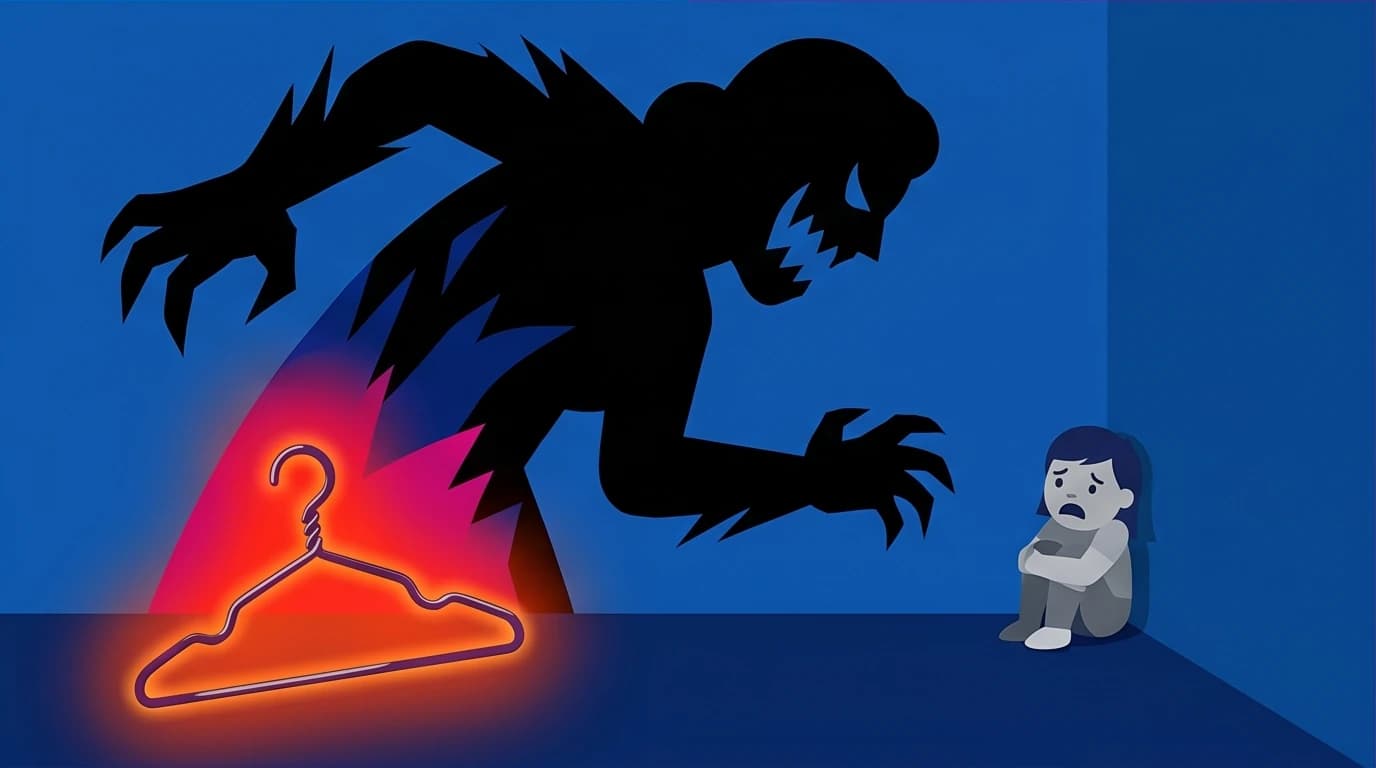
The infamous "no wire hangers" scene has become a pop-culture punchline, but psychologically, it represents pure, unadulterated terror. Joan discovering a cheap wire hanger in Christina’s closet triggered a violent, screaming rampage that ended with Joan destroying Christina’s room and physically attacking her. This is not discipline. This is a narcissistic rage episode. The trigger is irrelevant; the goal is to terrorize the child into a state of hyper-vigilance, ensuring they are always anticipating the parent's next explosion.
Sleep Deprivation and Night Raids
Joan frequently woke Christina in the middle of the night to force her to force her to clean specific areas of the house, like scrubbing the bathroom floor until dawn. Sleep deprivation is a recognized form of psychological torture. By denying her child basic physiological needs, Joan maintained absolute dominance, breaking down Christina's physical and mental resistance.
Gaslighting and The "Crazy Making" Process
Whenever Christina tried to assert reality, Joan would twist the narrative to make Christina look like a liar or a problem child. Joan even sent Christina to strict boarding schools and eventually a convent, convincing the staff that Christina was delinquent and unmanageable. Isolating a child and turning authority figures against them is a classic abusive tactic designed to destroy the victim's credibility and self-esteem.
The devastating impact of a maternal figure who views you as a problem to be managed—or worse, a threat to her own image—can leave lifelong wounds on your self-esteem. If the toxic dynamic between Joan and Christina hits close to home, Dr. Karyl McBride’s compassionate guide is an essential, life-changing resource tailored specifically for daughters recovering from maternal narcissism.
Will I Ever Be Good Enough?
Dr. Karyl McBride, Ph.D.
20 Duration8 Key Points4.4 RateGenerational Trauma Joan Crawford Passed Down
Abuse rarely exists in a vacuum. It is usually the result of a chain reaction. To fully grasp the narrative, we must examine the generational trauma Joan Crawford carried and subsequently inflicted on her adopted children.
Joan Crawford was born Lucille Fay LeSueur. Her childhood was defined by severe poverty, paternal abandonment, and abuse at the hands of stepfathers. She clawed her way out of a desperate situation using her looks, relentless ambition, and absolute control over her environment. For a complete picture of the hardships that shaped this complex and often cruel personality, it's helpful to understand her full history.
However, escaping poverty did not heal her psychological wounds. Trauma that goes unacknowledged repeats itself. Joan’s obsessive need for control, her extreme perfectionism, and her paranoia about losing her status were all trauma responses. Because she never engaged in self-reflection or healing, she dumped her unhealed pain onto Christina and Christopher.

This is the insidious nature of generational trauma. The behaviors Joan used to survive her own horrific childhood became the weapons she used to terrorize her children. She created the exact environment of fear and instability that she had supposedly worked so hard to escape.
Breaking free from a family's painful legacy requires looking closely at the behavioral patterns that were established long before you were even born. If you want to dive deeper into how unhealed pain is biologically and psychologically passed down through generations, Mark Wolynn's eye-opening research offers a powerful framework for identifying and finally resolving inherited family trauma.
It Didn't Start with You
Mark Wolynn
21 Duration8 Key Points4.8 RateThe Golden Child vs. Scapegoat Dynamic
Joan eventually adopted two more children, the twins Cindy and Cathy. Interestingly, the twins reported a vastly different experience, often defending Joan’s legacy. This perfectly illustrates the "Golden Child" and "Scapegoat" dynamic common in narcissistic families. The abusive parent splits their children into distinct roles. Christina and Christopher were the scapegoats, absorbing all the rage and blame, while the younger twins were designated as the golden children, receiving the performative affection. This division prevents the children from uniting and keeps the narcissistic parent in the center of power.
Healing from the Shadow of Mommie Dearest
The ultimate value of a Mommie Dearest book analysis lies not in condemning Joan Crawford, but in providing a roadmap for those seeking to escape similar dynamics. If Christina’s story resonates with your own upbringing, understanding the psychological mechanics is your first step toward healing.
First, validate your reality. Narcissistic parents rely on your silence and self-doubt. Christina broke a massive industry code of silence by publishing her truth, facing intense backlash from Hollywood insiders who wanted to protect Joan’s brand. You do not owe your abuser a pristine reputation. Naming the abuse for what it was is an essential step in reclaiming your sanity.
Second, recognize that you cannot fix the narcissistic parent. Joan never apologized, and she explicitly disinherited Christina and Christopher in her will—a final act of punitive control from beyond the grave. Healing requires grieving the parent you deserved but never had, rather than waiting for an apology that will never arrive.
Finally, break the cycle. Generational trauma stops with the person brave enough to acknowledge it. By educating yourself on these toxic dynamics, setting ironclad boundaries, and seeking professional psychological support, you can prevent the ghosts of your past from dictating your future.
Acknowledging the reality of your upbringing is a massive milestone, but the real day-to-day work involves implementing strict parameters to protect your newfound peace. Whether you are dealing with an actively narcissistic family member or simply trying to unlearn the enmeshment tactics of your childhood, Nedra Glover Tawwab's expert advice will give you the practical tools needed to draw the line and prioritize your own well-being.

Set Boundaries, Find Peace
Nedra Glover Tawwab
29 Duration10 Key Points4.5 RateReading through these essential books can feel like a monumental task, especially when you're low on emotional energy. If you need a more manageable way to start absorbing these healing concepts, an app can help bridge the gap.


Listen to the core ideas from bestselling books on healing and psychology in just 15 minutes, making it easier to learn and grow without feeling overwhelmed.
 LeapAhead
FAQ
Is Mommie Dearest considered a true story?
Yes, it is an autobiographical memoir. While some Hollywood loyalists and her younger adopted daughters disputed the severity of the claims to protect Joan Crawford's legacy, Christina's brother Christopher corroborated the abuse. Mental health professionals widely regard the book as a highly accurate, first-hand account of living with a parent suffering from severe, untreated Narcissistic Personality Disorder.
Yes, it is an autobiographical memoir. While some Hollywood loyalists and her younger adopted daughters disputed the severity of the claims to protect Joan Crawford's legacy, Christina's brother Christopher corroborated the abuse. Mental health professionals widely regard the book as a highly accurate, first-hand account of living with a parent suffering from severe, untreated Narcissistic Personality Disorder.
Why didn't the studio or anyone else intervene in the abuse?
During the Golden Age of Hollywood, the studio system (specifically MGM) held immense power and actively covered up stars' personal scandals to protect their box-office investments. Furthermore, Joan Crawford surrounded herself with enablers—staff, agents, and friends—whose livelihoods depended on keeping her happy. Narcissists excel at hiding their abuse from those who could hold them accountable.
During the Golden Age of Hollywood, the studio system (specifically MGM) held immense power and actively covered up stars' personal scandals to protect their box-office investments. Furthermore, Joan Crawford surrounded herself with enablers—staff, agents, and friends—whose livelihoods depended on keeping her happy. Narcissists excel at hiding their abuse from those who could hold them accountable.
How can I tell if my mother is a narcissist like Joan Crawford?
Key signs include a drastic difference between her public persona and private behavior, viewing you as an extension of herself rather than an independent person, experiencing intense rage over minor perceived slights (narcissistic injury), a chronic lack of empathy for your feelings, and a habit of gaslighting you when you attempt to set boundaries. If your relationship feels entirely conditional based on your compliance, it is a significant red flag.
Key signs include a drastic difference between her public persona and private behavior, viewing you as an extension of herself rather than an independent person, experiencing intense rage over minor perceived slights (narcissistic injury), a chronic lack of empathy for your feelings, and a habit of gaslighting you when you attempt to set boundaries. If your relationship feels entirely conditional based on your compliance, it is a significant red flag.
Did Joan Crawford ever show remorse for her actions?
No. Typical of severe narcissistic pathology, Joan maintained her victimhood and absolute righteousness until her death. She punished Christina and Christopher one final time by explicitly cutting them out of her will "for reasons which are well known to them," a classic manipulation tactic used to maintain dominance even after death.
No. Typical of severe narcissistic pathology, Joan maintained her victimhood and absolute righteousness until her death. She punished Christina and Christopher one final time by explicitly cutting them out of her will "for reasons which are well known to them," a classic manipulation tactic used to maintain dominance even after death.