

You watch a brilliant, bored high school student pick up a supernatural notebook and instantly rationalize murdering thousands of people. The leap from honors student to global executioner feels extreme, but it follows a strict psychological blueprint. You are not just watching a thriller. You are observing a clinical case study. The sudden access to absolute power did not create his malice. It simply removed the consequences. Unpacking Light Yagami psychology requires looking past the supernatural elements to analyze a highly realistic depiction of severe personality pathology.
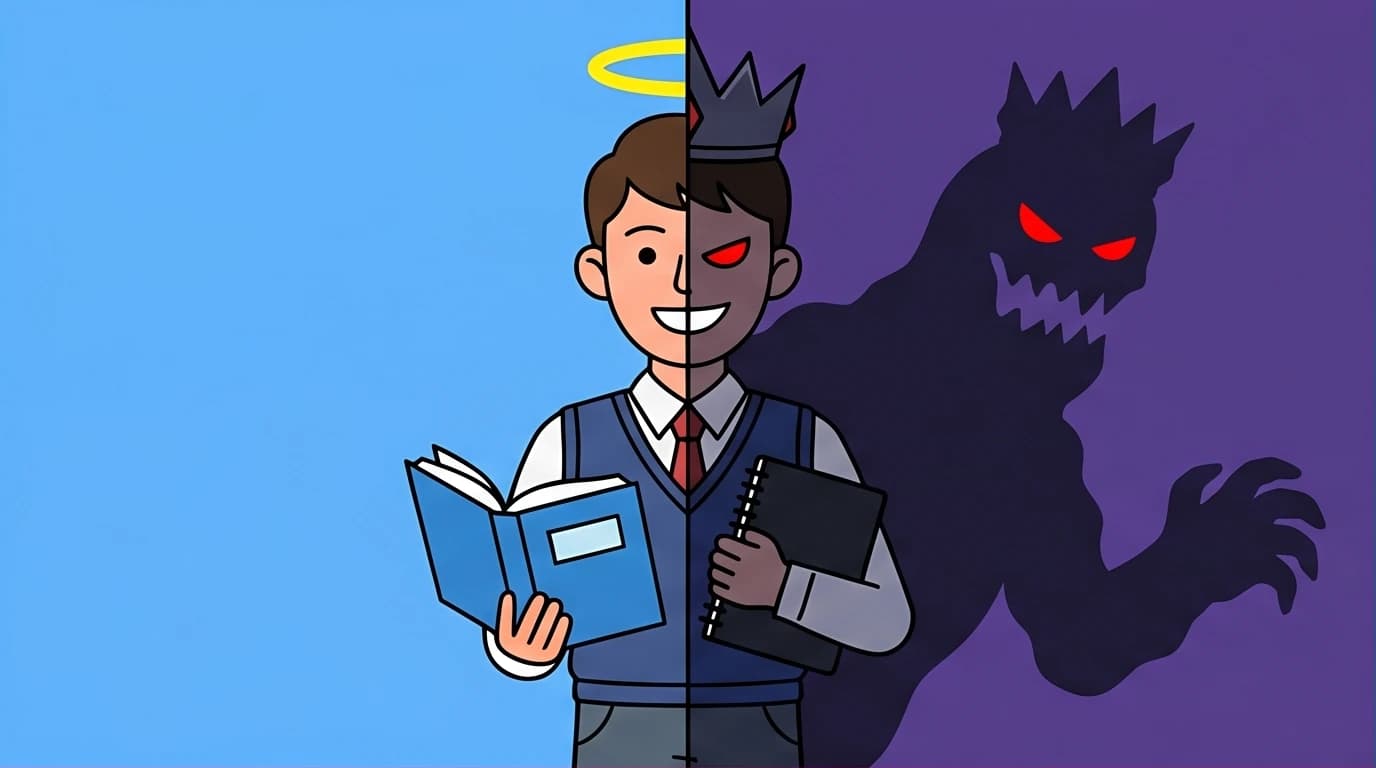
The Dark Triad Traits in Action
Clinical psychology groups three distinct but overlapping offensive personality types under one umbrella. To understand Light's cognitive framework, you must apply the dark triad traits to his daily decision-making.
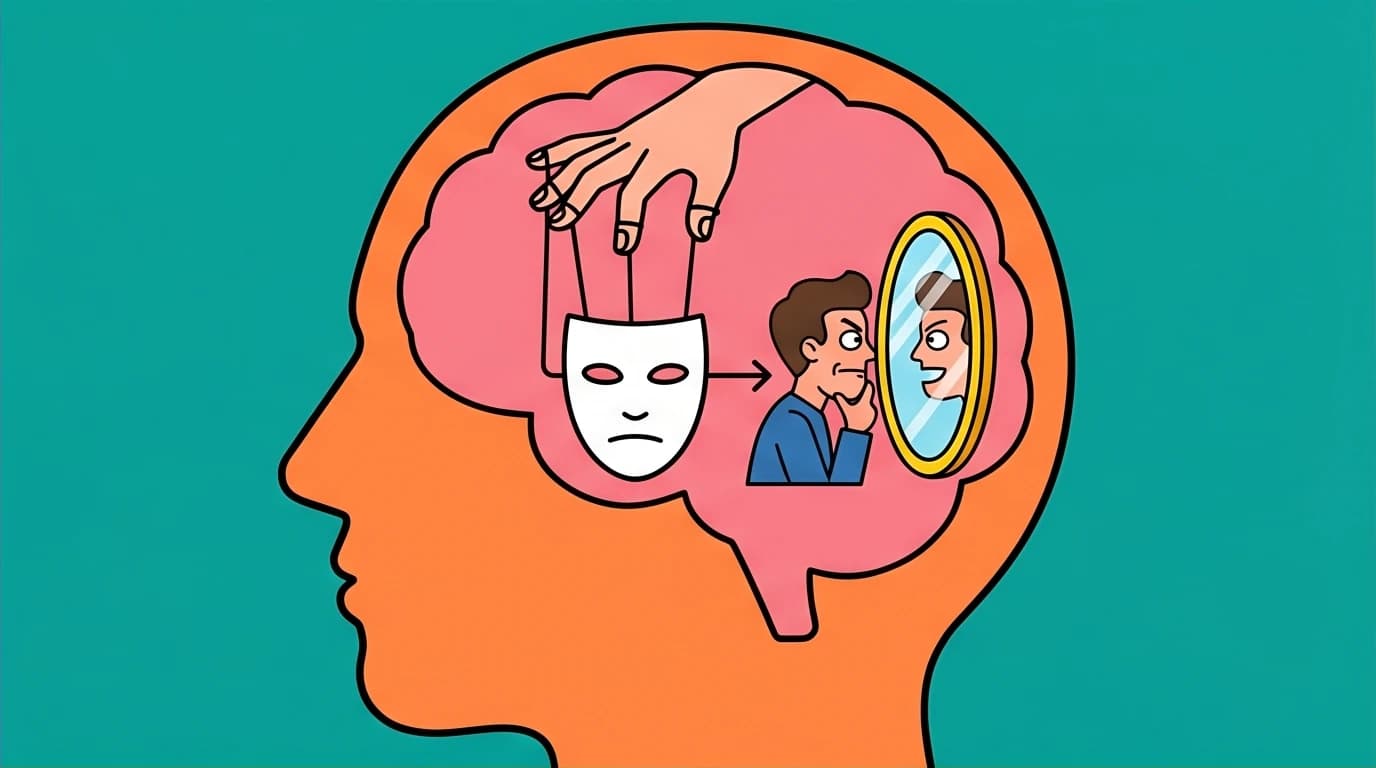
Machiavellianism: The Ends Justify the Means
Machiavellianism is characterized by a duplicitous interpersonal style, a cynical disregard for morality, and a focus on self-interest and personal gain. Light does not view other humans as people with inherent value. He views them as chess pieces.
Look at his manipulation of FBI agent Raye Penber and his fiancée, Naomi Misora. Light does not just kill them; he meticulously engineers situations where they actively participate in their own demise. He exploits Naomi's grief and desperation, isolating her emotionally before leading her to suicide. A highly Machiavellian individual excels in these scenarios because standard ethical boundaries do not disrupt their cognitive processing.
If you are fascinated by how highly Machiavellian minds operate, you might want to explore the real-world strategies that mirror this calculating mindset. Understanding the mechanics of power and manipulation can offer incredible insight into both historical figures and fictional masterminds like Light. For a deep dive into the historical and psychological frameworks of ruthless ambition and strategic dominance, this classic book is an eye-opening read.

The 48 Laws of Power
Robert Greene
 43 Duration
 7 Key Points
 4.6 Rate
If tackling dense psychological texts like "The 48 Laws of Power" feels daunting, there's a more accessible way to grasp these core ideas without dedicating weeks to a single book.

Get the key insights from dense psychology books like 'The 48 Laws of Power' in just 15-minute summaries, making complex theories easier to understand.

Download LeapAhead App now
Psychopathy: Absence of Affective Empathy
Psychopathy involves high impulsivity, thrill-seeking, and a profound lack of empathy or remorse. Light possesses what clinicians call "instrumental empathy." He can read people perfectly. He knows what they feel, which allows him to manipulate them—like feigning romantic interest in Misa Amane or acting like a grieving son.
However, he lacks "affective empathy"—the ability to actually share those feelings. When his father dies, Light’s immediate internal reaction is frustration that his father did not write down Mello’s real name. His physiological responses remain flat under intense scrutiny. Beating lie detector tests and maintaining a low heart rate while L stares directly at him are classic markers of primary psychopathy.
Light’s ability to flawlessly mimic human emotion while feeling absolutely nothing inside is a chilling hallmark of real-world psychopathy. If you want to better understand how individuals with these severe personality disorders hide in plain sight, it is worth looking into clinical insights on the topic. Learning to spot the red flags of charm, mirroring, and emotional manipulation can be incredibly empowering. This comprehensive guide unpacks the exact tactics used by toxic and psychopathic personalities.
Psychopath Free (Expanded Edition)
Jackson MacKenzie
17 Duration7 Key Points4.7 RateNarcissism: The Chosen One Narrative
The final pillar of the triad is narcissism, defined by grandiosity, pride, egotism, and a lack of empathy. Light convinces himself that he is the only person mentally and morally equipped to wield the notebook. He adopts the moniker "Kira" (Killer/God) and actively seeks the worship of the masses. He does not want to just clean up the world anonymously. He demands to be recognized as its savior.
Diagnosing God Complex Psychology
A "God complex" is not a formalized diagnosis in the American Psychiatric Association's DSM-5. However, god complex psychology maps directly onto severe Narcissistic Personality Disorder (NPD) combined with extreme grandiosity.
Light meets almost every diagnostic criterion for NPD:
- Grandiose sense of self-importance: He expects to be recognized as superior without commensurate achievements (believing he is the god of the new world as a teenager).
- Preoccupation with fantasies of unlimited power: His entire mission revolves around absolute control over life and death.
- Belief that he is "special": He genuinely believes only a genius detective like L is worthy of his time, isolating himself from "ordinary" people.
- Requirement of excessive admiration: He monitors the internet and news constantly to ensure the public is praising Kira.
His God complex is a psychological defense mechanism. The moment he killed his first two victims, he experienced a severe cognitive dissonance. He was an honors student, a "good" person. Good people do not commit double homicide. To protect his fragile ego from the guilt of murder, his psyche fractured into a grandiose delusion. He had to become a god, because if he is a god, his murders are not crimes—they are divine judgments.
The way Light rationalizes his murders as "divine judgments" is a textbook example of malignant narcissism blending into something far darker. When someone becomes so obsessed with their own perceived goodness that they easily destroy others, clinical psychologists often classify it as a specific form of human evil. If you are intrigued by the psychiatric evaluation of extreme narcissism and the devastating ways people justify their darkest actions, consider exploring this groundbreaking work on the psychology of evil.
People of the Lie
M. Scott Peck
16 Duration6 Key Points4.2 Rate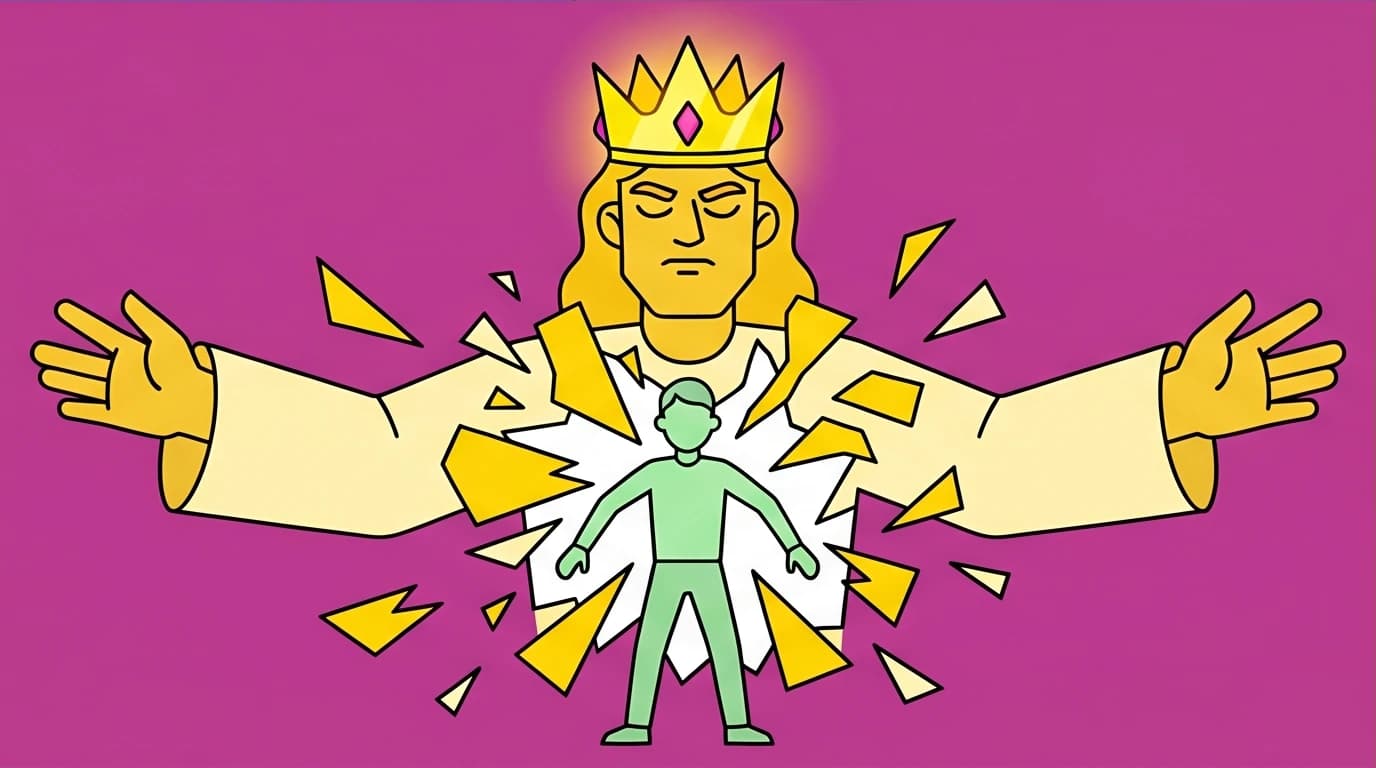
Megalomania Examples and Narcissistic Injury
Megalomania is an obsessive obsession with power and the delusion of one's own omnipotence. While narcissists want to be admired, megalomaniacs want to dominate.
The clearest megalomania examples in Light’s behavior emerge when his authority is challenged. A rational actor trying to secretly eliminate crime would ignore taunts. Light does the exact opposite.
When the detective "Lind L. Tailor" calls Kira evil on a live television broadcast, Light snaps. He does not calmly assess the strategic risk of killing the man. He screams at the television and executes him immediately. In clinical terms, this is a Narcissistic Injury. His ego is so brittle that a single insult on television provokes a lethal, impulsive rage.
Another textbook example of megalomania is his final breakdown in the Yellow Box warehouse. Confronted with undeniable proof of his defeat, his psychological architecture collapses. He writhes, screams, and demands that the others recognize his divine right to rule. Stripped of his power, the megalomaniac cannot process failure, leading to a total psychotic break from reality.
The Diathesis-Stress Model: Did the Notebook Corrupt Him?
A common debate is whether the notebook made Light evil or if he was always a psychopath. Clinical psychology explains this through the Diathesis-Stress Model.
This model suggests that a person has a pre-existing vulnerability (diathesis) for a psychological condition, which remains dormant until triggered by a severe environmental factor (stress).
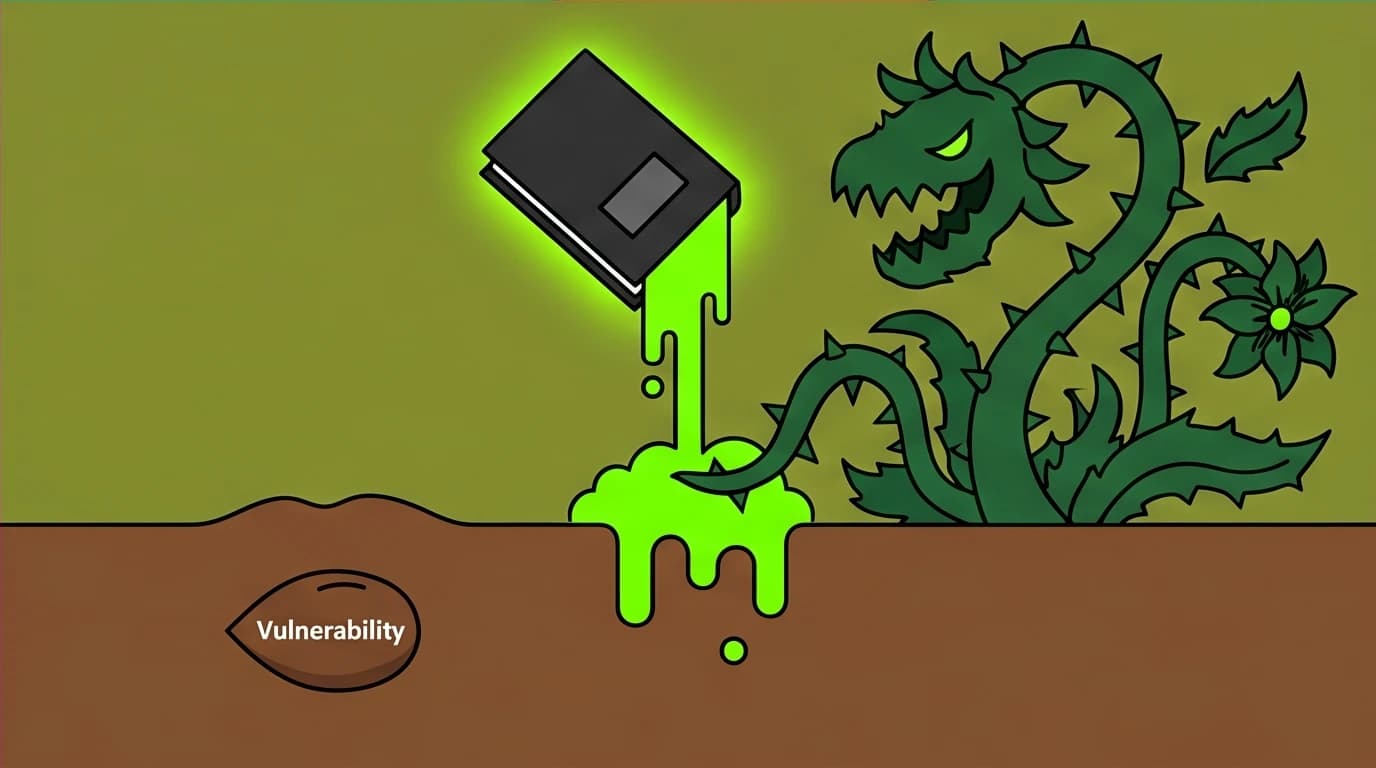
Light always possessed the baseline dark triad traits: he was bored, arrogant, highly intelligent, and lacked deep emotional connections. However, living in standard society with laws, police, and consequences kept these traits in check. He channeled his need for superiority into getting perfect test scores.
The Death Note was the ultimate environmental trigger. It provided a zero-consequence environment. It stripped away societal guardrails, allowing his latent psychopathy and narcissism to metastasize overnight. The power did not create his God complex; it acted as the fertilizer for seeds that were already planted.
Understanding this character through a clinical lens transforms a standard anime villain into a terrifyingly realistic study of human pathology. It forces us to realize how thin the line is between an upstanding citizen and a monster when accountability is permanently erased.
The debate over whether Light was born a monster or made into one by the Death Note strikes at the very heart of behavioral biology. How much of our darkest behavior is hardwired, and how much is triggered by our environment? If you want to explore the fascinating science behind human nature, aggression, and the environmental factors that push ordinary people toward extreme actions, this comprehensive look at our biology is absolutely essential reading.

Behave
Robert M. Sapolsky, Ph.D.
42 Duration9 Key Points4.6 RateAfter exploring all these fascinating but complex topics, your reading list might be starting to look intimidating. If you want to absorb these powerful insights without the heavy time commitment, there's a more practical way.
Tackle your reading list by listening to key takeaways from books on psychology and human behavior during your commute, helping you learn without the burnout.
Download LeapAhead App now
FAQ
Does Light Yagami have Antisocial Personality Disorder (ASPD)?
While Light exhibits traits of ASPD—specifically deceitfulness, reckless disregard for the safety of others, and lack of remorse—his presentation leans heavier toward Narcissistic Personality Disorder. He does not typically display the chaotic impulsivity or childhood conduct disorder usually required for a strict ASPD diagnosis. He is highly calculated and requires admiration, which are stronger indicators of NPD.
While Light exhibits traits of ASPD—specifically deceitfulness, reckless disregard for the safety of others, and lack of remorse—his presentation leans heavier toward Narcissistic Personality Disorder. He does not typically display the chaotic impulsivity or childhood conduct disorder usually required for a strict ASPD diagnosis. He is highly calculated and requires admiration, which are stronger indicators of NPD.
How does L's psychology contrast with Light's?
L also displays significant neurodivergent traits and obsessive-compulsive behaviors, but he lacks Light's grandiosity. While L is highly manipulative and isolates himself, his drive is rooted in solving the puzzle and upholding a structured system of justice, rather than a desire to be worshipped as a deity. L's ego is tied to his intellect; Light's ego is tied to his perceived divinity.
L also displays significant neurodivergent traits and obsessive-compulsive behaviors, but he lacks Light's grandiosity. While L is highly manipulative and isolates himself, his drive is rooted in solving the puzzle and upholding a structured system of justice, rather than a desire to be worshipped as a deity. L's ego is tied to his intellect; Light's ego is tied to his perceived divinity.
Could Light have been treated through therapy before finding the notebook?
Treating dark triad traits and severe narcissism is notoriously difficult because the patient rarely believes there is anything wrong with them. However, before the notebook triggered his megalomania, targeted cognitive behavioral therapy (CBT) focusing on empathy-building and dismantling his superiority complex might have helped manage his arrogance. Once he committed his first murder, he crossed a clinical point of no return.
Treating dark triad traits and severe narcissism is notoriously difficult because the patient rarely believes there is anything wrong with them. However, before the notebook triggered his megalomania, targeted cognitive behavioral therapy (CBT) focusing on empathy-building and dismantling his superiority complex might have helped manage his arrogance. Once he committed his first murder, he crossed a clinical point of no return.