

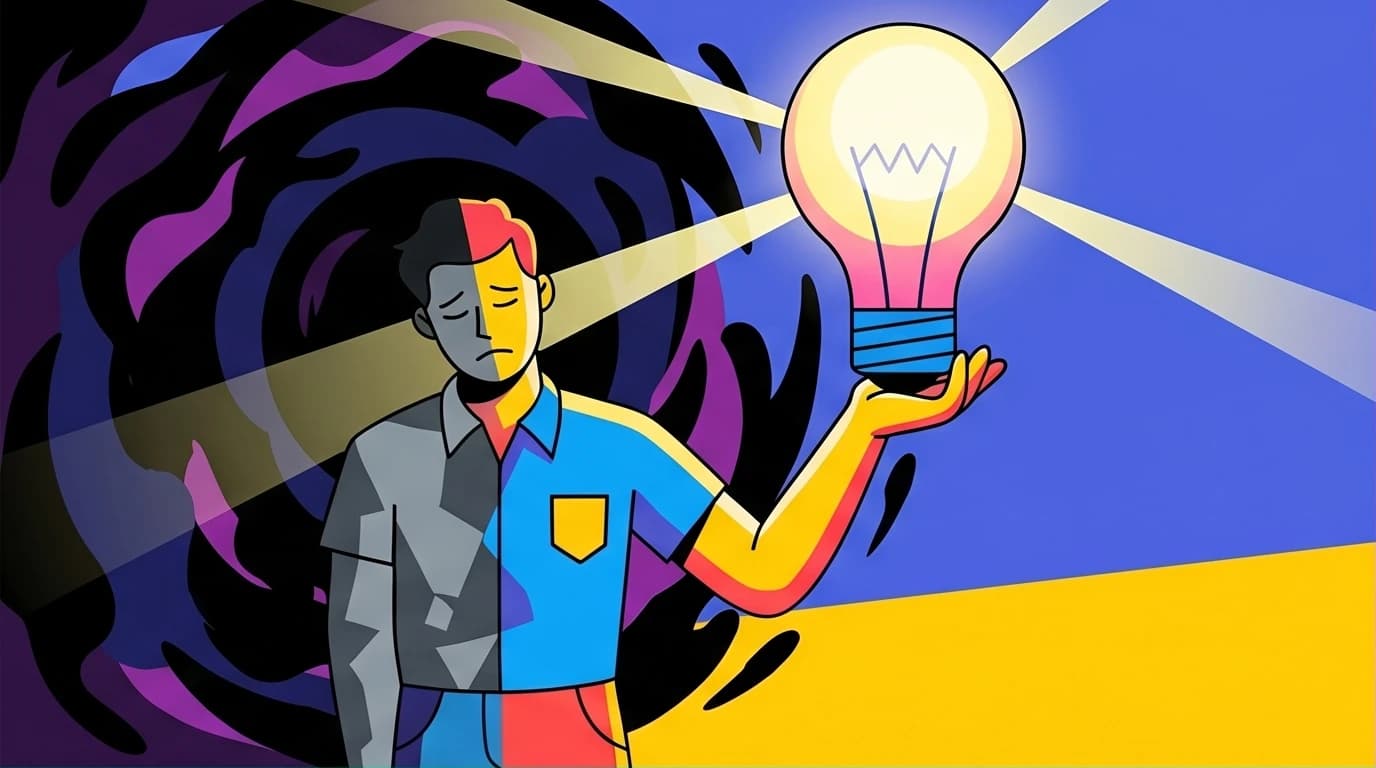
You hit a wall. Maybe it is a sudden job loss, a terrifying medical diagnosis, or watching a long-term relationship collapse. The immediate instinct is to ask, "Why is this happening to me?" You feel trapped in a mental loop of unfairness, and your energy drains just trying to make it through the day. The pain feels incredibly isolating.
When you look at someone who has survived the unthinkable, it is easy to assume they have some superhuman trait you lack. You look at a teenage girl who survived a point-blank assassination attempt by the Taliban, underwent massive reconstructive surgery, and somehow emerged smiling on the global stage. It looks like magic. It is not.
Understanding Malala Yousafzai resilience requires stripping away the Nobel Peace Prize and the celebrity status. Beneath the accolades lies a highly effective, deeply human psychological blueprint for surviving the worst day of your life.
For a complete look at her life story and the path that led to her activism, it's helpful to understand the background that shaped her.
The Core Shift: From Victimhood to Agency
Trauma fundamentally robs you of control. Whether a bullet shatters your skull or a sudden layoff shatters your career, the psychological damage is rooted in powerlessness. Most people get stuck right here. They let the event become their entire identity.
To understand how Malala overcame adversity, you have to look at the exact moment she woke up in a hospital in Birmingham, thousands of miles away from her home in Pakistan. Half of her face was paralyzed. She had a tube in her neck. She could not speak.
Instead of lingering on the terror of the attack, her immediate internal dialogue shifted. She later wrote that she felt she had been spared for a reason. This is a crucial psychological pivot known as Radical Acceptance. She did not fight the reality of what happened. She accepted the brutal facts, but she flatly refused the narrative the Taliban tried to force on her: that she was a victim who should hide in fear.

You can apply this exact pivot. When disaster strikes, you cannot control the event, but you have absolute control over the meaning you assign to it. If you view a failure as proof that you are broken, you will act broken. If you view it as an agonizing but necessary pivot point, you regain your agency.
To truly grasp the depth of this transition from victim to global advocate, hearing Malala's story in her own words is essential. While news headlines often focus on the tragedy of the attack, her autobiography paints a vivid picture of the supportive, education-focused upbringing that built her unshakeable foundation. If you want to understand the day-to-day reality of her life in Pakistan and the exact mindset that empowered her to stand up to the Taliban, this book is a must-read.

I Am Malala
Malala Yousafzai & Christina Lamb
 47 Duration
 9 Key Points
 3.6 Rate
The Anatomy of the Malala Yousafzai Mindset
Resilience is not a personality trait. It is a set of cognitive habits. The Malala Yousafzai mindset relies on three very specific mental frameworks that act as armor against despair.
1. Weaponizing Purpose Over Pain
Viktor Frankl, the psychiatrist who survived the Holocaust, famously noted that those who survive extreme conditions usually hold onto a meaning that transcends their current suffering. Malala anchored herself entirely to the cause of girls' education.
When you are deeply wounded, focusing inward on your own pain amplifies it. Shifting your focus outward—connecting your survival to a broader purpose—acts as a neurological painkiller. It forces your brain out of the amygdala (the fear center) and into the prefrontal cortex (the planning and logic center). If you are struggling right now, find something outside of yourself to care for. It could be a family member, a community project, or a new creative endeavor. Make your survival about something bigger than your own ego.
As mentioned earlier, Viktor Frankl’s observations on human resilience provide a profound framework for surviving the darkest of circumstances. In his seminal work detailing his experiences in Nazi concentration camps, he outlines the psychological approach known as logotherapy—the belief that human nature is motivated by the search for a life purpose. If you are trying to navigate your own personal tragedy and need to figure out how to weaponize your purpose over your pain, Frankl's firsthand account is one of the most powerful books you will ever read.
Man's Search for Meaning
Viktor E. Frankl
44 Duration8 Key Points4.6 RateWhile these books are essential reading, finding the mental energy to get through them when you're already overwhelmed can be a challenge. If you want to grasp their core principles without the heavy time commitment, a summary app can be a great starting point.


LeapAhead

Listen to the key ideas from life-changing books like Man's Search for Meaning in just 15 minutes, making it easier to find purpose when you're low on energy.

2. Forgiveness as a Cognitive Tool
One of the most striking aspects of overcoming trauma Malala modeled is her lack of public anger toward her attackers. She stated repeatedly that she did not want revenge.
Many people misunderstand forgiveness. They think it means letting the offender off the hook. In reality, forgiveness is an aggressive act of self-preservation. Holding onto rage burns massive amounts of cognitive energy. It keeps your nervous system in a constant "fight or flight" state. By deciding not to hate the men who shot her, Malala freed up 100% of her mental bandwidth to focus on her recovery and her global mission. You do not have to like the people or circumstances that broke you, but you must drop the anger if you want the energy to rebuild.
This focus on her global mission, rather than personal revenge, is a key element of her impact on the world.
3. Rejecting the Myth of "Bouncing Back"
People often define resilience as returning to your original shape after being bent. This is a toxic expectation. You do not bounce back from severe trauma. You move forward as an entirely new person. Malala did not go back to being an ordinary schoolgirl in the Swat Valley. She integrated the trauma into a new identity as a global advocate. Expecting to feel exactly like "your old self" after a massive life shock sets you up for failure. Embrace the new version of yourself, scars and all.
Unpacking the Courage of Malala Yousafzai: A Practical Framework
We often romanticize courage as the absence of fear. If you read Malala's accounts or watch her interviews, she admits to fear. The courage of Malala Yousafzai is simply action in the presence of intense terror.
If you are facing a massive personal challenge, you do not need to feel brave to act brave. You can engineer courage using this simple, three-step framework:
Step 1: Identify Your Immediate Locus of Control
When everything falls apart, your brain tries to process the entire disaster at once. This causes paralysis. Stop looking at the whole mountain. What can you control in the next five minutes? When Malala was in the hospital, she could not control international politics or her paralyzed facial nerves. She could control her physical therapy exercises. She could control reading books. Shrink your world down to the absolute smallest actions you can dictate.
Step 2: Rewrite Your Personal Narrative
Trauma attempts to write the end of your story. You have to pick up the pen. Take a piece of paper and write down the facts of your current situation without the emotional weight.
Instead of: “I lost my job and my career is completely ruined, I am a failure.”
Write: “My position was eliminated. I have ten years of marketing experience. I need a new income source.”
This strips the power away from the panic and forces you to view your life objectively.
Instead of: “I lost my job and my career is completely ruined, I am a failure.”
Write: “My position was eliminated. I have ten years of marketing experience. I need a new income source.”
This strips the power away from the panic and forces you to view your life objectively.
Step 3: Build a Forward-Facing Support System
Nobody survives a crisis completely alone. Look at Malala’s dynamic with her father, Ziauddin. He was her absolute anchor, reinforcing her worth and her mission daily. The American culture of extreme individualism often tells us to "tough it out" solo. That is terrible advice. You need a sounding board. Whether it is a therapist, a trusted friend, or a support group you find online, you must externalize your thoughts. If you keep your fears locked in your head, they will eat you alive.
Her own words often provide the most direct insight into her courageous mindset.
The Reality of Post-Traumatic Growth (PTG)
If you read books on human psychology—the kind frequently reviewed on Goodreads or recommended on Audible—you will find the concept of Post-Traumatic Growth. PTG occurs when someone experiences a psychological earthquake that shatters their belief system, but they use the rubble to build a stronger foundation.
Malala represents the ultimate manifestation of PTG. Before the attack, her voice was loud, but it was regional. The assassination attempt was meant to silence her; instead, it handed her a global megaphone.
This is the ultimate secret of resilience: The obstacle becomes the path.

If you are navigating a brutal divorce, that experience might become the foundation for a profound new understanding of boundaries and self-respect. If you fail at a business venture, that failure contains the exact data you need to succeed in the next one. The trauma itself is not a gift—trauma is awful. But the response to the trauma can become your greatest asset.
Understanding concepts like Post-Traumatic Growth requires acknowledging the profound physical and psychological toll that severe stress takes on the human nervous system. Trauma isn't just something that happens in your mind; it physically rewires your brain and embeds itself in your biology. For anyone looking to truly comprehend how trauma changes us and, more importantly, the scientifically proven therapies that can help release it and build a path forward, diving into the leading research on trauma recovery is an incredibly empowering next step.
The Body Keeps The Score
Bessel Van Der Kolk
32 Duration10 Key Points4.5 RateHow to Apply This to Your Life Today
You do not need to win a Nobel Prize to validate your resilience. You just need to get through this week.
- Audit Your Information Diet: When you are vulnerable, what you consume matters. Stop doom-scrolling. If you are reading this, you are already looking for solutions. Keep feeding your brain stories of survival, psychology, and tactical advice. If finding the focus for full-length books feels like too much right now, you can still follow this advice by consuming powerful ideas in a more digestible format.
LeapAhead
Feed your brain with insights on resilience and psychology from top nonfiction books, summarized into 15-minute reads or listens to fit your energy level.
- Establish a Micro-Routine: Severe stress destroys structure. Wake up at the exact same time every day. Drink a glass of water. Walk one mile. These sound almost insultingly simple, but micro-routines send a signal of safety to a panicking brain.
- Embrace the "Stockdale Paradox": Named after Admiral James Stockdale, who survived years in a Vietnam POW camp, this concept states: You must retain unwavering faith that you will prevail in the end, while simultaneously confronting the most brutal facts of your current reality. Do not practice toxic positivity. Admit that your current situation is terrible. Cry if you need to. Then, wipe your face, look at the brutal facts, and plan your next move.
Resilience is a muscle. It tears under heavy weight, and it builds back denser and stronger. Malala Yousafzai did not choose to be shot, but she chose exactly who she would become afterward. You did not choose the crisis you are currently sitting in. But you possess the exact same cognitive machinery she does. You get to decide what this pain creates.
The "Stockdale Paradox" mentioned above is just one of the many transformative concepts that separate those who merely survive from those who truly thrive after facing brutal facts. Originally identified in the context of organizations achieving extraordinary leaps, this paradox is brilliantly detailed in one of the most celebrated leadership books of our time. Whether you are rebuilding your personal life, leading a team through a crisis, or trying to organize a path out of professional failure, mastering this balance of unwavering faith and grounded realism is essential.

Good to Great
Jim Collins
45 Duration7 Key Points4.6 RateFAQ
Did Malala experience PTSD or long-term trauma?
Yes. While she is a symbol of strength, she has spoken about the ongoing physical and emotional toll, including multiple reconstructive surgeries and the inherent stress of living under a microscope. Resilience does not mean you never suffer; it means you continue functioning and finding purpose despite the suffering.
Yes. While she is a symbol of strength, she has spoken about the ongoing physical and emotional toll, including multiple reconstructive surgeries and the inherent stress of living under a microscope. Resilience does not mean you never suffer; it means you continue functioning and finding purpose despite the suffering.
How can I build this kind of resilience when I have zero energy left?
Start incredibly small. When you are suffering from burnout or depression, the brain lacks the dopamine to tackle big goals. Focus purely on basic biological stabilization: sleep, hydration, and minimal movement. Do not try to find your "life's purpose" when you are exhausted. Find the energy to win the next hour. The larger mindset shifts come only after the central nervous system is out of the red zone.
Start incredibly small. When you are suffering from burnout or depression, the brain lacks the dopamine to tackle big goals. Focus purely on basic biological stabilization: sleep, hydration, and minimal movement. Do not try to find your "life's purpose" when you are exhausted. Find the energy to win the next hour. The larger mindset shifts come only after the central nervous system is out of the red zone.
Is Malala's level of courage innate or learned?
Courage is almost entirely learned. Malala was raised in an environment by her father that actively encouraged independent thinking and standing up for education. Her courage was practiced in small increments long before the attack. You can train your own courage by leaning into small, uncomfortable situations daily, gradually increasing your tolerance for risk and fear.
Courage is almost entirely learned. Malala was raised in an environment by her father that actively encouraged independent thinking and standing up for education. Her courage was practiced in small increments long before the attack. You can train your own courage by leaning into small, uncomfortable situations daily, gradually increasing your tolerance for risk and fear.
How do I stop feeling angry about the unfairness of my situation?
Acknowledge the anger without letting it drive your car. Anger is a natural, valid response to injustice. The goal is not to instantly stop feeling it, but to refuse to let it dictate your daily actions. Try setting a timer—give yourself 15 minutes a day to journal or vent furiously about the unfairness. When the timer goes off, force yourself to pivot to one constructive task. Contain the anger; do not let it spread.
Acknowledge the anger without letting it drive your car. Anger is a natural, valid response to injustice. The goal is not to instantly stop feeling it, but to refuse to let it dictate your daily actions. Try setting a timer—give yourself 15 minutes a day to journal or vent furiously about the unfairness. When the timer goes off, force yourself to pivot to one constructive task. Contain the anger; do not let it spread.