

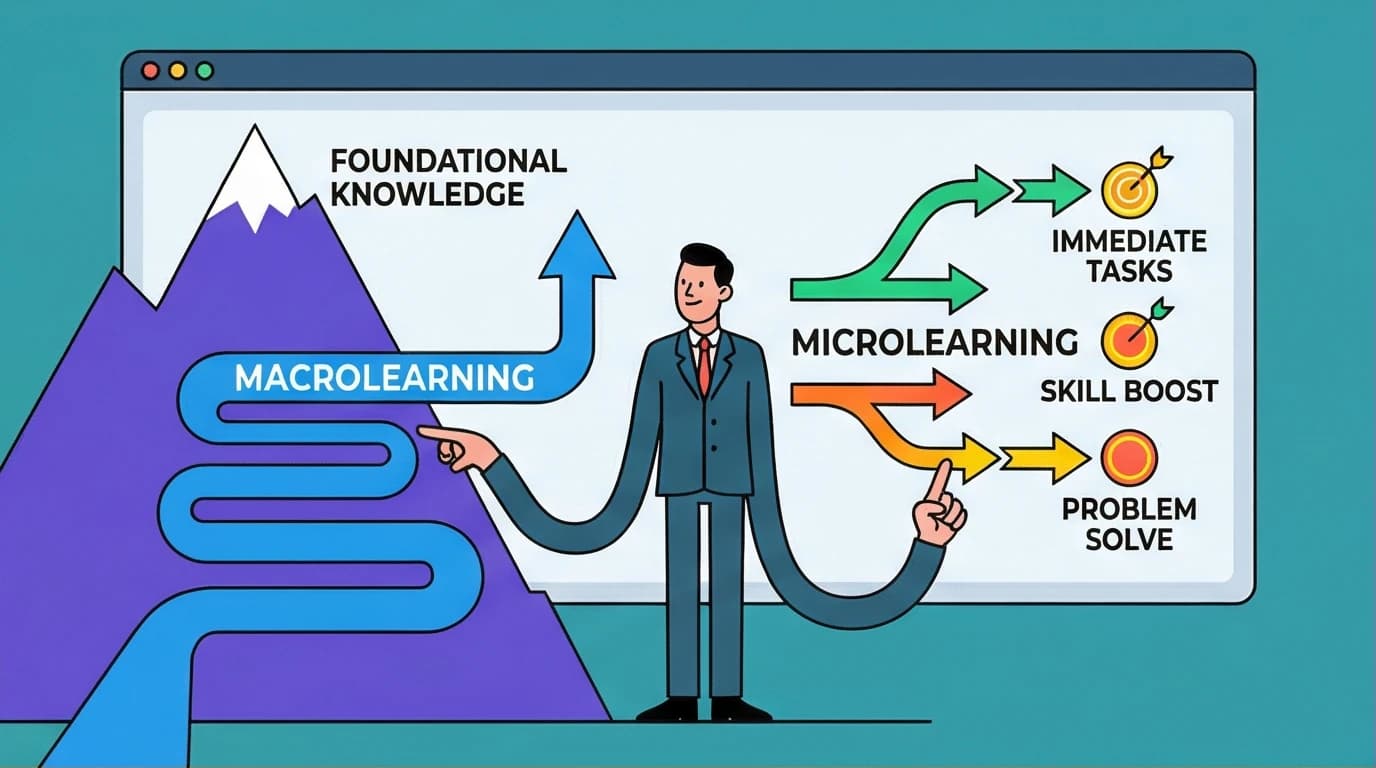
Your employees are overwhelmed, their calendars are packed, and completion rates for those mandatory three-hour e-learning modules are hitting rock bottom. As a Chief Learning Officer or L&D leader, you face constant pressure from the executive team to justify your training budget and prove real business impact. You cannot afford to guess which training delivery method works. You need a targeted approach that builds deep workforce competence without pulling your teams offline for days at a time.
The debate of microlearning vs macrolearning often dominates modern L&D discussions. However, treating them as competing methodologies is a strategic mistake. Both serve distinct cognitive purposes. Understanding how to deploy each effectively is the difference between an expensive training program that employees click through mindlessly and a high-ROI strategy that actually changes behavior.
Decoding the Core Concepts
To build a high-performance training ecosystem, you must first clarify what these methodologies actually do for the learner.
Macrolearning Definition
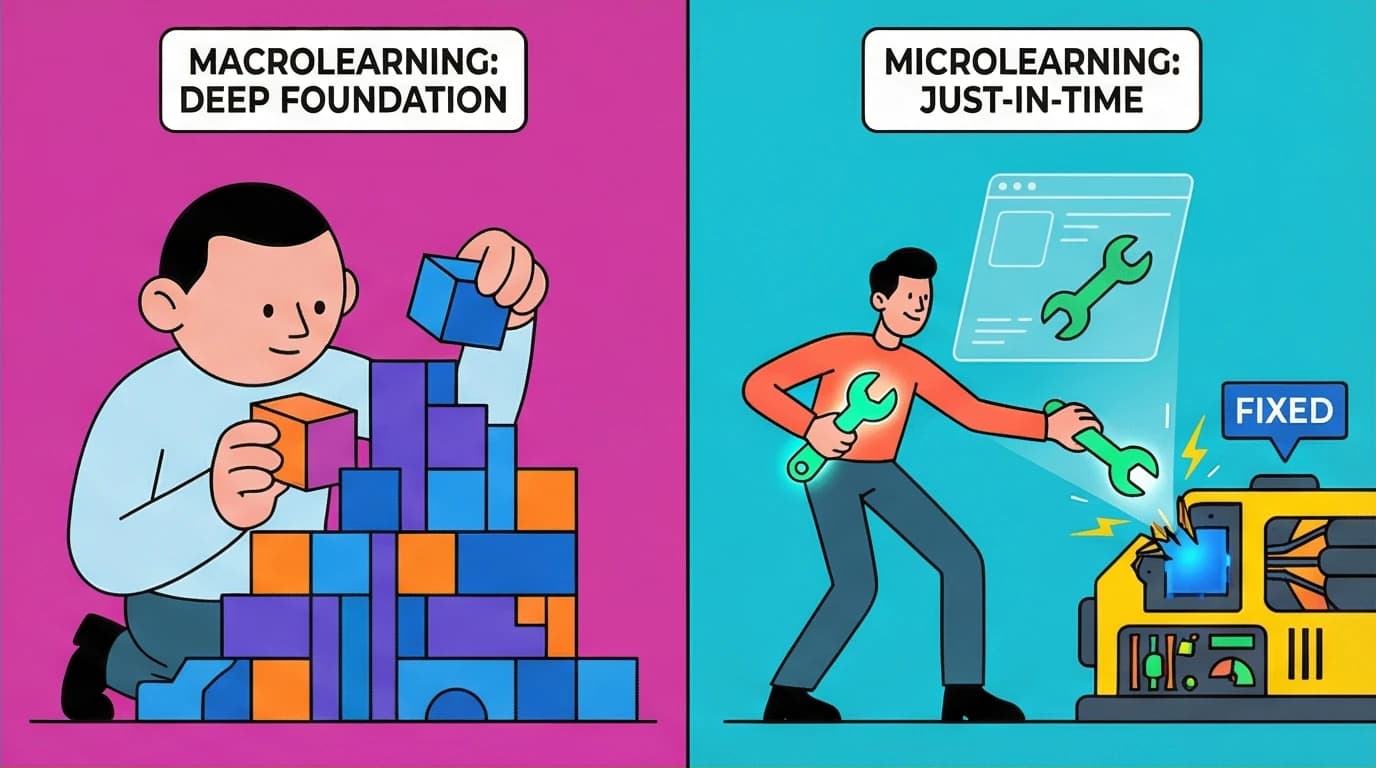
Macrolearning is the continuous, structured process of learning an entirely new domain, complex skill, or comprehensive concept. This is what we typically associate with formal education and traditional corporate training.
A standard macrolearning definition includes any learning event that requires dedicated time, high cognitive focus, and a significant disruption to the normal workflow. It is designed to build the "big picture."
Common examples of macrolearning include:
- Multi-day leadership development bootcamps
- A two-hour onboarding module for new hires
- Degree programs and intensive professional certifications
- Deep-dive workshops on sweeping industry regulations (like OSHA compliance in manufacturing or SEC rules in finance)
Macrolearning answers the question: “What do I need to know to fundamentally change my capability?”
What is Microlearning?
Microlearning is the delivery of short, hyper-focused, and highly contextual learning bursts. Usually lasting anywhere from 30 seconds to five minutes, these modules target one single learning objective.
Microlearning does not teach foundational theory. It solves a specific problem at the exact moment a worker needs help, seamlessly integrating into their daily workflow.
Common examples of microlearning include:
- A 90-second video on how to handle a specific customer objection
- A quick reference guide or interactive flashcard on a new software feature
- A daily quiz pushed to a sales rep's phone via an app
- A short checklist embedded directly within a CRM platform like Salesforce
Microlearning answers the question: “What do I need to do right now to complete this specific task?”
This approach is designed for speed and retention. For a deeper dive into the theory and benefits that drive its effectiveness, explore our complete guide.
Understanding the cognitive mechanisms behind how adults actually absorb and retain information is the cornerstone of any successful L&D strategy. If you want to dive deeper into the science of mental schemas, focused versus diffuse thinking, and how the brain processes new skills, Learning How To Learn is an essential addition to your professional library. It offers actionable, research-backed insights to help you structure both massive corporate training programs and quick-hit tutorials more effectively so your team stops wasting time on methods that simply don't stick.

Learning How To Learn
Barbara Oakley, Terrence Sejnowski
 21 Duration
 10 Key Points
 4.6 Rate
Traditional Learning vs Microlearning: The Strategic Breakdown
When evaluating traditional learning vs microlearning, CLOs must look beyond duration. The real differences lie in cognitive load, content lifecycle, and immediate business application.
1. Cognitive Goal: Foundation vs Application
Traditional learning builds a mental schema. If you are training a software engineer on a completely new programming language, they need the deep, uninterrupted focus that macrolearning provides. They must understand the syntax, the architecture, and the logic.
Microlearning drives immediate application. Once that engineer knows the basics, a microlearning module—like a quick snippet on how to run a specific debugging protocol—helps them apply that knowledge without leaving their code editor.
2. Time and Workflow Disruption
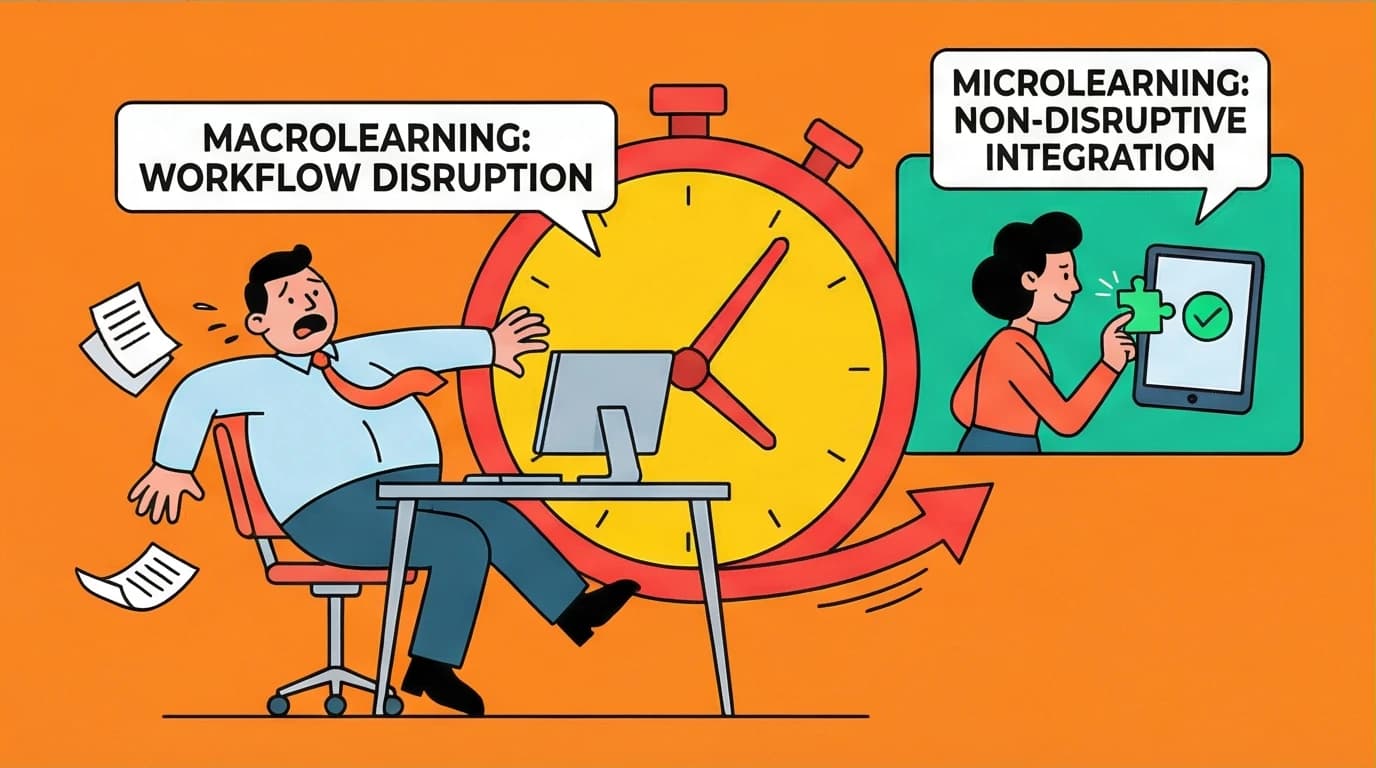
Macrolearning pulls employees away from their jobs. This downtime is expensive. Every hour an employee spends in a classroom or clicking through a sprawling e-learning course is an hour of lost productivity. You must guarantee that the skill acquired justifies that expensive downtime.
Microlearning happens in the flow of work. It is minimally invasive. An employee can watch a two-minute tutorial on a new expense reporting software while waiting for a Zoom meeting to start. The disruption is practically zero.
3. Content Agility and Maintenance
Traditional learning modules are heavy. Building a comprehensive three-hour course requires intensive instructional design, extensive subject matter expert (SME) interviews, and high production costs. When a company policy changes, updating that massive course is slow and expensive.
Microlearning assets are agile. If a product feature changes on Tuesday, an L&D team can easily record a new quick-hit video, swap out the old file, and deploy it to the sales team by Wednesday morning.
Putting this agility into practice requires a clear development process.
When to Use Microlearning
Microlearning excels when it comes to reinforcement, immediate problem-solving, and overcoming the "forgetting curve." Deploy it aggressively in the following scenarios:
- Software Updates and Process Changes: If your team already knows how to use a platform and you are just introducing a new feature, do not force them through a 30-minute module. A two-minute walkthrough is entirely sufficient.
- Just-in-Time Support: Customer service reps on the floor need fast answers, not theory. Searchable microlearning libraries allow them to find exactly how to process a specific refund type while the customer is on hold.
- Knowledge Reinforcement: Humans forget up to 70% of new information within 24 hours if it is not applied. Use microlearning to drip-feed quick quizzes and scenario-based questions in the weeks following a major macrolearning event.
- Compliance Reminders: Instead of an annual, mind-numbing three-hour compliance course, send out monthly three-minute scenarios testing employees on data privacy best practices.
These scenarios are just the beginning. To see these principles in action across different departments and use cases, it's helpful to see what other companies are doing.
Overcoming that dreaded forgetting curve requires more than just bombarding your team with notifications. To truly master the art of spaced repetition and active recall, Make It Stick is an absolute must-read for any corporate training professional. The authors break down the cognitive psychology behind why traditional cramming fails and explain exactly how strategically spaced, low-stakes retrieval practices—like your new microlearning quizzes—permanently lock new information into your employees' long-term memory. It is the perfect blueprint for designing reinforcement modules that actually work.

Make It Stick
Peter C. Brown, Mark A. McDaniel, Ph.D., Henry L. Roediger III, Ph.D.
18 Duration8 Key Points4.6 RateAnd for L&D leaders looking to practice what they preach, absorbing the key ideas from essential business books like this can be a challenge with a packed schedule.

LeapAhead helps you grasp the core insights from bestselling business and leadership books in just 15 minutes, making it easier to stay ahead of industry trends even on your busiest days.

Download LeapAhead App now
When Macrolearning Remains Essential
Do not fall into the trap of thinking microlearning can replace everything. Chopping up a highly complex topic into 50 two-minute videos does not make it microlearning; it just makes it a fragmented, frustrating macro course. Stick to traditional, longer-form learning for:
- Complete Role Transitions: Promoting an individual contributor to a management role requires a fundamental shift in mindset, empathy, and strategy. You cannot teach leadership through flashcards.
- Total Immersion in New Concepts: Onboarding requires macrolearning to immerse new hires in your company culture, overarching strategy, and core operational frameworks.
- High-Stakes Certifications: Industries requiring rigorous safety or legal certifications require deep, verified knowledge acquisition that only structured macrolearning can provide.
Navigating those complex role transitions—especially moving from an individual contributor to a management position—requires profound behavioral shifts that mobile flashcards simply cannot trigger. If you are developing a macrolearning curriculum for new managers, consider integrating the frameworks found in The Coaching Habit. This practical book strips away the typical corporate jargon and teaches leaders how to guide their teams through powerful, targeted questions, making it a perfect foundational text for your next multi-day leadership development bootcamp.

The Coaching Habit
Michael Bungay Stanier
40 Duration7 Key Points4.5 RateBuilding Winning Learning and Development Strategies
The most successful Chief Learning Officers architect their learning and development strategies around a concept called the "Macro-Micro Flip." They stop viewing these methodologies as an either/or proposition and start designing them as a unified ecosystem.
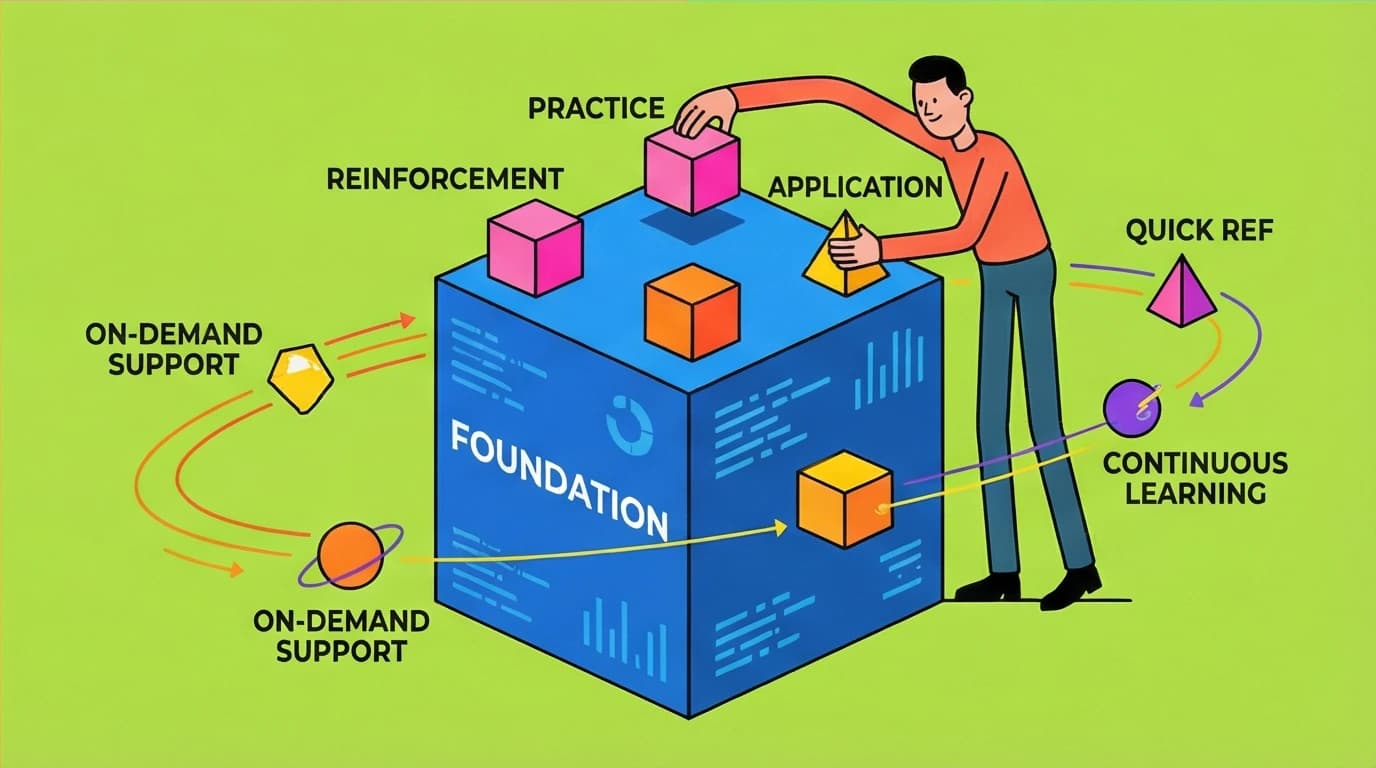
Here is how you execute a high-ROI blended strategy:
Phase 1: Establish the Baseline (Macrolearning)
Use macrolearning to lay the foundation. Bring the team together (virtually or physically) for a deep dive. For example, if you are rolling out a new enterprise-wide sales methodology, use a structured, traditional format to explain the psychology behind the method, the market shift driving it, and the overarching framework.
Phase 2: Drive Retention (Spaced Microlearning)
Once the foundational event ends, the real work begins. Schedule automated microlearning interventions over the next 30 to 60 days. Push short scenario-based videos to the sales team asking them to identify the correct response to a client objection based on the new methodology. This forces active recall and cements the macro concepts into long-term memory.
Phase 3: Provide Performance Support (On-Demand Microlearning)
House a searchable library of specific, task-oriented micro-assets in your Learning Management System (LMS) or integrate them directly into tools like Slack, Microsoft Teams, or Salesforce. When a rep forgets how to log a specific type of deal under the new methodology, they pull up a 60-second tutorial, solve their problem, and get right back to work.
Phase 4: Track Business Metrics, Not Just Completion Rates
Traditional training ROI is notoriously difficult to measure because completion rates tell you nothing about behavior change. A blended strategy gives you better data. You can track exactly which microlearning assets are accessed most frequently. If a two-minute video on "Handling Pricing Objections" gets 5,000 views in a month, you have identified a massive skill gap in real-time, allowing you to deploy targeted coaching before quarterly revenue takes a hit.
Shifting your L&D department's focus from mere completion rates to actual business impact is no small feat. To successfully align your training metrics with your executive team's overarching goals, you need a rigorous operational framework. Measure What Matters introduces the OKR (Objectives and Key Results) system used by top-tier companies in the United States to drive explosive growth. Applying these principles to your blended learning strategy will help you prove undeniable ROI and secure the budget you need to scale your corporate training ecosystem.

Measure What Matters
John Doerr
47 Duration9 Key Points4.5 RateChoosing between microlearning vs macrolearning is a false dichotomy. The modern workforce requires the depth of macrolearning to grow and the agility of microlearning to execute. By systematically aligning the format of your training with the specific cognitive needs of your employees, you will dramatically reduce wasted training hours, improve skill retention, and finally deliver the L&D ROI your executive board demands.
FAQ
Can microlearning completely replace my existing traditional training programs?
No. Microlearning is excellent for skill reinforcement and quick problem-solving, but it lacks the depth required to teach entirely new, complex concepts. If an employee needs to build a new mental framework—such as a new manager learning foundational leadership skills—they require the focused time and structure of macrolearning.
No. Microlearning is excellent for skill reinforcement and quick problem-solving, but it lacks the depth required to teach entirely new, complex concepts. If an employee needs to build a new mental framework—such as a new manager learning foundational leadership skills—they require the focused time and structure of macrolearning.
How do we measure the ROI of microlearning vs macrolearning?
Macrolearning ROI is generally measured over a longer horizon through performance reviews, internal mobility rates, and broad productivity metrics. Microlearning ROI can be measured almost instantly by looking at engagement data (which modules are accessed most often) and correlating that with immediate KPI improvements, such as reduced customer call handle times or faster software adoption rates.
Macrolearning ROI is generally measured over a longer horizon through performance reviews, internal mobility rates, and broad productivity metrics. Microlearning ROI can be measured almost instantly by looking at engagement data (which modules are accessed most often) and correlating that with immediate KPI improvements, such as reduced customer call handle times or faster software adoption rates.
What is the ideal length for a microlearning module?
The industry standard for microlearning is between 2 to 5 minutes. However, the exact length should be dictated by the content. The rule is simple: the module should be exactly as long as it takes to solve one specific problem or teach one single objective, and not a second longer.
The industry standard for microlearning is between 2 to 5 minutes. However, the exact length should be dictated by the content. The rule is simple: the module should be exactly as long as it takes to solve one specific problem or teach one single objective, and not a second longer.
How do I convince leadership to invest in new microlearning tools?
Focus the conversation entirely on time and productivity. Calculate the hourly cost of pulling your workforce off the floor for a traditional multi-hour training session. Contrast that massive expense with the minimal disruption of microlearning, which happens seamlessly in the flow of work. Highlight that microlearning acts as an insurance policy, guaranteeing that the expensive foundational knowledge gained in traditional training is actually retained and applied.
Focus the conversation entirely on time and productivity. Calculate the hourly cost of pulling your workforce off the floor for a traditional multi-hour training session. Contrast that massive expense with the minimal disruption of microlearning, which happens seamlessly in the flow of work. Highlight that microlearning acts as an insurance policy, guaranteeing that the expensive foundational knowledge gained in traditional training is actually retained and applied.