

You miss a deadline at work, snap at your partner, or fail to hit a personal goal, and the internal monologue immediately turns vicious. You call yourself lazy, stupid, or inadequate. When you are running on empty and acting as your own worst critic, generic advice to simply "love yourself" feels disconnected and useless. You need concrete, grounded methods to interrupt that downward mental spiral before it derails your entire day.

Mindful self-compassion is not about making excuses or lowering your standards. It is a proven psychological mechanism for building resilience. When you stop attacking yourself, you free up the mental bandwidth required to actually fix the problem. Here is exactly how to practice self compassion using structured, actionable techniques you can start today.
Mindful self-compassion is not about making excuses or lowering your standards. It is a proven psychological mechanism for building resilience. When you stop attacking yourself, you free up the mental bandwidth required to actually fix the problem. Here is exactly how to practice self compassion using structured, actionable techniques you can start today.
The Core Blueprint: How to Practice Self Compassion
To understand how to practice self compassion effectively, you need to understand its three active ingredients, originally identified by Dr. Kristin Neff:
- Mindfulness: Noticing your pain without exaggerating it.
- Common Humanity: Recognizing that making mistakes and feeling pain is part of the shared human experience, not a unique defect in you.
- Self-Kindness: Actively offering yourself care rather than harsh judgment.
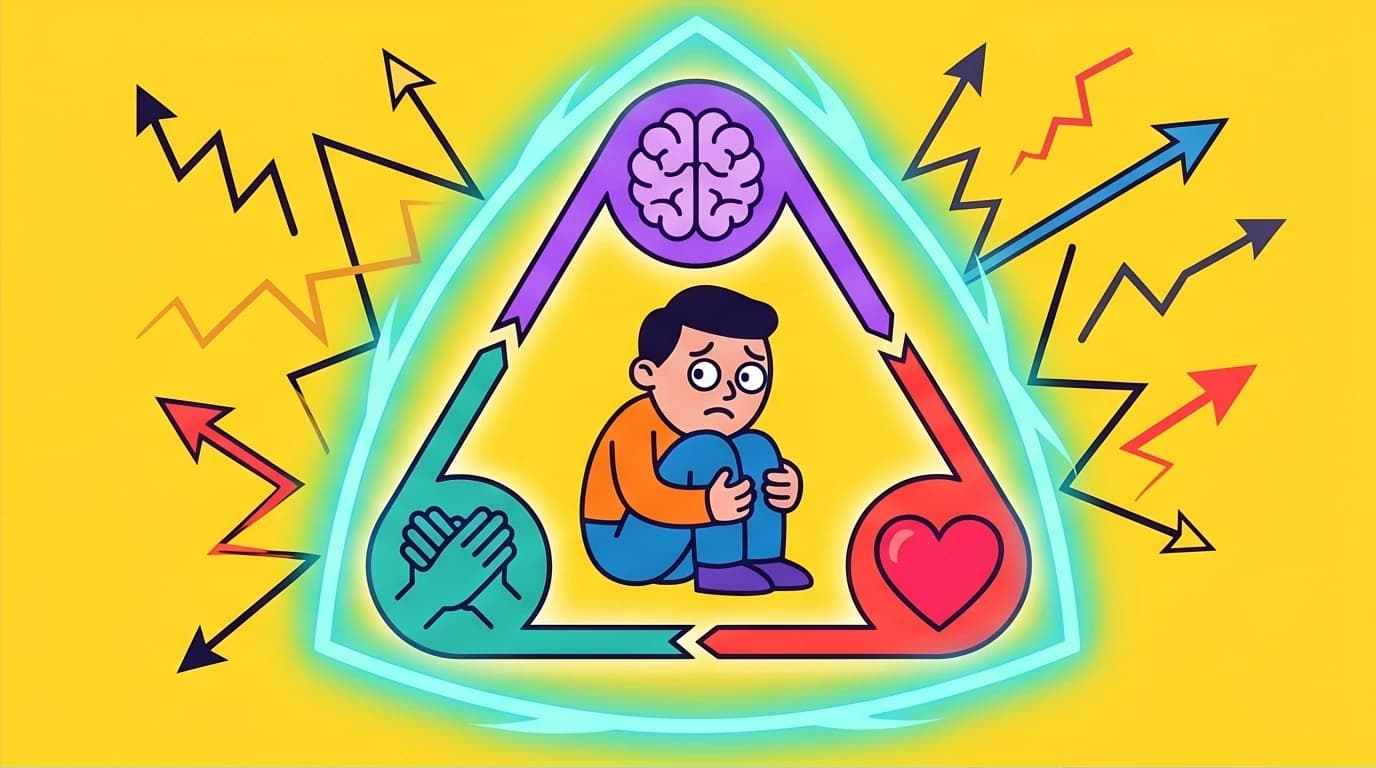
The following mindful self compassion exercises are designed to hit all three of these pillars simultaneously.
These three components are the foundation of a more resilient mindset. Understanding the key differences between mindfulness and self-compassion, and why you need both, is crucial for making these exercises stick.
1. The 3-Minute Self-Compassion Break
This is the ultimate emergency brake for a spiraling mind. When you feel overwhelmed, step away from your desk or pull your car over, and walk through these three statements:
- Acknowledge the pain (Mindfulness): Say to yourself, "This is a moment of suffering," or "This hurts right now," or "I am really stressed." This validates your reality.
- Connect to others (Common Humanity): Say, "Suffering is a part of life," or "Other people feel exactly like this," or "I am not alone in failing at this."
- Offer care (Self-Kindness): Put your hand over your heart, feel the warmth of your palm, and say, "May I be kind to myself in this moment. May I give myself the compassion I need."
2. Supportive Physical Touch
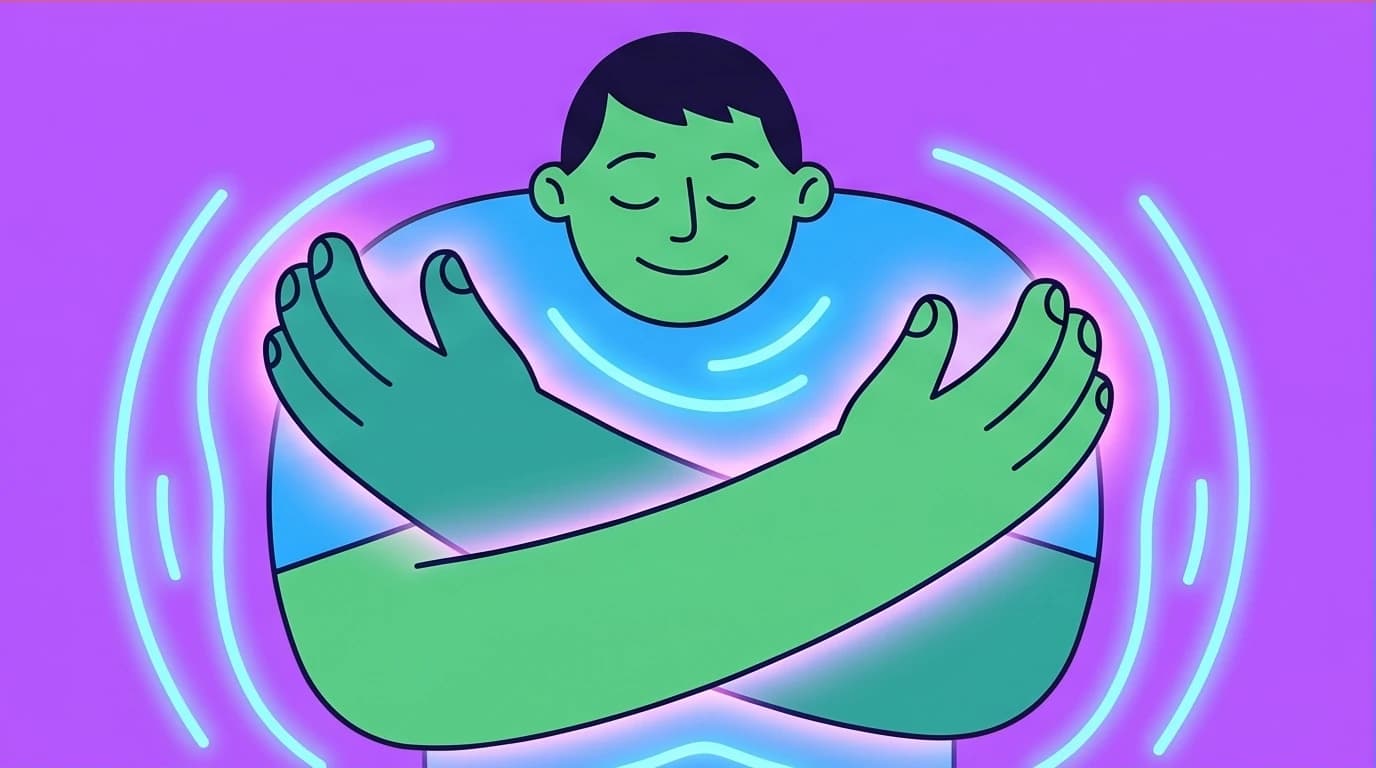
Your nervous system responds to physical touch the same way, regardless of whether that touch comes from you or someone else. When your inner critic is loud, your body goes into fight-or-flight mode. Physical grounding exercises short-circuit this stress response.
- The Heart-Hand Rest: Place both hands over your heart. Notice the gentle pressure and warmth. Breathe normally and focus on the rhythm of your chest rising and falling.
- The Arm Squeeze: Cross your arms and gently squeeze your upper arms, giving yourself a firm but gentle hug.
- Cupping Your Face: Rest your face in your palms as if you were holding the face of a small child.
Hold these positions for just 60 seconds. You do not have to think happy thoughts while doing this; the physical sensation alone will lower your cortisol levels.
Since the article directly references Dr. Kristin Neff's foundational three pillars of self-compassion, diving deeper into her original research is a logical next step. If you want to fully grasp the science behind why we are so hard on ourselves—and how to permanently rewire that instinct—her seminal book is an absolute must-read. It expands beautifully on the concepts of mindfulness, common humanity, and self-kindness, offering practical daily applications to help you treat yourself with the same warmth you would give a best friend.
Self-Compassion
Kristin Neff, Xe Sands, et al.
 26 Duration
 8 Key Points
 4.8 Rate
A Practical Self Compassion Meditation Script
If you struggle to direct your own thoughts, relying on a structured self compassion meditation script is the most reliable way to stay focused. You can record this script into the Voice Memos app on your Apple or Android phone and play it back to yourself during your commute or right before bed.
If you find that listening is an easier way to absorb new concepts, especially when you're too tired or stressed to sit down and read, there are great tools designed for that. You can apply the same principle to learn the key ideas from bestselling self-help books during those same pockets of time.


Listen to the core ideas from books on mindfulness and psychology in just 15 minutes, making it easy to learn even when you're too drained to read.
 LeapAhead
Preparation: Find a quiet space. Sit comfortably with your feet flat on the floor. Take three deep breaths, inhaling through the nose and exhaling slowly through the mouth.
The Script:
"Bring to mind a mild to moderate difficulty you are experiencing right now. A situation that causes you stress, but not overwhelming trauma. Visualize the situation clearly. Who is there? What was said? What happened? [Pause for 5 seconds]
"Bring to mind a mild to moderate difficulty you are experiencing right now. A situation that causes you stress, but not overwhelming trauma. Visualize the situation clearly. Who is there? What was said? What happened? [Pause for 5 seconds]
Notice where you feel the stress of this situation in your body. Is it a tightness in your chest? A clenching in your jaw? A heavy feeling in your stomach? Just observe it. [Pause for 5 seconds]
Now, silently say to yourself: 'This is hard. This is a moment of struggle.' Allow yourself to validate the difficulty without trying to fix it. [Pause for 5 seconds]
Remind yourself: 'Struggle is a normal part of the human experience. Everyone fails, everyone gets tired, and everyone feels inadequate sometimes. I am entirely normal for feeling this way.' [Pause for 5 seconds]
Place your hand over your heart. Feel the warmth of your hand. Say to yourself: 'May I be kind to myself right now. May I accept myself exactly as I am. May I forgive myself for the things I cannot control.' [Pause for 10 seconds]
Take one final deep breath. Let it out slowly. When you are ready, gently open your eyes."
Essential Self Compassion Worksheets and Written Exercises
Putting pen to paper externalizes your inner critic, making it easier to analyze and dismantle. While you can buy excellent guided workbooks at Barnes & Noble or on Amazon, you can create highly effective self compassion worksheets right now using a blank piece of paper.
The "Treating a Friend" Worksheet
Draw a line down the middle of a piece of paper.
- Column A: Think about a time a close friend came to you after failing at something important. Write down the exact words you said to them, the tone of voice you used, and your physical posture toward them.
- Column B: Think about a recent time you failed at something. Write down the exact words you said to yourself, the tone of your internal voice, and how you physically carried yourself.
The Review: Notice the massive gap between Column A and Column B. The exercise forces you to realize the cruelty of your inner critic. Your action step is to rewrite Column B using the exact language and tone from Column A.
The Compassionate Letter Exercise
When you are feeling deeply inadequate about a specific perceived flaw (your career progress, your body, your parenting), write a letter to yourself from the perspective of an unconditionally loving imaginary friend.
- Paragraph 1: Have this "friend" acknowledge your flaw or mistake with pure objectivity. ("I see that you are struggling with your weight right now and feeling ashamed about it.")
- Paragraph 2: Have them remind you of your shared humanity. ("It makes complete sense you are struggling. You work 50 hours a week, and managing stress is incredibly hard. Millions of people are fighting this exact same battle.")
- Paragraph 3: Express deep compassion and support. ("Regardless of this struggle, I care about you deeply. You are inherently valuable. What can we do today to make you feel just a little bit better?")
Read this letter back to yourself whenever the inner critic takes the wheel.
Sometimes, no matter how many letters you write or worksheets you fill out, that nagging voice in your head just refuses to quiet down. If you're constantly battling feelings of inadequacy or fighting off imposter syndrome, you might need a more targeted approach to put your inner critic in its proper place. Learning how to disarm that persistent negativity and reclaim your creative confidence can be incredibly liberating. If you are ready to finally stop letting self-doubt call the shots, there is a fantastic resource that tackles this exact struggle with much-needed humor and deeply relatable advice.
Your Inner Critic is a Big Jerk
Danielle Krysa
50 Duration10 Key Points4.7 RateIntegrating Daily Mindfulness Practices
Mindful self compassion exercises fail when they are only used during a crisis. To build resilience, you must weave daily mindfulness practices into your routine so self-kindness becomes your default setting.
Morning Habit Stacking
Do not add a new 30-minute routine to your morning. Instead, attach a 30-second mindfulness practice to an existing habit. While your coffee is brewing, or while you are waiting for the shower water to warm up, set an intention. Say out loud: "Today, I will inevitably make a mistake. When I do, I will treat myself as an ally, not an enemy."
The Mid-Day Check-In
Set an alarm on your phone for 1:00 PM. When it goes off, perform a quick body scan. Drop your shoulders, unclench your jaw, and ask yourself one simple question: "What do I need right now?"
Sometimes the answer is a glass of water. Sometimes it is five minutes away from your screen. Responding to your own basic needs is a foundational act of self-compassion.
Sometimes the answer is a glass of water. Sometimes it is five minutes away from your screen. Responding to your own basic needs is a foundational act of self-compassion.
The Evening Review (Replacing the Rumination)
Instead of lying in bed agonizing over everything you did wrong that day, forcefully redirect your attention. Write down three things you handled well, even if they were tiny. If you had a terrible day, write down: "I survived a very difficult day, and I am allowed to rest now."
Weaving new mindfulness routines into a busy American lifestyle is notoriously difficult, especially when you are already stretched thin. As mentioned earlier, the secret isn't overhauling your entire schedule overnight; it is all about "habit stacking" and attaching tiny, positive behaviors to things you already do every single day. If you want to master the art of building these incremental routines without feeling overwhelmed, understanding the psychology of habit formation is crucial. Learning how microscopic changes can compound into massive emotional and physical transformations will make your daily self-compassion journey much smoother.

Atomic Habits
James Clear
26 Duration8 Key Points4.7 RatePitfalls: When Self-Compassion Feels Uncomfortable
When you first begin mindful self compassion exercises, you might hit a wall. It is critical to know about these obstacles so you do not quit prematurely.
The "Backdraft" Effect

When you open the door of a burning building, oxygen rushes in and flames shoot out. This is called backdraft. The same thing happens emotionally. When you finally offer yourself unconditional kindness after years of harsh self-criticism, old pain, grief, or anger might suddenly rush to the surface.
If practicing self-compassion makes you cry or feel temporarily worse, you are not doing it wrong. Your mind is finally relaxing enough to process pent-up stress. If the backdraft feels too intense, scale back. Focus on simpler, more grounded daily mindfulness practices like feeling the soles of your feet on the floor, or washing your hands with warm water, until you feel stable enough to try the emotional exercises again.
The Fear of Laziness
Many high-achievers resist self-compassion because they believe their inner critic is the only thing keeping them productive. They fear that if they are nice to themselves, they will sit on the couch all day and accomplish nothing.
Data proves the exact opposite. Self-criticism generates anxiety and fear of failure, which actually leads to procrastination and burnout. Self-compassion creates a safe mental environment. When failure is not punished by brutal mental attacks, you become much more willing to take risks, learn from mistakes, and bounce back quickly.
The shift from a critical to a supportive inner voice is the ultimate goal. For a deeper look at practical strategies to challenge negative self-talk and overcome the patterns of self-criticism, it's helpful to have a dedicated guide.
The fear that self-compassion breeds laziness is incredibly common, especially in fast-paced work environments where chronic stress is practically worn as a badge of honor. However, constantly running on the fumes of self-criticism and anxiety is a one-way ticket to complete emotional exhaustion. If you feel like you are trapped in a cycle of overworking, stressing, and crashing, it is critical to understand the biological stress cycle and how to properly close it. For anyone struggling to differentiate between healthy ambition and toxic, burnout-inducing pressure, learning how to unlock your body's natural stress-relief mechanisms is a true game changer.

Burnout
Emily Nagoski, Ph.D., Amelia Nagoski, DMA
25 Duration9 Key Points4.5 RateThroughout this article, we’ve touched on powerful concepts from authors like Dr. Kristin Neff and James Clear. If you're feeling inspired to dive deeper but overwhelmed by a growing to-read list, there's a practical way to start learning from these experts today.
Absorb the main insights from books on self-compassion, habits, and burnout in 15-minute audio or text summaries, turning your commute into productive learning time.
LeapAheadFAQ
Is self-compassion just making excuses for bad behavior?
No. Self-compassion requires clear-eyed mindfulness, which means acknowledging exactly what happened without distortion. If you made a mistake at work, self-compassion does not say, "It wasn't my fault." It says, "I made a mistake, and I am responsible for fixing it, but I do not need to mentally abuse myself in the process of fixing it."
No. Self-compassion requires clear-eyed mindfulness, which means acknowledging exactly what happened without distortion. If you made a mistake at work, self-compassion does not say, "It wasn't my fault." It says, "I made a mistake, and I am responsible for fixing it, but I do not need to mentally abuse myself in the process of fixing it."
Why do I feel worse or want to cry when I try these exercises?
This is a common psychological phenomenon called "backdraft." When you finally give yourself the kindness you have been lacking for years, old emotional pain often surfaces. It is a sign the exercises are working. If it becomes overwhelming, stop the exercise, open your eyes, and focus on physical grounding techniques (like petting a dog or drinking a cold glass of water) until you feel regulated.
This is a common psychological phenomenon called "backdraft." When you finally give yourself the kindness you have been lacking for years, old emotional pain often surfaces. It is a sign the exercises are working. If it becomes overwhelming, stop the exercise, open your eyes, and focus on physical grounding techniques (like petting a dog or drinking a cold glass of water) until you feel regulated.
How long does it take to see results from mindful self compassion exercises?
While physical gestures (like hand-over-heart) can lower your heart rate and cortisol levels in a matter of seconds, changing your default mental monologue takes time. Most people who consistently integrate these practices into their daily routines notice a significant reduction in anxiety and self-criticism within three to four weeks.
While physical gestures (like hand-over-heart) can lower your heart rate and cortisol levels in a matter of seconds, changing your default mental monologue takes time. Most people who consistently integrate these practices into their daily routines notice a significant reduction in anxiety and self-criticism within three to four weeks.
Do I have to meditate to practice self-compassion?
Absolutely not. While seated meditation is one way to build the skill, written worksheets, physical touch gestures, and quick behavioral check-ins are equally valid. The goal is the attitude of self-kindness, not the specific posture you use to get there.
Absolutely not. While seated meditation is one way to build the skill, written worksheets, physical touch gestures, and quick behavioral check-ins are equally valid. The goal is the attitude of self-kindness, not the specific posture you use to get there.