


Your heart rate spikes over an email. Your mind races at 2 AM about a project deadline that is still weeks away. You try taking a deep breath, perhaps you even step away from your desk for a few minutes, but the moment you return, the crushing weight of anxiety is right back sitting on your chest. You are hitting the hard limits of surface-level stress management. Taking a hot bath or going for a run might momentarily burn off excess adrenaline, but they do not change the structural way your mind interacts with the demands of life.
If you want to stop feeling constantly overwhelmed, you have to stop treating the symptoms. You need a fundamental overhaul of how you perceive and process threats. This requires looking under the hood of your own nervous system.
The Trap of Symptom Management
Most mainstream advice treats stress like a temporary infection: take a weekend off, download a meditation app, and hope the symptoms disappear. This approach fundamentally misunderstands the modern human condition.
You cannot eliminate stressors. Bills will arrive, bosses will demand results, and traffic on the interstate will stall for miles. When you focus solely on trying to relax after the stress has occurred, you remain trapped in a reactive loop. You are essentially bailing water out of a sinking boat without patching the hole.
The goal is not to live a life free of friction. A friction-free life does not exist. The objective is to build a psychological shock absorber so that the bumps in the road no longer break your axle. This is where clinical, evidence-based mindfulness enters the picture. It provides the exact mental tools needed to step outside the panic loop and restructure your cognitive baseline.
Decoding the Psychology of Stress
To change your relationship with pressure, you must first understand the underlying psychology of stress. Your brain is an ancient survival machine operating in a modern environment. It is designed to keep you alive, not to keep you happy.
When you encounter a perceived threat, a small, almond-shaped structure in your brain called the amygdala sounds the alarm. It floods your body with cortisol and adrenaline. Blood rushes to your extremities. Your heart pounds. This is the classic fight-or-flight response. Thousands of years ago, this response was perfect for escaping a physical predator.
Today, your amygdala cannot tell the difference between a charging bear and an aggressive Slack message from your manager. It triggers the exact same biological cascade. Worse, because modern stressors are chronic rather than acute, your alarm system gets stuck in the "on" position.

When the amygdala is hyperactive, it suppresses the prefrontal cortex—the part of your brain responsible for logic, planning, and rational thought. This is why you cannot "think" your way out of a panic attack. Your executive function has been temporarily disconnected. Chronic stress literally shrinks the prefrontal cortex and enlarges the amygdala. You become neurologically wired to scan for threats, making you increasingly reactive to smaller and smaller triggers.
If you want to truly understand how this physiological hijacking works, it helps to look at the science of how our bodies store chronic tension. When your internal alarm system is stuck in the "on" position, the physical toll can be immense. For a deep, eye-opening look into how stress and trauma physically alter our brain networks and nervous systems, The Body Keeps the Score is an absolute must-read. It beautifully breaks down the biology of overwhelm and offers a clinical roadmap for resetting your body's baseline.
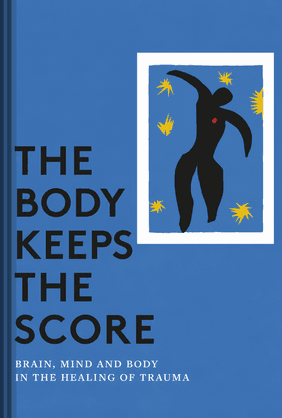
The Body Keeps The Score
Bessel Van Der Kolk
 32 Duration
 10 Key Points
 4.5 Rate
Since so many of these modern triggers originate in our professional lives, it's crucial to have specific strategies for the office. For a closer look at targeted approaches for the workplace, explore these tips for handling pressure on the job.
The Anchor: Mindfulness for Stress Reduction
How do you break this biological hijacking? You use mindfulness to create a wedge between the stimulus and your response.
Mindfulness for stress reduction is frequently misunderstood as clearing your mind or reaching a state of blissful emptiness. This is a myth. Mindfulness is the active, non-judgmental observation of your present experience. It is the practice of noticing your thoughts and physical sensations without getting swept away by them.
When you practice mindfulness, you are doing heavy lifting for your prefrontal cortex. You are activating the brain's "observer" mode. By simply noticing that you are stressed—"My chest is tight, my thoughts are racing about tomorrow's presentation"—you send a signal to the amygdala that the threat is not a physical emergency. You begin to deactivate the alarm system.
You stop being the storm and become the sky watching the storm. This separation is the precise moment where you regain control over your behavioral response.

Of course, knowing that you need to be more mindful is one thing; actually doing it when you are drowning in deadlines and commuting through heavy stateside traffic is another. If the idea of sitting cross-legged and chanting feels completely out of touch with your fast-paced American lifestyle, Meditation for Fidgety Skeptics is the perfect entry point. It strips away the woo-woo mysticism and delivers a highly practical, BS-free guide to training your prefrontal cortex without needing to retreat to a mountaintop.
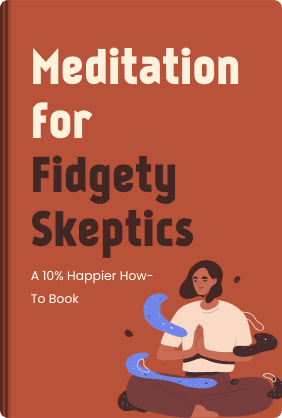
Meditation for Fidgety Skeptics
Dan Harris, Jeff Warren, Carlye Adler
36 Duration9 Key Points4.6 RateImplementing Cognitive Reframing Techniques
Observation alone is powerful, but true mental hardiness requires active intervention. Once mindfulness has created that gap between trigger and reaction, you must use cognitive reframing techniques to change the narrative your brain is constructing.
Cognitive reframing is a core concept in cognitive behavioral therapy (CBT). It involves identifying irrational or unhelpful thoughts and challenging them with logic and reality. Under stress, your brain defaults to cognitive distortions. You catastrophize ("If I mess up this report, I will get fired and lose my house") or engage in black-and-white thinking ("This entire project is a complete failure").
Here is a practical framework to integrate reframing into your high-stress moments:
Step 1: Catch the Distortion
Use your mindfulness practice to catch the spiraling thought. Label it objectively. Say to yourself, "I am having the thought that I am going to fail." Notice the language. You are not saying "I will fail." You are acknowledging the presence of a thought. This distances your identity from the anxiety.
Step 2: Examine the Evidence
Interrogate the thought like a skeptical lawyer. What is the actual evidence supporting this catastrophic prediction? What is the evidence against it? Have you handled similar tight deadlines before? Yes. Do you have a track record of competence? Yes.
Step 3: Construct the Reframe
Replace the distorted thought with an accurate, balanced alternative.
Original thought: "I am completely overwhelmed and I am going to ruin this presentation."
Reframed thought: "I am feeling a lot of physical anxiety right now because this presentation is important. I have prepared for it, and even if I make a mistake, I have the skills to recover and deliver the core message."
Original thought: "I am completely overwhelmed and I am going to ruin this presentation."
Reframed thought: "I am feeling a lot of physical anxiety right now because this presentation is important. I have prepared for it, and even if I make a mistake, I have the skills to recover and deliver the core message."
You are not lying to yourself with toxic positivity. You are forcing your brain to operate in reality rather than in a fabricated nightmare.
Mastering this kind of cognitive reframing requires you to intimately understand your own inner dialogue. The conversations you have with yourself can either act as a harsh critic or a supportive coach. To really dive into the mechanics of why our inner voice spirals out of control—and how to harness it to your advantage—Chatter is an incredible resource. It offers science-backed tools to step back from the mental noise and reframe those destructive, catastrophizing thoughts into focused, rational action.
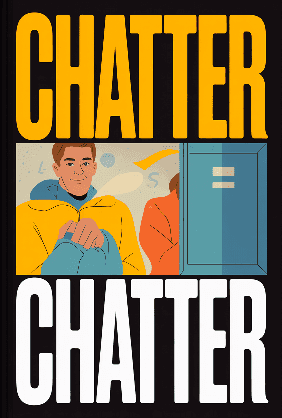
Chatter
Ethan Kross, Ph.D.
23 Duration10 Key Points4.3 RateActivating the Mindset Shift for Stress
Reframing individual thoughts builds the foundation for a much larger, systemic mindset shift for stress. Decades of psychological research reveal a fascinating truth: the way you view stress dictates how your body processes it.
If you believe stress is inherently harmful, debilitating, and a sign that something is wrong with your life, your body will release higher levels of toxic stress hormones. Your blood vessels will constrict. You will physically wear down faster.
However, if you adopt a "stress-is-enhancing" mindset, everything changes. This involves viewing the physiological arousal of stress—the pounding heart, the sharp focus—not as anxiety, but as your body preparing you to meet a challenge. Your blood vessels remain open. Your body releases DHEA, a neurosteroid that promotes brain growth and resilience.

This is the ultimate mindset shift. When the pressure mounts, stop telling yourself to calm down. Instead, recognize the physical sensations as biological fuel. Tell yourself, "My body is giving me the energy I need to handle this difficult situation." You transform the stress from a destructive force into a functional tool.
Rethinking your biological response to pressure is one of the most powerful changes you can make. The idea that stress can actually make you smarter, stronger, and more successful flies in the face of everything we are typically taught in our modern hustle culture. If you want to explore the fascinating studies behind this phenomenon and learn how to fully embrace this mindset shift, The Upside of Stress is a total game-changer. It will completely transform the way you approach high-stakes projects, tight schedules, and the everyday friction of life.
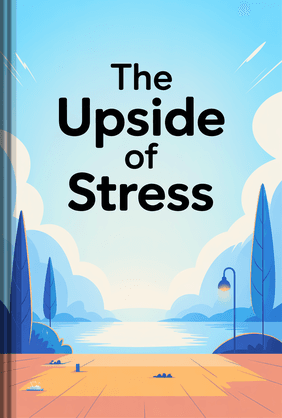
The Upside of Stress
Kelly McGonigal
42 Duration9 Key Points4.4 RateWhile these books offer a complete roadmap, finding the time to read them cover-to-cover can feel overwhelming when you're already managing a full plate. If you want to get the core insights without the time commitment, a specialized app can help.


LeapAhead delivers the key takeaways from bestselling books on stress and psychology in 15-minute summaries, making it easy to learn these resilience-building techniques on the go.
 LeapAhead
How to Build Resilience in Daily Life
Resilience is not a personality trait you are born with; it is a muscle you build through deliberate, consistent repetitions. Understanding the theory is useless if you do not operationalize it. If you want to know how to build resilience that actually holds up during a crisis, you must integrate small, systematic practices into your routine.
Do not wait for a major life crisis to try these techniques. Train during peacetime.
The S.T.O.P. Protocol
Implement this micro-practice whenever you transition between intense tasks or feel the initial wave of overwhelm:
- S - Stop: Literally pause what you are doing. Take your hands off the keyboard. Put your phone down.
- T - Take a breath: Take one deep, intentional breath. Feel the air expand your stomach.
- O - Observe: What is happening in your body? Is your jaw clenched? What is your mind saying? Just notice it without trying to fix it.
- P - Proceed: Ask yourself, "What is the most effective and constructive thing I can do right now?" Choose your next action deliberately, rather than reacting blindly.
Anchor Routines
Attach mindfulness to an existing daily habit. If you drive to work, use the first two miles of your commute to turn off the radio, grip the steering wheel, and bring your full attention to the physical sensation of driving. If you drink a morning coffee, spend the first three sips completely focused on the temperature and taste. These micro-moments of anchoring train your brain to snap back to the present moment, building the neural pathways required to pull yourself out of a stress spiral later in the day.
Curate Your Cognitive Input
The psychology of stress dictates that your brain processes what it consumes. If you are constantly doomscrolling or engaging with high-anxiety environments, your baseline stress will remain elevated. Take control of your your inputs. Swap an hour of social media for a challenging but engaging audiobook on Audible, or read material that expands your perspective. The books you find in the psychology section of Barnes & Noble or highly-rated reads on Goodreads regarding cognitive behavioral therapy can reinforce the mental frameworks you are trying to build. You must actively feed your mind high-quality fuel.
For a deeper dive into the most effective daily routines and habits that can proactively reduce anxiety, building a strong foundation is key.
If swapping an hour of scrolling for a full book feels like too big of a leap, you can start smaller. Turning short breaks or your commute into learning time is one of the most effective ways to build this habit without feeling more exhausted.
LeapAhead is designed for this exact purpose, offering 15-minute audio summaries of books that build mental toughness, so you can fuel your mind without needing hours of free time.
LeapAheadThe Long Game of Mental Mastery
Changing your fundamental relationship with stress is uncomfortable. It requires you to sit with difficult emotions rather than immediately numbing them. It demands that you confront the cognitive distortions you have relied on for years.
But the return on investment is total mental autonomy. Mindfulness for stress reduction is the ultimate leverage. By mastering your attention, understanding your biological responses, and systematically reframing your thoughts, you cease to be a victim of your circumstances. You build a psychological architecture capable of absorbing the chaos of life, processing it, and using it to grow stronger. You do not just survive the pressure; you learn how to navigate it with absolute clarity.
FAQ
Can mindfulness actually cure chronic burnout?
Mindfulness alone is not a cure-all for severe burnout, especially if you are in a highly toxic environment. However, it is an essential recovery tool. Burnout damages your nervous system and locks you in a state of exhaustion. Mindfulness practices help regulate your nervous system, allowing your brain to transition from a state of chronic alarm back to baseline rest and digest. It creates the mental clarity needed to make larger life or career changes.
Mindfulness alone is not a cure-all for severe burnout, especially if you are in a highly toxic environment. However, it is an essential recovery tool. Burnout damages your nervous system and locks you in a state of exhaustion. Mindfulness practices help regulate your nervous system, allowing your brain to transition from a state of chronic alarm back to baseline rest and digest. It creates the mental clarity needed to make larger life or career changes.
How long does it take to see changes in my stress levels?
Neuroplasticity—the brain's ability to rewire itself—takes time. While a single breathing exercise can lower your heart rate instantly, fundamentally changing your psychological baseline usually requires 4 to 8 weeks of consistent, daily practice. You will slowly notice a "gap" developing between a stressful event and your reaction, giving you more time to choose how to respond.
Neuroplasticity—the brain's ability to rewire itself—takes time. While a single breathing exercise can lower your heart rate instantly, fundamentally changing your psychological baseline usually requires 4 to 8 weeks of consistent, daily practice. You will slowly notice a "gap" developing between a stressful event and your reaction, giving you more time to choose how to respond.
Is mindfulness just meditation? What if I cannot clear my mind?
Mindfulness is not about clearing your mind; that is the most common and frustrating misconception. The mind is designed to think. Mindfulness is simply the act of noticing that you are thinking. Meditation is just one formal way to practice mindfulness. If you cannot sit still, you can practice mindfulness while walking, washing dishes, or listening to a colleague. Every time you realize your mind has wandered and you bring your focus back to the present task, you have successfully practiced mindfulness.
Mindfulness is not about clearing your mind; that is the most common and frustrating misconception. The mind is designed to think. Mindfulness is simply the act of noticing that you are thinking. Meditation is just one formal way to practice mindfulness. If you cannot sit still, you can practice mindfulness while walking, washing dishes, or listening to a colleague. Every time you realize your mind has wandered and you bring your focus back to the present task, you have successfully practiced mindfulness.