


You wake up, look at your phone, and instantly feel behind. Between morning meetings, dropping the kids off at school, and an endless stream of household chores, your schedule is running you—not the other way around. The connection between time management and stress is direct and unforgiving. When you have zero control over your calendar, your brain stays locked in a perpetual state of fight-or-flight.
You do not need a complicated color-coded planner to fix this. You need a functional system that fits into the chaotic reality of an adult life. Here is exactly how to stop drowning in your to-do list and start taking your time back.
The Reality of Time Management and Stress
Most people misunderstand what time management actually is. They think it means squeezing 30 hours of productivity into a 24-hour day. That approach only accelerates burnout.
True time management is energy management. When you fail to allocate your time effectively, small tasks pile up into massive mental hurdles. A forgotten email turns into an angry client. A delayed trip to the grocery store means an expensive, unhealthy takeout dinner. This constant cycle of reacting to emergencies floods your system with cortisol.

To break the cycle, you have to shift from defensive reacting to proactive planning.
If you constantly feel like you are losing a race against the clock, it might be time to rethink your relationship with productivity entirely. Trying to hack your way to a 30-hour day is a recipe for disaster. Instead of focusing on getting more done, it is often more effective to embrace your limits. A fantastic read that challenges our obsession with endless efficiency and helps you find peace in a chaotic world is Four Thousand Weeks. This book offers a refreshing, realistic approach to time management that focuses on what truly matters rather than just checking off boxes.
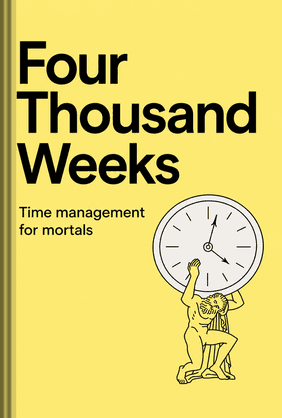
Four Thousand Weeks
Oliver Burkeman
 36 Duration
 7 Key Points
 4.6 Rate
Step 1: Organizing Life to Reduce Stress
When it comes to organizing life to reduce stress, the goal is simplification. You have to lower the friction of your daily tasks.
Audit Your Reality
You cannot fix a schedule if you do not know where your time goes. Spend just three days tracking your activities. You will quickly realize how much time disappears into a void of doom-scrolling, searching for lost items, or deciding what to cook for dinner.
Automate and Outsource the Basics
Stop using your limited mental bandwidth on repetitive decisions.
- Set up subscriptions: Use Amazon Subscribe & Save for household basics like paper towels, pet food, and laundry detergent.
- Batch your errands: Do not drive 5 miles across town three different times a week. Group your trips.
- Meal plan: Decide what you are eating on Sunday. The simple act of removing the 5:00 PM "What's for dinner?" debate will significantly lower your evening stress.
Step 2: Creating a Functional Stress Management Plan
A solid stress management plan does not require you to be a robot. It requires boundaries.
The Rule of Three
Ditch the 25-item to-do list. It is a massive source of anxiety. Instead, write down just three critical tasks you must complete today. If you only accomplish those three things, the day is a success. Everything else is a bonus. This forces you to prioritize what actually moves the needle rather than just clearing out easy, low-value tasks.

Narrowing down your focus to just a few essential items can feel uncomfortable at first, especially when you are used to juggling a dozen projects simultaneously. However, learning to identify the single most impactful task on your plate is the fastest way to reduce daily friction and make real progress. If you want to dive deeper into this philosophy and learn how to ruthlessly prioritize your life and career, The ONE Thing is a highly recommended resource. It provides a straightforward framework for cutting through the clutter and dedicating your energy to the tasks that yield the highest return.

The ONE Thing
Gary Keller, Jay Papasan
22 Duration10 Key Points4.5 RateMany of these principles are especially critical in a professional setting, where deadlines and demands can quickly lead to overwhelm. For a deeper look at applying these ideas to your career, explore our guide on managing stress at work.
Feeling inspired by these book suggestions but overwhelmed by the idea of adding more to your reading list? There's a way to get the core insights without the time commitment.


Get the core ideas from bestselling productivity books like these in just 15 minutes, making it easier to learn new strategies without adding to your reading list.
 LeapAhead
Time Blocking
Your brain cannot switch seamlessly between writing a report, answering a text from your spouse, and scheduling a dentist appointment. Multitasking is a myth that drains your focus and spikes your anxiety.
Divide your day into dedicated blocks of time:
- Deep Work Block: 90 minutes of zero distractions. Phone in another room.
- Admin Block: 30 minutes specifically for clearing emails, paying bills, and making calls.
- Buffer Blocks: Do not schedule meetings back-to-back. Leave 15 minutes between tasks to grab water, use the restroom, or simply breathe.
Step 3: Proactive Tactics for Preventing Stress
The best way to handle stress is to stop it before it starts. Preventing stress requires you to protect your schedule fiercely.
Learn to Say "No"
Every time you say "yes" to something you do not want to do, you are saying "no" to your own rest. You do not have to volunteer for every school bake sale or join every optional work committee. "I don't have the bandwidth for this right now" is a complete sentence.

Setting these kinds of limits is often easier said than done, particularly if you are a chronic people-pleaser. The guilt of turning down a request can sometimes feel just as stressful as taking on the extra work. However, mastering the art of pushing back is absolutely essential for your mental health. To get comfortable with drawing lines in the sand without feeling guilty, check out Set Boundaries, Find Peace. It is an incredibly practical guide that will teach you exactly how to communicate your limits clearly, both in the workplace and in your personal life.

Set Boundaries, Find Peace
Nedra Glover Tawwab
29 Duration10 Key Points4.5 RateEstimate Accurately (The Planning Fallacy)
Humans are notoriously bad at guessing how long tasks will take. We assume traffic will be perfect and technology will cooperate. If you think a project will take one hour, block out an hour and a half. Giving yourself a realistic timeline eliminates the panic of watching the clock.
Step 4: Daily Habits for Stress Relief
You do not need an extensive two-hour morning routine involving meditation and an ice bath to feel centered. Focus on practical daily habits for stress relief that anchor your day.
- The 10-Minute Evening Reset: Before bed, spend 10 minutes resetting your environment. Start the dishwasher, lay out your clothes, and write down tomorrow's "Rule of Three." Waking up to a clean kitchen and a clear plan sets a calm tone for the entire day.
- Consume Content Wisely: If you have a long commute, stop listening to stress-inducing news. Put on an Audible book or a podcast you love. Turn dead time into recovery time.
- Move for 20 Minutes: You do not need a complicated gym routine. Walk around your neighborhood. Get your heart rate up. Physical movement is the fastest biological way to process and clear stress hormones from your body.
If a full audiobook feels like too much of a commitment on a low-energy day, you can still make your commute productive.
Turn your commute into a quick learning session by listening to the key takeaways from nonfiction books in an easy-to-digest audio format.
LeapAheadBuilding these types of daily routines does not require sheer willpower; it requires a smart strategy. Many people fail at creating new, healthy habits because they try to change too much too fast, leading to immediate burnout. The secret to lasting change is starting so small that failure is nearly impossible. If you are struggling to make your stress-relief routines stick, Tiny Habits breaks down the science of behavior change. It will show you how to anchor new positive actions to your existing schedule, making self-care an automatic part of your day.
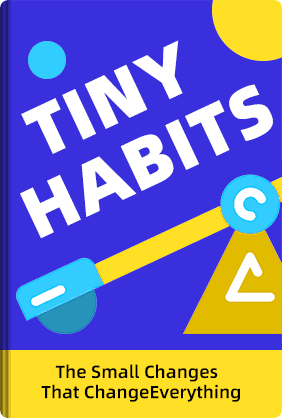
Tiny Habits
BJ Fogg, Ph.D.
40 Duration8 Key Points4.7 RateAlongside these structural habits, cultivating a resilient mindset is key. Building a simple daily practice can fundamentally change how you react to stressful situations. Discover how mindfulness for stress reduction can help you build that resilience.
Common Traps to Avoid
- Toxic Productivity: Believing your worth is tied to how much you get done. Rest is a requirement, not a reward.
- The "I'll Just Remember It" Trap: Your brain is a terrible filing cabinet. Put every deadline, school event, and reminder into a digital calendar immediately.
- Chasing Perfection: Done is better than perfect. If the house is messy but the kids are fed and your work is submitted, you won the day.
FAQ
How do I manage time when unexpected emergencies happen every day?
Build flex time into your schedule. If you know chaos is inevitable, leave 20% of your day completely blank. When the school calls or a client has an emergency, you have a built-in cushion to handle it without blowing up your entire day.
Build flex time into your schedule. If you know chaos is inevitable, leave 20% of your day completely blank. When the school calls or a client has an emergency, you have a built-in cushion to handle it without blowing up your entire day.
Does scheduling my free time ruin the fun?
No. Scheduling free time guarantees it actually happens. If you leave rest up to chance, chores and work will bleed into your evenings and weekends. Block out "family time" or "reading time" on your calendar and treat it with the same respect as a meeting with your boss.
No. Scheduling free time guarantees it actually happens. If you leave rest up to chance, chores and work will bleed into your evenings and weekends. Block out "family time" or "reading time" on your calendar and treat it with the same respect as a meeting with your boss.
What if I’m too exhausted to stick to a routine?
Start impossibly small. Do not try to overhaul your entire life by Monday. Pick one single habit—like the 10-minute evening reset or writing down three daily tasks—and do only that for two weeks. Consistency builds momentum.
Start impossibly small. Do not try to overhaul your entire life by Monday. Pick one single habit—like the 10-minute evening reset or writing down three daily tasks—and do only that for two weeks. Consistency builds momentum.
How long does it take to see a reduction in stress once I start organizing my time?
You will likely feel a sense of relief immediately just by writing tasks down and getting them out of your head. However, adjusting to a new schedule and firmly enforcing boundaries usually takes about two to three weeks before it feels natural and significantly lowers your daily baseline anxiety.
You will likely feel a sense of relief immediately just by writing tasks down and getting them out of your head. However, adjusting to a new schedule and firmly enforcing boundaries usually takes about two to three weeks before it feels natural and significantly lowers your daily baseline anxiety.