


You are staring at a blank presentation slide or a half-finished essay, knowing you need a compelling hook. You want to challenge the myth of the "self-made" genius, but skimming through a 300-page book to find the perfect anchor takes hours you do not have. You need the exact phrasing of the 10,000-hour rule or the right anecdote to drive your message home right now.
Finding the right words matters. When you leverage Outliers Malcolm Gladwell quotes, you instantly tap into recognized cultural touchstones. This guide breaks down the essential quotes, the famous stories behind them, and exactly how to use them in your own content.
If you need the key insights from Outliers and other bestselling non-fiction but are short on time, an app can help you grasp the core arguments in minutes.


Summarizes books like Outliers into 15-minute audio or text explainers, perfect for quickly finding the concepts you need for a presentation or project.
 LeapAhead
Decoding the Outliers Meaning Gladwell Presents
Before dropping quotes into your slide deck, you need the foundational context. The traditional narrative tells us that highly successful people achieve greatness strictly through grit and innate brilliance. Gladwell turns this upside down.
To capture the true outliers meaning Gladwell intended, you must look at the ecosystem of success. It is about birth months, cultural legacies, historical timing, and sheer luck. An outlier is someone who was given an opportunity and had the exact right conditions to seize it.
If you are speaking to a team or writing a motivational piece, this is a liberating concept. It shifts the focus from "you must be born a genius" to "you must recognize and capitalize on your unique opportunities."
Since this entire article breaks down the paradigm-shifting concepts from Malcolm Gladwell's famous work, it is the perfect time to dive into the source material if you haven't already. While these quotes offer fantastic quick insights for your next presentation, reading the full text reveals the rich, detailed case studies behind them—from Canadian hockey players to the cultural legacies of airline pilots. It is an essential read for anyone who wants a complete understanding of how hidden advantages and lucky timing truly shape extraordinary success in the United States and beyond.

Outliers
Malcolm Gladwell
 43 Duration
 8 Key Points
 4.5 Rate
The Best Quotes From Outliers by Topic
If you want the best quotes from Outliers, you need to organize them by the specific argument you are trying to make. Here are the most impactful lines categorized by theme, paired with the famous case studies that back them up.
On the 10,000-Hour Rule and Mastery
"Practice isn't the thing you do once you're good. It's the thing you do that makes you good."
"Ten thousand hours is the magic number of greatness."
The Context: These are the absolute anchors of the book. Use these quotes when you need to shift an audience's mindset from innate talent to actionable, sustained effort. It is perfect for coaching sessions, student motivation, or skill-building workshops.
The Supporting Case Study: The Outliers Beatles 10000 hours story is the best way to illustrate this. Most people think The Beatles just burst out of Liverpool with natural genius. Gladwell points out that before they ever had a hit in America, they were invited to play in the strip clubs of Hamburg, Germany.
They did not just practice in a garage. They were forced to play live on stage for eight hours a night, seven days a week. By the time they arrived in the United States in 1964 and sparked the British Invasion, they had performed live an estimated 1,200 times. Most bands today do not perform 1,200 times in their entire careers. That intense, concentrated crucible is the true weight of the 10,000 hours.

On Opportunity, Timing, and Luck
"Outliers are those who have been given opportunities—and who have had the strength and presence of mind to seize them."
"Superstar lawyers and math whizzes and software entrepreneurs appear at first blush to lie outside ordinary experience. But they don't. They are products of history and community, of opportunity and legacy."
The Context: Use these quotes to ground arrogant leaders, to encourage gratitude, or to explain market dynamics. Success does not happen in a vacuum.
The Supporting Case Study: The Outliers Bill Gates story perfectly illustrates this. Bill Gates is undeniably brilliant. But Gladwell points out a massive, unprecedented hidden advantage. In 1968, as an eighth-grader, Gates had access to a time-sharing computer terminal at Lakeside School in Seattle. At that time, most university professors did not have that kind of computing power.
Gates practically lived in that computer room. By the time he dropped out of Harvard to start Microsoft, he was one of the only teenagers in the world with thousands of hours of real-time programming experience. His genius was necessary, but his access to a computer in 1968 was the luck that made the genius matter.
Gladwell's analysis of Bill Gates reveals that success is a complex mix of talent, hard work, and fortunate circumstances. These hidden advantages and lucky breaks are often the real secret behind what makes someone an outlier.

On Meaningful Work and Motivation
"Hard work is a prison sentence only if it does not have meaning. Once it does, it becomes the kind of thing that makes you grab your wife around the waist and dance a jig."
"Those three things - autonomy, complexity, and a connection between effort and reward - are, most people will agree, the three qualities that work has to have if it is to be satisfying."
The Context: Managers and HR professionals, take note. If your team is burning out, it might not be the workload itself. It is often a breakdown in the nature of the work. Use this quote when advocating for job restructuring or team empowerment. People will work incredibly hard if they control their methods (autonomy), use their brains (complexity), and actually see the payoff of their hustle (connection between effort and reward).
Gladwell’s breakdown of meaningful work—autonomy, complexity, and a clear connection between effort and reward—touches on the deeper psychology of what keeps us motivated. If you are a manager or a leader trying to foster this kind of intrinsic drive within your team, understanding the science behind motivation is a game-changer. Moving beyond traditional "carrot and stick" reward systems can dramatically increase both productivity and job satisfaction. For a comprehensive look at how to structure work so people actually want to show up and give their best, consider adding this fantastic read to your leadership library.

Drive
Daniel H. Pink
24 Duration11 Key Points4.5 RateOn The Matthew Effect and Early Advantages
"For unto every one that hath shall be given, and he shall have abundance. But from him that hath not shall be taken away even that which he hath."
(Gladwell quoting the Gospel of Matthew to explain accumulated advantage)
"The tallest oak in the forest is the tallest not just because it grew from the hardiest acorn; it is the tallest also because no other trees blocked its sunlight, the soil around it was deep and rich, no woodcutter chopped it down before it matured, and because the sun shone on it at exactly the right time."

The Context: This is a beautiful, highly visual metaphor for systemic advantages. Public speakers use this to explain why early intervention in education or business funding is critical. It shows that small initial differences compound over time into massive gaps in achievement.
While Outliers brilliantly highlights how systemic advantages and early opportunities give people a massive head start, individual resilience is still a critical piece of the success puzzle. Once you understand the external factors and lucky breaks that shape achievement, the next step is cultivating the passion and perseverance needed to actually capitalize on those moments. If you want to understand how passion and long-term stamina work together to help you push through inevitable roadblocks, exploring the psychology of perseverance is a fantastic next step. This highly recommended book is the ultimate companion piece to Gladwell's theories.
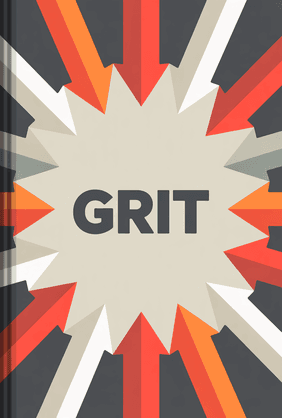
Grit
Angela Duckworth
18 Duration8 Key Points4.6 RateHow to Apply These Quotes in Your Content
When integrating Outliers Malcolm Gladwell quotes into your material, avoid the common trap of oversimplification. Do not just preach hustle culture.
Here are exact frameworks you can use to deploy these ideas effectively:
For Public Speakers & Presenters
The Strategy: Use the "Myth Busting" opener.
Script Idea: "We love the myth of the self-made genius. We love to think people just wake up brilliant. But Malcolm Gladwell shattered this in Outliers. He noted that 'practice isn't the thing you do once you're good. It's the thing you do that makes you good.' Consider The Beatles in Hamburg..."
Why it works: It creates immediate cognitive dissonance. You challenge a widely held belief, introduce a credible author, and provide a fascinating story to back it up.
Script Idea: "We love the myth of the self-made genius. We love to think people just wake up brilliant. But Malcolm Gladwell shattered this in Outliers. He noted that 'practice isn't the thing you do once you're good. It's the thing you do that makes you good.' Consider The Beatles in Hamburg..."
Why it works: It creates immediate cognitive dissonance. You challenge a widely held belief, introduce a credible author, and provide a fascinating story to back it up.
For Managers & Team Leaders
The Strategy: The "Meaningful Work" audit.
Script Idea: "I know we are pushing hard this quarter. Gladwell wrote that hard work is only a prison sentence if it lacks meaning. He defined satisfying work as having autonomy, complexity, and a clear connection between effort and reward. Today, I want to talk about how we can increase your autonomy on this project."
Why it works: It validates the team's exhaustion while pivoting to a constructive, research-backed framework for improving their daily experience.
Script Idea: "I know we are pushing hard this quarter. Gladwell wrote that hard work is only a prison sentence if it lacks meaning. He defined satisfying work as having autonomy, complexity, and a clear connection between effort and reward. Today, I want to talk about how we can increase your autonomy on this project."
Why it works: It validates the team's exhaustion while pivoting to a constructive, research-backed framework for improving their daily experience.
For Content Creators & Essayists
The Strategy: The "Contextual Shift".
Script Idea: When writing an article on startups, do not just say "build a good product." Tell the Bill Gates story. Show how timing the market (being born in 1955, coming of age just as personal computing started) combined with raw effort creates a billionaire. Quote Gladwell on how outliers are "products of history and community."
Why it works: It elevates your writing from generic advice to cultural analysis. Readers bookmark and share articles that make them feel smarter.
Script Idea: When writing an article on startups, do not just say "build a good product." Tell the Bill Gates story. Show how timing the market (being born in 1955, coming of age just as personal computing started) combined with raw effort creates a billionaire. Quote Gladwell on how outliers are "products of history and community."
Why it works: It elevates your writing from generic advice to cultural analysis. Readers bookmark and share articles that make them feel smarter.
Common Pitfalls to Avoid When Citing Gladwell
If you are going to use these references, you need to use them correctly to maintain your own authority.
- Do not treat 10,000 hours as a scientific law. The 10,000-hour rule is a metaphorical average, not a rigid guarantee. Anders Ericsson, the psychologist whose research Gladwell popularized, often clarified that the quality of deliberate practice matters just as much as the quantity. Point this out in your presentation to show you have done your homework.
This nuance is critical. The popular interpretation of the 10,000-hour rule often misses the key arguments and has sparked significant debate. For those interested in the controversy and the scientific counterarguments, it's worth exploring the other side of the story.
- Do not ignore the role of community. The biggest mistake people make with Outliers is focusing entirely on the 10,000 hours and ignoring the entire second half of the book, which focuses on cultural legacy and community support. Always pair the practice quote with a quote about opportunity.
- Ensure you attribute correctly. Gladwell synthesizes the work of many sociologists and psychologists. When appropriate, acknowledge that Gladwell is the brilliant storyteller who brought these academic concepts to the mainstream.
By leveraging these specific quotes and the powerful stories behind them, you transform standard advice into compelling narratives. You give your audience not just a reason to work hard, but a framework to understand how the world actually rewards that work.
As noted in the pitfalls above, Gladwell popularized the 10,000-hour rule, but the original, nuanced concept comes directly from the foundational research of psychologist Anders Ericsson. If you want to truly understand the mechanics of "deliberate practice" and how to apply it accurately—without falling into the trap of just logging mindless hours—reading Ericsson's own work is an absolute must. It will give you the exact blueprint for maximizing your practice sessions, stepping outside your comfort zone, and mastering any new skill in your career.

Peak
Anders Ericsson and Robert Pool
48 Duration10 Key Points4.5 RateWith a reading list full of powerful books like Outliers, Drive, and Peak, it's easy to feel like you'll never have time to get through them all. A great way to clear this 'reading debt' is by starting with the core ideas.
Get the main takeaways from these books and thousands more in short, digestible summaries, helping you apply game-changing ideas without the pressure of a long reading list.
LeapAheadFAQ
What is the exact 10,000-hour rule quote?
The most famous phrasing in the book is: "Ten thousand hours is the magic number of greatness." Gladwell uses this to explain the threshold of deliberate practice required to achieve world-class mastery in complex fields like software development, music, or sports.
The most famous phrasing in the book is: "Ten thousand hours is the magic number of greatness." Gladwell uses this to explain the threshold of deliberate practice required to achieve world-class mastery in complex fields like software development, music, or sports.
Is the 10,000-hour rule scientifically proven?
It is heavily debated. The concept is based on the research of psychologist Anders Ericsson. While Ericsson agreed that extensive deliberate practice is required for mastery, he stated that 10,000 is an average, not an absolute boundary. Some people achieve mastery in less time; others require more.
It is heavily debated. The concept is based on the research of psychologist Anders Ericsson. While Ericsson agreed that extensive deliberate practice is required for mastery, he stated that 10,000 is an average, not an absolute boundary. Some people achieve mastery in less time; others require more.
What is the main takeaway from Outliers?
The core takeaway is that high achievement is a combination of innate ability, relentless deliberate practice (roughly 10,000 hours), and—crucially—hidden advantages, demographic luck, and cultural legacies. Success is a group project, not an entirely solo endeavor.
The core takeaway is that high achievement is a combination of innate ability, relentless deliberate practice (roughly 10,000 hours), and—crucially—hidden advantages, demographic luck, and cultural legacies. Success is a group project, not an entirely solo endeavor.
Where can I find the Outliers audiobook?
The audiobook is widely available on platforms like Amazon's Audible and Apple Books. It is narrated by Malcolm Gladwell himself. Listening to him deliver these quotes adds an incredible layer of tone and storytelling that is highly recommended for public speakers looking to improve their delivery.
The audiobook is widely available on platforms like Amazon's Audible and Apple Books. It is narrated by Malcolm Gladwell himself. Listening to him deliver these quotes adds an incredible layer of tone and storytelling that is highly recommended for public speakers looking to improve their delivery.