

You pick up a fantasy book at Barnes & Noble expecting an escape from reality. You read it for the magic, the duels, and the triumph of good over evil. But the emotional weight of the story stays with you long after you put it down. Processing real-world anxiety, clinical depression, or childhood grief often feels cold and overwhelming when using medical terminology.

Exploring Harry Potter mental health themes changes the dynamic. Looking at your own mind through a beloved story makes heavy psychological concepts accessible. It removes the clinical stigma. You realize that the same psychological mechanisms helping a teenage wizard survive a dark lord can help you navigate the very real shadows in your own life.
The profound psychological themes in the series naturally lead to questions about when a young reader is ready to tackle them.
Dementors and Depression: The Anatomy of Despair
The clearest link between the wizarding world and modern psychology is the relationship between dementors and depression.
When a dementor enters a room, the physical environment changes. The air turns freezing cold. The lights flicker out. The victim feels as though they will never be cheerful again, stripped of every positive emotion until only their worst memories remain.
This is a textbook description of a major depressive episode. Depression is not simply feeling sad. It is an active void. It is anhedonia—the inability to feel pleasure. It drains your energy, distorts your perception of reality, and convinces you that hope is an illusion.
The Patronus Charm as Cognitive Behavioral Therapy
How do characters fight dementors? They use the Patronus Charm. The psychology behind this spell maps perfectly onto Cognitive Behavioral Therapy (CBT) and positive psychology.
You cannot defeat a dementor by fighting it physically. You defeat it by focusing entirely on a single, profoundly positive memory. The spell requires immense cognitive effort to redirect your brain away from the immediate trauma and anchor it to a core, grounding belief. In CBT, therapists teach patients to interrupt spiraling negative thoughts by consciously substituting them with evidence-based positive realities. Your Patronus is your mental anchor.
If the idea of using cognitive behavioral therapy to "cast a Patronus" against your own negative thoughts resonates with you, you might want to explore the real-world mechanics of this technique. Learning to identify and rewire the cognitive distortions that fuel depression is a completely learnable skill. For a comprehensive, step-by-step guide to changing your thought patterns and overcoming the "dementors" of daily life, this foundational book by Dr. David Burns is a must-read.
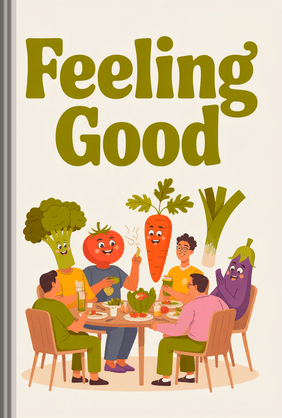
Feeling Good
David D. Burns, M.D.
 41 Duration
 9 Key Points
 4.6 Rate
If finding the time to sit down with a dense book feels like a challenge, there are ways to grasp the core concepts quickly and decide if you want to dive deeper.


Get the key insights from foundational psychology books like *Feeling Good* in just 15 minutes, making it easier to start applying these powerful techniques.
 LeapAhead
Overcoming Trauma in Harry Potter: The Reality of PTSD
The boy who lived in the cupboard under the stairs is a profound case study in Childhood Emotional Neglect (CEN) and complex trauma. The Dursleys systematically denied him affection, validation, and physical safety.
Yet, the psychological realism peaks in Harry Potter and the Order of the Phoenix. Overcoming trauma in Harry Potter is not a clean, linear process. After witnessing the murder of a classmate and facing extreme physical torture, Harry exhibits classic signs of Post-Traumatic Stress Disorder (PTSD):
- Hyperarousal and Anger: He constantly snaps at Ron and Hermione, his primary support system.
- Intrusive Thoughts: He suffers from vivid night terrors.
- Isolation: He believes no one can possibly understand his pain, pushing away those who try to help.
- Survivor’s Guilt: He questions why he survived when others did not.
The narrative does not magically cure his trauma. Healing begins only when he breaks his isolation. Creating Dumbledore's Army allows him to channel his hypervigilance into purpose. He finds a community that validates his reality. In psychological terms, this is Post-Traumatic Growth (PTG)—the experience of positive psychological change occurring as a result of struggling with highly challenging life circumstances.
Harry’s journey proves that trauma doesn't just disappear—it lives in the body and mind, manifesting as anger, hyperarousal, and isolation. If you or someone you love is navigating the lingering effects of severe stress or complex trauma, understanding how the brain and nervous system process these experiences is a vital step toward healing. To dive deeper into how trauma reshapes our biology and the proven paths to reclaiming your life, this groundbreaking work by Dr. Bessel van der Kolk offers incredible insight.
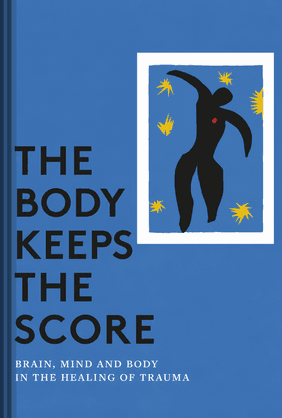
The Body Keeps The Score
Bessel Van Der Kolk
32 Duration10 Key Points4.5 RateHarry's struggle with PTSD is a critical part of his development, fitting within a classic storytelling framework that resonates deeply with readers.

Resilience in Harry Potter: Thriving Beyond the Trauma
Resilience is the psychological ability to bounce back from adversity. It is not about avoiding pain; it is about functioning despite it. When we examine resilience in Harry Potter, the most powerful examples often come from the supporting cast.
Neville Longbottom and the Growth Mindset
Neville starts his journey crippled by anxiety and imposter syndrome. He carries the secondary trauma of his parents' permanent mental incapacitation. His grandmother demands he live up to an impossible standard.
Neville’s trajectory perfectly illustrates a "growth mindset." He fails constantly. He melts cauldrons. He falls off his broom. But his resilience builds incrementally. He finds a specific area of competence (Herbology) which builds his self-efficacy. By acknowledging his fears rather than hiding them, he eventually finds the courage to lead a resistance movement. Resilience is built through repeated, manageable exposure to stress, leading to mastery.
Neville's transformation from a fearful, struggling student into a confident leader is the ultimate testament to the power of a growth mindset. When we stop viewing our abilities as fixed and start seeing failures as necessary stepping stones to mastery, our potential becomes limitless. If you want to cultivate this exact type of resilience in your own career, relationships, or parenting, discovering the research behind how our beliefs shape our success is game-changing.

Mindset
Carol S. Dweck
51 Duration8 Key Points4.6 RateNeville's arc is not just a lesson in resilience, but also a powerful study in emergent leadership.
Luna Lovegood and Radical Acceptance
Luna models a high degree of emotional intelligence and radical acceptance. She faces intense bullying. Her peers hide her belongings and ostracize her.
Instead of internalizing this rejection or masking her true self to fit in, Luna accepts reality without judgment. She processes the tragic death of her mother by acknowledging it (which allows her to see the Thestrals) rather than burying it. Her unshakable sense of self protects her psyche. She does not require external validation to know her own worth.
Luna’s ability to sit with uncomfortable truths without letting them destroy her sense of self is a masterclass in emotional regulation. In our own lives, fighting our natural feelings or forcing toxic positivity only creates more suffering. Learning to navigate life's twists and turns with radical acceptance and self-compassion can free you from the exhausting need for external validation. For a beautiful exploration of how to embrace your inner world with courage and grace, consider this highly recommended read.

Emotional Agility
Susan David, Ph.D.
48 Duration8 Key Points4.5 RateDefense Mechanisms: The Armor of the Mind
Freudian psychology introduces defense mechanisms—unconscious psychological strategies used to cope with reality and maintain self-image. The wizarding world relies heavily on these concepts.
Boggarts and Exposure Therapy
A Boggart takes the shape of your absolute worst fear. Remus Lupin teaches his students to defeat it using the Riddikulus spell.
This is a direct parallel to Exposure Therapy and Cognitive Reframing. You cannot defeat a phobia by ignoring it. You must face the trigger in a controlled environment and actively change the way your brain processes it. By forcing the terrifying image into something humorous—like putting a giant spider on roller skates—you strip the fear of its neurological power. Humor breaks the anxiety loop.

Occlumency and Dissociation
Severus Snape survives his life as a double agent using Occlumency, the magical art of closing one’s mind to intrusion.
Psychologically, Occlumency is extreme compartmentalization and dissociation. Snape shuts off his emotions to protect his core secrets. While dissociation is a highly effective survival mechanism in acute trauma situations, relying on it chronically is destructive. Snape's inability to integrate his emotions leaves him bitter, isolated, and permanently stuck in his past trauma. It keeps him alive, but it prevents him from actually living.
The Mirror of Erised and Rumination
The Mirror of Erised shows the deepest, most desperate desire of the heart. Dumbledore warns that men have wasted away staring into it, driven mad by what they cannot have.
The mirror represents rumination. Fixating on a lost past or an impossible fantasy paralyzes you. Grief requires processing, but endless rumination prevents you from engaging with the present. You cannot build a healthy future while staring exclusively at a reflection of what you lack.
Practical Psychology You Can Use Today
You do not need a wand to apply the psychology of Harry Potter to your daily life. The psychological frameworks hidden in the text offer direct action paths for your own mental health journey.
- Name Your Dementors. Acknowledge your depression or anxiety. Recognizing that the "cold room" is a symptom of a mental state—not a permanent reality—is the first step to fighting it.
- Identify Your Patronus. What anchors you when you spiral? It could be calling a specific friend, going for a run, or simply plugging in your headphones and listening to an audiobook on Audible. Build your mental anchor before you actually need it.
- Face Your Boggarts with Reframing. When anxiety hits, challenge the thought. Ask yourself: Is this fear rational? How can I look at this worst-case scenario differently? Strip the fear of its authority.
- Rely on Your Golden Trio. Trauma tells you that you are entirely alone and no one understands you. Combat that isolation aggressively. Reach out to your support system. Healing happens in community, never in a vacuum.
Building these mental habits is a journey, and continuously arming yourself with knowledge is key. If your busy schedule makes it hard to get through all the books that could help, you can still make progress.
Turn your commute or workout into a learning session with 15-minute audio summaries of books on trauma, resilience, and mental fortitude.
LeapAheadFAQ
Was J.K. Rowling intentionally writing about clinical depression when she created dementors?
Yes. The author has openly stated in interviews that dementors are a direct physical manifestation of her own experiences with clinical depression in her twenties. They were designed to represent the exact feeling of anhedonia—the absence of hope and the inability to feel joy.
How does the series portray coping with grief?
The series shows that grief is a permanent, yet manageable, alteration of your reality. Characters who accept death—like Luna and Harry seeing the Thestrals—are better equipped to handle reality. The story warns against getting stuck in the bargaining or denial phases of grief, perfectly symbolized by the dangers of the Mirror of Erised.
Can reading fiction actually improve my mental health and empathy?
Absolutely. Psychological studies show that reading literary fiction improves "Theory of Mind"—the ability to understand and empathize with others' mental states. By mapping your own real-world struggles onto familiar fictional characters, you create a safe psychological distance that makes processing your own trauma much easier and less intimidating.