

You have heard it your entire life: "Speak up more." "Why are you so quiet?" "You need to put yourself out there." Society constantly rewards the loudest voice in the room, leaving you wondering if your natural temperament is a flaw that needs fixing. It isn't. The solution is never to force yourself into an extroverted mold. It is to recognize the massive leverage you already possess.

Susan Cain’s manifesto changed the cultural conversation around personality types. If you want a quick reminder of your inherent worth without rereading the entire book, you need exact, shareable words that hit hard. Below is a curated collection of Quiet book quotes designed to validate your experience, shift your perspective, and give you the exact vocabulary to defend your boundaries.
Susan Cain’s manifesto changed the cultural conversation around personality types. If you want a quick reminder of your inherent worth without rereading the entire book, you need exact, shareable words that hit hard. Below is a curated collection of Quiet book quotes designed to validate your experience, shift your perspective, and give you the exact vocabulary to defend your boundaries.
The Extrovert Ideal: Recognizing the Bias
Before you can leverage your strengths, you must understand the cultural bias working against you. Cain calls this the "Extrovert Ideal"—the omnipresent belief that the ideal self is gregarious, alpha, and comfortable in the spotlight. These Quiet the power of introverts quotes perfectly articulate this societal blind spot.
"We live with a value system that I call the Extrovert Ideal—the omnipresent belief that the ideal self is gregarious, alpha, and comfortable in the spotlight."

The Reality Check: America loves a showman. From open-plan offices to participation grades in school, systems are designed for people who think out loud. Understanding that the game is rigged toward extroversion allows you to stop blaming yourself for feeling exhausted by it.
"Introversion—along with its cousins sensitivity, seriousness, and shyness—is now a second-class personality trait, somewhere between a disappointment and a pathology."
The Reality Check: You are not broken. When people treat your quietness as a problem to be solved, they are operating under a cultural bias, not stating a psychological fact. Your preference for a quiet evening over a noisy networking event is a healthy choice for your nervous system.
"There's zero correlation between being the best talker and having the best ideas."
The Reality Check: This is one of the best quotes from Quiet to remember during your next corporate meeting. The person dominating the conference room does not necessarily hold the right answer. Your well-thought-out, deeply analyzed perspective carries more weight than spontaneous, empty chatter.
If you haven't read the full manifesto that sparked this entire cultural shift, it is an absolute must-read for anyone who feels exhausted by America's loud, fast-paced culture. Susan Cain dives deep into the psychology and neuroscience of why society favors the "Extrovert Ideal" and provides incredibly validating research on the hidden power of quieter minds. It is the perfect foundational read to help you stop trying to fix yourself and start recognizing your natural temperament as a profound advantage.
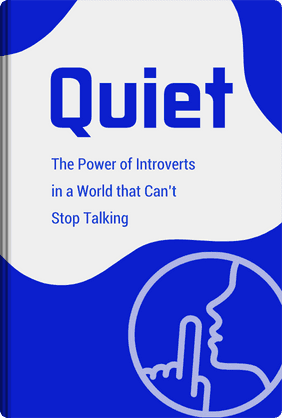
Quiet
Susan Cain
 40 Duration
 7 Key Points
 4.6 Rate
For a deeper look at the research and stories that form the foundation of these quotes, exploring a full summary of the book is the perfect next step.
Susan Cain Quotes Introverts Can Use for Self-Acceptance
Healing starts with accepting your baseline needs. You require different environments to thrive. Among the most shared Susan Cain quotes introverts use for self-validation, these stand out for their raw honesty and grace.
"Don't think of introversion as something that needs to be cured."
The Shift: Stop treating your personality like a disease. You do not need to "overcome" your desire to read a book on a Saturday night instead of hitting a crowded bar. Protect your peace unapologetically.
"The secret to life is to put yourself in the right lighting. For some, it's a Broadway spotlight; for others, a lamplit desk. Use your natural powers—of persistence, concentration, and insight—to do work you love and work that matters."
The Shift: Find your lamplit desk. If you thrive in one-on-one conversations rather than addressing a crowd of fifty, structure your career and relationships to maximize those intimate settings. Do not force yourself into the spotlight if it drains your color and energy.
"Spend your free time the way you like, not the way you think you're supposed to."
The Shift: Guilt is the enemy of rest. If organizing your bookshelf or diving into a Goodreads recommendation brings you genuine joy, do not let extroverted friends guilt-trip you into attending a loud party. Your downtime is yours alone.
Solitude as a Catalyst for Innovation
Extroverts get their energy from external stimuli; introverts recharge in solitude. But solitude is more than just a battery pack—it is the birthplace of profound creativity.
"Solitude matters, and for some people, it's the air they breathe."

The Insight: Treat your alone time as non-negotiable. Just as you schedule meetings or doctor appointments, block out time on your calendar for absolute quiet.
"Without great solitude, no serious work is possible." (Quoting Pablo Picasso)
The Insight: Cain highlights this to prove a historical point. The greatest inventors, writers, and thinkers—from Steve Wozniak building the first Apple computer alone in his cubicle to authors writing bestsellers—did their heavy lifting in isolation. Group brainstorming often leads to groupthink; solo deep work leads to breakthroughs.
"Introverts, in contrast, may have strong social skills and enjoy parties and business meetings, but after a while wish they were home in their pajamas. They prefer to devote their social energies to close friends, colleagues, and family."
The Insight: Being introverted does not mean you lack social skills. You simply have a different energy budget. Spend your social coins on high-ROI relationships rather than spreading yourself thin across a hundred acquaintances.
Since solitude is the ultimate breeding ground for innovation, learning how to ruthlessly protect your focus in a distracted world is a superpower. If you want to take your ability to concentrate to the next level, Cal Newport's concept of "deep work" is the perfect complement to your introverted nature. He teaches you how to block out the noise, eliminate shallow tasks, and leverage your natural capacity for prolonged, solitary concentration into rare, high-value output that sets you apart in any industry.
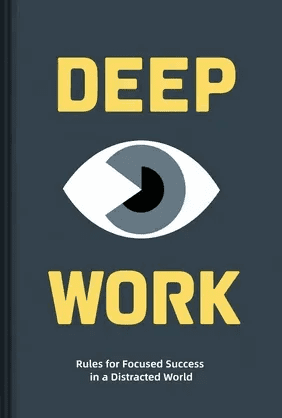
Deep Work
Cal Newport
47 Duration8 Key Points4.6 RateAbsorbing the insights from foundational books like Quiet and Deep Work can be life-changing, but finding the time to read them cover-to-cover is a real challenge.

LeapAhead

This app helps you grasp the core ideas from these and other bestselling books in 15-minute audio or text summaries, perfect for learning during a commute or when you need to recharge.
Inspirational Quotes for Introverts in the Workplace
Corporate environments can feel hostile to quiet professionals. However, introverted leadership is highly effective, often yielding better results when managing proactive teams. Use these inspirational quotes for introverts to redefine your professional value.
"Introverted leaders often deliver better outcomes than extroverts do, because when they are managing proactive employees, they're much more likely to let those employees run with their ideas."

The Strategy: You do not need to micromanage or dominate the conversation to be a boss. Your ability to listen, process, and give others the floor makes you a deeply empowering leader.
"We have two ears and one mouth and we should use them proportionally."
The Strategy: Active listening is a rare corporate commodity. While others are busy planning their next response, you are actually absorbing the data. This allows you to synthesize information and offer a comprehensive solution when you finally do speak.
"Everyone shines, given the right lighting."
The Strategy: If an open-plan office is destroying your focus, put on noise-canceling headphones. If you hate impromptu brainstorming sessions, ask for the agenda ahead of time so you can prepare. Advocate for the conditions you need to do your best work.
Understanding these principles is the first step. The next is applying them to your career path by leveraging your unique strengths in a professional setting.
Navigating corporate America as a quiet professional can sometimes feel like an uphill battle, especially when promotions seem to go to the loudest voices in the conference room. But you don't have to fake an alpha-extrovert persona to climb the ladder. Jennifer Kahnweiler offers a fantastic guide on how to channel your natural listening skills, calm demeanor, and thoughtful preparation into executive presence. It's an empowering resource for anyone ready to lead authentically without burning out their social battery.
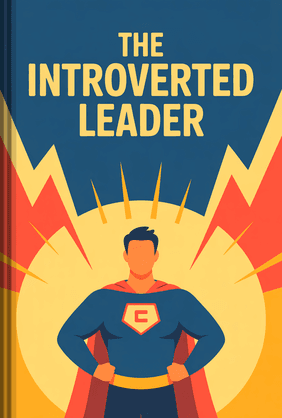
The Introverted Leader
Jennifer B. Kahnweiler
46 Duration9 Key Points4.4 RateHow to Apply These Quotes in Daily Life
Content is only useful if you apply it. Here is how you can practically use these Quiet book quotes to improve your daily routine and communication.
- Set Boundaries with Grace: Next time someone pressures you to attend an event you lack the bandwidth for, remember: "Spend your free time the way you like." A simple, "I need some quiet time to recharge tonight, but let's grab coffee one-on-one next week," honors both your nature and the friendship.
- Elevate Your Workspace: Write "There's zero correlation between being the best talker and having the best ideas" on a sticky note. Place it on your monitor. Look at it right before you join a chaotic Zoom call to ground your confidence.
- Upgrade Your Social Media Presence: If you are looking for an authentic Instagram caption for a photo of your weekend reading setup, "Solitude matters, and for some people, it's the air they breathe" perfectly communicates your vibe without requiring over-explanation.
- Communicate Your Value to Managers: During performance reviews, if asked about your quiet demeanor, pivot the narrative. Explain that your natural powers of persistence and concentration allow you to tackle deep, complex problems that others might abandon.
Your quietness is a distinct biological and psychological advantage. The world needs the depth, the focus, and the calm that only you can bring to the table.
Putting these principles into practice usually comes down to one critical skill: boundary setting. Saying no to a noisy happy hour or pushing back against a draining open-office layout can feel intimidating at first. If you struggle to communicate your limits, Nedra Glover Tawwab provides an incredibly practical roadmap for establishing healthy boundaries. Learning how to advocate for your time and energy is the ultimate act of self-care, ensuring you have the bandwidth to thrive in both your personal life and career.

Set Boundaries, Find Peace
Nedra Glover Tawwab
29 Duration10 Key Points4.5 RateFAQ
Does Susan Cain argue that introverts are better than extroverts?
No. Cain emphasizes balance. She advocates for a world where both temperaments are equally valued. Her goal is to dismantle the "Extrovert Ideal" that positions extroversion as the default standard of success, not to replace it with an introvert superiority complex. The most effective teams usually pair the deep-thinking capability of an introvert with the action-oriented energy of an extrovert.
No. Cain emphasizes balance. She advocates for a world where both temperaments are equally valued. Her goal is to dismantle the "Extrovert Ideal" that positions extroversion as the default standard of success, not to replace it with an introvert superiority complex. The most effective teams usually pair the deep-thinking capability of an introvert with the action-oriented energy of an extrovert.
Is Quiet a good book for extroverts to read?
Absolutely. If you are an extrovert, you almost certainly manage, love, or work alongside introverts. Reading Quiet will help you realize why your spouse needs an hour alone after work, or why your best employee goes silent during loud brainstorming sessions. It provides a blueprint for communicating effectively with half the population.
Absolutely. If you are an extrovert, you almost certainly manage, love, or work alongside introverts. Reading Quiet will help you realize why your spouse needs an hour alone after work, or why your best employee goes silent during loud brainstorming sessions. It provides a blueprint for communicating effectively with half the population.
How do I handle people constantly asking "why are you so quiet"?
Directly, but without apologizing. You can simply say, "I'm just taking it all in," or "I prefer to listen before I weigh in." By refusing to treat your silence as a deficit, you subtly train others to respect your process. Remember Cain's exact words: there is zero correlation between being the best talker and having the best ideas.
Directly, but without apologizing. You can simply say, "I'm just taking it all in," or "I prefer to listen before I weigh in." By refusing to treat your silence as a deficit, you subtly train others to respect your process. Remember Cain's exact words: there is zero correlation between being the best talker and having the best ideas.
Are introverts actually capable of public speaking and leadership?
Yes. Some of the most influential public speakers and leaders in history—from Abraham Lincoln to Eleanor Roosevelt—were profound introverts. Introverts often excel at public speaking because they prepare meticulously and speak only when they have something meaningful to share. They view the stage as a focused platform for an idea, rather than a place to seek personal validation.
Yes. Some of the most influential public speakers and leaders in history—from Abraham Lincoln to Eleanor Roosevelt—were profound introverts. Introverts often excel at public speaking because they prepare meticulously and speak only when they have something meaningful to share. They view the stage as a focused platform for an idea, rather than a place to seek personal validation.