

You have probably heard someone recommend Rich Dad Poor Dad as the ultimate starting point for personal finance. But finding the time to sit down with a 300-page book—even if you have it downloaded on Audible or sitting on your Kindle—isn't easy when you are balancing a full-time job and a busy life. You need the core financial principles right now, without wading through decades-old personal anecdotes.
This guide strips away the filler. We will break down exactly what makes the rich get richer and how you can apply these principles to your own wallet today.
If the struggle of finding time for full-length books sounds familiar, an app designed for this exact problem can help you get the key insights without the time commitment.

Listen to the core lessons of Rich Dad Poor Dad and other finance bestsellers in just 15 minutes, perfect for absorbing key ideas during your commute or lunch break.
Download LeapAhead App now
What is Rich Dad Poor Dad About? The Tale of Two Mindsets
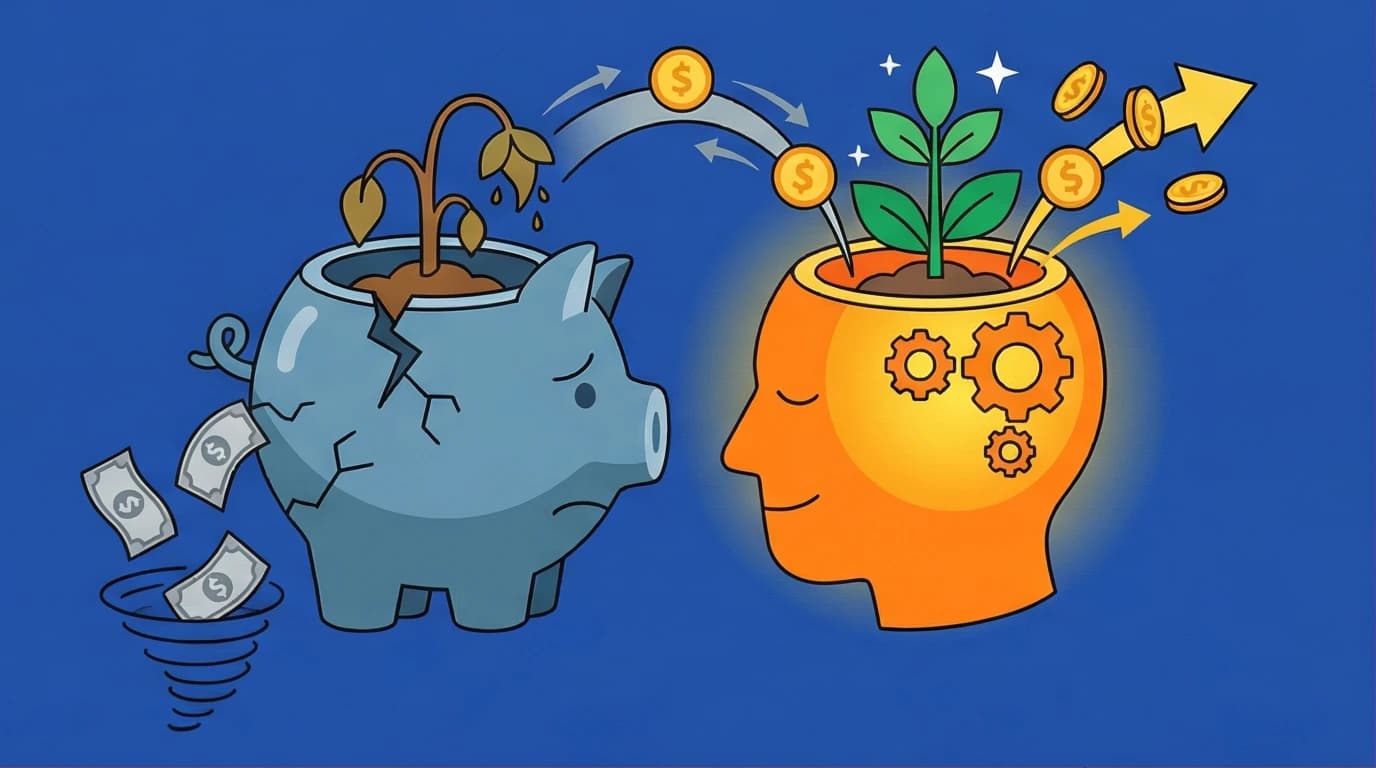
When people ask what is rich dad poor dad about, it boils down to a stark contrast in mindset between two father figures in Robert Kiyosaki's life.
Poor Dad (His Biological Father):
Highly educated, holding advanced degrees from Stanford, Chicago, and Northwestern. He was a hard-working government employee who believed in the traditional American dream: go to school, get good grades, find a safe job with benefits, buy a house, and save money. He struggled financially his entire life. When faced with something expensive, his default thought was, "I can't afford it."
Highly educated, holding advanced degrees from Stanford, Chicago, and Northwestern. He was a hard-working government employee who believed in the traditional American dream: go to school, get good grades, find a safe job with benefits, buy a house, and save money. He struggled financially his entire life. When faced with something expensive, his default thought was, "I can't afford it."
Rich Dad (His Best Friend’s Father):
An eighth-grade dropout who built an empire in Hawaii. He believed in financial education over traditional schooling, taking calculated risks, and building businesses. He eventually became one of the wealthiest men in his state. When faced with something expensive, his default question was, "How can I afford it?"
An eighth-grade dropout who built an empire in Hawaii. He believed in financial education over traditional schooling, taking calculated risks, and building businesses. He eventually became one of the wealthiest men in his state. When faced with something expensive, his default question was, "How can I afford it?"
The book proves that wealth is not determined by your college degree or your W-2 paycheck. It is determined by your financial literacy.
If this comparison resonates with you and you want to dive deeper into the full story that shifted the financial trajectory for millions, grabbing the original text is a must. While this guide gives you the highlights, Robert Kiyosaki’s complete narrative offers context and foundational stories that are incredibly motivating. It is the perfect addition to your financial library.
Rich Dad Poor Dad
Robert Kiyosaki
 50 Duration
 10 Key Points
 4.6 Rate
Core Rich Dad Poor Dad Key Takeaways
Before diving into specific chapters, you must understand the overarching theme of the book. The most critical rich dad poor dad key takeaways revolve around one simple rule: knowing the difference between an asset and a liability.
The Real Definition of Wealth: Assets vs. Liabilities
Kiyosaki redefines these two terms in a way that ignores traditional accounting, focusing purely on cash flow.
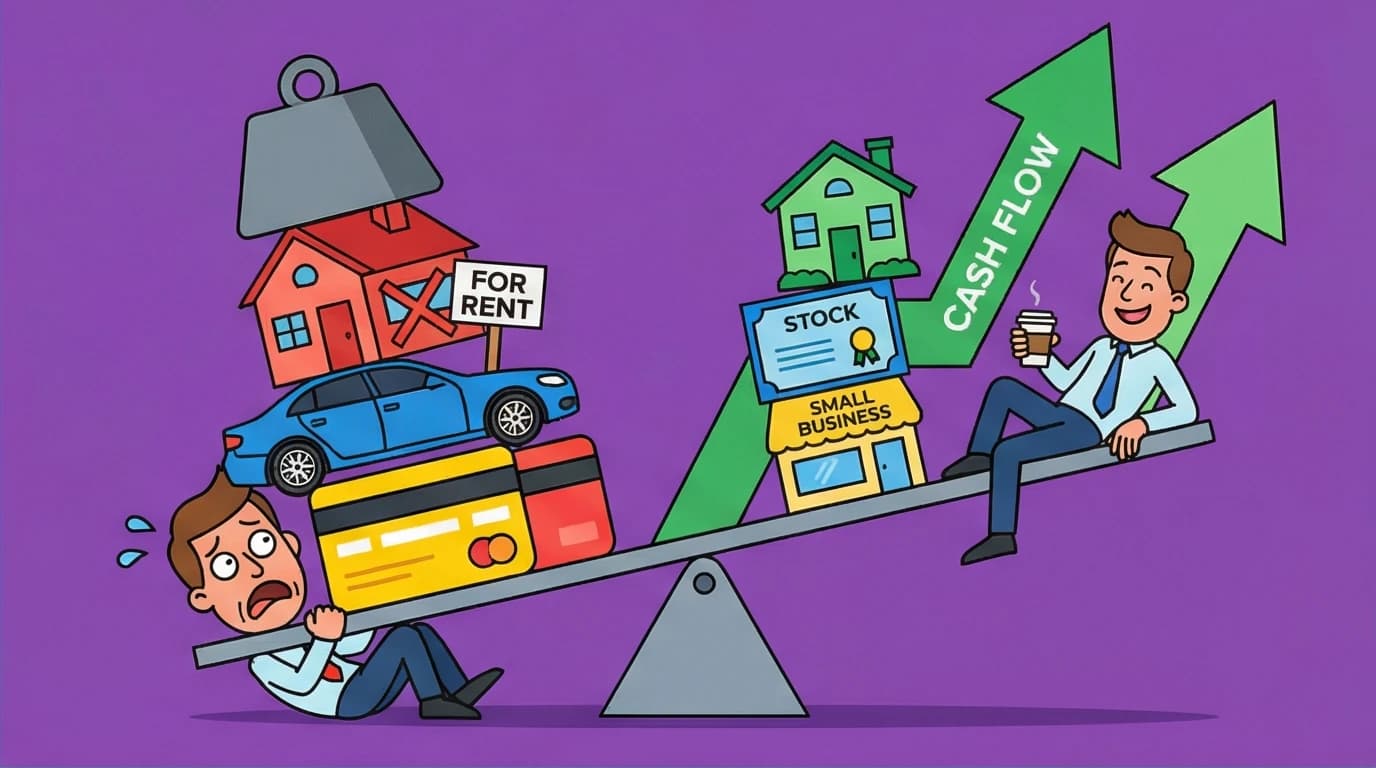
- An Asset puts money into your pocket. (Even when you are sleeping).
- A Liability takes money out of your pocket.
The middle class accumulates liabilities that they mistakenly believe are assets. The most common trap is the primary residence. You buy a house, take out a 30-year mortgage, pay property taxes, insurance, and maintenance costs. Money is constantly flowing out. According to Rich Dad, your house is a liability.
Real assets look like this:
- Real estate that you rent out for a positive monthly cash flow.
- Dividend-paying stocks in your brokerage account.
- Bonds or mutual funds.
- Intellectual property (royalties from music, books, or patents).
- A business that does not require your daily physical presence to operate.
The distinction between assets and liabilities is the foundational concept that allows the wealthy to escape the "Rat Race." Understanding this cash flow pattern is the first step toward building true financial freedom.
Understanding that real estate is one of the most powerful assets you can own is one thing, but actually buying your first cash-flowing property can feel overwhelming. If you are ready to move past theory and learn the exact step-by-step strategies for finding, financing, and managing rental properties, Brandon Turner's comprehensive guide is the perfect next read to help you build that asset column.
The Book On Rental Property Investing
Brandon Turner
22 Duration9 Key Points4.5 RateThe Cash Flow Pattern
- The Poor: Earn a paycheck, pay taxes, and spend the rest on living expenses (rent, food, gas).
- The Middle Class: Earn a bigger paycheck, pay higher taxes, and buy liabilities they think are assets (a new car on a loan, a bigger house with a massive mortgage, credit card debt).
- The Rich: Buy assets. Those assets generate income. The income covers their expenses and buys more assets.
The 6 Foundational Rich Dad Poor Dad Lessons
The core of the book is built around six lessons that Rich Dad taught Kiyosaki over the years. If you want the most critical rich dad poor dad lessons distilled, here are they.
Lesson 1: The Rich Don't Work for Money
The poor and middle class are trapped in the "Rat Race." They are driven by fear (fear of not having money) and greed (desire for things money can buy). You get a job, you earn a paycheck, your fear subsides. You get a raise, your greed kicks in, you buy a bigger TV or a nicer car, and your expenses go up. You are stuck running on the hamster wheel.
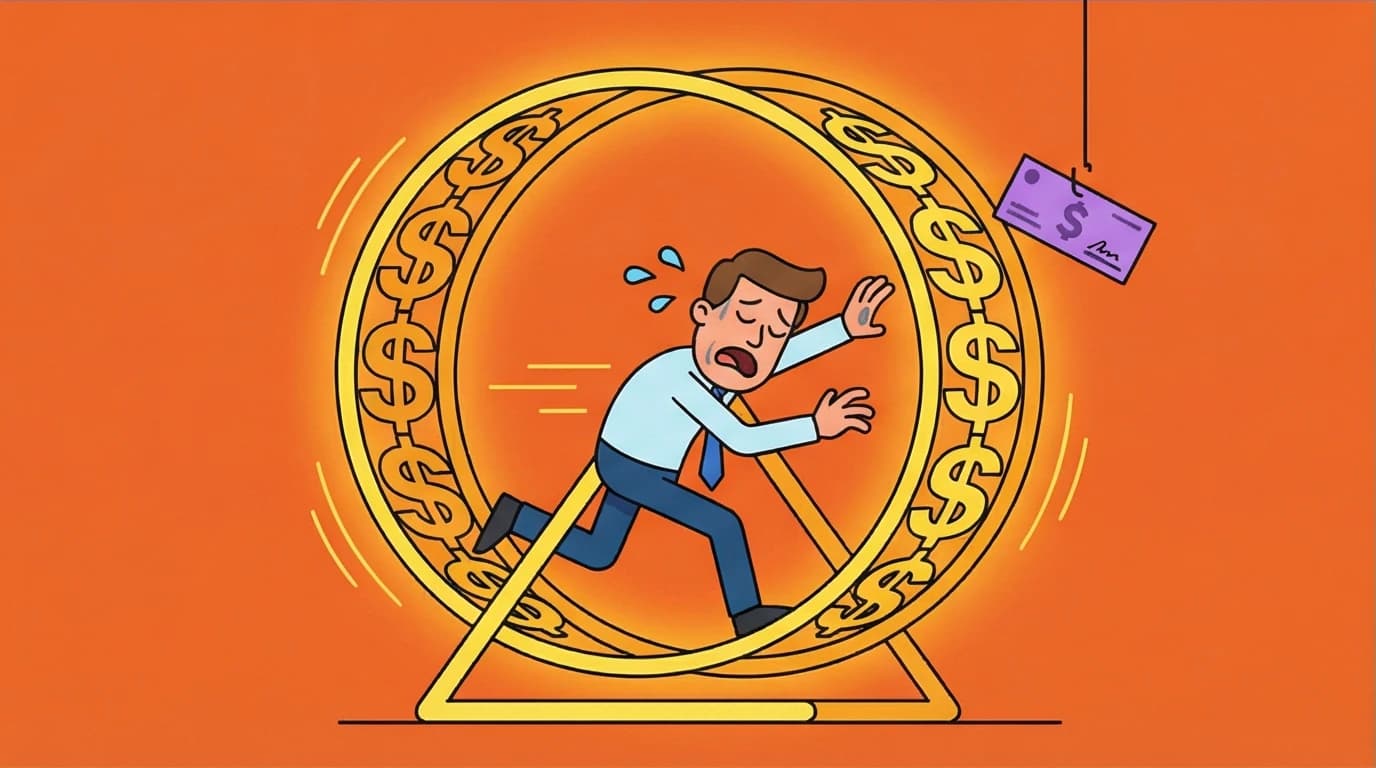
The rich bypass this entirely. They do not trade their time for dollars. Instead of spending their lives working for money, they figure out how to make money work for them through investments and business ownership.
Lesson 2: Why Teach Financial Literacy?
You can make a million dollars a year, but if your expenses are a million and one dollars, you are still broke. Financial literacy is the ability to read numbers and understand where your money is actually going.
Schools teach you how to read words, but they rarely teach you how to read an income statement and a balance sheet. You must train yourself to direct your money into the asset column of your balance sheet, protecting it from being eaten up by taxes and inflation.
Lesson 3: Mind Your Own Business
This does not mean you have to quit your day job immediately. Keep your job, but start minding your own business. Your "business" is your asset column.
Kiyosaki uses Ray Kroc, the founder of McDonald's, as an example. Kroc famously asked a group of MBA students what business he was in. They laughed and said he was in the hamburger business. Kroc corrected them: "Ladies and gentlemen, I am not in the hamburger business. My business is real estate." He used hamburgers to buy prime real estate at every busy intersection in America. Focus on building your asset column while you work your 9-to-5.
Lesson 4: The History of Taxes and the Power of Corporations
The tax code in the United States is written to favor business owners and investors.
- Employees earn money, pay taxes to the IRS immediately via paycheck withholding, and try to live on what is left.
- Corporations (and business owners) earn money, spend everything they possibly can as business expenses, and only pay taxes on what is left over.
You don't need a massive skyscraper to have a corporation. Setting up a simple LLC or S-Corp for a side hustle allows you to legally protect your wealth and reduce your tax burden.
Lesson 5: The Rich Invent Money
Great financial opportunities are not seen with your eyes; they are seen with your mind. The rich recognize opportunities that everyone else misses. They understand how to piece together deals.
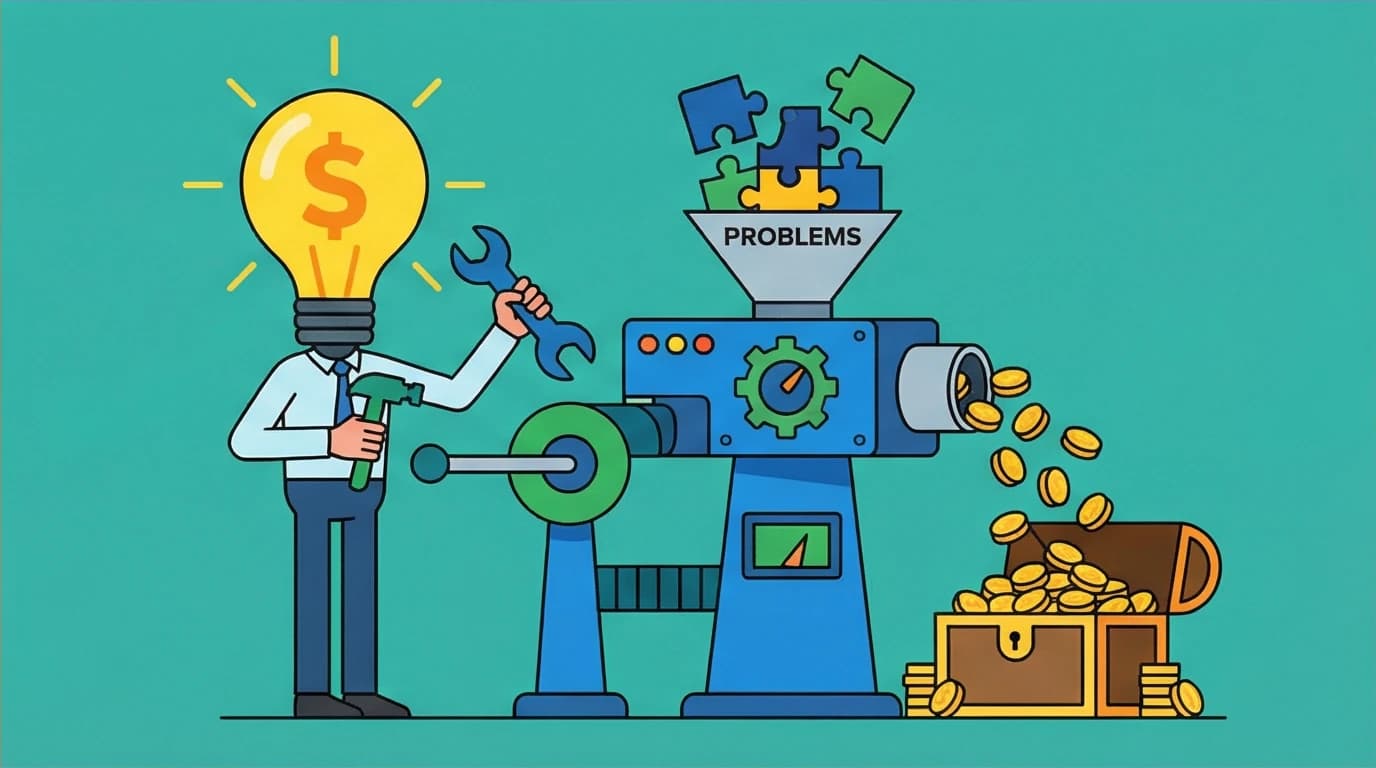
If a piece of real estate is undervalued, a financially literate person sees how to secure financing, buy the property, and flip it or rent it out without necessarily using their own money. They "invent" wealth by solving problems and moving capital efficiently.
Lesson 6: Work to Learn, Don't Work for Money
Job security meant everything to Poor Dad. Learning meant everything to Rich Dad.
When you are young or early in your career, do not just chase the highest salary. Look for jobs that will teach you specific skills: sales, marketing, public relations, communication, and leadership. A highly specialized skill set without the ability to sell or communicate will keep you poor. The world is filled with brilliant, broke people. Combine your core skills with sales and financial literacy, and your earning potential becomes unlimited.
These six lessons are packed with memorable ideas that challenge conventional thinking about money and work. Many of these concepts are best captured in his direct, often blunt, statements.
Rich Dad Poor Dad Chapter Summary: Navigating the Obstacles
While the first six chapters cover the lessons above, the latter part of the book focuses on execution. Here is a rapid rich dad poor dad chapter summary covering how to actually get started and what is standing in your way.
Even if people become financially literate, five major obstacles hold them back from building abundant asset columns.
- Fear: Specifically, the fear of losing money. Everyone is afraid of losing money. The difference is how you handle it. The rich use failure as a lesson to get smarter; the poor use failure as a reason to quit.
- Cynicism: "The economy is crashing." "Real estate is a bubble." "Investing is too risky." Cynics let their doubts paralyze them. Winners analyze the data and find the opportunity hidden in the panic.
- Laziness: The most common form of laziness is staying busy. People stay busy at their jobs and busy with their kids to avoid facing their financial reality. The cure for laziness is a little bit of greed—asking yourself, "What would my life look like if I never had to work again?"
- Bad Habits: Our lives are a reflection of our habits. The rich have the habit of "paying themselves first." Before paying the mortgage, the utility bill, or the credit card, they put money into their asset column. The pressure of unpaid bills then forces them to find innovative ways to generate more income.
- Arrogance: Arrogance is ego plus ignorance. What you know makes you money; what you do not know loses you money. When you are ignorant about a subject in finance, don't pretend you know it. Go find an expert or a book and educate yourself.
Overcoming fear, laziness, and bad habits is often the hardest part of any financial journey. Wealth is rarely just about math; it is overwhelmingly about behavior and mindset. If you want to master the mental game of wealth building and understand why smart people make bad financial decisions, Morgan Housel’s brilliant exploration of financial behavior will completely change how you view your money.
The Psychology of Money
Morgan Housel
48 Duration7 Key Points4.6 RateHow to Apply These Concepts Today
You don't need to read the full book to start making changes right now. Take these immediate steps based on Kiyosaki’s philosophy:
- Audit Your Balance Sheet: Log into your bank accounts. Write down every dollar that goes to a liability (car payments, subscriptions, credit card debt).
- Stop Buying "Fake" Assets: Delay upgrading your car or buying a larger house just because you got a promotion. Use that extra cash flow to buy income-generating vehicles.
- Invest in Financial Education: Dedicate 30 minutes a day to learning about real estate, index funds, or how to start a small business.
- Pay Yourself First: Set up an automatic transfer on payday. Move 10% of your income into an investment account before you pay a single bill.
Kiyosaki’s philosophy is a fantastic starting point, but you might be wondering exactly where to park that 10% you are paying yourself first. If the idea of managing real estate or starting a business sounds like too much work, investing in broad-based index funds is a proven, stress-free alternative. J.L. Collins offers an incredibly straightforward, no-nonsense roadmap to achieving financial independence through simple investing strategies.
The Simple Path to Wealth
J.L. Collins
41 Duration9 Key Points4.6 RateBuilding a reading list from classics like these is a great first step, but fitting them all into a busy schedule can feel like a challenge in itself.
Tackle your financial reading list by listening to the key takeaways from these books and more, turning small pockets of your day into productive learning sessions.
Download LeapAhead App now
FAQ
Is my primary house an asset or a liability?
According to Robert Kiyosaki, your primary residence is a liability. It takes money out of your pocket every month in the form of a mortgage, property taxes, insurance, and maintenance. It only becomes an asset if it generates positive cash flow for you, such as renting out a room or the entire property.
Is Rich Dad Poor Dad still relevant today?
Yes. While the specific real estate numbers and interest rates from the 1990s have changed, the underlying psychology of wealth remains exactly the same. The difference between an asset and a liability, the impact of taxes on W-2 employees, and the necessity of financial literacy are timeless principles.
Do I need a lot of money to start applying these lessons?
No. Financial literacy costs nothing. You can start by changing your spending habits, reducing liabilities, and investing small amounts into index funds or self-education. The book emphasizes that your mind is your most powerful asset; you use it to find opportunities, regardless of your current bank balance.
Why do some financial advisors disagree with the book?
Traditional financial advisors often favor diversification in mutual funds and tell clients their house is their biggest asset. Kiyosaki advocates for concentrated focus, heavy real estate investing using leverage (debt), and starting businesses. Traditional advisors prioritize risk management and safety, whereas Rich Dad Poor Dad prioritizes cash flow and financial independence through calculated risk.