

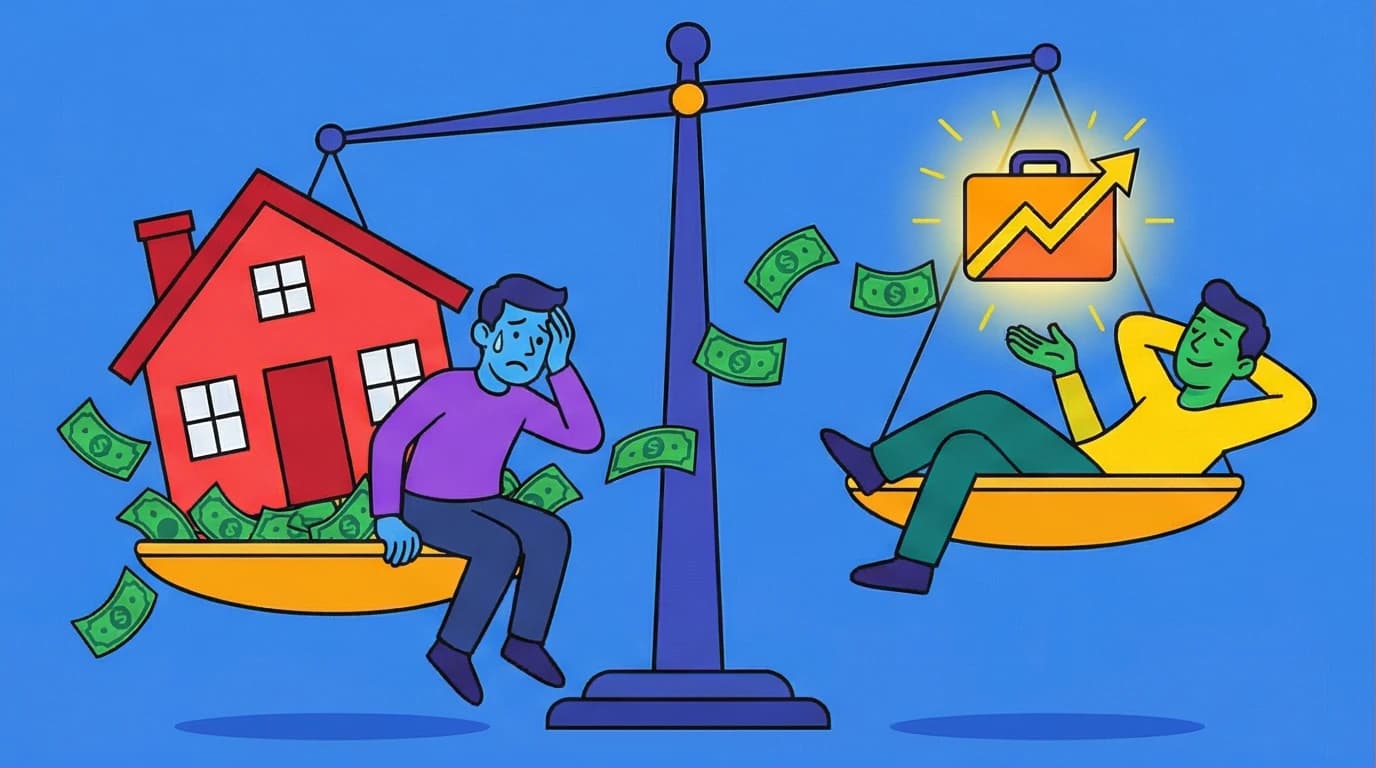
You work 40 hours a week, get a decent paycheck, pay your bills, and yet, at the end of the month, your checking account is practically empty. You followed the traditional script: go to school, get a secure job, buy a house, and finance a nice car. So why do you still feel financially stuck?
The problem is not how much money you make. The problem is a fundamental misunderstanding of what you buy with that money. The traditional financial industry uses complex jargon to blur the lines between what makes you rich and what keeps you broke.
To fix your finances, you need to master the exact assets vs liabilities rich dad poor dad rule. It is brutally simple, requires no accounting degree, and completely changes how you look at every dollar you earn.
The Core Definition: Follow the Cash Flow
Traditional accountants define an asset as anything of value that you own. Under that definition, your house, your car, your furniture, and even your golf clubs are considered assets.
Robert Kiyosaki rejects this completely. He argues that traditional accounting fails to account for cash flow. His definitions are based entirely on which direction the money moves.
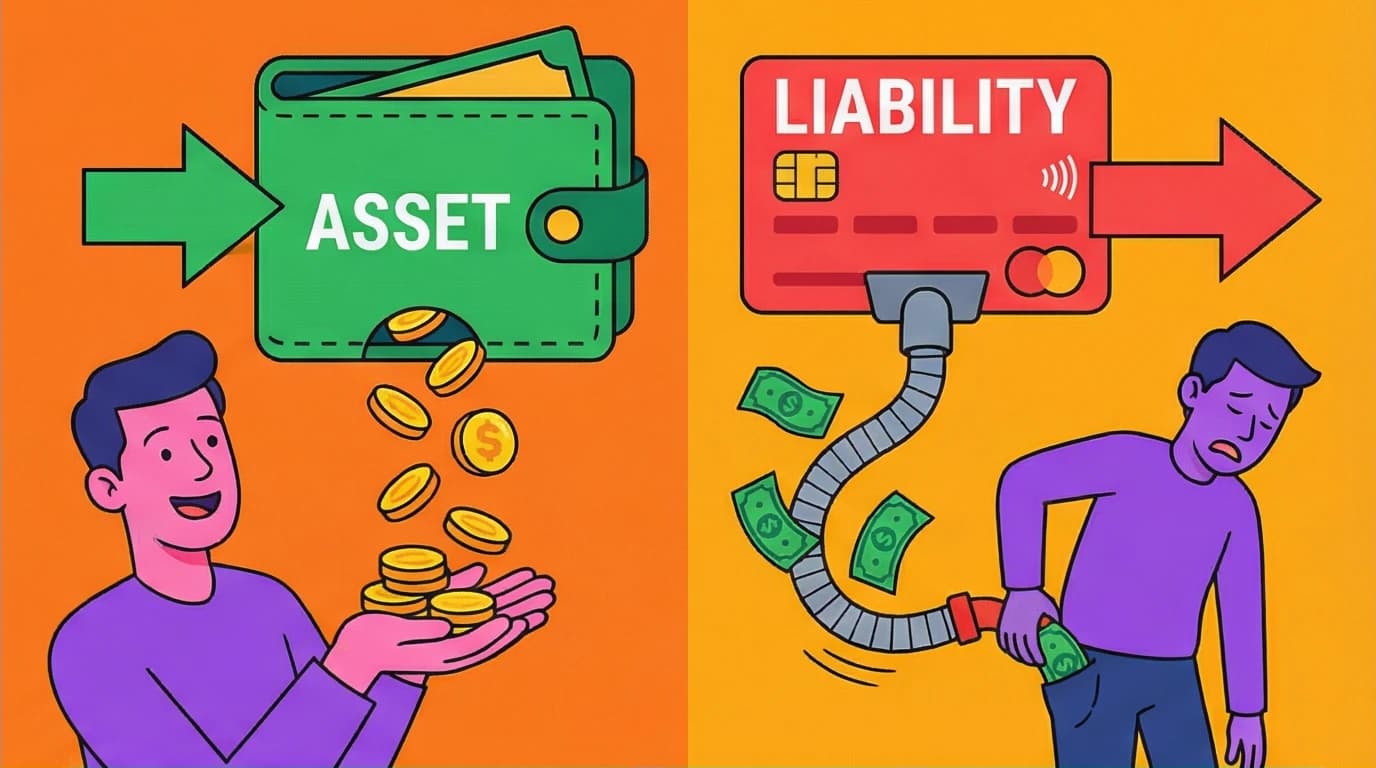
An Asset Puts Money in Your Pocket.
It generates income without requiring your constant active labor. If you lose your job tomorrow, an asset will still feed you.
Examples: Rental real estate, dividend-paying stocks, a high-yield savings account, royalties from a book you self-published on Amazon, or a business that runs without your daily involvement.
It generates income without requiring your constant active labor. If you lose your job tomorrow, an asset will still feed you.
Examples: Rental real estate, dividend-paying stocks, a high-yield savings account, royalties from a book you self-published on Amazon, or a business that runs without your daily involvement.
A Liability Takes Money Out of Your Pocket.
It costs you money to maintain, own, or operate. If you stop working, a liability will eventually bleed you dry.
Examples: Credit card debt, a car loan, subscriptions you do not use, and—most controversially—the house you live in.
It costs you money to maintain, own, or operate. If you stop working, a liability will eventually bleed you dry.
Examples: Credit card debt, a car loan, subscriptions you do not use, and—most controversially—the house you live in.
The Home Ownership Myth
Most Americans are taught that their primary residence is their biggest asset. Let's apply Kiyosaki's rule.
When you buy a house, money flows out of your pocket every month for the mortgage, property taxes, insurance, maintenance, and utilities. It does not generate income. Therefore, for the average homeowner, a house is a liability. It only becomes an asset if you rent it out to tenants and the rental income exceeds your monthly expenses.
The Cash Flow Patterns: Why the Rich Get Richer
To understand why you might be struggling, look at how different groups of people direct their money.
The Poor:
Income comes in from a paycheck and goes straight out to cover basic living expenses (rent, food, gas, clothes). There is nothing left to buy assets.
Income comes in from a paycheck and goes straight out to cover basic living expenses (rent, food, gas, clothes). There is nothing left to buy assets.
The Middle Class:
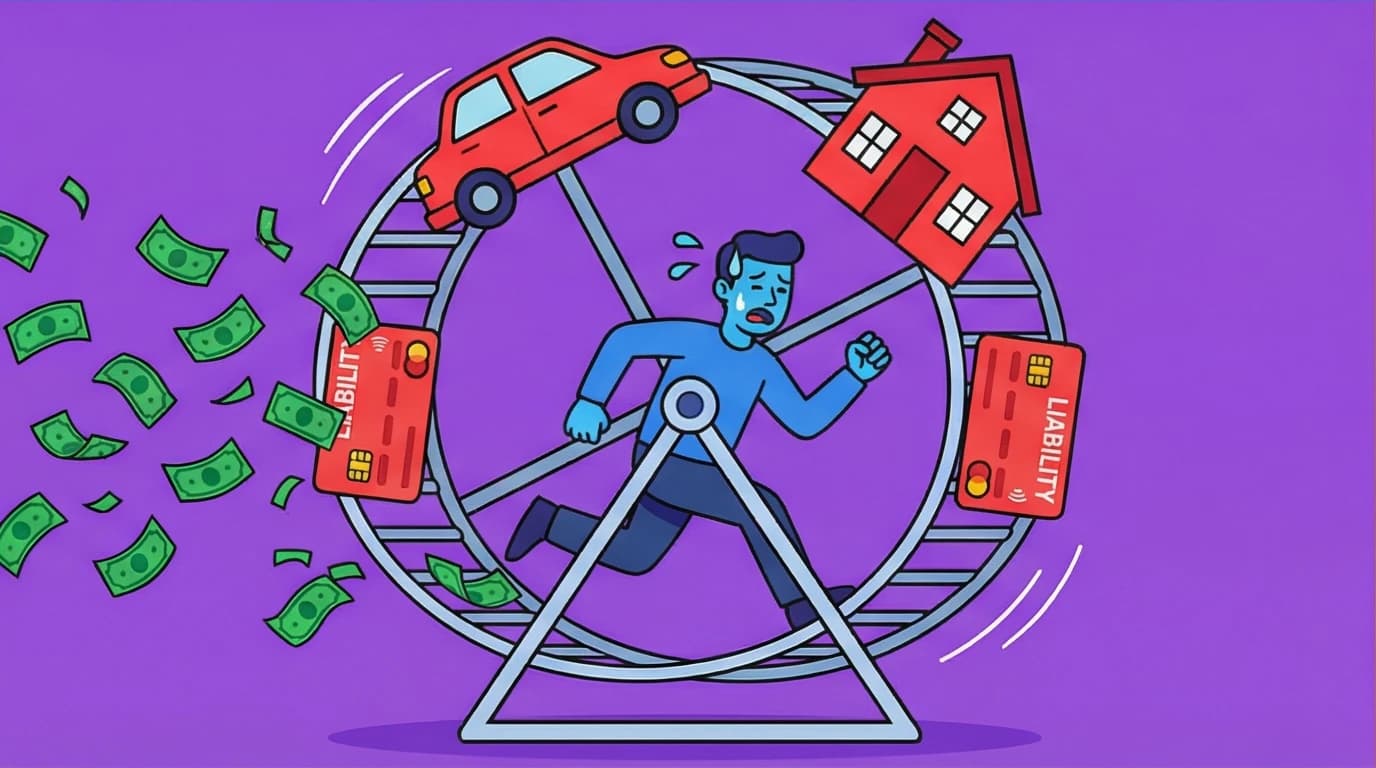
This is where the illusion of wealth traps people. The middle class earns a higher income, but they use that income to buy liabilities they think are assets. They buy bigger houses, finance newer cars, and take expensive vacations on credit. As their income goes up, their expenses go up exactly at the same rate. This exhausting cycle of working harder just to pay off more debt is the textbook definition of the rich dad poor dad rat race.
This is where the illusion of wealth traps people. The middle class earns a higher income, but they use that income to buy liabilities they think are assets. They buy bigger houses, finance newer cars, and take expensive vacations on credit. As their income goes up, their expenses go up exactly at the same rate. This exhausting cycle of working harder just to pay off more debt is the textbook definition of the rich dad poor dad rat race.
The Rich:
The rich operate entirely differently. They earn income and immediately use it to buy assets. Those assets generate passive income. They then use that passive income to buy their luxuries. The rich do not pay for their lifestyle with their time and labor; their assets pay for their lifestyle.
The rich operate entirely differently. They earn income and immediately use it to buy assets. Those assets generate passive income. They then use that passive income to buy their luxuries. The rich do not pay for their lifestyle with their time and labor; their assets pay for their lifestyle.
If you're tired of seeing your hard-earned paycheck vanish before the month is over, it’s time to go straight to the source. The foundational concepts of assets, liabilities, and escaping the financial treadmill are famously broken down in Robert Kiyosaki’s groundbreaking classic. This book completely shattered the traditional American approach to money, proving that you don't need a massive salary to build lasting wealth. It’s a required reading for anyone serious about stepping out of the rat race and getting their money to work for them.
Rich Dad Poor Dad
Robert Kiyosaki
 50 Duration
 10 Key Points
 4.6 Rate
If finding the time to read through foundational books like Kiyosaki's is your biggest challenge, you can start by absorbing the core lessons in a more manageable format.


Grasp the key lessons from 'Rich Dad Poor Dad' and other essential finance books in just 15 minutes, turning your commute or workout into a powerful learning session.
 LeapAhead
Where Assets Come From: The Cashflow Quadrant
You cannot build a portfolio of assets if you only think like an employee. To shift your mindset, you must understand the robert kiyosaki cashflow quadrant. It divides people into four categories based on how they earn money:
- E (Employee): You trade your time for a paycheck. You have a job.
- S (Self-Employed / Small Business): You own a job. If you stop working, the income stops.
- B (Business Owner): You own a system. People work for you. The business makes money even when you are sleeping.
- I (Investor): Your money works for you. You use capital to buy assets that generate more capital.
True financial freedom and significant asset accumulation happen on the right side of the quadrant (B and I). The tax code in the United States is written to favor business owners and investors because they provide jobs and housing. Employees carry the heaviest tax burden. Your goal is to migrate your income streams to the B and I quadrants.
Shifting your mindset from the left side of the quadrant (an employee trading time for money) to the right side (a business owner building systems) can feel incredibly daunting. If you want a no-nonsense, aggressive roadmap for making that leap, MJ DeMarco delivers exactly that. His perspective is a fantastic complement to Kiyosaki’s framework, challenging the traditional "work until you're 65" narrative and showing you how to build wealth-generating systems that detach your income from your time.
The Millionaire Fastlane
MJ DeMarco
25 Duration10 Key Points4.7 RateActionable Steps: How to Escape the Rat Race
If you want to know how to escape the rat race, you do not need to quit your job tomorrow. You need a structured plan to transition your money from buying liabilities to acquiring assets.
1. Perform a Harsh Expense Audit
Look at your last three bank statements. Categorize every dollar. How much money is flowing into liabilities? Look for the invisible leaks: auto loans with 8% interest rates, massive credit card balances, and high monthly subscription costs. Stop bleeding cash. You cannot build a foundation on a sinking ship.
It’s nearly impossible to start buying assets if you don’t actually know where your money is going right now. Plugging those invisible financial leaks requires more than just glancing at your bank app—it requires a proactive system. Jesse Mecham’s proven method helps you give every single dollar a specific job before you even spend it. If the thought of a "harsh expense audit" makes you anxious, this practical guide will help you gain total control over your cash flow without feeling deprived, freeing up the capital you need to invest.
You Need a Budget
Jesse Mecham
16 Duration7 Key Points4.7 Rate2. Control Your "Lifestyle Creep"
When you get a raise or a bonus, do not upgrade your car or move to a more expensive apartment. Keep your living expenses flat. Use 100% of that new income gap to purchase assets.
3. Start Acquiring Real Assets Today
You do not need a million dollars to start buying assets. Start small and let compound interest work in your favor.
- Paper Assets: Open a brokerage account. Buy index funds tracking the S&P 500. Look into dividend-paying blue-chip stocks.
- Real Estate: If you cannot afford an investment property yet, look into Real Estate Investment Trusts (REITs), which allow you to earn passive income from real estate without managing physical properties.
- Digital Assets: Create something once and sell it multiple times. Write an eBook, record a digital course, or start a YouTube channel.
- Small Businesses: Start a side hustle that can eventually run without you, like an e-commerce store or a vending machine route.
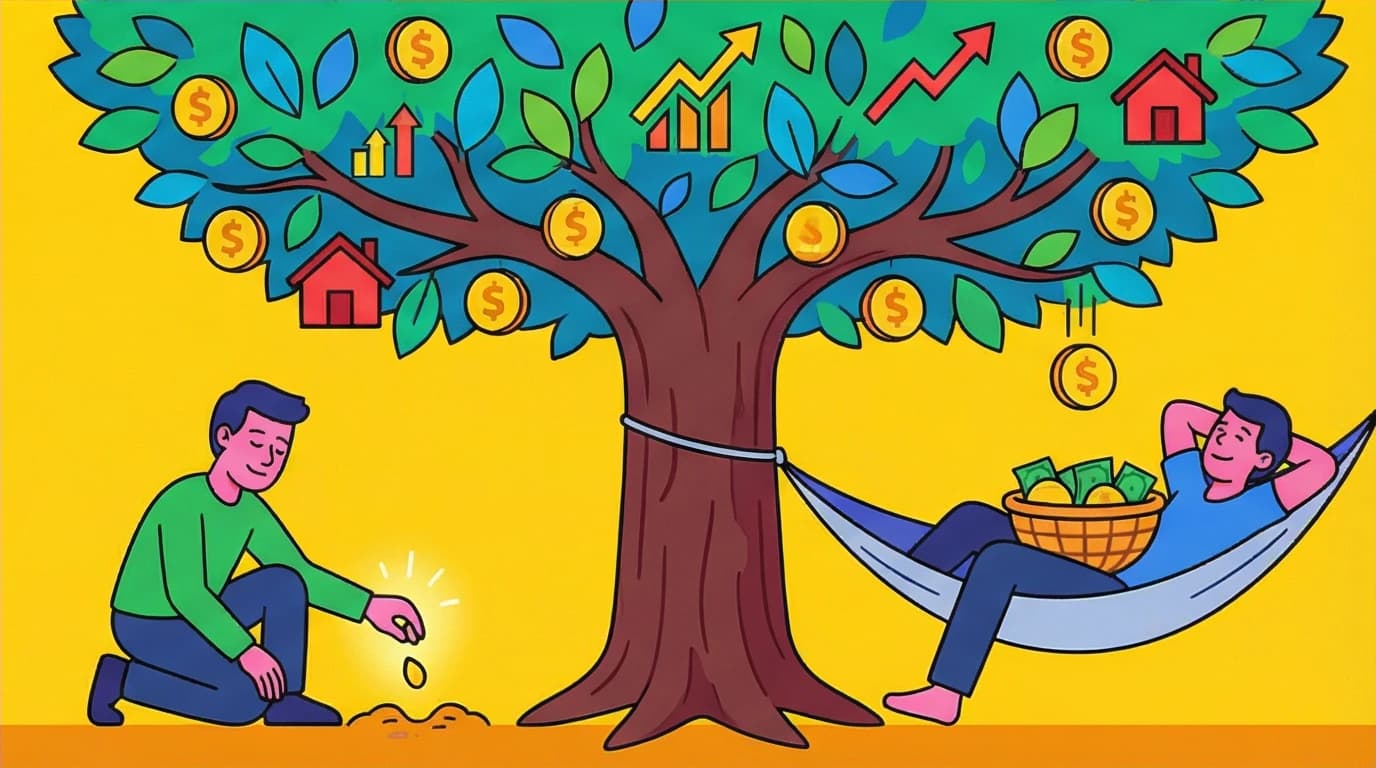
Real estate is arguably one of the most powerful asset classes you can acquire to permanently escape the daily grind. While buying physical properties might seem out of reach right now, understanding the mechanics of cash-flowing real estate is an invaluable skill. Brandon Turner offers a highly actionable, step-by-step blueprint specifically geared toward everyday Americans looking to build a profitable real estate portfolio. Whether you're aiming for your very first duplex or a large multifamily unit, this guide provides the exact strategies you need to ensure your properties actually put money in your pocket.
The Book On Rental Property Investing
Brandon Turner
22 Duration9 Key Points4.5 Rate4. Reinvest the Cash Flow
When your assets start generating money, do not spend it. Reinvest every single dollar to buy more assets. This creates a compounding snowball effect that accelerates your path to financial independence.
The Best Rich Dad Poor Dad Investing Advice
The most valuable rich dad poor dad investing advice is not a specific stock pick or a real estate loophole. It is about financial literacy.
Kiyosaki constantly preaches that your mind is your greatest asset. Before you put your hard-earned money into the stock market or a rental property, invest time in educating yourself. Learn how to read a basic financial statement. Understand the difference between capital gains and cash flow. Learn how the IRS taxes earned income differently from passive income.
When you're already working long hours to pay for liabilities, the idea of investing more time can feel impossible. A great way to start is by turning unproductive moments into learning opportunities.
Accelerate your financial literacy by listening to insights from hundreds of wealth-building books. It's a practical way to absorb essential knowledge on a tight schedule.
LeapAheadDo not hand your money over to a financial advisor and simply hope for the best. Take ownership of your financial education. Organize your finances, track your cash flow, and rigorously question every purchase: Is this putting money in my pocket, or taking money out?
By relentlessly applying the assets vs liabilities rule to your daily life, you will slowly choke off your bad debt, build a strong column of income-producing assets, and finally buy back your time.
FAQ
Is my primary residence really a liability?
Yes, if we use the cash flow rule. It takes money out of your pocket every month for mortgages, taxes, and maintenance. However, this does not mean buying a house is a bad life decision. It just means you should not view it as your primary wealth-building tool. You still need to buy income-producing assets outside of your home equity.
Yes, if we use the cash flow rule. It takes money out of your pocket every month for mortgages, taxes, and maintenance. However, this does not mean buying a house is a bad life decision. It just means you should not view it as your primary wealth-building tool. You still need to buy income-producing assets outside of your home equity.
Do I need a lot of money to start buying assets?
No. You can buy fractional shares of an ETF or a dividend-paying stock for just a few dollars using modern brokerage apps. The key is to start building the habit of buying assets consistently with whatever money you have left over after controlling your expenses.
No. You can buy fractional shares of an ETF or a dividend-paying stock for just a few dollars using modern brokerage apps. The key is to start building the habit of buying assets consistently with whatever money you have left over after controlling your expenses.
What is the fastest way to get out of the rat race?
The fastest way is to drastically reduce your living expenses while simultaneously building a side business (B quadrant) that generates extra cash flow. Once that business is profitable, funnel all the profits into investments (I quadrant) until your passive income exceeds your monthly living expenses. At that exact moment, you are out of the rat race.
The fastest way is to drastically reduce your living expenses while simultaneously building a side business (B quadrant) that generates extra cash flow. Once that business is profitable, funnel all the profits into investments (I quadrant) until your passive income exceeds your monthly living expenses. At that exact moment, you are out of the rat race.