

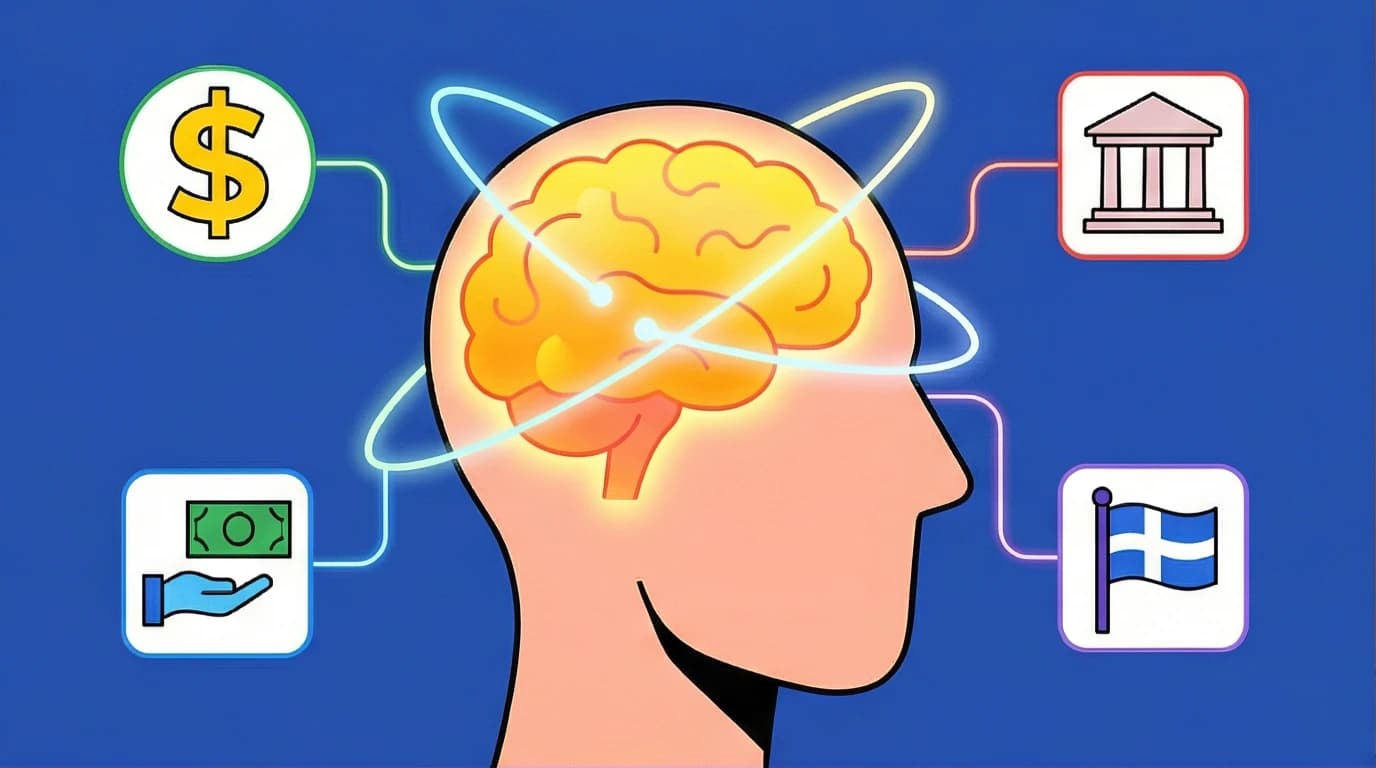
You are reading Yuval Noah Harari’s bestseller and hit a concept that makes you pause: the idea that everything around us is essentially made up. It is hard to wrap your head around the claim that nations, corporations, and even the dollar bills in your wallet do not actually exist outside of our collective imagination. This concept often leaves readers fascinated but slightly confused. You need to untangle this massive idea to truly grasp how human beings transitioned from insignificant apes to the rulers of the planet.
To understand how we got here, you have to look at the invisible architecture that holds our world together.
The Framework: Sapiens Three Revolutions
Harari structures human history around a specific framework. He argues that human destiny was shaped by the Sapiens three revolutions: the Cognitive Revolution, the Agricultural Revolution, and the Scientific Revolution.
While the Scientific Revolution gave us microchips and moon landings, and the Agricultural Revolution gave us permanent settlements, neither would be possible without the very first one. The Cognitive Revolution is the operating system update that made everything else happen. It completely changed the way our ancestors' brains processed information and communicated.
If this breakdown of human history is already blowing your mind, you might want to go straight to the source. Yuval Noah Harari’s masterpiece offers a sweeping, profound look at how a relatively unremarkable ape managed to dominate the globe. It is packed with incredible insights that will fundamentally change how you view our past and our present. If you haven't picked up a copy yet, it is an absolute must-read for understanding the invisible forces shaping our society.

Sapiens
Yuval Noah Harari
 45 Duration
 8 Key Points
 4.5 Rate
But if a 500-page book on human history feels daunting, or you simply want to absorb its core concepts quickly, you can get a head start.


LeapAhead

Grasp the key arguments from complex books like Sapiens in just 15 minutes, making it easy to understand big ideas on a tight schedule.
To help you navigate these big ideas, a detailed overview can be incredibly useful.
The Turning Point: Sapiens Cognitive Revolution
About 70,000 years ago, Homo sapiens were just another animal species living in Africa. We were not particularly special. Neanderthals were stronger, had bigger brains, and were better adapted to cold climates. Yet, Sapiens survived, and Neanderthals vanished.
The secret weapon was the Sapiens cognitive revolution.
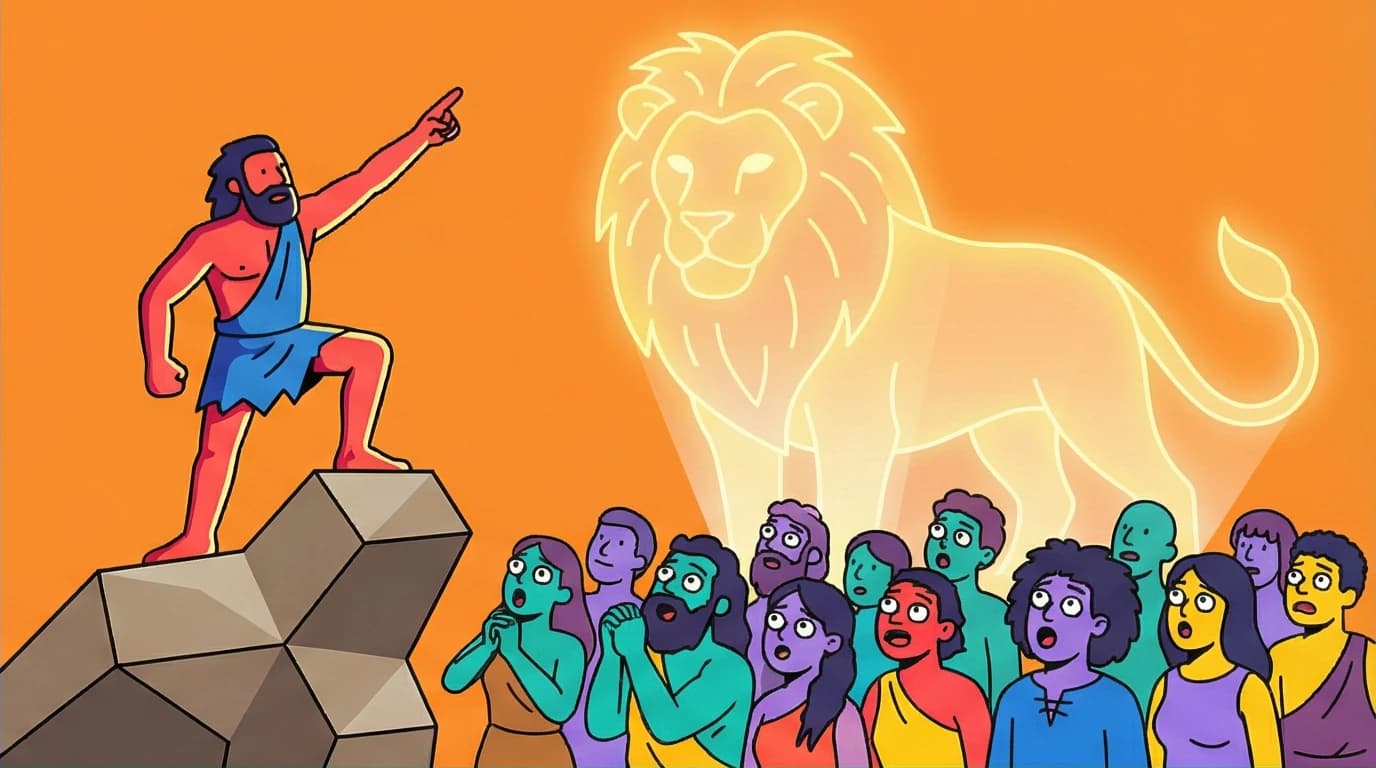
Before this shift, animal language was purely objective. A monkey can communicate, "Careful! A lion is near the river!" Sapiens, however, developed the ability to talk about things that do not exist at all. We could say, "The lion is the guardian spirit of our tribe."
This sounds like a minor difference, but it changed the trajectory of the planet. Biology limits group sizes. Primatologists have found that the maximum natural group size for humans, based on intimate social bonding and gossip, is about 150 people. Once a group grows beyond 150, social order breaks down. You cannot know every single person intimately.
So how do you get a city of a million people, or a country of 330 million people, to cooperate? You need a story.
Decoding Sapiens Imagined Realities
An imagined reality is not a lie. This is the most common misunderstanding of Harari's work.
If I tell you I have a million dollars in my bank account, but I actually have zero, that is a lie. I know it is false, and you are deceived.
An imagined reality is something that everyone believes in, and as long as the shared belief persists, the imagined reality exerts a powerful force in the world. Harari calls this an "inter-subjective reality." It exists not in one person's mind, but in the communication network linking thousands or millions of people.
Let's look at how Sapiens imagined realities manifest in our daily lives.
Corporations as Legal Fictions
Take Amazon. What exactly is Amazon? It is not the warehouses. If a tornado destroyed every Amazon fulfillment center, the company would still exist. It is not the CEO or the employees; they could all be replaced tomorrow. It is not the website code.
Amazon is a legal fiction. It exists entirely on paper and in our collective agreement to recognize its existence. Lawyers created a story, the US government officially recognized the story, and millions of investors and consumers believe in it. This shared fiction allows Amazon to open bank accounts, own property, and hire people as if it were a living, breathing entity.
Money: The Most Successful Story Ever Told
Money is the ultimate imagined reality. A $100 bill has no objective value. You cannot eat it, wear it, or use it to build a shelter. It is a piece of paper mixed with cotton.
Yet, you can hand that green paper to a complete stranger, and they will give you a cart full of groceries in return. Why? Because you both believe in the story created by the US Federal Reserve. You do not need to speak the same language or practice the same religion. You both trust the imagined reality of the US dollar. Money is the only fiction that bridges all cultural gaps.
Harari’s take on money as a shared fiction is fascinating, but you might be wondering how this system actually evolved from ancient bartering to modern Wall Street. If you want to dive deeper into the history of currency and how financial fictions built the modern world, exploring the evolution of finance offers incredible context. It reveals how the stories we tell about value—and the financial systems built upon them—have driven human progress and shaped global empires.
The Ascent of Money
Niall Ferguson
47 Duration8 Key Points4.6 Rate
Harari Myths and Religion: Binding Strangers
Throughout history, shared myths have served as the glue for massive human cooperation.
When you examine Harari myths and religion, you see the same mechanics at work. The belief in a shared deity allowed ancient Egyptians to coordinate the labor of tens of thousands of workers to build the pyramids. They believed the Pharaoh was a god, and that belief manifested as massive stone structures in the desert.
Harari pushes this further, pointing out that modern ideologies function the exact same way. "Human rights" do not exist in biology. If you cut a human open, you will find organs, blood, and bones, but you will not find a "right to liberty." We invented human rights because it is an incredibly useful story. Believing in human rights allows modern liberal democracies to function peacefully and productively.
The idea that shared stories and religious myths are the glue for massive human cooperation is a theme that extends far beyond anthropology. To truly grasp why human beings are so deeply wired for storytelling, it helps to look at the universal themes that appear across different cultures. Exploring how ancient myths continue to influence our modern lives can give you a profound appreciation for the narratives that bind us together as a society, even when we don't realize it.

The Power of Myth
Joseph Campbell, Bill Moyers
18 Duration7 Key Points4.8 RateThe Dark Side: Sapiens Agricultural Revolution Trap
The ability to create fictions allowed us to build civilizations, but our stories do not always have happy endings. Harari challenges the traditional view that discovering farming was a massive leap forward for human happiness. He frames it instead as the Sapiens agricultural revolution trap.
About 10,000 years ago, we bought into a new imagined reality: if we settle down, plant wheat, and work harder, our lives will be more secure.
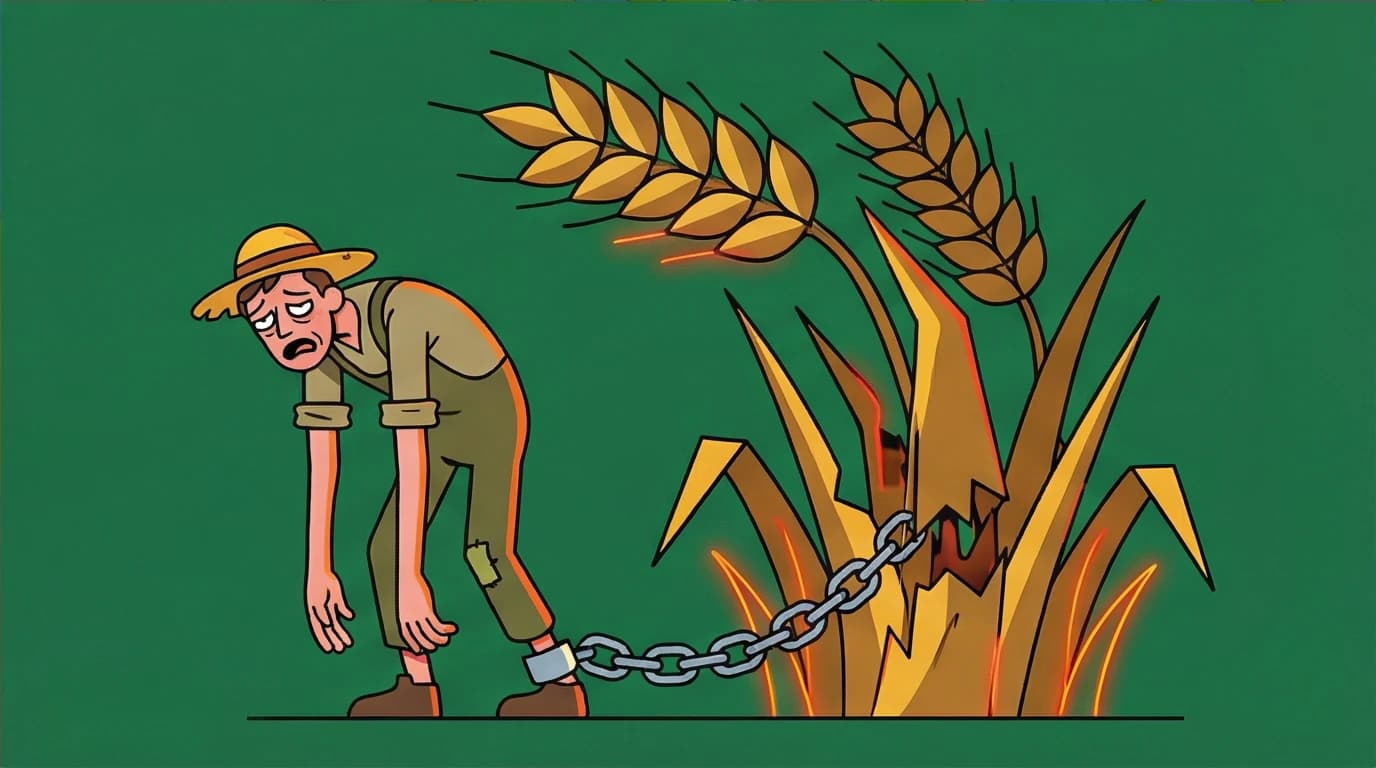
The reality was entirely different. Instead of a varied diet of meat, nuts, and berries gathered during a few hours of work a day, humans found themselves doing backbreaking labor from sunrise to sunset in the fields. Diets narrowed heavily to wheat and grains, leading to widespread malnutrition and dental problems. Crowded settlements brought devastating diseases.
Who actually benefited? The wheat.
Harari provocatively argues that we did not domesticate wheat; wheat domesticated us. We surrendered our freedom and our health for the myth of agricultural security. The imagined reality of a "better future" trapped humans in a cycle of endless toil, creating massive population growth but significantly reducing the quality of life for the average individual. The surplus food only benefited a tiny elite—kings and priests—who used the extra resources to invent even more complex imagined realities (taxes, laws, and organized warfare).
The Agricultural Revolution completely altered the trajectory of human life, but it also raises a massive question: why did some civilizations develop advanced technologies and conquer others, while some remained hunter-gatherers? If Harari's perspective on farming and human development piqued your interest, Jared Diamond's Pulitzer Prize-winning work is the perfect follow-up. It unpacks the geographical and environmental factors that determined which societies thrived and which were conquered, offering another essential puzzle piece to the history of humanity.

Guns, Germs, and Steel
Jared Diamond, Ph.D.
16 Duration7 Key Points4.8 RateThis provocative take on agriculture is a prime example of Harari's style, which has drawn both praise and significant criticism from other historians and scientists.
Why Recognizing Imagined Realities Matters Today
Understanding this concept is not just an academic exercise. It completely changes how you view the world around you.
When you realize that national borders, stock markets, political parties, and corporate hierarchies are all imagined realities, they lose their rigid permanence. They are not laws of physics like gravity. They are simply software programs running in the collective human mind.
If a system is entirely based on a shared story, it means the system can be changed.
When the story changes, the world changes. The abolition of slavery, the fall of the Soviet Union, and the rise of cryptocurrency are all examples of a massive shift in collective belief. Humans stopped believing one story and started believing another.
To survive and thrive in modern society, you have to play the game. You need money to live, you must follow the laws of your country, and you likely work for a corporation. But recognizing them as fictions gives you a distinct mental advantage. You stop mistaking the rules of society for the absolute rules of the universe. You gain the clarity to question which stories are serving you, and which stories might be trapping you.
The ideas in Sapiens, Guns, Germs, and Steel, and the other books mentioned can truly change your perspective, but tackling them all is a huge time commitment. If you're eager to learn but find your reading list overwhelming, there's a more manageable approach.
LeapAhead
Listen to the main takeaways from these essential non-fiction books and thousands more in 15-minute audio summaries that fit perfectly into your daily commute or workout.
FAQ
Is an imagined reality the same thing as a lie?
No. A lie requires one person to know the truth but intentionally deceive someone else. An imagined reality is an "inter-subjective truth." It only exists because a large group of people genuinely believe in it and act according to its rules. Money, laws, and nations are imagined realities, but they have very real consequences in the physical world.
No. A lie requires one person to know the truth but intentionally deceive someone else. An imagined reality is an "inter-subjective truth." It only exists because a large group of people genuinely believe in it and act according to its rules. Money, laws, and nations are imagined realities, but they have very real consequences in the physical world.
Are human rights really just a fiction according to Harari?
Yes. Biologically speaking, humans do not possess innate "rights" any more than wolves or chimpanzees do. Human rights are a modern, shared story invented to protect individuals and ensure society functions smoothly. Calling them a fiction does not mean they are bad; Harari views them as one of the most beneficial stories humans have ever invented.
Yes. Biologically speaking, humans do not possess innate "rights" any more than wolves or chimpanzees do. Human rights are a modern, shared story invented to protect individuals and ensure society functions smoothly. Calling them a fiction does not mean they are bad; Harari views them as one of the most beneficial stories humans have ever invented.
Why couldn't other human species, like Neanderthals, create imagined realities?
The Cognitive Revolution seems to have caused a unique genetic mutation in the brain wiring of Homo sapiens. While Neanderthals had language to describe objective reality (where food is, where danger is), they lacked the specific cognitive ability to conceptualize and communicate abstract, non-existent ideas. Without this ability, they could not organize in groups larger than about 150 individuals.
The Cognitive Revolution seems to have caused a unique genetic mutation in the brain wiring of Homo sapiens. While Neanderthals had language to describe objective reality (where food is, where danger is), they lacked the specific cognitive ability to conceptualize and communicate abstract, non-existent ideas. Without this ability, they could not organize in groups larger than about 150 individuals.
How does the concept of imagined realities explain the value of gold or Bitcoin?
Neither gold nor Bitcoin has high intrinsic, objective value. You cannot eat them or build useful tools with them. Their value comes entirely from collective trust. Because millions of people agree on the story that these items hold wealth, they function perfectly as mediums of exchange. The value is not in the metal or the code; the value is in the shared belief.
Neither gold nor Bitcoin has high intrinsic, objective value. You cannot eat them or build useful tools with them. Their value comes entirely from collective trust. Because millions of people agree on the story that these items hold wealth, they function perfectly as mediums of exchange. The value is not in the metal or the code; the value is in the shared belief.