


You set a target in January, mapped out the timeline, and felt unstoppable. By March, your company shifted its priorities, unexpected roadblocks hit, and that original plan now feels completely out of reach. You drop the project. You do not lack ambition; you lack a system built for reality.
Static goals look great on paper but shatter in the real world. To maintain momentum over the long haul, you need a methodology that breathes, adapts, and survives contact with friction.
What Does SMARTER Goals Stand For?
If you are wondering exactly what does smarter goals stand for, it is an extension of the widely used SMART criteria. While the first five letters help you build a solid foundation, the final two letters act as your survival mechanism when circumstances change.
Here is the complete smarter goals acronym broken down:
- S - Specific: The goal is laser-focused and clearly defined.
- M - Measurable: You have concrete metrics to track progress.
- A - Achievable: The goal requires effort but remains within the realm of physical and professional possibility.
- R - Relevant: The objective aligns with your broader life, career, or business trajectory.
- T - Time-bound: A strict deadline creates urgency.
- E - Evaluate: You routinely assess your progress against your metrics.
- R - Readjust: You modify your approach, timeline, or scope based on your evaluations.
While this breakdown defines the components, it's crucial to understand the strategic shift that the final two letters represent. For a deeper analysis of this evolution, explore the key differences between the two frameworks.
The SMARTER Meaning in Goal Setting: Why Add E and R?
Traditional goal setting has a massive flaw: rigidity. It assumes the environment you set the goal in will remain exactly the same throughout the execution phase. The smarter meaning in goal setting lies entirely in eliminating this rigidity.

The Power of "Evaluate"
Evaluation acts as your early warning system. Many professionals set a goal, work blindly for six months, and only check their progress at the deadline. By then, it is too late to fix anything.
Adding an intentional "E" forces you to step off the execution treadmill and look at the map. It answers critical questions: Are the actions I am taking actually moving the needle? Did I miscalculate the time required? Are external factors, like a shift in the US market or a budget freeze, impacting my ability to execute?
The Necessity of "Readjust"
Readjustment is the most misunderstood concept in productivity. People often equate adjusting a goal with failure. In the SMARTER framework, readjusting is a strategic pivot, not a surrender.
If a hiker encounters a collapsed bridge, they do not turn around and go home, nor do they try to jump a 50-foot gap. They look at their map and find a new route to the same destination. "Readjust" gives you permission to change your route without feeling guilty about abandoning the original path.
If you are tired of rigid systems that break at the first sign of friction, you might want to explore the science behind why some approaches consistently outperform others. In Smarter, Faster, Better, Charles Duhigg dives into the psychology and behavioral economics of productivity. He explores how the most successful people and organizations do not just work harder—they design adaptable systems that allow them to process information, maintain motivation, and pivot seamlessly when circumstances shift.
Smarter, Faster, Better
Charles Duhigg
 45 Duration
 7 Key Points
 4.5 Rate
How to Build SMARTER Objectives (Step-by-Step)
Creating smarter objectives requires front-loading your effort. You must design the feedback loop before you take your first step.
Step 1: Define the Baseline (The S.M.A.R.T. Core)
Start by locking in the traditional parameters. Strip away vague ambitions like "I want to increase my sales." Instead, define it: "I will close $150,000 in new enterprise software contracts in the Northeast territory by the end of Q3."
This baseline gives you something specific to measure against.
This baseline gives you something specific to measure against.
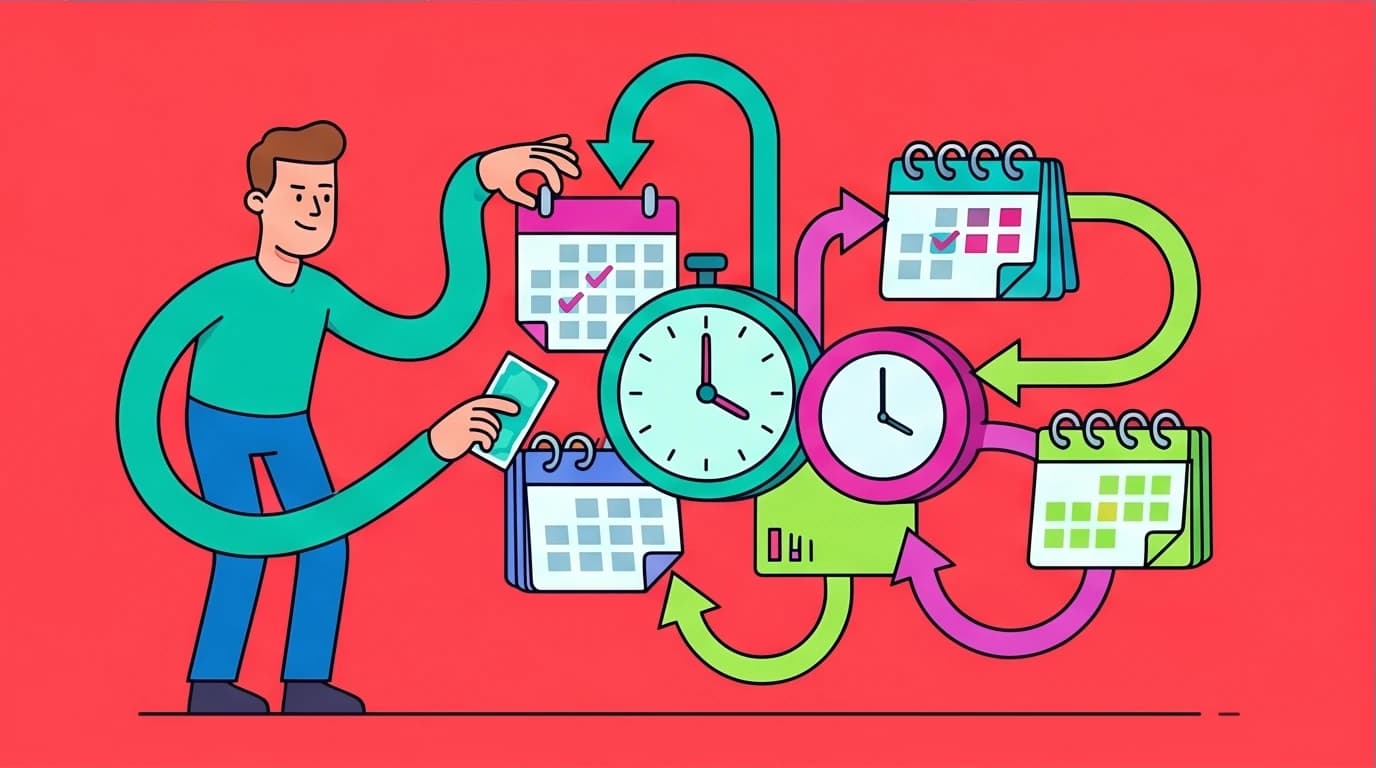
Step 2: Schedule Evaluation Intervals
Do not leave evaluation up to chance or "whenever you have time." Hardcode it into your calendar.
- Micro-evaluations: 15 minutes at the end of every week to check immediate output.
- Macro-evaluations: One hour at the end of every month to analyze broader trends.
Block this time out on your Outlook or Apple Calendar. Treat this appointment with yourself as seriously as a meeting with an investor.
Step 3: Define Your Readjustment Triggers
Decide in advance what scenarios will trigger a readjustment. If you fall behind your target by 20% for two consecutive weeks, that is a trigger. If your department's budget is cut, that is a trigger. Pre-defining these parameters takes the emotion out of the pivot. You are simply following the system you built.
This three-step process forms the foundation for your goals. For a more detailed walkthrough with templates and advanced techniques, a dedicated guide can help you master the process.
Building a bulletproof feedback loop requires tracking the right metrics so you know exactly when to pull those readjustment triggers. If you struggle to figure out which numbers actually move the needle, The 4 Disciplines of Execution is a fantastic resource. The authors break down the crucial difference between lag measures (your end goal) and lead measures (your daily actions), providing a clear, corporate-tested framework to ensure your wildly important goals do not get swallowed up by the whirlwind of your day-to-day operations.

The 4 Disciplines of Execution
Chris McChesney, Sean Covey, and Jim Huling
20 Duration9 Key Points4.6 RateReal-World Examples of the SMARTER Goals Acronym
To see how this methodology functions under pressure, let's look at two practical scenarios spanning professional and personal development.
Example 1: The Professional Promotion
The Initial Goal: Earn a promotion to Senior Marketing Manager by December 31st by leading three successful nationwide product launches.
- Evaluate: During the monthly check-in in August, you realize supply chain issues have delayed two of your products. They will not launch until next year. Under a static goal system, your goal is now dead. You lose motivation.
- Readjust: You pivot your objective. Instead of relying on product launches, you shift your focus to optimizing the current customer retention funnel. You propose a new retention strategy to the VP of Marketing, demonstrating leadership and strategic thinking despite the supply chain crisis. You still hit the core intent (demonstrating value for a promotion) but changed the vehicle.
Example 2: The Marathon Runner
The Initial Goal: Run the Chicago Marathon in under 4 hours by following a strict 16-week, 40-mile-per-week training block.
- Evaluate: At week six, you develop mild shin splints. Your tracking app shows your pace is dropping, and your pain levels are rising.
- Readjust: You immediately decrease your weekly mileage to 25 miles and substitute the remaining volume with low-impact cycling and pool running. You adjust your finish time expectation to 4 hours and 15 minutes. You arrive at the starting line healthy and motivated, rather than injured and sidelined.
These scenarios show how the framework applies in practice. For more inspiration, seeing how this model works across different roles—from leadership to personal development—can help you apply it to your own life.
Strategic Ways to Readjust Your Goals
When you hit a roadblock, you have three distinct levers you can pull to readjust effectively.

Lever 1: Adjust the Timeline
Sometimes your strategy is perfect, but your timeline was overly optimistic. If you aimed to master a new programming language in three months but are struggling with the syntax, push the deadline to six months. Keep the standard high; give yourself more runway.
Lever 2: Adjust the Method
If your timeline is locked but your progress is stalling, change your approach. If cold calling 50 prospects a day isn't generating leads, stop doing it. Pivot your method. Transition those hours into targeted LinkedIn outreach or attending local networking events.
Lever 3: Adjust the Scope
If external resources vanish—your budget is slashed, a key team member quits—you must shrink the scope. If you cannot deliver a five-feature software update by Friday, deliver a flawless two-feature update. Protect the quality by reducing the volume.
When external resources vanish and your original timeline shatters, it is easy to feel frustrated by the roadblocks standing in your way. However, reframing how you view these unexpected hurdles can completely change your trajectory. In The Obstacle Is the Way, Ryan Holiday draws on ancient Stoic philosophy to show how history’s greatest leaders used friction to their advantage. Instead of seeing a slashed budget or a failed method as a dead end, this quick read will teach you how to turn those exact limitations into the fuel you need to readjust and succeed.
The Obstacle Is the Way
Ryan Holiday
44 Duration7 Key Points4.6 RatePutting these frameworks into practice often means learning from the experts, but it can feel overwhelming to add more books to your reading list.

Listen to the core ideas from books like The Obstacle Is the Way and other bestsellers on strategy and productivity while you commute, turning your downtime into learning time.

Download LeapAhead App now
Common Mistakes When Using the SMARTER Goals Framework
Even with a superior framework, execution traps remain. Avoid these common pitfalls to keep your objectives on track.
Confusing "Readjust" with "Giving Up"
Readjusting is about lowering the friction, not lowering your standards entirely. If you want to read 24 books a year but fall behind by May, dropping the goal entirely is giving up. Changing the goal to 15 books, or switching from physical books to an Audible subscription during your commute, is readjusting.
The toxic idea that a goal must be executed perfectly or not at all is the number one reason people abandon their objectives by February. If you have a habit of throwing in the towel the moment you fall behind schedule, Jon Acuff’s Finish will be a game-changer. Acuff humorously and accurately dissects the perfectionism that derails our progress, offering practical, counterintuitive advice on how to cut your goals in half, make the process fun, and finally cross the finish line without burning out.

Finish
Jon Acuff
17 Duration7 Key Points4.6 RateIf your goal is to absorb more knowledge from books like these but you consistently run out of time, an app that summarizes key ideas can be a powerful way to readjust your learning method.
Get the core lessons from must-read books on productivity and goal-setting in just 15 minutes, making it easier to stay on track with your learning goals.
Download LeapAhead App now
Skipping the Evaluation Appointments
When your schedule gets chaotic, the weekly evaluation session is usually the first thing canceled. This is a fatal error. Skipping evaluations is like driving through a storm with your eyes closed. No matter how busy you get, protect that 15-minute review window.
Overcomplicating the Metrics
Your measurements need to be clear. If you need a complex, color-coded spreadsheet with 40 variables just to figure out if you had a good week, your system is too heavy. Keep your KPIs (Key Performance Indicators) to three or fewer distinct numbers.
FAQ
What is the difference between SMART and SMARTER goals?
Traditional SMART goals end at the deadline. They outline what you want to do and by when. The SMARTER goals framework adds an active management phase. "Evaluate" and "Readjust" build a feedback loop into the process, allowing you to adapt the goal as real-world conditions change rather than abandoning it when obstacles arise.
Traditional SMART goals end at the deadline. They outline what you want to do and by when. The SMARTER goals framework adds an active management phase. "Evaluate" and "Readjust" build a feedback loop into the process, allowing you to adapt the goal as real-world conditions change rather than abandoning it when obstacles arise.
How often should I evaluate my goals?
For fast-moving or daily goals, a quick weekly review of 10 to 15 minutes is ideal. For long-term career or massive business objectives, a deep-dive evaluation at the end of each month or quarter works best. The frequency should match the pace of the project.
For fast-moving or daily goals, a quick weekly review of 10 to 15 minutes is ideal. For long-term career or massive business objectives, a deep-dive evaluation at the end of each month or quarter works best. The frequency should match the pace of the project.
Does readjusting a goal mean I failed?
No. Refusing to adjust to reality is the true failure. Readjustment is strategic agility. If a business loses its main supplier, it doesn't close its doors; it finds a new supplier or creates a new product. Applying that same agility to your personal and professional targets ensures you cross the finish line.
No. Refusing to adjust to reality is the true failure. Readjustment is strategic agility. If a business loses its main supplier, it doesn't close its doors; it finds a new supplier or creates a new product. Applying that same agility to your personal and professional targets ensures you cross the finish line.
Can I use the SMARTER framework for team management?
Absolutely. It is highly effective for teams because it removes the fear of failure. When employees know there is a formal "Evaluate and Readjust" phase built into their quarterly targets, they are more willing to communicate roadblocks early, rather than hiding problems until the deadline.
Absolutely. It is highly effective for teams because it removes the fear of failure. When employees know there is a formal "Evaluate and Readjust" phase built into their quarterly targets, they are more willing to communicate roadblocks early, rather than hiding problems until the deadline.